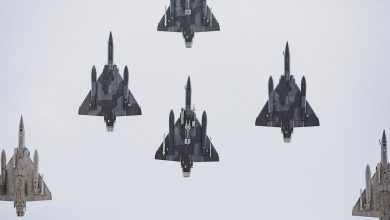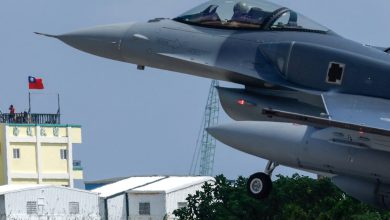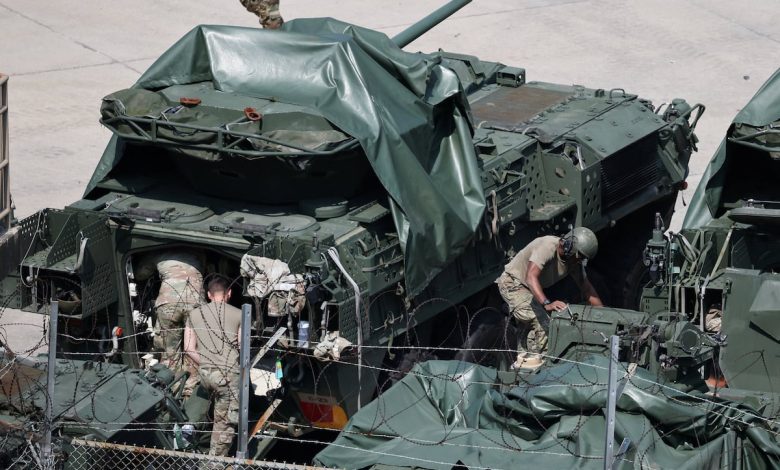
South Korea and the United States will cut short annual joint military drills to five days from 11 and scale back some field training, the allies said on Wednesday, after President Donald Trump ordered a substantial reduction in U.S. participation.
The change in the drills comes as Chinese Foreign Minister Wang Yi visits South Korea on Wednesday and Thursday for regional security talks expected to cover developments on the Korean Peninsula.
North Korea’s Kim Yo Jong, sister of leader Kim Jong Un, late on Wednesday dismissed the move, saying the nature of the exercises remained provocative and aggressive even if the scale and duration had been reduced, according to a statement published by state media KCNA.
The Ulchi Freedom Shield exercise, which began on Aug. 17, will now run through Aug. 21, South Korea’s Joint Chiefs of Staff and a Pentagon official said, instead of the original end date of Aug. 27.
South Korean Defence Minister Ahn Gyu-back said the allies were moving to cancel the drills’ second phase, media said, adding that it had been expected to involve counterattack operations after an initial defensive phase.
At the suggestion of the United States, the countries agreed on partial adjustments to the duration and scope of the drills, the JCS said. Some combined field manoeuvre training would also be scaled back, although details were still being discussed.
A Department of Defense official said the department had substantially reduced the exercise and associated live-training events, with some cancelled or switched to simulations.
The changes would preserve essential readiness and training aims, with no degradation to U.S. training objectives, the official added.
The changes follow Trump’s order on Sunday to “substantially reduce” the U.S. role in the drills, citing his “very good relationship” with North Korean leader Kim Jong Un. On Monday, Trump added that Kim had responded to his steps, without giving any details.
Trump’s objectives in the order appeared to be to pressure Seoul over the pace of its promised U.S. investments under a trade deal, shift attention away from U.S. challenges in Iran and reopen diplomacy with Pyongyang, one analyst said.
“Trump is trying to catch three birds with one stone here,” said Ellen Kim, senior fellow at the Korea Economic Institute of America.
Kim Yo Jong said she was unaware of recent communication between the two but added that Kim Jong Un held fond personal memories and feelings towards Trump.
“The relationship between the two leaders remain excellent,” KCNA quoted her as saying.
North Korea denounces drills
North Korea had earlier on Wednesday denounced the drills and said it would continue exercising its right to self-defense against what it called military threats from Washington and Seoul, KCNA said.
In a commentary, it called the United States and South Korea “warmongers” raising tension on the Korean Peninsula, but stopped short of mentioning Trump, his order or the scaling back.
North Korea’s decision to issue the commentary, rather than a statement by a senior official or a military show of force, may signal an effort to leave room for diplomacy, said Hong Min, a researcher at the Korea Institute for National Unification.
Trump has pushed aides to arrange an in-person meeting with Kim as soon as this autumn, the Wall Street Journal said, citing U.S. officials.
He has discussed holding talks during a possible November trip to Asia for the Asia-Pacific Economic Cooperation summit in the Chinese technology hub of Shenzhen, the paper added.
Reuters could not immediately verify the report.
The White House did not respond to a request for comment on its approach to North Korea or the military exercises.
Pyongyang routinely condemns joint U.S.-South Korean military exercises as rehearsals for invasion, while Washington and Seoul say they are defensive and necessary to ensure readiness against North Korea’s military threats.
Neither South Korean nor U.S. officials knew in advance about Trump’s order, South Korean Foreign Minister Cho Hyun told a parliamentary hearing on Wednesday.
On Tuesday, President Lee Jae Myung said the Ulchi exercises were defensive and Seoul had no intention of using them to attack North Korea or heighten tension on the peninsula.
China, North Korea’s only formal treaty ally, has not commented directly on Trump’s remarks, but Chinese Foreign Minister Wang Yi said in Seoul that Washington should change its “hostile policy” towards Pyongyang, South Korea’s Yonhap reported.