I Am a Retired US Army Special Forces NCO and Carried a Rifle for a Living: The US Army Spent Billions on the M7 Rifle. Soldiers Made It Clear They Did Not Like Carrying It

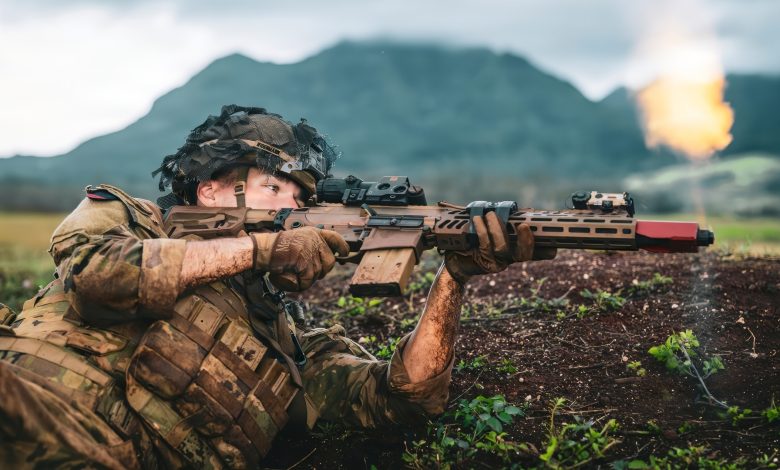
The XM7/M7: The Army’s Next-Generation Rifle Is Already Being Replaced – The Army spent years and billions of dollars building a rifle for the next war. Four years after the contract was signed, it has stopped buying it. That’s the short version of the XM7/M7. The long version is more complicated and, in my opinion, more interesting. It’s the story of a rifle that did exactly what the Army asked it to do. The problem was what the Army asked for.
This is a half-decade-long endeavor to replace the M4 and the M16 family of weapons that have served the Army since the mid-1960s.
How We Got Here on the M7 Rifle
The Army got reports from the troops in the field in Afghanistan that the 5.56 mm rounds of the M4 were ineffective at penetrating body armor or barriers at long distances.
The Special Operations Command (SOCOM), Army Marksmanship Unit (AMU), and Army Armament Research, Development, and Engineering Center (ARDEC) have all conducted research and testing and had a big influence on the Army to make the switch from the 5.56 mm to the 6.8mm cartridge.
SIG Sauer, which was awarded the contract for the Army’s Modular Handgun System for the M17 and M18 pistols, was awarded the contract for the Army’s Next Generation Squad Weapon program (NGSW), the XM7, and the squad automatic weapon, the XM250, to replace the M4 and the M249 SAW on April 19, 2022.
The Next Generation Squad Weapon program was intended to replace the M4 carbine and the M249 SAW with weapons capable of defeating modern body armor at longer ranges.
After a 27-month competition among three designs, the Army awarded SIG Sauer the contract on April 19, 2022. The package included a rifle, an automatic rifle, a new family of 6.8mm ammunition, and the XM157 fire control optic built by Vortex.
The rifle was first called the XM5. However, the Army learned that Colt already used the M5 name for one of its 5.56mm carbines, so in January 2023 it renamed the rifle the XM7.
XM7 Next Generation Squad Weapon NGSW.
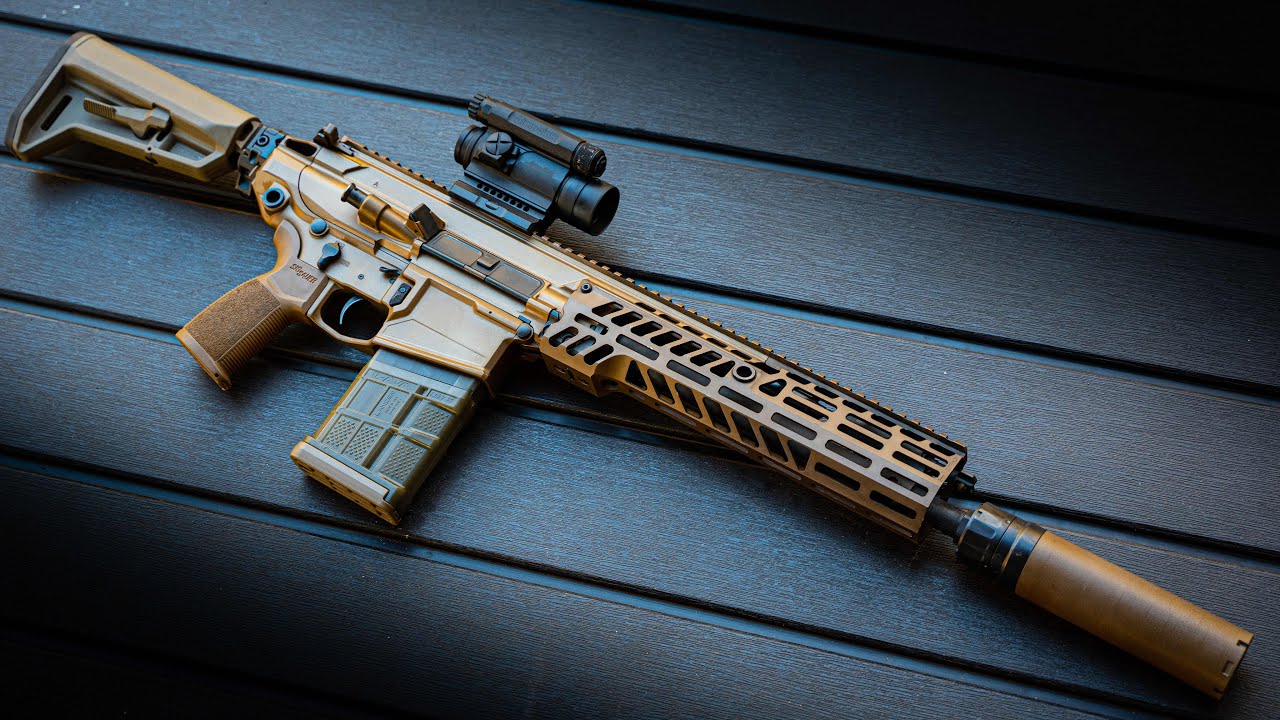
XM7. Image Credit: Creative Commons.
It’s a military version of SIG’s MCX-Spear, a short-stroke gas piston rifle chambered in 6.8x51mm. The big innovation is the cartridge. SIG’s hybrid case combines a steel base with a brass body, allowing it to handle chamber pressures well above those of conventional rifle ammunition.
More pressure means higher velocity and more energy on target, from a shorter barrel.
On paper, it’s a real leap. The 6.8 hits harder and reaches farther than 5.56, and the XM157 adds a laser rangefinder and ballistic computer to the rifle. The Army set an acquisition objective of 111,428 rifles, and the XM7 was type-classified as the M7 on May 21, 2025.
The rifle was equipped with the Vortex M157 Next-Generation Squad Weapon-Fire Control (NGSW-FC), an optic designed to integrate advanced technologies, including a laser rangefinder, ballistic calculator, and digital display overlay, into a next-generation rifle optic.
The Captain Who Called It Out
A few weeks before that decision, Army Captain Braden Trent stood up at Modern Day Marine and called the rifle “unfit for use as a modern service rifle.”
His complaints were specific. The M7 uses 20-round magazines. A soldier carrying seven of them has 140 rounds. With an M4, the same seven magazines hold 210.
Each loaded M7 magazine adds 1.25 pounds. He reported visible damage to the rifling after about 2,000 rounds. In one live-fire exercise, a platoon was almost out of ammunition within 10 minutes of the engagement starting.
His most important point had nothing to do with hardware. The soldiers he talked to said that nearly all of their engagements occurred within 300 meters. The rifle was built to win at long range, and most fights don’t happen at long range.
SIG disputed his findings, and Task and Purpose reported the details of that. While the manufacturer and the Army may have disagreed with Captain Trent, the troops who carried the rifle agreed with him.
The Points Made In The Rifle’s Criticism Were Valid
That’s the core problem with the M7. Every advantage it has comes with a cost the soldier pays. More power means more recoil and a heavier cartridge.
A heavier cartridge means fewer rounds in the magazine and fewer on the body. The suppressor cuts noise and flash but adds weight and length. Having carried a rifle for a living, I can tell you that every pound matters by the end of the day when you’re loaded down with “lightweight equipment.”
The Marines weighed the same trade-offs and passed. In February 2026, the Corps confirmed it would retain the 5.56mm M27 rather than adopt the M7, citing its suitability for close-combat formations and interoperability with allies. The M27 holds 30 rounds. The M7 holds 20.
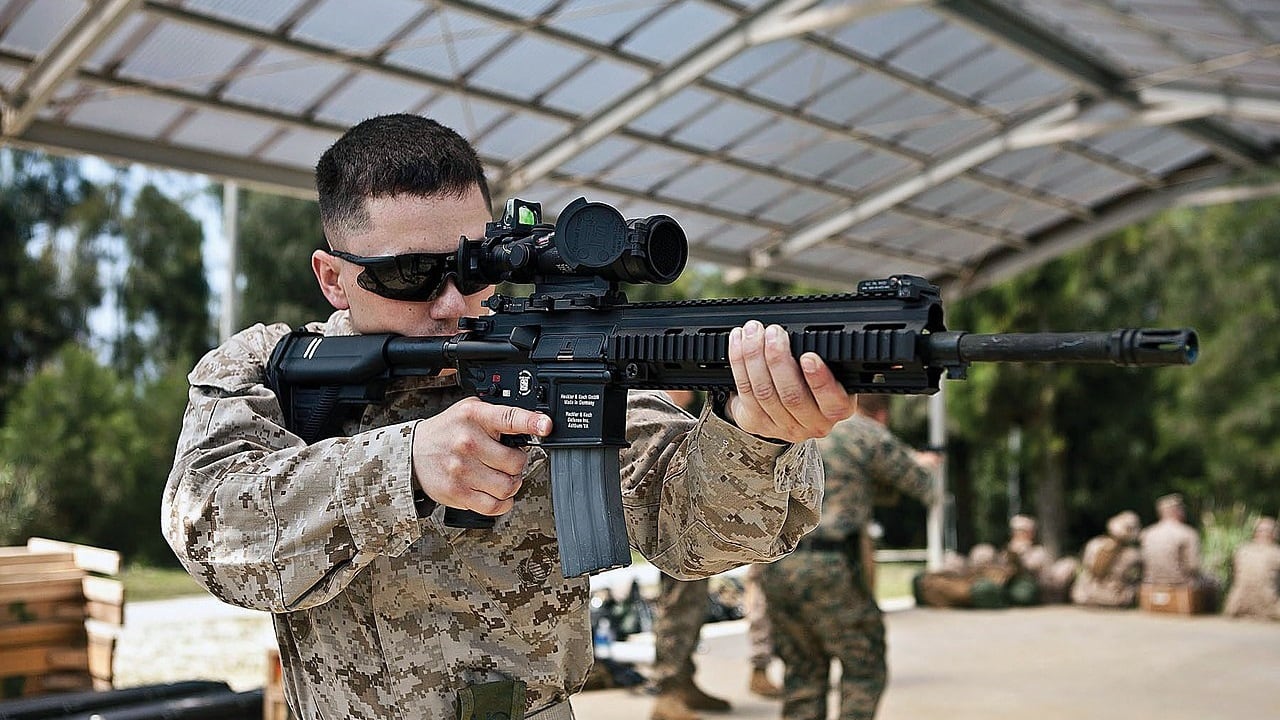
CAMP HANSEN — Lance Cpl. Zachary A. Whitman, a shooter with the III Marine Expeditionary Force detachment, familiarizes himself with the M27 Infantry Automatic Rifle in preparation for the Australian Army Skill at Arms Meeting 2012. AASAM is a multilateral, multinational event allowing Marines to exchange skills tactics, techniques and procedures with members of the Australian Army as well as other international militaries in friendly competition. (U.S. Marine Corps photo by Sgt. Brandon L. Saunders/released)
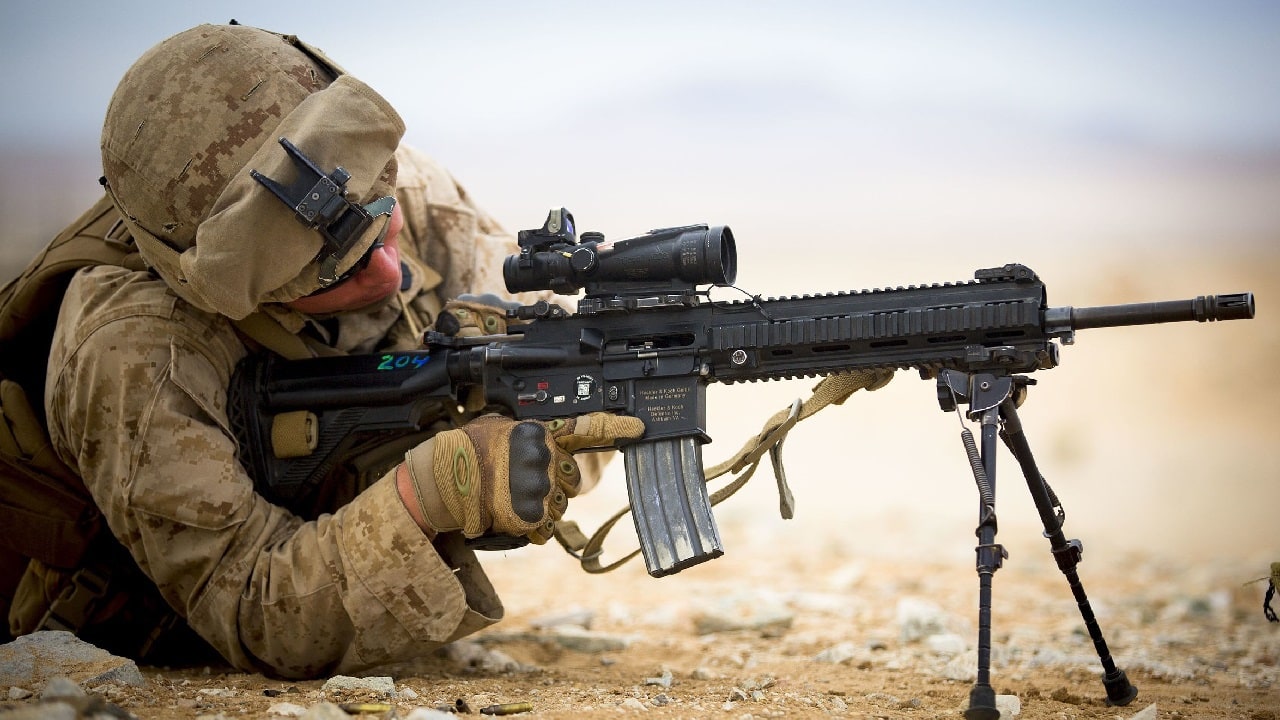
M27 IAR. Image Credit: Creative Commons.
The ammunition has its own problems. Reports from the Lake City Army Ammunition Plant describe persistent case separations in the bi-metal hybrid case, the same failure Trent flagged in 2025.
So Is The M7 Dead?
Not officially. Unofficially, it’s close. The Army hasn’t ordered a single M7 since October 1, 2025. About 50,000 have been delivered.
The production line has shifted to the XM8 carbine, a shorter version with an 11-inch barrel instead of 13, a fixed stock in place of the folding one, and a bare weight of 7.33 pounds, about a pound lighter than the M7.
The Army received its first XM8 in April 2026, and the FY27 budget asks for 14,944 of them and no new M7s. Test units are scheduled to receive them starting in October.
However, the XM8 fires the same cartridge. With the suppressor attached, it still weighs more than a loaded M4A1. The magazine is expected to grow to 25 rounds, which is better, but still short of 30. The fundamental trade-off is still there, just in a slightly smaller package.
Is the 6.8 concept wrong? I don’t think so. Body armor is spreading, and a round that can defeat it at distance is worth having in the squad.
However, the Army tried to give every rifleman that capability, even though it probably belonged to designated marksmen and M250 gunners.
The M7 was built for the fight the Army expected. Its soldiers kept telling it about the fight they actually get.
About the Author: Steve Balestrieri
Steve Balestrieri is a National Security Columnist. He served as a US Army Special Forces NCO and Warrant Officer. In addition to writing for 19FortyFive, he covers the NFL for PatsFans.com and is a member of the Pro Football Writers of America (PFWA). His work was regularly featured in many military publications.