VIENNA — Britain will pour more than £63 billion ($84 billion) into its nuclear deterrent over the next four years, the government confirmed this week.
The June 30 announcement comes as part of a £15 billion ($20 billion) defense funding boost announced by outgoing Prime Minister Keir Starmer’s government. It is a continuation and concretization of the U.K.’s recent push to expand the country’s atomic arsenal. The money will fund the Dreadnought-class ballistic missile submarines and SSN-AUKUS attack boats, along with a new sovereign warhead named Astraea, according to the announcement.
The nuclear spending is a significant portion of a broader £298 billion ($398 billion) four-year spending profile meant to lift U.K. defense spending to 2.7 percent of GDP en route to NATO’s 3.5 percent target by 2035.
The figures continue an upward trend in nuclear spending that has persisted for several years. The Ministry of Defence’s Defence Nuclear Enterprise already consumed 18% of the defense budget, £10.9 billion ($14.6 billion), in 2024-25, and the Public Accounts Committee had projected that share would keep climbing to a full fifth of all military spending. The International Campaign to Abolish Nuclear Weapons has separately calculated that Britain became the world’s third-largest nuclear spender in 2025, at $12.6 billion.
The high spending associated with the nuclear program has caused criticism by some domestic advocacy groups who argue the money could be put to better use elsewhere. The government argues the nuclear bombs are essential to ensure Britain’s sovereignty, and that London plays a “unique role as the only European power to pledge our nuclear deterrent to defend our NATO allies.”
Central to the current package is Astraea, the warhead designated A21/Mk7 that the Atomic Weapons Establishment has been developing since 2020 to replace the aging Holbrook design carried on Trident II D5 missiles.
Officials and independent analysts say the replacement is less a matter of choice than necessity: Because Britain’s warheads must remain flight-certified against the American Mk4/Mk4A aeroshell shared with the U.S. Navy, the U.K. cannot simply refurbish Holbrook indefinitely once Washington moves to its own next-generation W93 warhead.
Astraea is being developed “in parallel” with the W93 and will share its Mk7 re-entry body, according to the government. The new British warhead’s estimated yield will reportedly fall somewhere between 90 and 455 kilotons, according to an analysis of publicly available information by the Nuclear Information Service, a U.K.-based nonprofit research organization. It will very likely mean a marked rise from Holbrook’s estimated 80 to 100 kilotons.
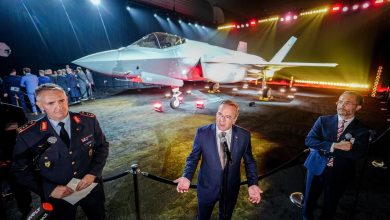
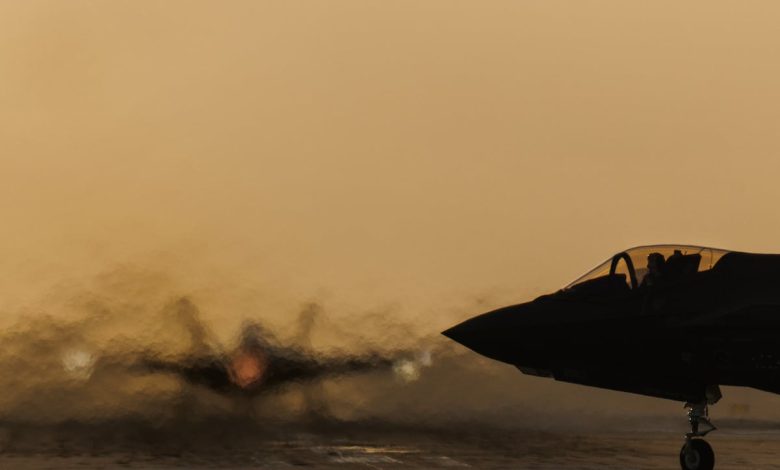
This week’s announcement also reaffirms Britain’s June 2025 decision to buy 12 F-35A jets and rejoin NATO’s Dual Capable Aircraft nuclear-sharing mission for the first time since the Cold War, a move that will see American B61-12 bombs likely based on U.K. soil, to be delivered by British aircraft if the U.S. president authorizes a strike. Similar arrangements exist with the Netherlands, Belgium, Germany, Italy and Turkey.
Britain’s nuclear modernization joins a growing chorus of signals that the world may be entering a new era of nuclear re-armament after several decades of reduction, stagnation and public opposition to nuclear bombs following the Cold War’s excesses.
Aside from London’s program, France has announced intentions to increase the size of its arsenal and extend its nuclear umbrella to other European countries, potentially deploying French nuclear bombers there, too.
China has also been engaged in a significant expansion of its arsenal, sending alarm bells ringing in Washington.
And between Russia and the U.S., who collectively hold 86% of the world’s nuclear weapons, the last remaining strategic arms reduction treaty expired in February.
Linus Höller is Defense News’ Europe correspondent and OSINT investigator. He reports on the arms deals, sanctions, and geopolitics shaping Europe and the world. He holds master’s degrees in WMD nonproliferation, terrorism studies, and international relations, and works in four languages: English, German, Russian, and Spanish.