The Pentagon Is Paying $24,290,000,000 for 296 F-35 Fighters. The Engines Were Not Included. With Them, One F-35A Now Costs $92,000,000.

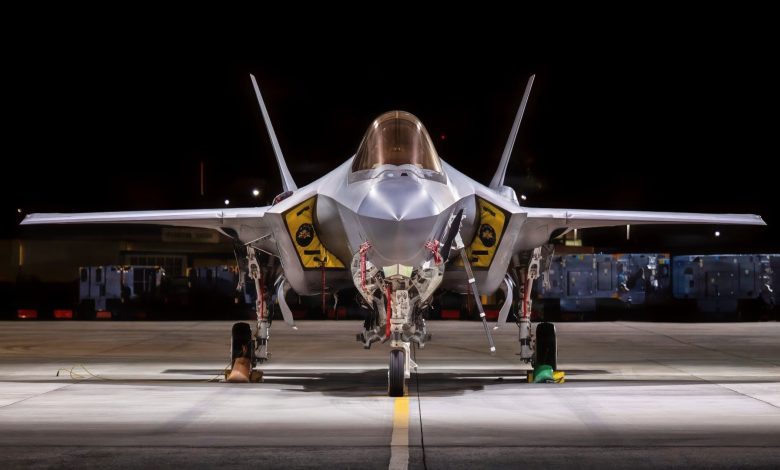
Summary and Key Points: The Pentagon has stated the cost of the newest F-35 in today’s dollars. The F-35 Joint Program Office confirmed in early September that an Air Force F-35A from Lots 18 and 19 carries an average flyaway price of $92 million, with the Navy’s F-35C at $110.8 million and the Marine Corps F-35B at $121.4 million, all higher than the three lots before them.
The F-35 Is No Cheap Fighter
The Pentagon has confirmed the exact cost of the newest F-35 fighter jets, disclosing for the first time that an Air Force F-35A now costs $92 million as the latest aircraft move through production.
The F-35 Joint Program Office confirmed the new figure in early September following inquiries from Breaking Defense and Air & Space Forces Magazine, disclosing the average per-unit price for each of the three versions of the fighter purchased under Lots 18 and 19.
Those two lots are the latest batches of aircraft negotiated over the last several years and are slated for delivery between 2026 and 2027.
The prices were not available in today’s dollars previously.
The Pentagon and Lockheed Martin finalized the agreement for the airframes for both production lots in September 2025, covering a total of 296 fighters for $24.29 billion.
The contract did not, however, include the Pratt & Whitney F135 engines that were sold separately.
The Pentagon finalized billions of dollars worth of engine contracts in 2026 to accommodate the latest batches of aircraft.
With those costs included, the Joint Program Office now says that an F-35A in lot 18 or 19 has an average “flyaway” price of $92 million, constituting an 11.5% increase over the $82.5 million price for aircraft in lots 15, 16, and 17.
All Three F-35s Are More Expensive Now
The latest Pentagon figures show prices have risen across the board, with all three F-35 variants affected.
F-35 at the Smithsonian. 19FortyFive original image.
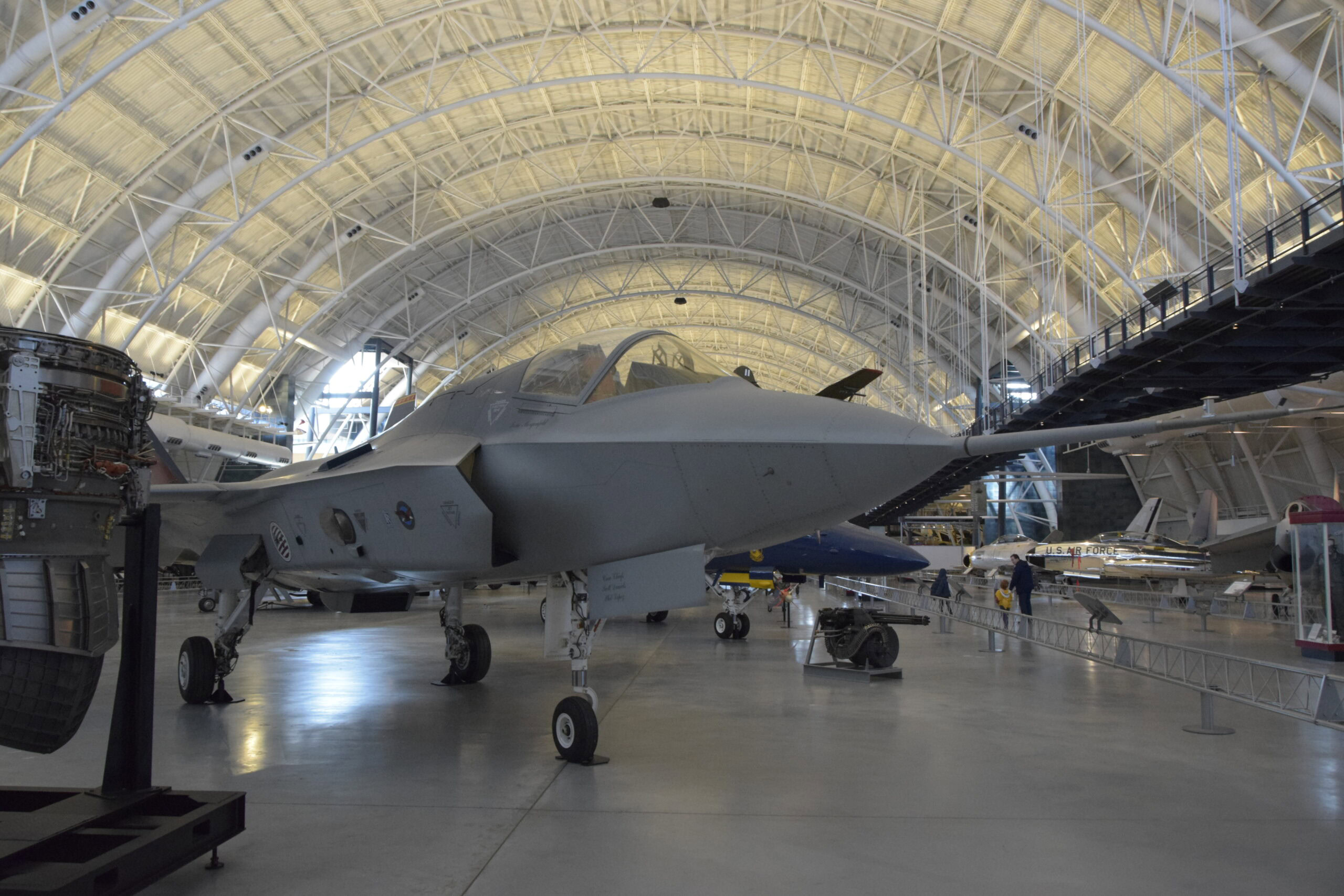
F-35 at the Smithsonian. 19FortyFive original image.
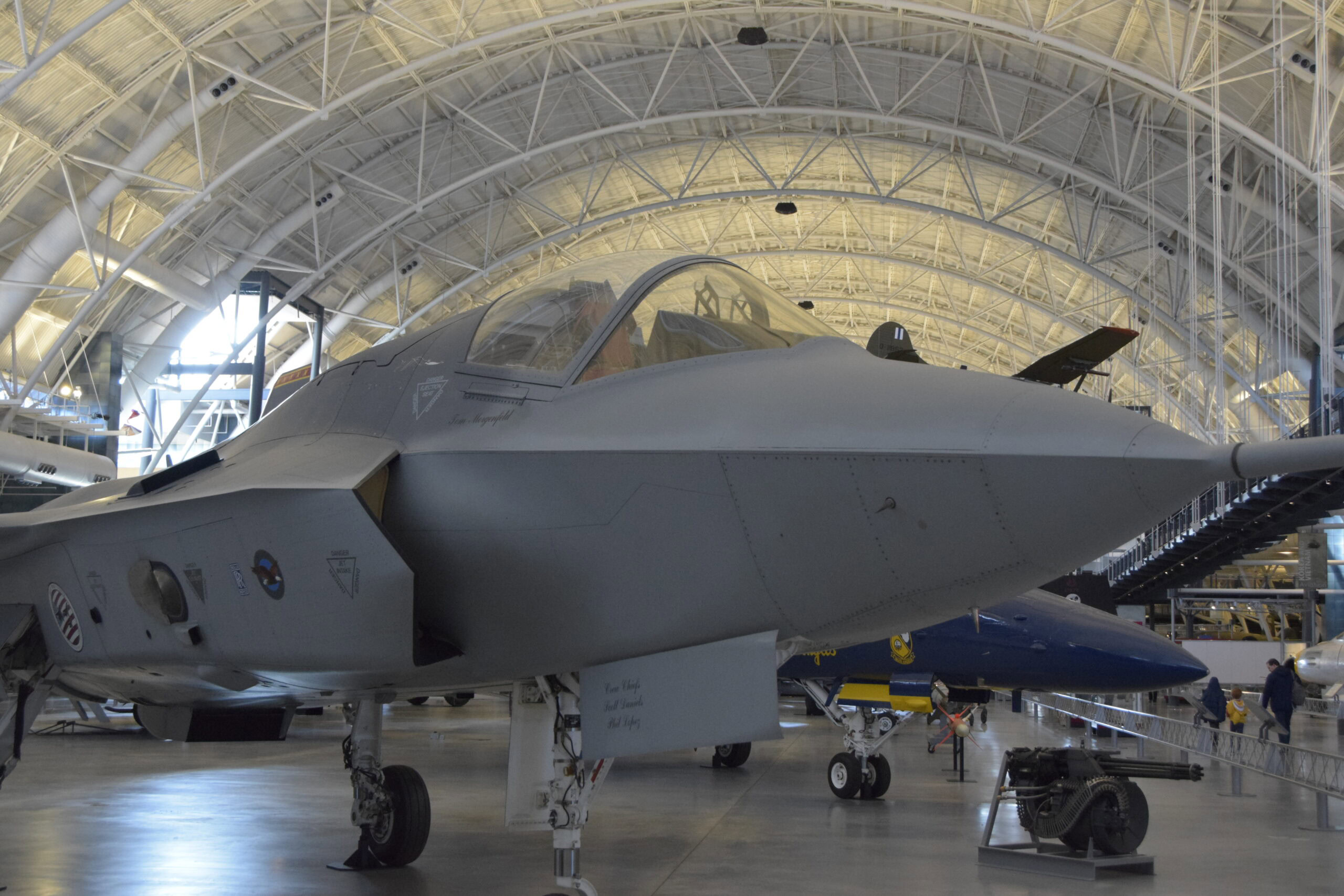
F-35 at the Smithsonian. 19FortyFive original image.
The F-35B now costs an average of $121.4 million, up from $109 million — an increase of 11.4%. The F-35C has risen from $102.1 million to $110.8 million, an 8.5% increase.
Those “flyaway” prices refer to the base cost of producing a complete aircraft ready for delivery, including its engine and radar.
The government buys major parts of the F-35 through separate contracts, however. Lockheed Martin builds the aircraft, and Pratt & Whitney produces the engine.
Both are purchased separately and installed.
That means the $24.29 billion agreement for lots 18 and 19 announced in September 2025 doesn’t tell taxpayers exactly what a single F-35 costs; it covers the airframes, averaging $82.4 million across all three variants, but excludes the engines.
Why Prices Went Up
The price increase was generally expected and does not mean that Lockheed suddenly decided to raise the F-35’s price.
Lots are essentially production batches, and the previous publicly available figures covered three lots between 15 and 17.
The newer batches were negotiated after major global inflation surges following the pandemic, with manufacturers facing higher labor and raw material costs and more complex supply chains.
In short, the world and the economy are different, and the new price reflects that reality.
When lots 18 and 19 were finalized last year, the Joint Program Office – which oversees the F-35 and its procurement – said the cost per aircraft had increased but, adjusted for inflation, was generally consistent with what was paid for the last three lots.
At the same time, the jets themselves have changed. Newer F-35 aircraft are receiving Technology Refresh 3 hardware needed to support the Block 4 modernization program, which will add improved computer systems, modernized systems, advanced weapons, and new electronic warfare capabilities.
The Three Different Versions
The F-35 comes in three different versions because the United States needs the same performance for different contexts.
The $92 million F-35A is the conventional version of the aircraft operated by the Air Force.
The fighter jet takes off and lands on ordinary runways.
It is the simplest and cheapest of the three variants.
The Marine Corps, meanwhile, uses the F-35B, and it is considerably more complex.
Its short-takeoff-and-vertical-landing system lets the aircraft operate from ships and bases with shorter runways or poor landing conditions.
The aircraft uses a lift fan and a swiveling engine exhaust nozzle that generates vertical lift.
That technology is part of why the variant costs $29.4 million more to build than the F-35A.
The Navy then uses the F-35C, which is designed for Navy aircraft carriers.
The $110.8 million aircraft is also used by the Marine Corps, and it features larger wings and folding wingtips.
It also has strengthened landing gear, making it suited for catapult launches and arrested landings.
The Pentagon’s latest lots 18 and 19 purchases include aircraft from across all three services, including some designated for international partners and overseas customers.
The F-35 Program Becomes More Expensive
The increase in unit prices comes as the F-35 program more generally becomes more expensive.
The Pentagon’s latest estimate now puts acquisition costs for the aircraft and engines at $536.2 billion – more than 10% higher than its previous estimate.
And those costs only cover procurement. Operating, maintaining, and later modernizing the U.S. F-35 fleet over its lifetime will push those costs even higher overall.
About the Author: Jack Buckby
Jack Buckby is a British researcher and analyst specializing in defense and national security, based in New York. His work focuses on military capability, procurement, and strategic competition, producing and editing analysis for policy and defense audiences. He brings extensive editorial experience, with a career output spanning over 1,000 articles at 19FortyFive and National Security Journal, and has previously authored books and papers on extremism and deradicalization.