Lockheed Martin’s Skunk Works will build four more Vectis uncrewed aircraft in addition to the prototype already under construction, the company said Monday, with the first expected to fly by the end of 2027.
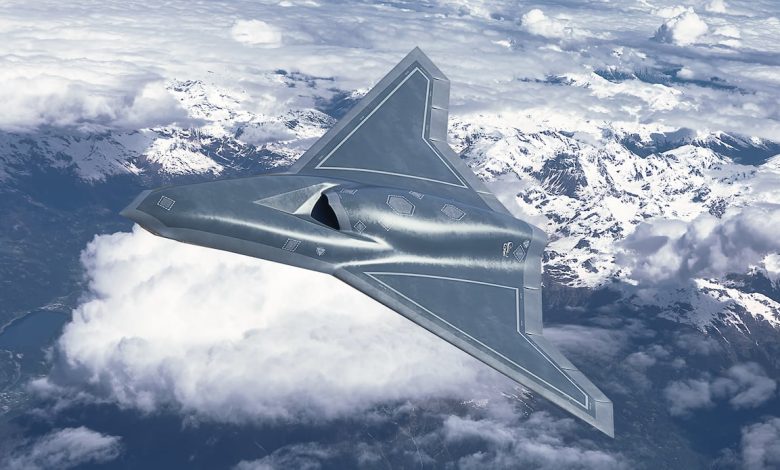
A full-scale Vectis model was publicly displayed for the first time on Monday at the Air & Space Forces Association’s Air, Space & Cyber Conference in National Harbor, Maryland, according to Lockheed. The announcement brings the total Vectis prototypes to five.
“Domestic and international customer conversations, coupled with our internal analysis, continue to reinforce the urgent need for a survivable, autonomous and multi-mission capability,” Ron Fehlen, vice president and general manager of Skunk Works, said in a statement. “We’re leaning into that demand, making a strategic investment to accelerate Vectis’ progress and maturity through an additional four vehicles.”
Vectis is a Group 5 collaborative combat aircraft designed to fly solo or alongside crewed fighters such as the F-35. The company, which says it is funding the project itself, unveiled the aircraft in September 2025, pitching it to U.S. and allied militaries for precision strike, ISR targeting, electronic warfare and counter-air missions.
Lockheed was not picked to build aircraft for the first increment of the Air Force’s Collaborative Combat Aircraft program, or CCA, and has not tied Vectis to a specific competition.
The service cleared CCA Increment 1 for production in June, awarding contracts to General Atomics and Anduril. Lockheed did win one of six spots in the pool of vendors eligible to compete to build the autonomy software that will fly the Increment 1 aircraft.
According to Lockheed, the team went from the first Vectis drawing to wind tunnel testing in less than two months and completed an initial digital build in six months.
The company said in December that the Vectis prototype will fly with a Williams International FJ44-4, a commercial turbofan that produces more than 3,600 pounds of thrust. Lockheed said it picked a proven engine to speed up the development timeline.
The Air Force is still finalizing requirements for CCA Increment 2.
Col. Timothy Helfrich, the service’s portfolio acquisition executive for fighters and advanced aircraft, told reporters at the Air Force Life Cycle Industry Days in July that the concept refinement phase with nine unnamed vendors had about 10 months left to run, and that the service could carry as many as six designs into prototyping afterward. He also said companies currently left out of the concept refinement phase could enter later.
Asked whether Lockheed was among the nine companies, Skunk Works spokesman Shane Nicholson said that Lockheed Martin Vectis is an internally funded effort aimed at opportunities in the domestic and international markets, and that “specific questions about CCA Increment 2 are best addressed by the U.S. Air Force.”
Lockheed has not announced a customer, a contract or a unit price for Vectis.
Michael Scanlon is a defense journalist covering air and space warfare. A former U.S. Air Force A-10 crew chief, he has supported land and sea programs for the U.S. Army, Navy, Marine Corps and Coast Guard.