A US Air Force SR-71 Blackbird Came Apart Around Pilot Bill Weaver at Mach 3.2 and 78,000 Feet. He Never Pulled the Handle — the Aircraft Threw Him Out. He Survived and Was Flying Again 2 Weeks Later.
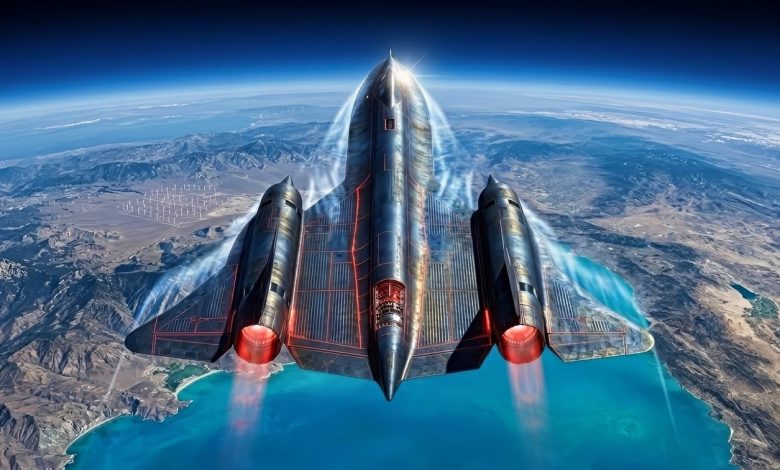
Summary and Key Points: In 1966, Lockheed Martin test pilot Bill Weaver made history when he became the first, and so far only, human to eject from an aircraft traveling at Mach 3. Weaver and his accompanying Reconnaissance Systems Officer (RSO), Jim Zwayer, were conducting a test flight on January 25, 1966, when their SR-71 Blackbird experienced an engine unstart, resulting in a catastrophic failure. In the heat of the moment, before he could bail out of his aircraft, the SR-71 quite literally disintegrated beneath his feet, tossing him out at Mach 3.
By some miracle, he survived the incident without major injury. Unfortunately, Zwayer was not so lucky and was killed almost instantly.
Known Issues on the SR-71 Blackbird
Today, the Blackbird is one of the most beloved Cold War-era aircraft, but during its development it had several technical issues that frequently led to freak accidents like Weaver’s.
One of the main issues was the unstart problem, in which one engine would simply give out during supersonic flight and extinguish its afterburner.
In a typical unstart scenario, asymmetrical thrust could cause the aircraft to yaw violently, often causing pilots to lose control completely.
Back in the 1960s, when Weaver flew the SR-71, the aircraft had no automatic restart system, requiring pilots to either kill the other engine or restart the faulty one before losing control.
SR-71 Blackbird at the Smithsonian. 19FortyFive original image taken in July 2025.
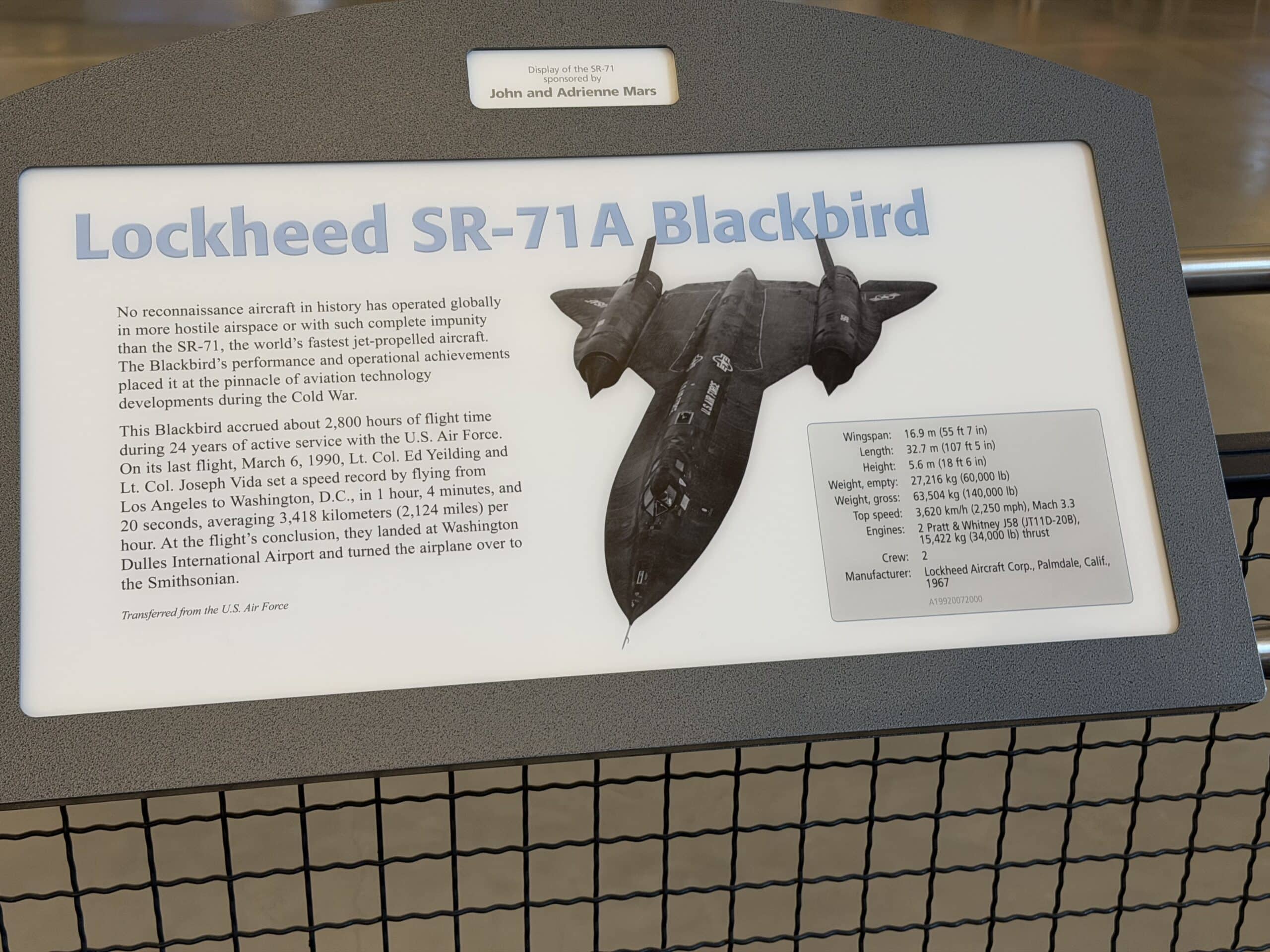
SR-71 Blackbird at the Smithsonian. 19FortyFive original image taken in July 2025.
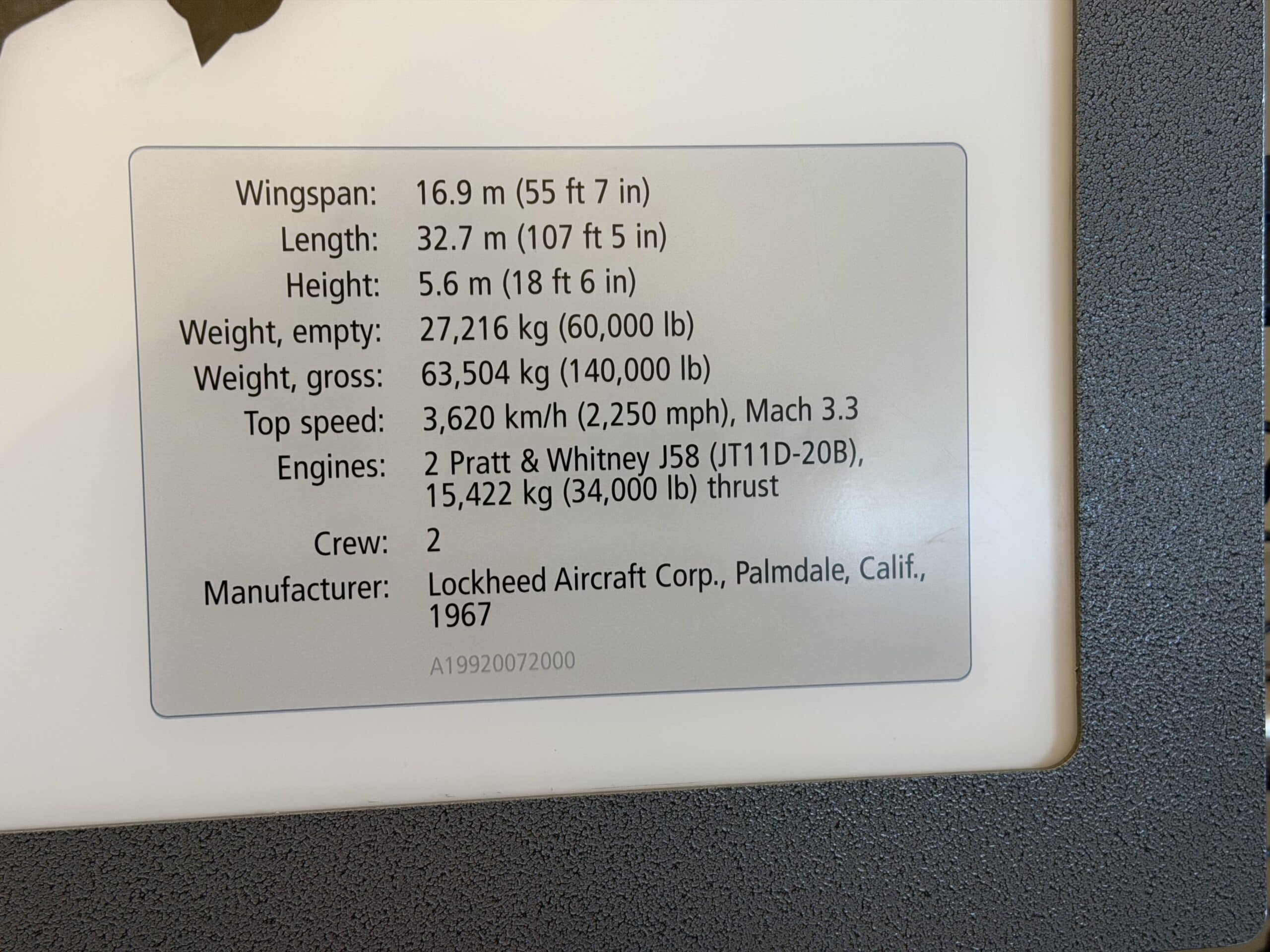
SR-71 Blackbird at the Smithsonian. 19FortyFive original image taken in July 2025.
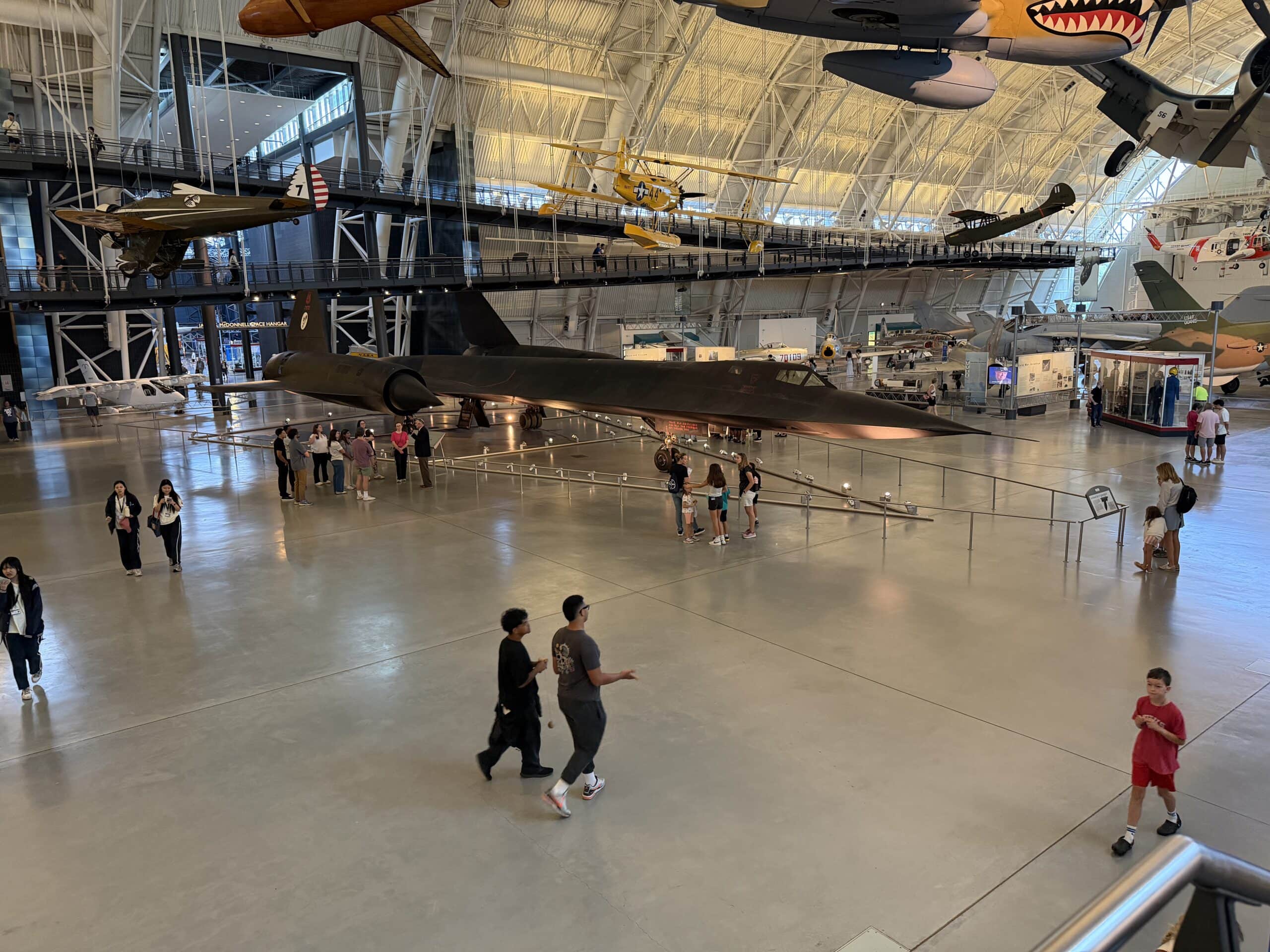
SR-71 Blackbird at the Smithsonian. 19FortyFive original image taken in July 2025.
In Weaver’s case, he had no time to attempt either option.
The flight began at 11:20 a.m. as Weaver and Zwayer took off from Edwards AFB to gather some more flight data from Lockheed Martin.
Initially, the flight proceeded without any issues.
The aircraft refueled from a KC-135 Stratotanker, then accelerated to Mach 3.2 and climbed to 78,000 feet.
Several minutes after reaching cruising speed, however, the Blackbird experienced an engine unstart during a 35-degree bank turn.
Weaver tried to regain control, but the controls no longer responded.
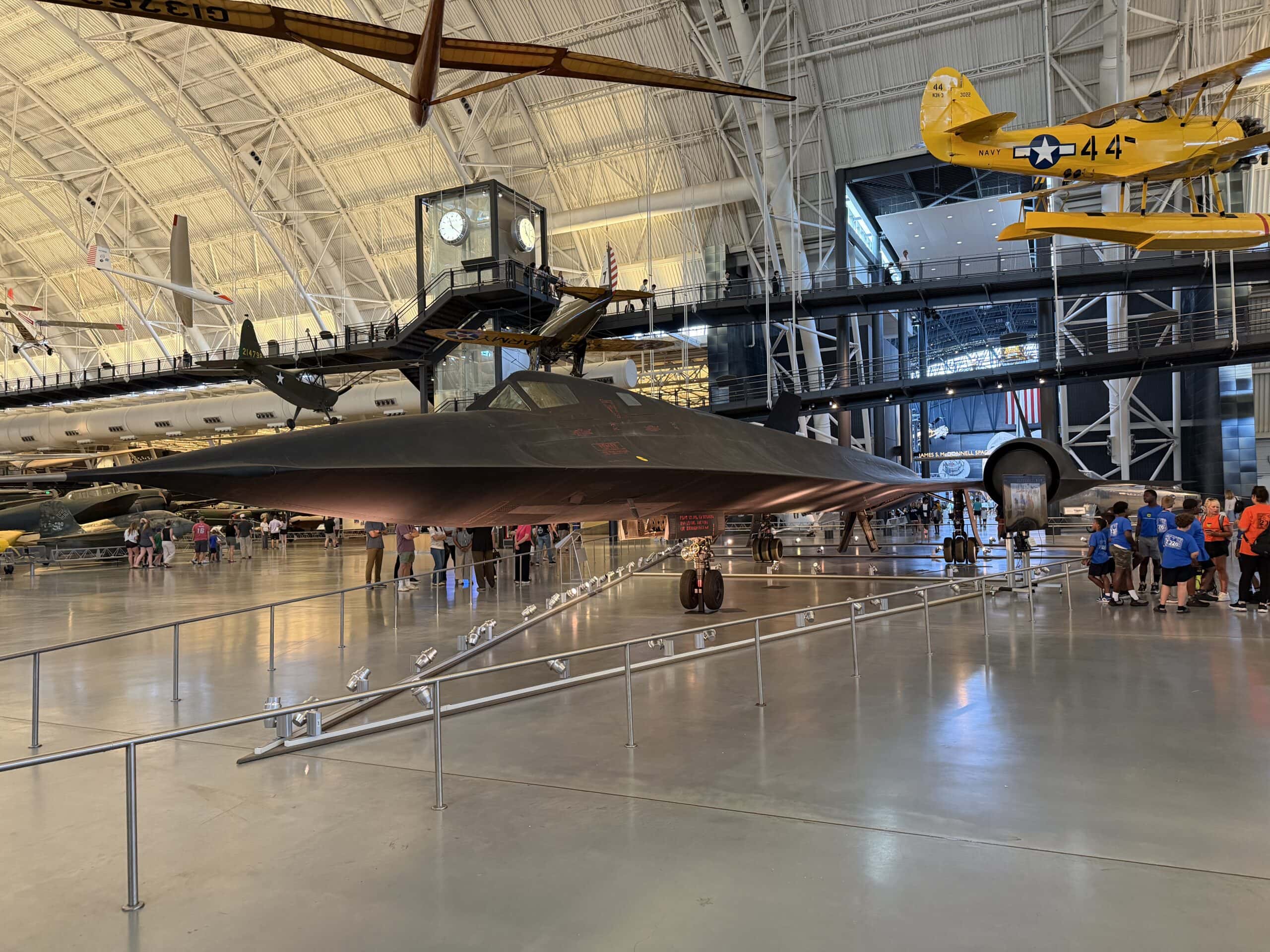
SR-71 Blackbird at the Smithsonian. 19FortyFive original image taken in July 2025.
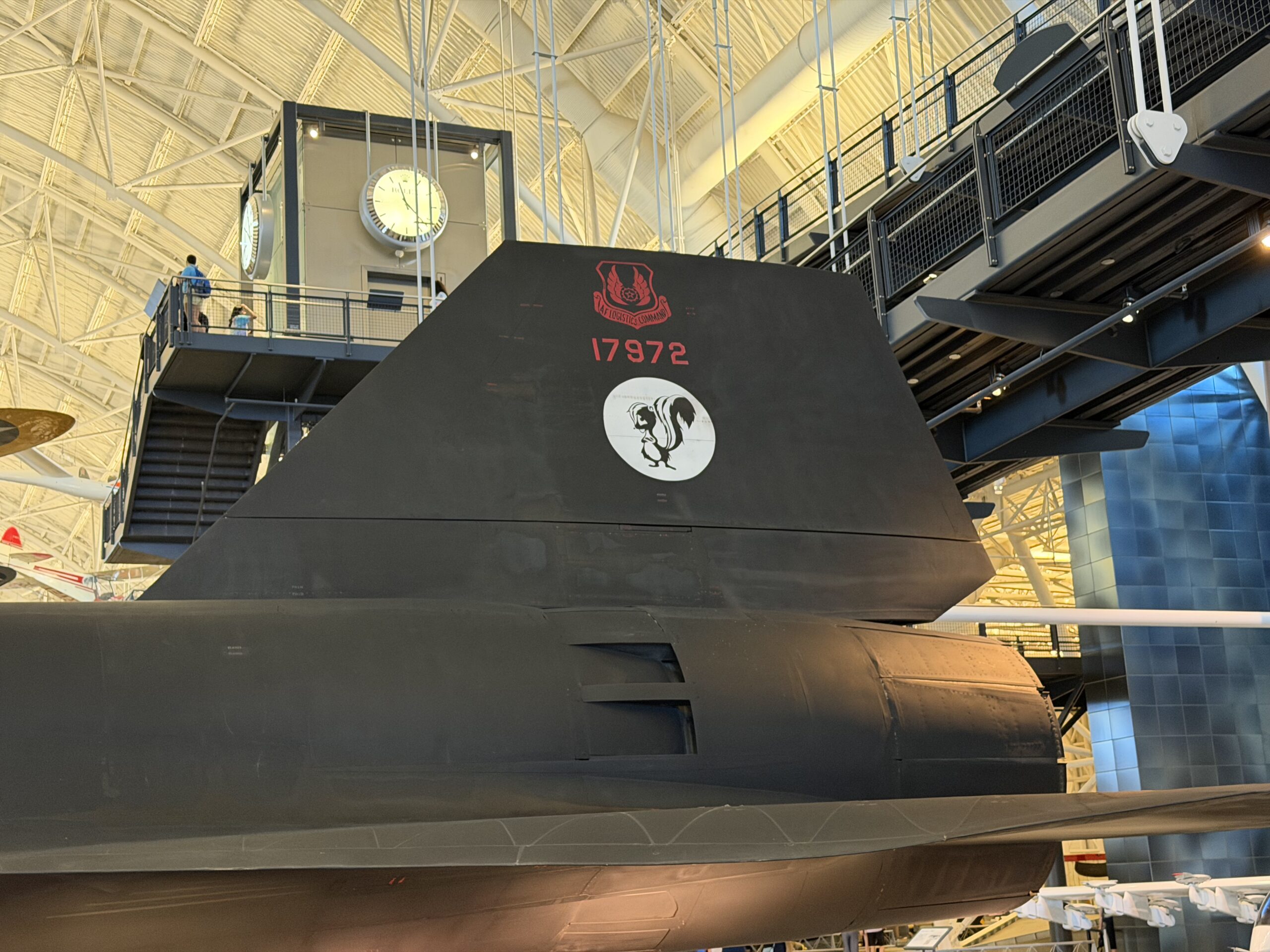
SR-71 Blackbird at the Smithsonian. 19FortyFive original image taken in July 2025.
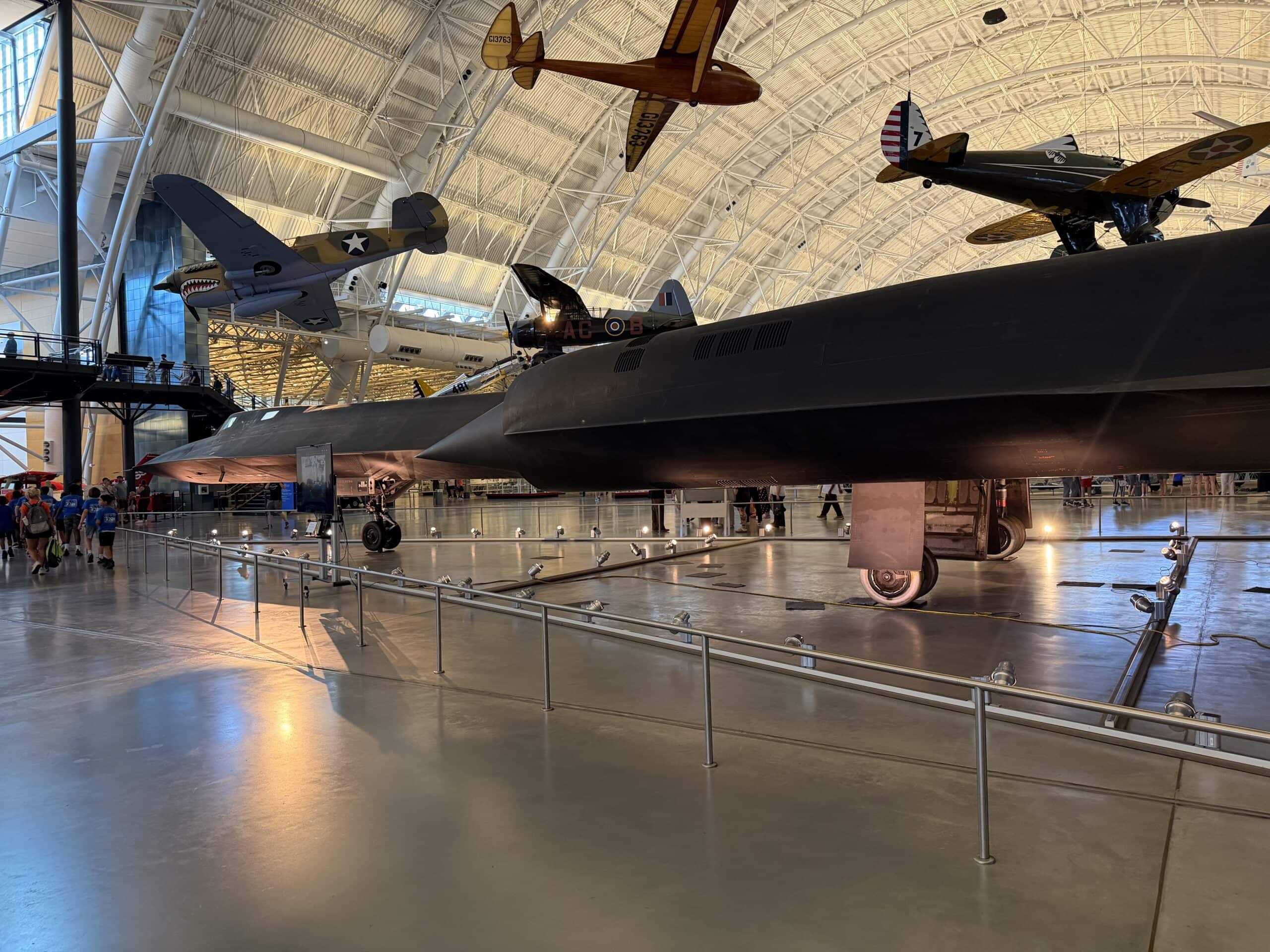
SR-71 Blackbird at the Smithsonian. 19FortyFive original image taken in July 2025.
He tried to communicate with Zwayer, telling him to stay in the aircraft until it reached a lower Mach speed, but because of the high G pressures on both men, their communications were garbled.
Before he could manually eject, the raw forces ripped apart his aircraft, flinging him out at Mach 3 speeds.
Surviving an Ejection from Mach 3
Weaver initially lost consciousness, but slowly regained his senses during the descent.
According to his later recollections, he initially thought he was experiencing a bad dream or even dead, but as his senses returned, the reality of the situation became clear.
His aircraft was gone, and he was in free fall. Fortunately for Weaver, the SR-71 flight suit was exceptionally well designed.
The suit was pressurized, preventing his blood from boiling at the extreme altitude and providing a constant supply of oxygen.
Additionally, the ejection system included a small chute that deployed at high altitudes to stabilize the falling pilot before the larger chute deployed at lower altitudes.
Both chutes were designed to deploy automatically, but because Weaver had lost consciousness and his faceplate had frozen over, he could not determine his altitude or whether the chutes had opened properly.
During the fall, Weaver manually opened up his faceplate and was relieved to find that his chutes had deployed properly and he was descending at a safe rate.
In the vast and clear skies, he spotted another set of parachutes from Zwayer’s suit, which greatly relieved him.
Unfortunately, he could not have known that his friend and RSO was already dead.
Weaver landed in the desert terrain, avoiding any rocks or cacti during his descent. To his surprise, a local cattle rancher, Albert Mitchell, Jr., flew out in his helicopter.
The kind man informed Weaver of Zwayer’s death and flew him to Tucumcari hospital, where he was able to contact Lockheed’s flight test office at Edwards AFB.
The SR-71 and Bill Weaver After the incident
After the incident with Weaver and Zwayer, the SR-71 underwent several improvements.
The aircraft’s aerodynamic profile was refined to prevent trim-drag issues, and advances in computing technology enabled better flight-control systems and automatic engine-restart systems.
With these improvements, the Blackbird became much more reliable. Inlet unstarts became rare, and better flight controls and automatic inlet controls made the aircraft much easier to handle.
Two months after the incident, the SR-71 officially entered service with the USAF, thus beginning its glorious service life.
Bill Weaver, meanwhile, returned to service just two weeks later.
He remained a test pilot for Lockheed Martin, continuing to fly the SR-71 and the Lockheed L-1011 TriStar before retiring as Division Manager of Commercial Flying Operations.
He died peacefully on July 28, 2021, at the age of 93.
Weaver had flown the F-104 Starfighter along with the entire Blackbird family, including the A-12 Oxcart, the YF-12, and the SR-71.
He flew his last flight mission at the age of 85 and participated in numerous flights aboard Orbital Sciences Corporation’s L-1011 to launch the Pegasus rocket-powered satellite launch vehicle.
About the Author: Isaac Seitz
Isaac Seitz, a Defense Columnist, graduated from Patrick Henry College’s Strategic Intelligence and National Security program. He has also studied Russian at Middlebury Language Schools and has worked as an intelligence Analyst in the private sector.