How Much Equipment Should I Carry?
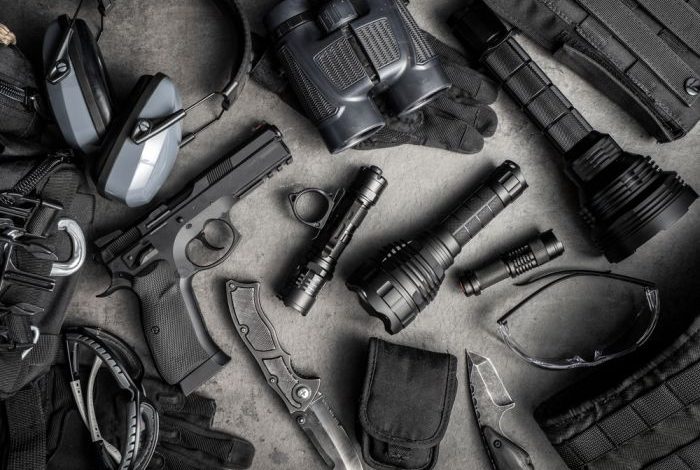
Tolerance for how much gear can be comfortably carried varies, not only from one individual to the next, but by activity. You might feel it necessary to carry more survival gear on a wilderness trek than to collect the mail. Personally, I like to be prepared, and I try to practice what I preach, so I probably carry more EDC gear than most folks, but even guys like me have times that we carry less, like when we take a swim or attend a black-tie wedding.
One side of the argument says that on 9-11, the fact that a guy was carrying a small flashlight for finding computer ports under desks saved dozens of lives. How many times has a torniquet saved the day? All the survival gear in the world is of no benefit to its owner if it is at home in a sock drawer when disaster strikes.
The other side of the argument says, the more you know, the less you need and if you try to carry too much, you will end up leaving it behind when you need it.
The Bare Necessities
I can make everything I need to survive, so I shouldn’t carry anything, right? I don’t recommend that approach because, in a real survival ordeal, you won’t likely have the calories and time to find the resources you need and make everything from scratch.
- Knife – A knife is worth carrying so you will have a good sharp knife when you need it, even in an environment where knives aren’t difficult to scavenge or make. I carry a fixed blade in the wilderness and usually opt for a lock back folder in the city.
- Light Source – One of the first lessons I learned on my first real wilderness survival trip at about 12 years of age was to always bring a light source. I figured I would be able to make a fire and build torches, but, of course, Murphy showed up. The vehicle broke down on the way there, so I was dropped off on Mingus Mountain in Arizona’s Black Hills mountains range after dark, under a canopy of forest, on a cloudy, moonless night. I couldn’t see to gather wood or build a shelter, and it was soon too cold to manipulate a lighter or matches. I had no sleeping bag, only a too tight denim jacket and he best I could do was to scrape up a big pile of pine needles with the sides of my boot soles and burrow into it. It was miserably cold and dark night, and it taught me several hard learned lessons. One of them is to always carry a light source.
- Fire Starter – You don’t want to be reliant on fire by friction when everything’s soaked, the wind is blowing, the sun is going down, and you are probably already in the early stages of hypothermia. You need to be able to get a fire going fast. I don’t smoke, but I carry a lighter and ferro rod and magnesium on my keychain. I always get sideways looks from mom’s at birthday parties when they don’t have anything to light the candles with, they start asking around, and so I hand them a lighter. If you live where it’s cold, you should always have a way to start a fire. That’s just common sense.
With a knife, a fire starter and a light source, I can find the other things that I need and solve most other problems. I almost never carry just these three things, because it’s so easy to carry more, but they are the minimum I would carry.
If I get out of bed to run to the garage at night, I grab my knife and my LED out of my EDC valet. If I’m home sick in my easy chair in shorts, I have a knife and LED clipped to them. I always try to keep a knife and LED on my person, even when minimally dressed.
SERE Necklace
One way to make sure you don’t get caught without a few necessities is to wear a SERE necklace.
I often wear one that has a ferro rod and magnesium toggle, a ceramic beach, used to scrape it, a small LED, is made of Technora, which can be used as a friction saw, and includes a cut-down handcuff key and a handcuff shim with a small saw on the side. I have featured versions of it in articles and videos over the years, but the latest incarnation features a section of shock cord to make it more comfortable to wear while sleeping.
The SERE necklace is a way to ensure that you’ll have the little bit of gear on you that you need to see, start a fire or escape, even if you are sleeping in your boxers and a T-shirt.
Integrate Equipment into Your EDC
Another way to ensure that survival gear doesn’t get left behind is to add it to integrate it into things that you usually carry. This can add capability while only adding minimal bulk and weight.
- Clothing – Clothing is your first line of shelter, so choose it carefully, always factoring in its survival value. Dress in light loose-fitting layers that incorporate natural fibers like merino wool blend socks or a packable hooded down jacket. Dress for the coldest nighttime temperature and remove layers as needed.
- Wallet Insert – I took the little vinyl pocket that Frensel lenses come in and stuck some retro-reflected tape to the outside, the Fresnel lens, emergency cash, and a thin, metal mirror inside. It’s about the thickness of a credit card or two and it gives me:
- Night and day signal capability.
- The ability to assess and treat parts of my body that I can’t see without a mirror.
- The ability to see around hard cover or concealment without exposing myself.
- A magnifying lens to start a fire, treat splinters and eye particles or, at my age, just to read fine print!
- Money for food, transportation, communication, car repairs, first aid supplies, lodging, etc. in an urban environment or once I affect self-recovery.
- Keychain – Your keychain is another place to stash a few essentials. I use Nite Ize locking S-biners to secure my keys and a few pieces of survival equipment to my keychain. Just don’t use the kind that don’t lock with anything you don’t want to lose. They give me the ability to quickly add or remove equipment from my keychain. I carry:
- Ferro Rod – In an aluminum tube with an integrated striker to protect it from rust in salt air and damage by keys and tools.
- Magnesium Rod – Tinder.
- Small LED
- Whistle – I carry a buffalo horn whistle, but the Fox 40 Micro is a good plastic, pea-less keychain whistle.
- Resqueme Auto Escape Tool – To break tempered auto glass and cut seatbelts to escape a vehicle in an emergency.
- ASP Key Defender – Knurled aluminum OC spray that takes replaceable test and heat cartridges and is also a yawara stick.
- Boot or Shoelaces – Many survivalists make boot laces of 550 cord. They can also be made of Technora, sheathed Kevlar, and composite cordage of your own specifications. This is a great way to carry extra cordage without adding noticeable bulk or weight.
- Belt – SERE belts feature a pocket for carrying a few survival essentials. When Ötzi the Iceman died 5,300 years ago in the Ötztal Alps, he was wearing the neolithic equivalent of one. In it, he carried cutting and boring tools and a fire kit of flint, iron pyrite, and charred tinder fungus. What I carry in mine varies, but I usually carry:
- SOG Centi II Locking Knife
- Button Compass
- Cordage
- Cash
- Custom Pouch of Entry/Escape Tools – Very small.
- Watch – If you have the money, high end tactical watches have a number of useful features, including GPS. If you don’t, you can always add a compass to your watchband.
If you integrate a little survival equipment into the things you carry anyway, you can add capability without packing your pockets.
Cache’s EDC
What I carry varies a little from day to day, but the following is pretty typical:
- Customized Glock 19 – Yes, I am a longtime fan of the tactical Tupperware and carry a G19 and count tritium sights, an extended slide release and an extended mag release amongst the most important modifications. I carry in in a custom Kydex holster that I had made back in the 90’s. There are more comfortable holsters now, but I use what I have.
- Wuben T2 Compact Tactical LED – Hailing from the contractor and training community, I have always carried Surefire LEDs, but this year I finally decided to try something else. I still like Surefires but the Wuben T2 is small, bright, rechargeable, has a replaceable battery, has lockout, duty and tactical modes, and is a fraction of the cost. The pocket clip isn’t as secure and there are a couple of other things to get used to but ask me if I still like it in a couple of years.
- Spare Magazine – The mag in the G19, the round in the chamber, plus the spare gives me 31 rounds, which will hopefully be enough to end the threat or shoot my way back to my Go Bag, my vehicle or my safe, and more ammo or bigger guns.
- Knife – This is constantly changing, but lately I often carry a Fallkniven R2 Scout or a Spyderco Endura.
- Swiss Army Knife or Multitool – This also changes but is most often a 1980’s vintage Victorinox similar to the Explorer, or a Leatherman Squirt PS4. Neither takes up much room and I use it every day.
- Keys – I carry the tools I suggested above plus an encrypted pen drive.
- HuMn Wallet – I carry the wallet insert I suggested above with a couple of additional items.
- Phone – I carry a smartphone but
- XL Cotton Bandana or Cotton Cravat – A triangular or square piece of cotton cloth of sufficient size has endless uses. Virtually every culture carried a version of this tool.
- Witch Hazel, 6ml Eye Dropper Bottle – I have a rowdy 4-year-old boy, so I patch up a lot of minor skin abrasions and insect bites.
- Flat Escape Tool – This is a custom flat handcuff key with a thin handcuff shim/saw and a customized dual pawl handcuff shim fixed to it with small brass eyelet. With it, I can usually get out of most handcuffs, zip cuffs, and other things. I carry it where it won’t likely be found but I can get at it if I am illegally restrained. This tool is small enough that you won’t notice that you are carrying it.
Summary
Build realistic EDC setups that are legal, comfortable, and work friendly, so you stop leaving your gear home in a drawer and start carrying it daily.