The US Navy Planned 32 Zumwalt-Class Destroyers and Built 3. Each One Cost About $10,600,000,000 With Development Included — More Than 7 Times the Original Estimate — and the 2 155mm Guns on Every Ship Were Never Fired Because Each Shell Reached $800,000.

Summary and Key Points: The US Navy set out to build 32 Zumwalt-class destroyers and finished three. A Government Accountability Office assessment puts the cost at roughly $10,600,000,000 per ship once development is counted, more than seven times the original unit-cost estimate, and the reason is partly that the buy collapsed and partly that the Navy tried to mature twelve new technologies while simultaneously designing and building the ships that would carry them. Some of those technologies never worked. The most expensive failure was the ammunition. Each ship carried two 155mm Advanced Gun Systems designed to fire the Long Range Land Attack Projectile, and by 2016 the projected cost of a single round had reached as much as $800,000, with some estimates approaching $1 million. The Navy canceled the ammunition. That left three of the most expensive warships ever built carrying six enormous guns with nothing to load into them.
The Zumwalt-Class Problem
The U.S. Navy is considering another major overhaul of the Zumwalt-class destroyers, with plans to replace the warships’ existing AN/SPY-3 radar systems with newer, upgraded AN/SPY-6 radar systems, potentially starting in 2028.
Raytheon and the Navy are now examining whether three Zumwalt-class destroyers can be equipped with the AN/SPY-6(V) 3 radar system — a version of the radar that is already being introduced across other parts of the surface fleet.
The proposed plans are part of a broader Zumwalt upgrade program, the Zumwalt Enterprise Upgrade Solution (ZEUS), intended to modernize and enhance the ships’ capabilities.
The news comes as USS Zumwalt, the lead ship of the class, is preparing to return to service after its own major overhaul that saw its two 155mm Advanced Gun Systems removed and replaced with launchers designed to accommodate Conventional Prompt Strike hypersonic missiles.
However, the weapons themselves are not yet operational on the ship.
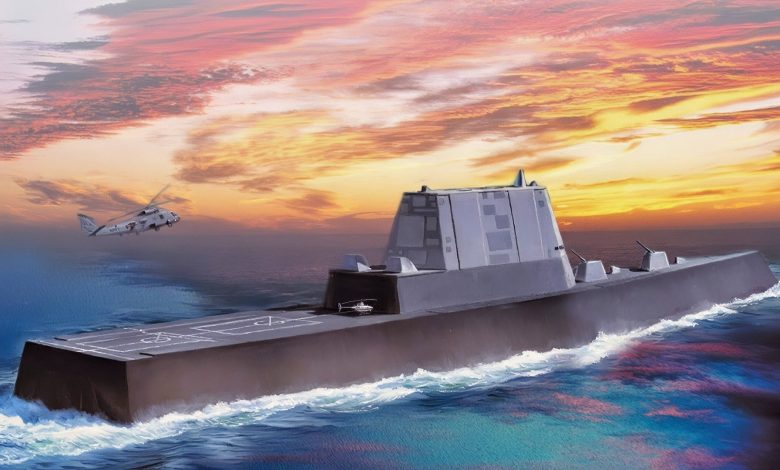
Zumwalt-Class U.S. Navy Destroyer. Image Credit: Creative Commons.
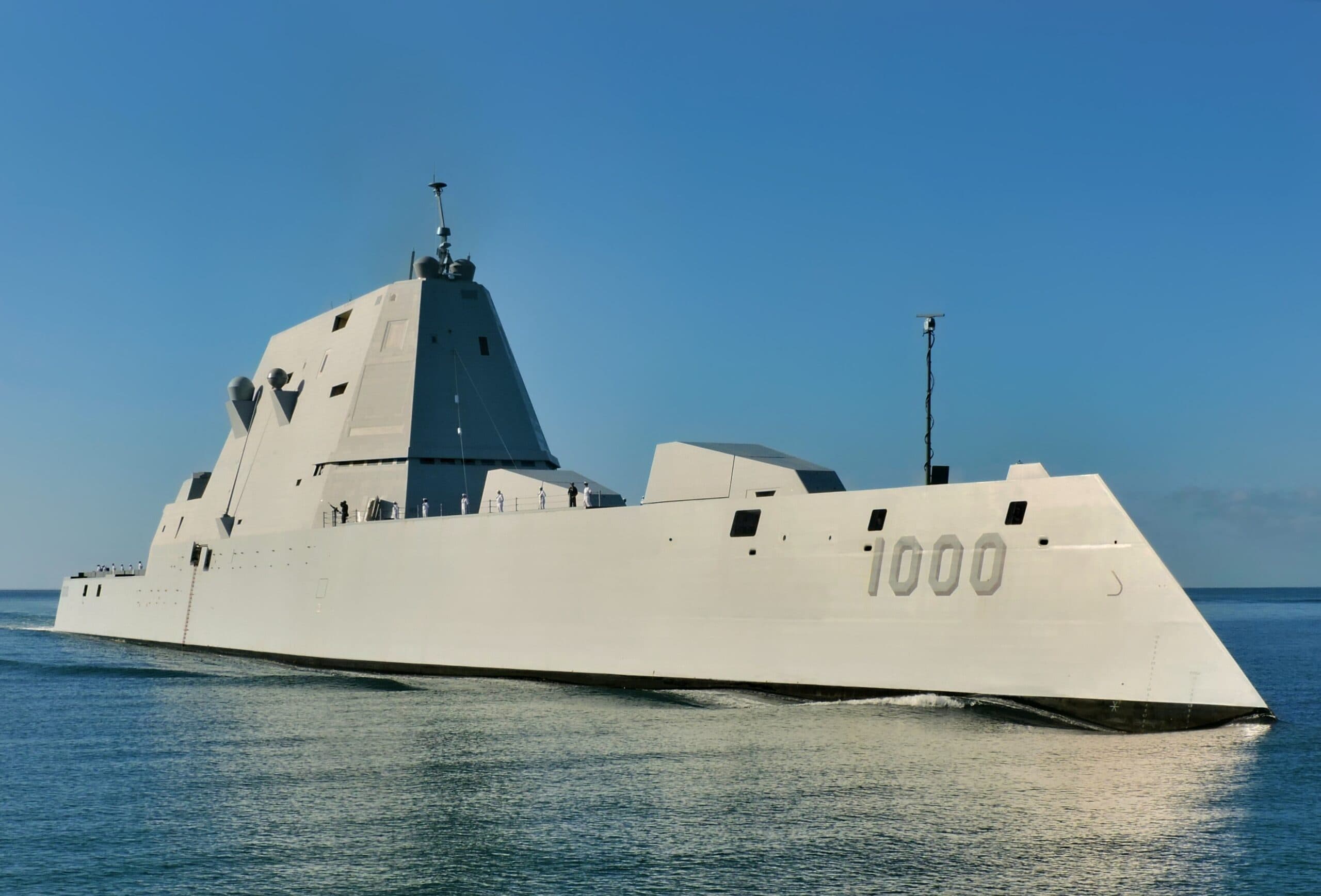
Zumwalt-Class Destroyer U.S. Navy. Image Credit: Creative Commons.
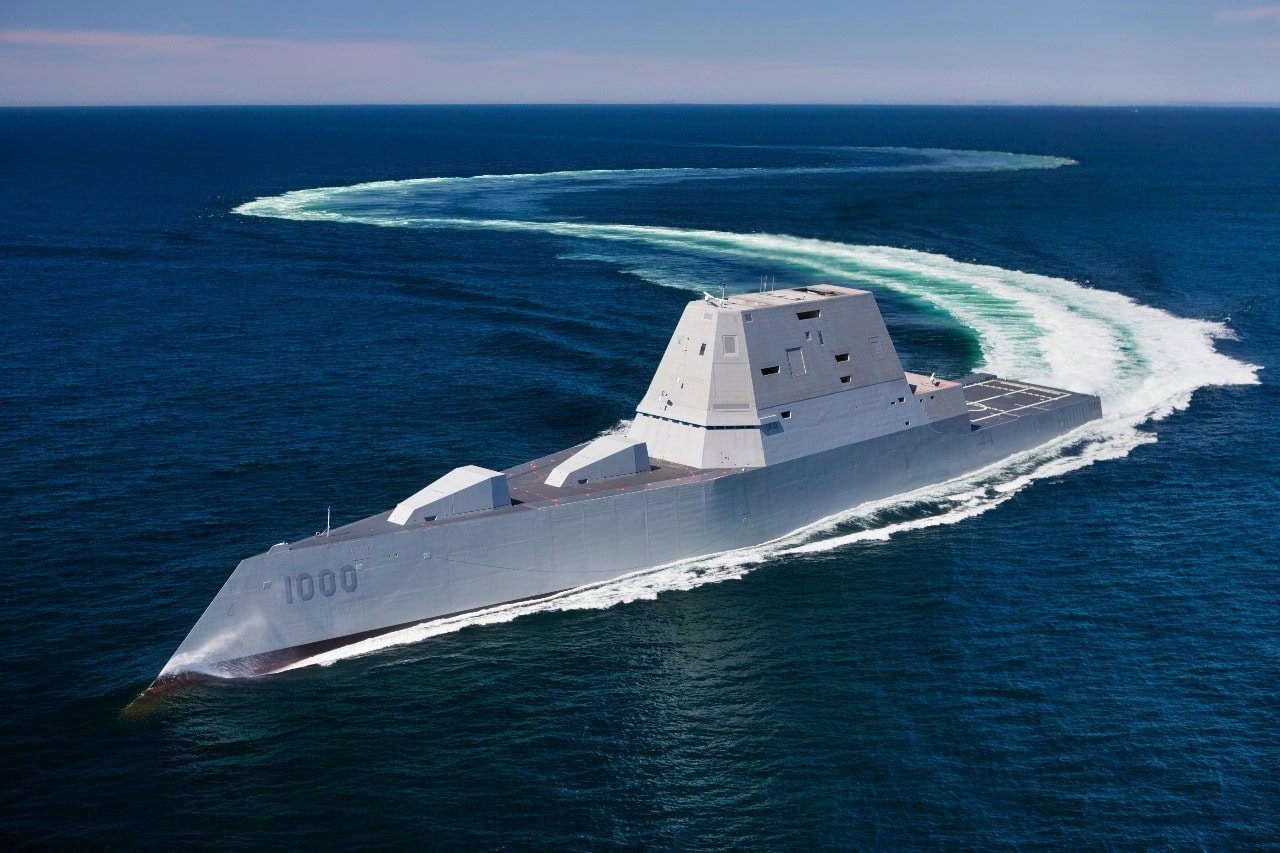
Zumwalt-Class Destroyer U.S. Navy.
The changes being made show just how dramatically the Zumwalt program has changed since the Navy first began developing the destroyer more than 20 years ago.
The class was originally conceived as a fleet of 32 stealth warships built primarily to attack targets ashore — but only three were ever built, and their primary guns were rendered useless when their ammunition became prohibitively expensive.
And the Navy has spent years trying to find new missions for the ship.
The Guns With No Ammunition
The Zumwalt’s problems began when its ammunition became prohibitively expensive.
The ships were intended to operate relatively close to enemy coastlines and provide long-range fire support using two Advanced Gun Systems capable of firing Long Range Land Attack Projectiles.
But as the Navy reduced the planned Zumwalt fleet from 32 ships to only three, the economics of producing ammunition designed specifically for this one tiny fleet no longer worked.
By 2016, the projected price of each of those projectiles climbed to as much as $800,000, with some estimates approaching $1 million per round.
The Navy still saw potential in the ships, but could not justify such an enormous expense and eventually abandoned plans to purchase the ammunition altogether.
That meant the three existing Zumwalt-class destroyers had two enormous guns on each of them that could not actually be used.
Then, the problems worsened when the Navy’s priorities changed. The ships arrived as the Navy shifted from operating close to hostile coastlines and toward fighting from greater distances. In 2017, the service was forced to change the Zumwalt’s primary mission from land attack to offensive surface strike.
How Much Did the Zumwalt Cost?
An assessment published by the Government Accountability Office in 2026 estimated that the three Zumwalt ships cost approximately $10.6 billion each, including development costs.
That’s more than seven times the original unit-cost estimate.
Part of the reason for that cost is that the fleet was significantly reduced, but also the number of new technologies developed simultaneously.
According to the GAO, the Navy attempted to incorporate 12 new technologies into the Zumwalt while also designing and constructing the ships.
Some of those technologies ultimately failed to meet their intended cost or performance targets, but the ship was, nonetheless, still being designed to incorporate them.
The result was an expensive class with systems that would, in theory, have been found nowhere else — but some of those systems were never realized, and the program was plagued with problems from the start.
Hypersonic Missiles and a New Mission
The Navy eventually found a new role for the Zumwalt: carrying some of the most advanced American long-range weapons.
Thanks to its large hull, the Zumwalt was perfect for the role.
It has substantial internal space and integrated electric power systems that made the ships good candidates for the Conventional Prompt Strike hypersonic weapon.
The Navy is now installing four launch tubes aboard each destroyer, each designed to accommodate three missiles.
Those plans would give each Zumwalt the capacity to carry 12 CPS weapons capable of traveling at hypersonic speeds and striking targets from great distances.
But the conversion is taking time, and there are delays. The GAO reported in July that modernization of the ships is running 24 months behind the Navy’s original schedule. Shipboard flight testing was originally expected in 2025, but it is now planned for 2027.
What Now?
USS Zumwalt is expected to return to service this year — but its transformation isn’t over. The first at-sea test of the Conventional Prompt Strike weapon is planned for 2027, followed potentially by a new radar beginning in 2028.
After billions of dollars of work and decades of development, the Navy is still in the process of rebuilding the Zumwalt around an entirely new mission — and hoping it will still be relevant by the time it is done.
About the Author: Jack Buckby
Jack Buckby is a British researcher and analyst specializing in defense and national security, based in New York. His work focuses on military capability, procurement, and strategic competition, and he produces and edits analysis for policy and defense audiences. He brings extensive editorial experience, with a career output spanning over 1,000 articles at 19FortyFive, and has previously authored books and papers on extremism and deradicalization.