MILAN – French troops part of the United Nations Interim Force countered a hostile drone in southern Lebanon by deploying French-made jamming rifles that repelled the craft back toward Israel.
Earlier this month, footage circulated on social media showing a group of UNIFIL forces stationed in the southern part of Lebanon pointing a jammer at the sky in an apparent operation against a drone.
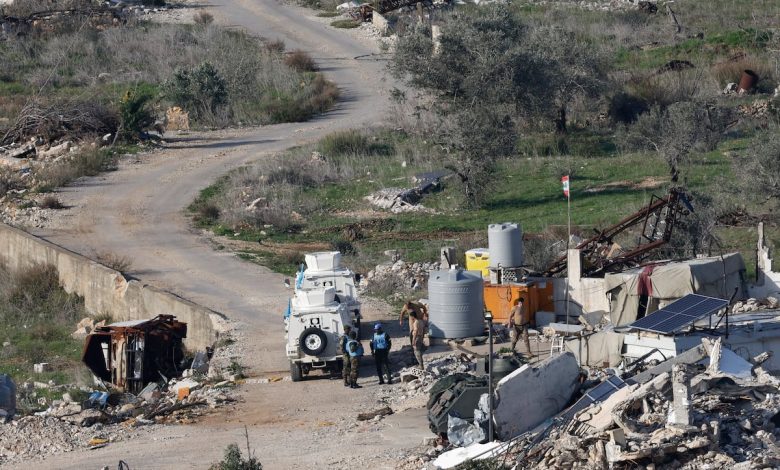
The French military command confirmed to Defense News that the personnel shown in the video, filmed by a local resident on Jan. 5, 2026, are French UNIFIL peacekeepers. They were on foot patrol at the time, when a drone began illegally flying over them in the municipality of Meiss Ej Jabal, after which they moved closer to their light armored vehicle.
“In accordance with the rules of engagement and with a constant concern for proportionality and protection of civilians, the patrol carried out a jamming operation, aimed solely at stopping the drone from flying overhead, without causing it to crash, in order to avoid any risk of material damage or bodily harm,” Lt. Laura, a spokeswoman for the French Armed Forces General Staff, said in an emailed response to questions.
RELATED
According to UNIFIL spokesperson Kandice Ardiel, the peacekeepers were “aggressively” approached by the drone that flew as close as 30 meters above them. This prompted them to employ defensive measures that ultimately forced the drone to turn back.
The jammer used by the UN peacekeepers seen in the video is the Nerod F5 manufactured by the France-based M2 Technology, according to a company representative.
The device is designed to counter commercial drones by carrying out non-destructive jamming, which means that it does not physically damage or destroy them, rather interfering with their radio signals. The interference occurs once an operator has positioned the target in his sights and pulled the trigger, transmitting jamming signals on up to five different frequency bands.
The French military command declined to comment on whether the drone was deployed by Israel, and UNIFIL was not able to confirm its provenance.
The Long War Journal, a project from the Washington-based Foundation for Defense of Democracies research institute, tracked Israeli operations in Lebanon against Hezbollah from Jan. 5-11. During that period, it recorded that the Israeli Defense Forces conducted missions across 37 Lebanese localities, which included eight quadcopter activities and nine drone strikes.
On Jan. 5 the Lebanon National News Agency, or NNA, reported that an Israeli drone had targeted a vehicle, though in a different district than the one the French peacekeepers were located in. The following day, the NNA stated that an Israeli quadcopter had dropped an explosive in Meiss Ej Jabal.
The Israeli Ministry of Defense said it had no comment on the incident.
In a Facebook post, the Israel-based Alma Research and Education Centre shared the Jan. 5 video, writing that “UNIFIL is trying to disrupt the IDF’s efforts to disarm Hezbollah.”
Rules of engagement
In the Jan. 5 incident, UNIFIL said its peacekeepers acted “in self-defense” to ensure that no bystanders were harmed, as it took place in a crowded civilian area.
The UN-mandated force and its contingents have been provided with various kinds of equipment that allows them to jam drones, following several cases of drones, at times armed, operating above their locations and patrols.
According to the spokeswoman, peacekeepers posted in southern Lebanon and along the Blue Line – a 120-kilometer UN-demarcated line that follows the country’s southern border with Israel – have observed daily drone intrusions.
“In all actions, peacekeepers are guided by the established rules of engagement – they use necessary countermeasures only when the field commander determines that the drone poses a [direct] danger to the ones operating in the area and such actions are taken strictly in self-defense,” Ardiel told Defense News.
Beyond Israeli drone overflights, personnel stationed in areas close to the Blue Line are themselves observing frequent jamming of their equipment, which Lebanese officials and analysts say comes from Israel.
“Israeli jamming is carried out without any respect for Lebanese sovereignty or international laws. … It disrupts military communications, weakens navigation and data exchange, and complicates field coordination and routine tasks,” retired Brig. Gen. Mounir Shehade, a former Lebanese Armed Forces officer and government designated coordinator for UNIFIL, said.
Shehade said that while the Lebanese Army does have some counter-drone capabilities, they are not comparable with its southern neighbour’s “technical superiority used without international accountability.”
A UNIFIL statement published on Jan. 16 stated that an Israeli drone hovered and dropped a grenade approximately 30 meters away from peacekeepers that were conducting a planned patrol near Adeisse. The peacekeeping body said that it sent a stop-fire request to the IDF, adding that such activities on Lebanese territory are a violation of the Security Council’s 1701 resolution.
The 19-paragraph long resolution was adopted unanimously in 2006 with the purpose of ending hostilities between Hezbollah and Israel, with the Council calling for a permanent ceasefire based on the creation of a buffer zone. It urged the immediate stop of all Hezbollah attacks and Israeli offensive operations.
When Israeli or Lebanese authorities want to carry out any activities in proximity to the Blue Line, UNIFIL calls on them to provide an advance notice to allow the peacekeepers and all parties informed to avoid misinterpretations that could escalate tensions.
Rudy Ruitenberg in Paris contributed to this report. Stracquadanio reported from Beirut.
Elisabeth Gosselin-Malo is a Europe correspondent for Defense News. She covers a wide range of topics related to military procurement and international security, and specializes in reporting on the aviation sector. She is based in Milan, Italy.
Agnese Stracquadanio is a Middle East correspondent for Defense News. She has a background in writing and photojournalism, holds a master’s degree in international relations, and previously worked for Reuters.