There are certain days that divide life into before and after. September 11, 2001 was one of them.
I remember how quickly an ordinary Tuesday became something nobody understood. People went to work, dropped children off at school, boarded airplanes, made coffee, and started another normal day. Then normal disappeared. Within hours, air travel stopped, buildings were evacuated, and phone networks struggled under enormous demand. Families tried to find each other. Streets filled with people trying to get home on foot. First responders faced a disaster larger and more complicated than almost anyone had planned for.
The country changed afterward. Airport security changed, emergency planning changed, and intelligence sharing changed. The Department of Homeland Security was created, and the Transportation Security Administration became part of everyday American travel.
But some of the most important lessons from that day belong much closer to home. Twenty-five years later, these are the ones I still think about.
1. Normal Can End In Minutes
Preparedness becomes far easier to understand once you accept how quickly circumstances can change. At 8:45 that morning, millions of Americans were following completely ordinary routines. A short time later, people were evacuating skyscrapers, trying to reach relatives, searching for information, and wondering whether more was coming.
That lesson reaches well beyond terrorism. A tornado, a chemical spill, a wildfire, a cyberattack, a bridge collapse, a major blackout, or a violent incident near your workplace can all arrive with very little warning. So I try to keep enough basic readiness around me that I do not need normal life to hand me several days of notice first.
2. Know How To Leave A Building
This sounds almost embarrassingly simple right up until you are standing inside a large building filled with smoke, confusion, alarms, and frightened people. Where are the stairs? Where is the second exit? Does that door actually open? Where do you go once you are outside?
I look for the exits when I walk into hotels, offices, stadiums, shopping centers, and any building I do not know. I do not obsess over it or turn it into a performance. I simply notice, and then I go on with my day. The 9/11 Commission later described evacuation planning as a central part of civilian preparedness, and it is a lesson any family can apply without spending a dollar.
3. Do Not Depend On Your Phone For Everything
One of the clearest lessons from September 11 was how fast communications could become overloaded and unreliable, and our dependence has only grown since then. My phone holds contacts, maps, banking information, tickets, photographs of documents, news, weather alerts, and nearly every communication tool I use. That convenience is also a single point of failure.
So I keep important phone numbers written down on paper. I want my family to know where we meet if we cannot reach each other. I keep some addresses and basic directions offline, and I keep a battery bank available. A family emergency plan should still work when the screen says “No Service.”
4. Decide Where Your Family Meets
If something major happens while everyone is scattered, the first question is always the same. Where is everybody? One person is at work, another is at school, and somebody may be shopping thirty miles away. Phone calls may fail, roads may close, and public transportation may stop running.
That is why I like having at least two meeting plans. One place close to home, and another location outside the immediate neighborhood in case getting home turns out to be impossible. Every family member old enough to understand it should know both. A plan made while everyone is calm prevents an enormous amount of confusion later.
5. Keep A Small Kit Where You Actually Spend Time
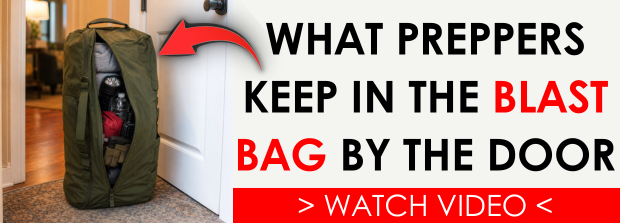
A beautifully organized emergency room in the basement does me very little good if I am twenty miles away when trouble starts. That is why I prefer small layers of supplies spread across the places I actually am: a few things in the vehicle, a few at work, and a basic bag near the door at home.
What goes in them stays simple. Water, comfortable shoes, a flashlight, a battery bank, basic first aid, any necessary medication, a little cash, paper contacts, and a small radio where that makes sense. None of this is meant to sustain anybody for a week. I am preparing to get through the first several hours and make my way somewhere safer. The big stockpile can wait for me at home.
6. Good Shoes Are Emergency Equipment
This may be the least glamorous preparedness lesson I can give anyone. Keep shoes you can walk in.
After the attacks, thousands of people left lower Manhattan on foot, and long-distance walking suddenly became transportation. The same thing can happen in many emergencies. Subways stop. Buses stop. Bridges close to vehicles. Traffic locks up and stops moving entirely. An office worker in uncomfortable dress shoes can suddenly have several miles in front of him. I would rather keep an old pair of walking shoes under my desk than own another expensive gadget I never learned to use.
7. Pay Attention Before Everybody Else Does
Prevention begins with awareness. Most suspicious things turn out to be completely harmless, and that is fine. It does not mean I switch my brain off.
An unattended bag. A door that should be secured standing open. Someone behaving strangely around a restricted area. Smoke where there should not be smoke, a strong chemical smell, an alarm that people are walking past, or anything that simply does not fit the environment. I do not investigate dangerous situations myself. I move away from them and notify the people whose job it is to respond. Situational awareness earns its place in preparedness because prevention so often starts with one person noticing something early.
8. Never Assume Professional Help Will Arrive Immediately
September 11 showed the extraordinary courage of first responders, and it also showed the limits that even extraordinary responders run into during a massive disaster. Police, firefighters, paramedics, hospitals, and emergency managers all work with a finite number of people and a finite amount of equipment, and a large enough crisis can overwhelm any of them.
That means ordinary citizens may have to handle the first few minutes on their own. Basic first aid matters. CPR matters. Knowing how to control serious bleeding matters, along with knowing how to evacuate calmly and how to shut off utilities when the situation calls for it. Preparedness is what fills the gap between the moment something goes wrong and the moment help actually reaches you.
9. Information Can Be Wrong During The First Hours
During a fast-moving crisis, information arrives incomplete. Rumors spread quickly, people misunderstand what they saw, and news organizations end up correcting earlier reports. Social media has made all of that considerably worse.
I try not to make major decisions based on one dramatic post or one frightened person’s account. I look for official emergency instructions, and I compare information across several reliable sources when there is time to do it. I also try to separate information I need from information I merely want. Once I know what actually affects my family, staring at a screen for another six hours rarely accomplishes anything except raising everyone’s blood pressure.
10. Security And Freedom Both Require Attention
The years following September 11 brought enormous changes to American security. The TSA was formally established in November 2001, and the Department of Homeland Security later brought 22 federal agencies and offices together under a single department.
Those changes are a reminder that every major crisis produces a response. Some of what follows genuinely improves security. Some of it creates new inconvenience without much benefit. And some of it raises legitimate questions about privacy, authority, cost, and how much power a government should keep once the immediate emergency has passed. The 9/11 Commission itself recognized that expanded security powers ought to come with oversight attached. For a prepper, the lesson is straightforward enough: pay attention during the emergency, and keep paying attention afterward.
11. Community Is Still Part Of The Survival Plan
One of the things I remember most clearly about the aftermath of September 11 is how many ordinary people helped each other. Coworkers guided one another down the stairs. Strangers shared phones, rides, food, information, and places to sleep. First responders kept moving toward the danger while everyone else was trying to get away from it.
Preparedness can drift into being almost entirely about the individual. My food, my generator, my security, my family. All of those things matter, and I am not going to pretend otherwise. But disasters happen to communities, not to individuals in isolation. Knowing your neighbors, helping an elderly person evacuate, checking on somebody who lives alone, passing along reliable information, and knowing who nearby has medical or mechanical skills makes everyone on that street more likely to come through it.
The Lesson I Do Not Want To Forget
Twenty-five years later, there are people old enough to have children of their own who have no memory of life before September 11. The security systems built afterward are simply ordinary to them. The history should not be.
For me, remembrance also means learning something and keeping it. Have a way out of the building. Have a way home. Know how to reach your family when the phones fail. Keep basic supplies where you actually spend your time. Learn the skills that matter during the first few minutes. Pay attention to what is happening around you, and never get so comfortable with normal life that you forget how fast it can end.
We prepare because terrible days sometimes arrive without asking whether we are ready.
We remember because thousands of Americans learned that lesson for us on September 11, 2001.