Plans by the U.S. Marine Corps in recent years to reorganize itself for small-unit expeditionary warfare have drawn fire from traditionalists who worry the service’s capabilities will be gutted in the process.
For some Chinese naval officers, however, the prospect of facing missile-equipped Marine Stand-In Forces, or SIF, on Pacific islands is concerning.
“The USMC’s continuous refinement of the SIF concept and optimization of deployment and operational employment will erode our land-enabled advantages in sea denial, make it more difficult for us to breach island chain blockades, induce rapid depletion of our combat resources, and complicate our operating environment,” according to a recent U.S. Navy translation of a 2023 Chinese military journal article.
“This escalates the real-world threats facing us and we must maintain strategic resolve and respond proactively and effectively,” wrote Senior Captains Yue Zhiqiang, Wang Li and Li Jinqia in the journal Military Art, which was translated by the China Maritime Studies Institute at the U.S. Naval War College.
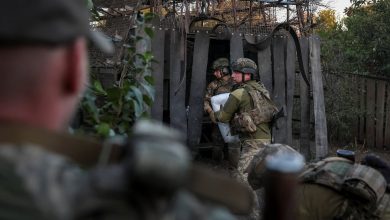
Stand-In Forces were the centerpiece of the Marine Corps’ much-debated Force Design 2030 plan, which was first released in 2020. A far cry from the large, mechanized Marine operations of World War II, Korea and Vietnam, Force Design 2030 envisions a light infantry force with small, stealthy teams of Marines operating from Pacific islands.
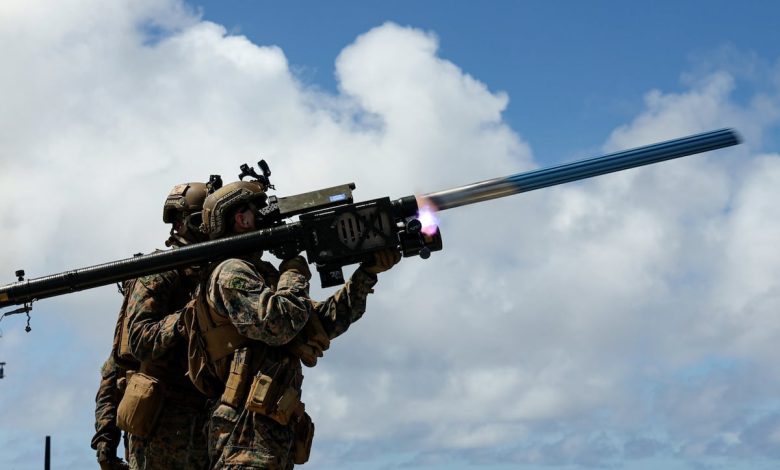
Equipped with sensors and missiles, these personnel would interdict Chinese naval movements while providing surveillance and targeting data for U.S. naval and air operations.
American critics have denounced the plan as leaving Marine detachments unsupplied, unsupported and vulnerable to an overwhelming force. But Chinese experts see SIF units as “key assets for deterrence and containment along China’s frontiers,” which maintain “a persistent forward presence in China’s near seas.”
In particular, the Chinese report expressed concern that Marine littoral forces will unleash missiles as well as unmanned underwater vehicles.
“During crises and armed conflict, SIFs can deploy large UUVs or have submarines launch small UUVs to loiter near our shipping lanes,” they said. “They can covertly ambush or conduct suicide attacks against our undersea forces and large vessels.”
The article suggests the People’s Liberation Army Navy should target Marine SIF units with intensity in the event of a regional fight.
“To effectively counter the USMC SIF, we should adopt a proactive offensive posture, aggressively expand our operational reach, project forces forward, and apply countermeasures at the source,” they argue.
This, the report states, would mean forward-deploying Chinese forces, including extending “undersea combat capabilities as far forward as feasible.” China should also develop “undersea prepositioned weapons systems,” the authors argue.
The report adds that China should expand surveillance by radar, satellites, underwater sensors and patrol aircraft, while better integrating military, paramilitary and civilian ships to mitigate “fragmented, redundant, and inefficient coastal surveillance efforts.”
A massive fleet of Chinese commercial vessels could also pose a threat to Marine forces, the paper notes.
“We can conduct maritime deception to overwhelm U.S. SIFs with massive information overload to paralyze and neutralize their capabilities, effectively supplementing our own reconnaissance and surveillance assets,” the article states.
To counter the use of unmanned U.S. platforms, the authors recommend developing cheap Chinese drones, as well anti-drone lasers and microwave weapons.
“We absolutely must avoid engaging small capabilities with large capabilities, or resource-intensive assets against lightweight assets,” the report states.
The authors go on to suggest that the command networks coordinating SIFs should also be targeted.
“We must leverage our late-mover advantage in cyber and electromagnetic domain technologies to develop offensive capabilities which can effectively paralyze U.S. maritime command and control networks,” the report states.
The Military Art article reflects longstanding Chinese concerns that U.S. deployments in the Pacific threaten China’s home waters, Lyle Goldstein, director of the China Initiative at Brown University’s Watson School, told Defense News.
“The article is suffused with major concerns about how U.S. strategy might use drones especially, but also small combat units to try to unhinge China’s military,” said Goldstein. “For example, by causing it to divert resources or by enabling long-range targeting of key Chinese assets, including submarines.”
The article also highlights China’s focus on undersea warfare and its sensitivity toward the safety of its own submarines.
“A major theme of the article is the undersea contest and how the USMC strategy could impact China’s egress of submarines,” said Goldstein, who is also director of the Asia Program at the think-tank Defense Priorities.
“It is also interesting that the article seems to place a very high premium on China’s ability to wield UUVs, along with the related undersea acoustic detection arrays off of Chinese ports and key waterways.”
Michael Peck is a correspondent for Defense News and a columnist for the Center for European Policy Analysis. He holds an M.A. in political science from Rutgers University. Find him at theuncommondefense.com. His email is [email protected].