The mission statement for the United States’ military’s ongoing war with Iran — one that has lasted months, left hundreds of service members injured and 18 dead — is not only shrouded in mystery but classified.
In the Pentagon’s first full accounting of the Iran war, the Defense Department’s Office of the Inspector General wrote in its report to Congress that “The full [Operation Epic Fury] mission statement is classified.”
The report covers costs related to the Iran war between April 1 and June 30, despite the Department of Defense officially launching Operation Epic Fury on Feb. 28. The watchdog, however, also included information about American service member deaths and U.S. arms sales to regional allies from March and July.
The latest watchdog report coincides with the Pentagon’s limited public briefings on the war as well as U.S. officials’ reticence to commit to an official timeline and mixed public statements on what exactly the U.S. has set out to accomplish. In one of the few press conferences on the war with Iran held in March, military leaders diverged in their descriptions of the Pentagon’s ultimate objective.
Secretary of Defense Pete Hegseth said the goal of Operation Epic Fury was to destroy Iranian weapons and infrastructure to prevent the country from acquiring nuclear weapons.
In that same press conference, Chairman of the Joint Chiefs of Staff, Air Force Gen. Dan Caine, told reporters that the U.S. endeavored to “protect and defend ourselves,” and “disrupt, degrade, deny and destroy Iran’s ability to conduct and sustain combat operations.”
In response to the Inspector General’s request for information to U.S. Central Command, officials also told the watchdog that it “continued to refine and adjust the [Operation Epic Fury mission] after it began.”
Adding to the ever-changing narratives around the war, the military’s public-facing title appears to have changed.
On Feb. 28, the Department of Defense officially launched Operation Epic Fury. Over the next several months, casualties climbed, and multiple ceasefires took place, before see-sawing back to open hostilities. News reports began scrutinizing the Pentagon’s casualty database, and by July, the Pentagon began recording wounded troops under “overseas operations,” rather than under “Operation Epic Fury.”
While the Inspector General report appears to be using Operation Epic Fury as the official designation for the entirety of the Iran war, administration officials at different times have appeared to declare that Operation Epic Fury had ended, with U.S. Secretary of State Marco Rubio saying it had ended on May 5, and the Pentagon reportedly urging troops not to refer to the war in Iran by its operational title.
Since the war began, 18 service members have died, and more than 750 were wounded as part of operations related to the Iran war.
The U.S. war with Iran comes after two decades of war in the Middle East, with the wars in Iraq and Afghanistan being perhaps the most well-known, but far from the only conflicts that fell under the wide umbrella of the Global War on Terrorism, which has long been associated with nebulous goals and unclear end states.
On the 25th anniversary of 9/11, President Donald Trump and Hegseth pitched the war with Iran as an extension of the Global War on Terrorism.
As for the financial toll of the war, the first four months cost $33.4 billion, which included $7.4 billion in contingency operation expenses, $22.3 billion in expended munitions, and $3.7 billion in equipment losses, according to the Inspector General report.
Despite the total amount tallied by Defense Department investigators, the watchdog noted that official costs for the operation are “difficult to calculate” because Congress has not appropriated funding “specifically” for Operation Epic Fury, and the services have rerouted funding originally meant for other activities like training and maintenance.
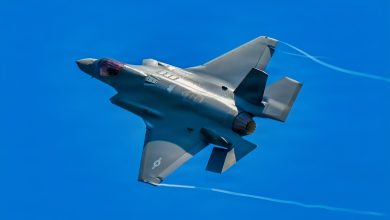
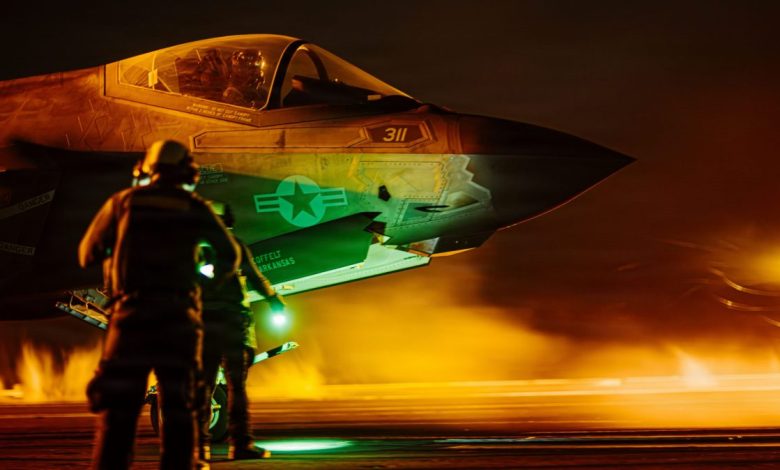
The report also gave insight into the scale of damages caused by Iranian strikes, friendly fire incidents, and accidents that occurred mid-operation. On U.S. bases, hundreds of buildings and structures in Kuwait, Bahrain, Qatar, United Arab Emirates, Saudi Arabia, Iraq, Oman and Jordan were damaged by Iranian strikes. Additionally, dozens of U.S. aircraft were also destroyed or damaged, which included “as many as” 30 Reaper drones, 12 KC-135s, 4 F-15Es, 4 AH-6 helicopters, and an F-35A.