The US Navy Brought Back Just One Battleship for Vietnam. USS New Jersey Fired More 16-Inch Shells There Than in World War II and Korea Combined.

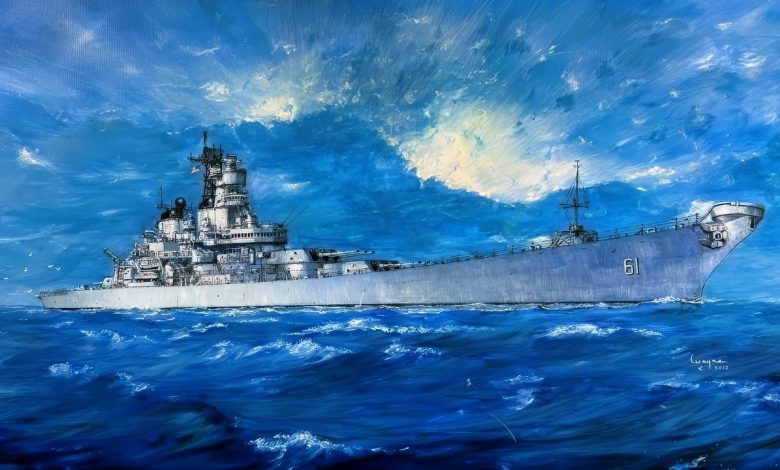
Summary and Key Points: The battleship USS New Jersey (BB-62) had been out of commission since 1957, when the Navy recalled her for Vietnam, the only battleship recommissioned for that war. She made up for lost time. In her first two months on the gun line, she fired nearly 10,000 rounds, including more than 3,000 16-inch shells, and over three days in November 1968, she destroyed or damaged more than 300 bunkers, tunnels, and other structures. By the time she left, she had fired more main-battery ammunition in Vietnam than in World War II and Korea combined.
Iowa-Class Battleship USS New Jersey Joined the Vietnam War
In 1968, the United States found itself in the throes of one of the most unpopular, unwinnable wars it had ever fought.
Vietnam was tearing the United States apart; it was straining the military, and it wasn’t going well.
Multiple missions per day by warplanes were targeting key infrastructure throughout North Vietnam.
Indeed, the United States dropped more bombs on Vietnam than the Allies had dropped on Europe during the Second World War.
And the North Vietnamese and their Vietcong allies in South Vietnam were by no means as advanced a military as the Nazis were.
Adapting to the North Vietnamese Air Defenses
What’s more, the North Vietnamese were getting extremely proficient in defending their airspace against US warplanes.
So the Americans conceived of placing a well-armed, massive battleship off the coast of Vietnam, knowing it’d be harder for Hanoi to destroy that platform, and that the firepower the battleship could bring to bear would be utterly devastating.
Enter the USS New Jersey (BB-62).
She was the only battleship recommissioned specifically for the Vietnam War. She was decommissioned in 1957.
USS Iowa Battleship tour 19FortyFive conducted back in July of 2025.
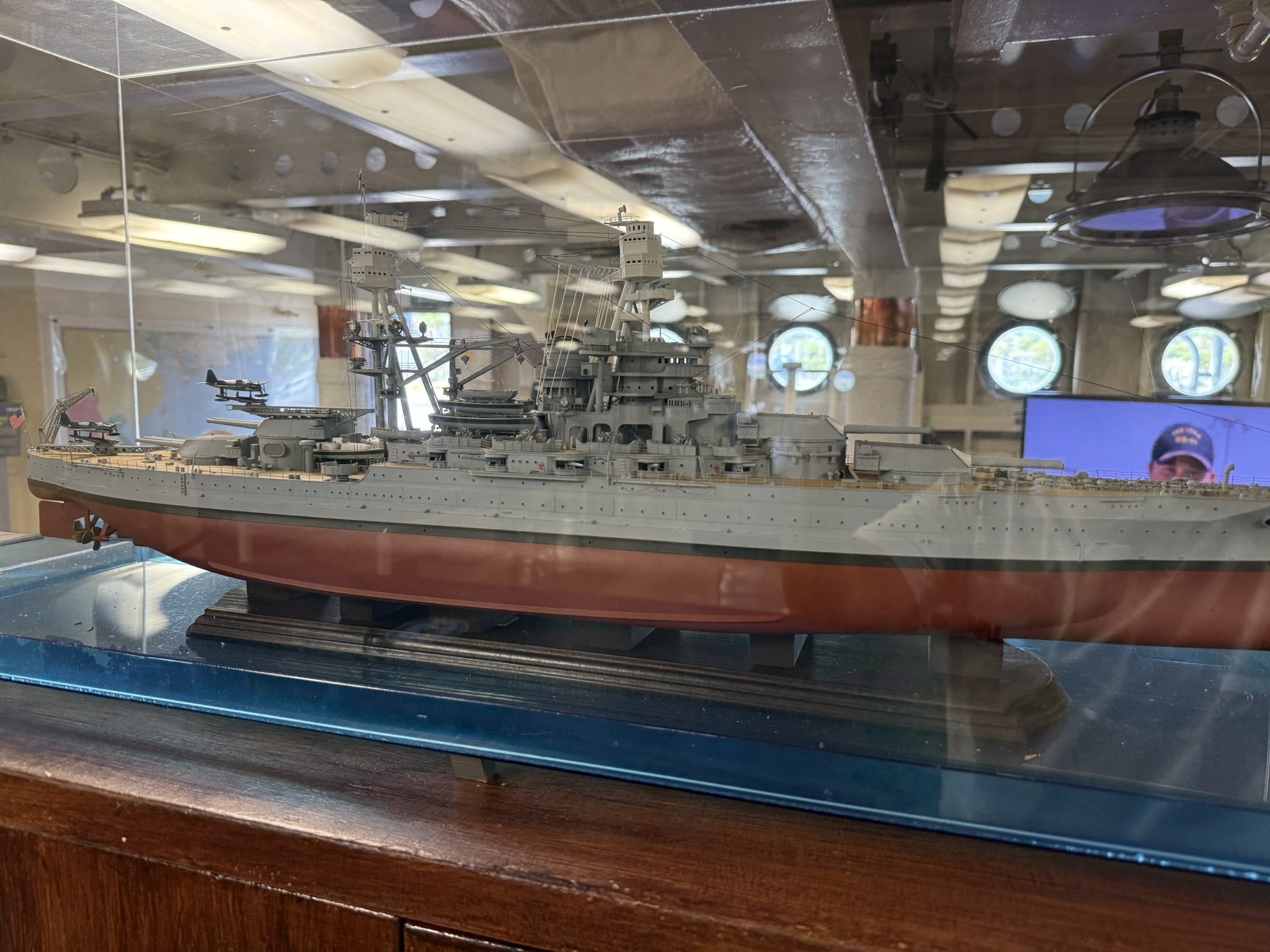
USS Iowa Battleship tour 19FortyFive conducted back in July of 2025.
But the Vietnam War had gone so badly that, by 1968, the military needed something more than just warplanes and bombers.
Just what did the New Jersey bring to bear that newer bombers and warplanes did not?
Well, try 20,579 rounds of pure destruction.
That’s around 5,688 16-inch shells and 14,891 five-inch shells, for a total of 20,579 shells.
And that’s much cheaper than the missiles and bombs the Air Force and Navy were lobbing at hardened targets inside North Vietnam and elsewhere in Indochina.
Talk about massive firepower without ever risking American pilots or the airframes of expensive, complex bombers and warplanes.
Iowa-Class Battleships: A Story In Photos (We Visited USS Iowa Last Year)
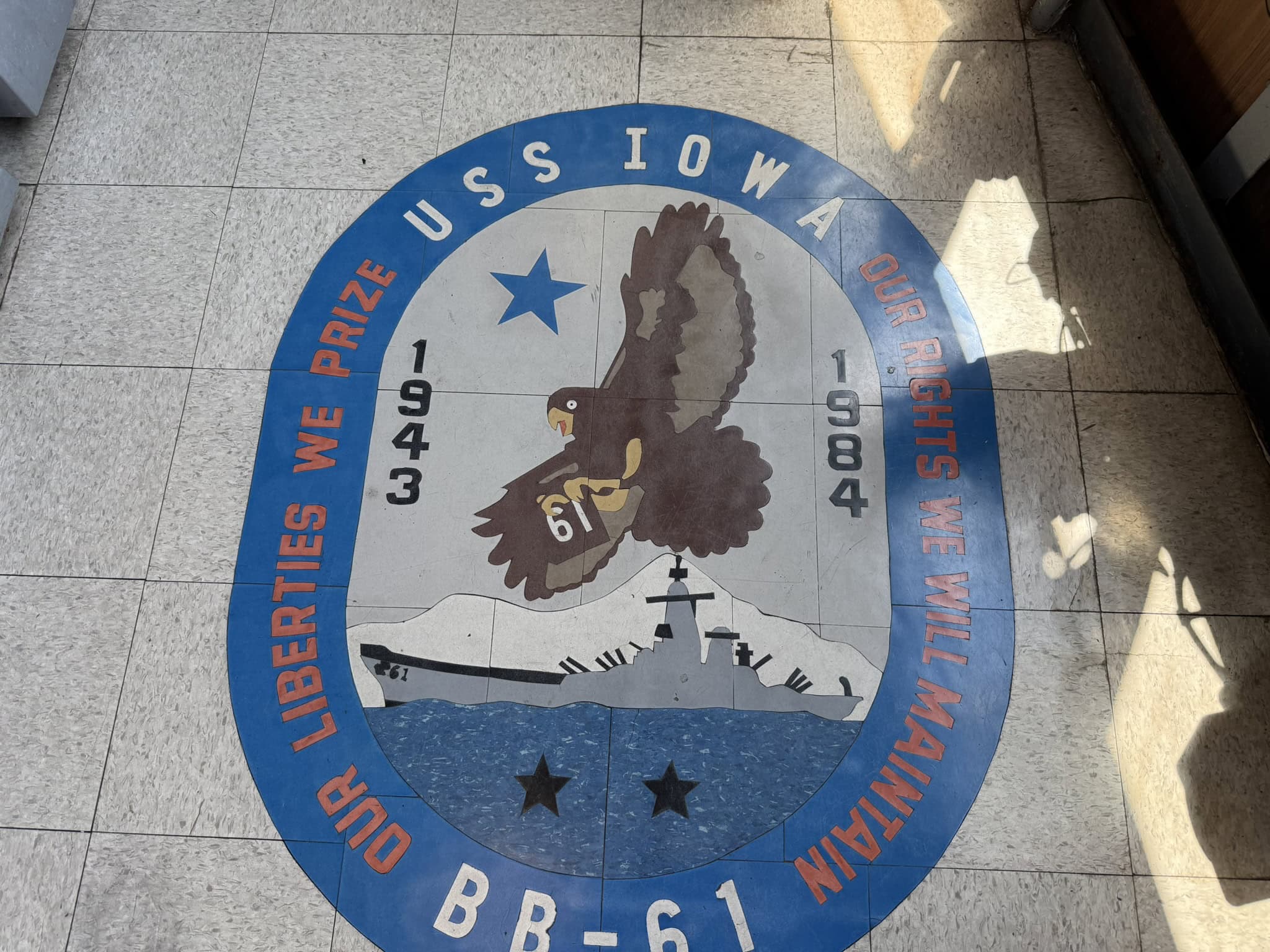
USS Iowa Battleship Seal on the Bridge. 19FortyFive Photo by Harry J. Kazianis
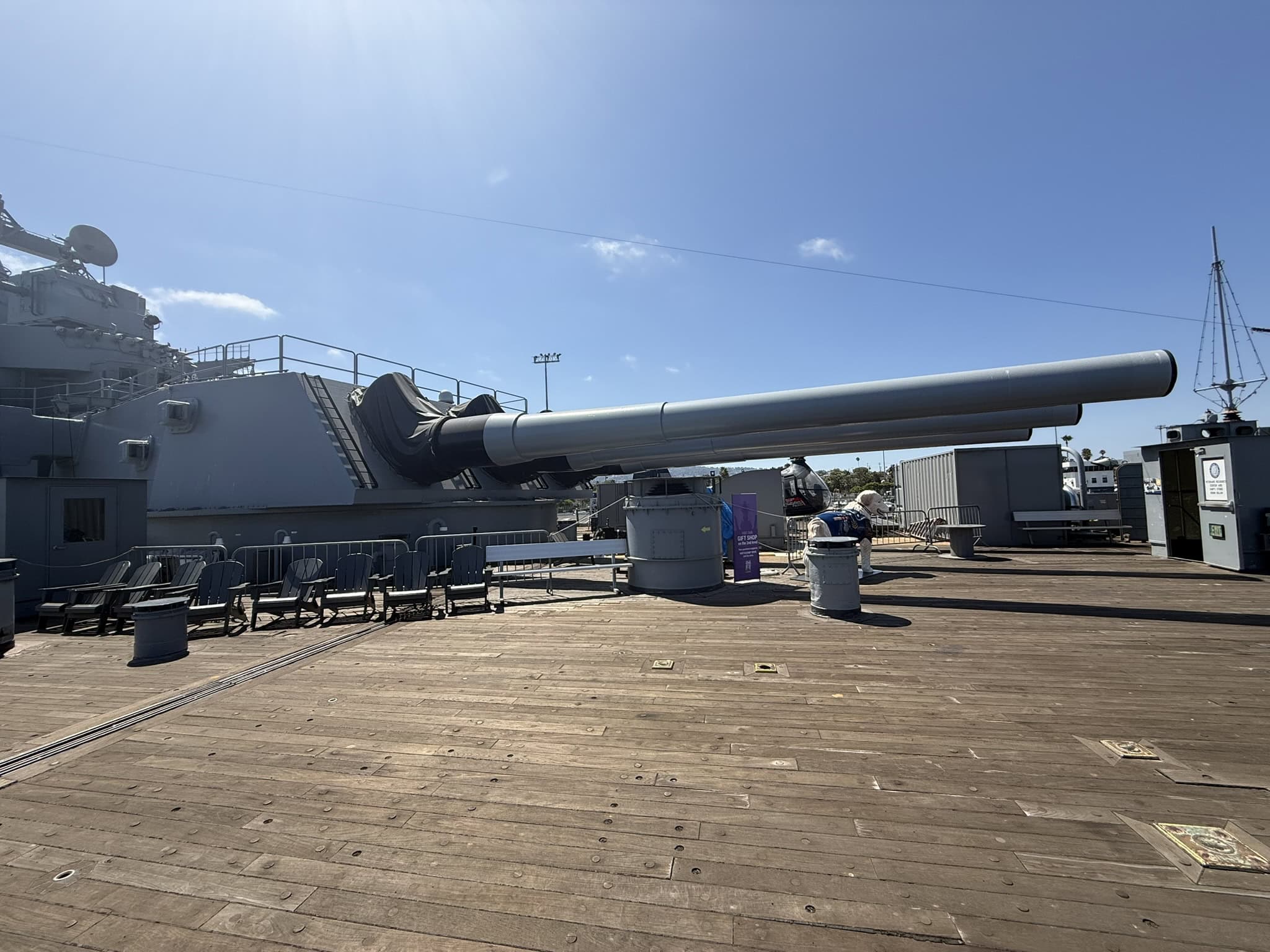
USS Iowa 16-Inch Guns. Image Credit: Harry J. Kazianis.
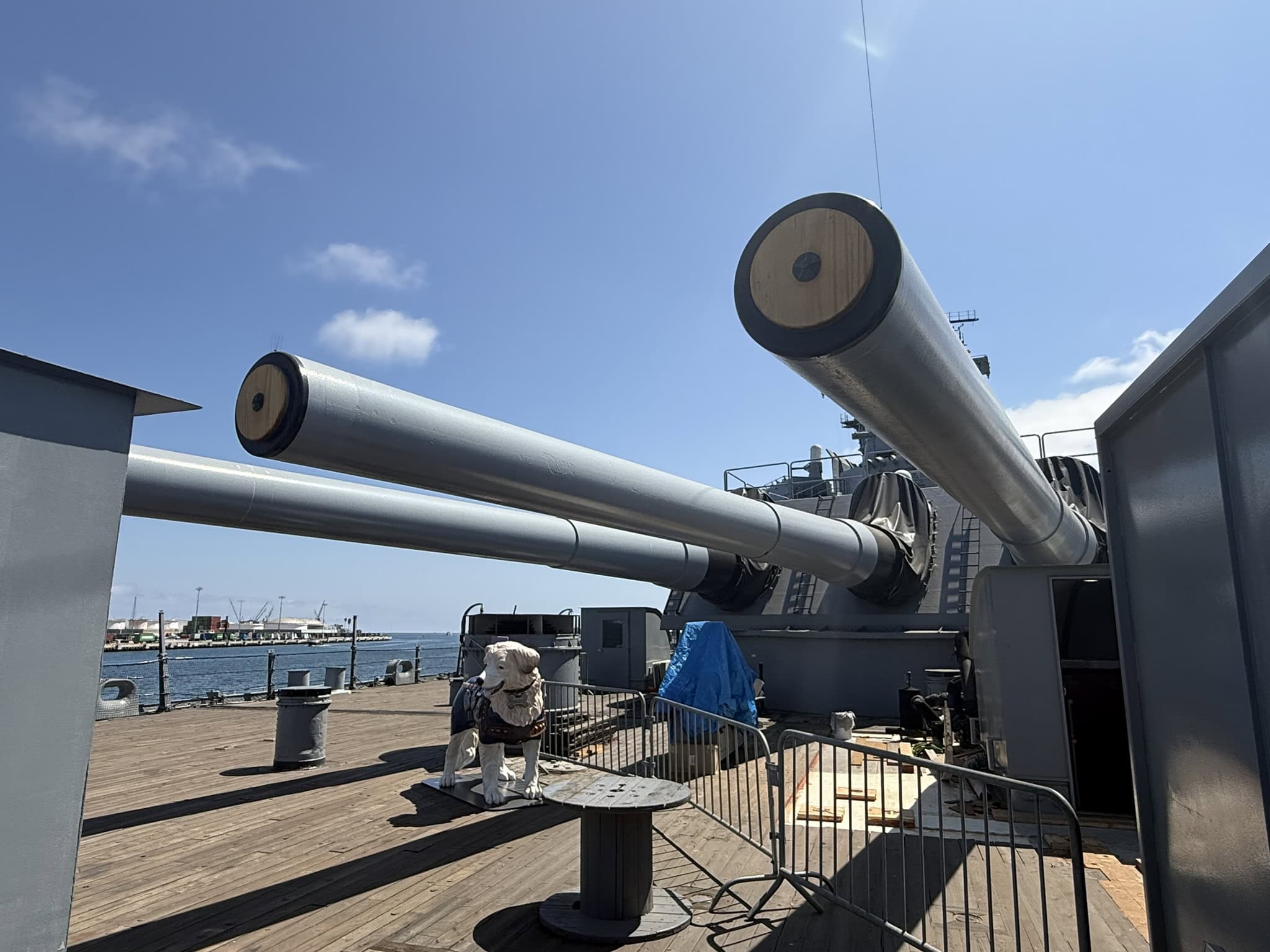
USS Iowa 16-Inch Guns. Image Credit: Harry J. Kazianis.
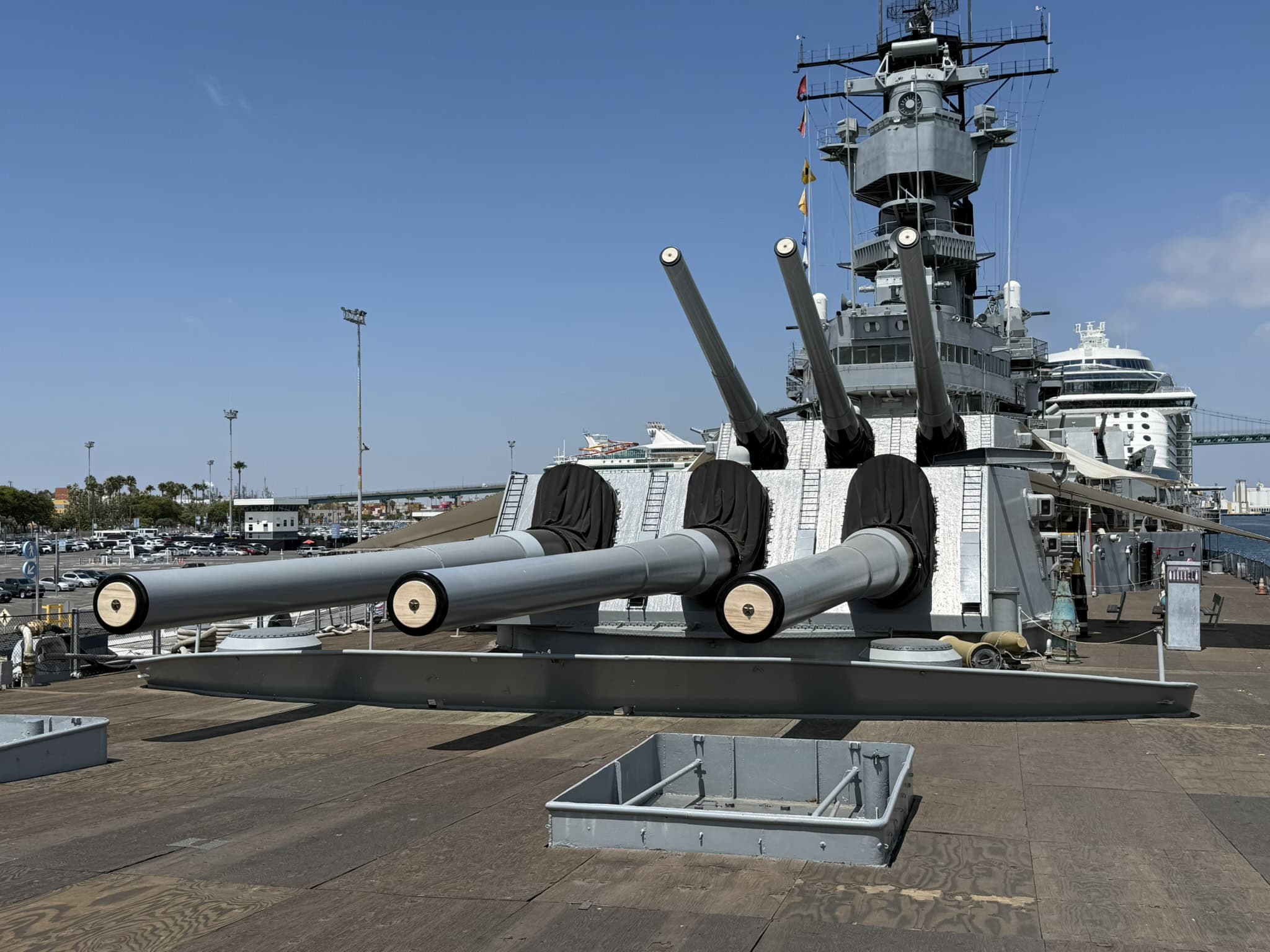
USS Iowa 16-Inch Guns. Image Credit: Harry J. Kazianis.
A Potent Platform
The 16-inch Mark Seven guns alone could lob one-ton projectiles at a target from more than 20 miles away.
Unlike aircraft, the battleship could remain on station and address crises as they developed in real time.
As a naval asset, she was specifically tasked with supporting the First and Third Marine Divisions, which were engaged in heavy ground combat.
The New Jersey also provided protective duty for the US Army’s 173rd Airborne Brigade and 101st Airborne Division.
New Jersey was tasked with participating in Operation Sea Dragon, which was an effort to destroy North Vietnamese coastal logistics, artillery positions, and radar installations.
All these logistical attacks were, of course, aimed at slowing down the North Vietnamese war effort and further degrading the North Vietnamese air defenses to eventually make it easier for US warplanes and bombers to hit targets deep inside North Vietnamese territory.
According to the Navy’s own account of the New Jersey’s performance during the Vietnam War, in the first two months of her deployment, the New Jersey fired nearly 10,000 rounds, including more than 3,000 16-inch shells.
She was tasked with missions directed against North Vietnamese bunkers, tunnels, artillery sites, rocket positions, supply dumps, and troop concentrations.
For three days in November of 1968, the battleship New Jersey destroyed or damaged more than 300 bunkers, tunnels, and other structures.
In fact, New Jersey ultimately fired more main-battery ammunition during her relatively brief stint on the gun line in the Vietnam War than she ever fired during World War II and Korea combined.
That should show you how serious the fighting in Vietnam was — and how committed to their cause against the Americans the North Vietnamese were.
One Million Pounds of Projectiles in Two Years
Just contemplate the numbers involved here. A 1,900-pound high-capacity projectile, such as the New Jersey’s 16-inch round, fired as many times as the New Jersey fired it during its service in Vietnam, means that millions of pounds of these projectiles were launched.
That doesn’t even count propellant or the 15,000 rounds fired by the secondary batteries.
After the United States Navy replaced the battleship as its primary surface warfare platform with the aircraft carrier, the battleship continued to serve.
But it was in an ancillary role.
That ancillary role was as an offshore artillery platform.
In Vietnam, the New Jersey proved that the battleship, as a potent offshore artillery platform, was one of the best choices the Navy ever made.
That’s why the Navy decommissioned battleships and brought them back into service multiple times throughout the second half of the twentieth century.
The only reason that the New Jersey was ultimately withdrawn from the gun line was not that it was ineffective or needed repairs.
It was part of the wider US military drawdown in the Vietnam War. Plus, maintaining the New Jersey off Vietnam’s shores was becoming increasingly costly for the Pentagon.
What Might Have Been
The New Jersey was decommissioned again in December 1969.
But it demonstrated how a platform designed long before the Japanese attacks on Pearl Harbor in 1941 continued fighting on the front lines for the United States decades after experts assumed that these battlewagons were obsolete.
Indeed, the New Jersey provided one of the most effective, continuous long-range artillery capabilities for the United States military during the crucible of the bloody Vietnam War.
Just imagine if the Navy had not fully decommissioned the New Jersey’s sister battleships; how multiple units sitting off the coast of North Vietnam might have helped the US military smash apart the logistics chain and hardened facilities belonging to the fearsome North Vietnamese forces.
How many fighter pilots and bomber crews might have been saved from death or horrific capture?
About the Author: Brandon J. Weichert
Brandon J. Weichert is the Senior National Security Editor at 19FortyFive.com. He also manages The Weichert Brief on Substack. Weichert also hosts “National Security Talk” on Rumble. He is the author of four bestselling national security books, most recently A Disaster of Our Own Making: How the West Lost Ukraine (Encounter Books). Follow him via Twitter/X @WeTheBrandon.