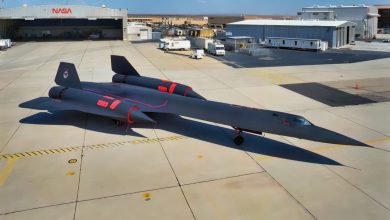
The US Military Destroyed $600,000,000 in SR-71 Blackbird Parts After Retirement, the Jet Needs 300 Hours of Maintenance per Flight Hour, and NASA Still Wants to Fly One

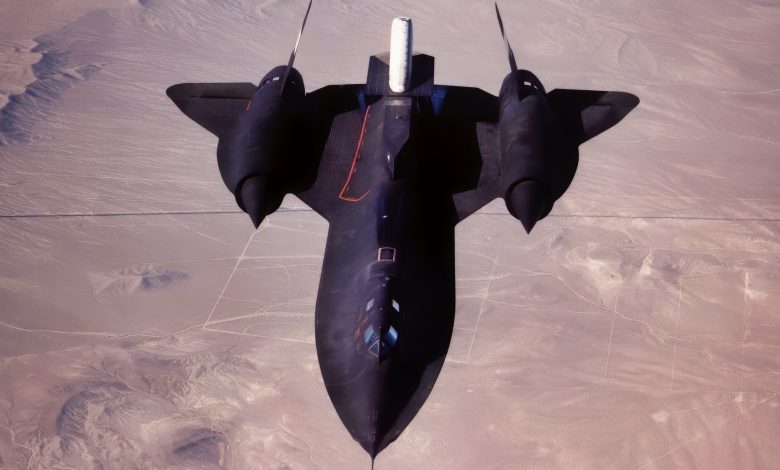
Will the SR-71 Blackbird and F-14 Tomcat be flying again soon, at least on a limited basis? Without a doubt, the Lockheed “Skunk Works” SR-71 spy plane and the Grumman F-14 fighter plane are two of the most popular and iconic warbirds of the Cold War era: the former because it’s *still* the world’s fastest air-breathing aircraft—official record Mach 3.2, unofficially Mach 3.56), a whopping 62 years after its maiden flight; the latter because it immortalized itself in movie pop culture by fulfilling then-LT Pete “Maverick” Mitchell’s “need for speed” in the original 1986 “Top Gun” film.
But how feasible and practical would it be to resurrect these cool Cold War classics for flight?
Steven F. Udvar-Hazy Center F-14 Tomcat Exhibit. 19FortyFive Photos by Christian D. Orr.
Resurrection Prospect #1: The SR-71
The talk about reviving the SR-71 may sound a bit behind the times in light of all of the buzz about its supposed heir apparent, the SR-72 “Darkstar,” aka “S.O.B. (Son Of Blackbird).”
Be that as it may, on September 29, 2026, Steve Trimble of Aviation Week reported that Mike Relja, an ex-U.S. Air Force and NASA test engineer for the SR-71A, was approached by newly hired NASA special projects director David Ash about making a formerly NASA-operated Blackbird airworthy again.
To wit: “I told the guy, ‘You know, I’m too old to be doing this.’ I wish you well. I’d like to see you make it. It would be interesting. But I just don’t think you can get there from here.’”
Mr. Relja added, “I do know they’ve got people working on it. But again, without equipment, it’s beyond me what they’re doing.”
An unnamed NASA spokesperson was more cryptic and evasive, telling Aviation Week, “We recognize the interest in the SR-71 and its remarkable history at NASA but have no additional information to share regarding the aircraft at this time.”
Resurrection Prospect #2: The F-14
This one has official backing in Congress, and its importance cannot be overstated.
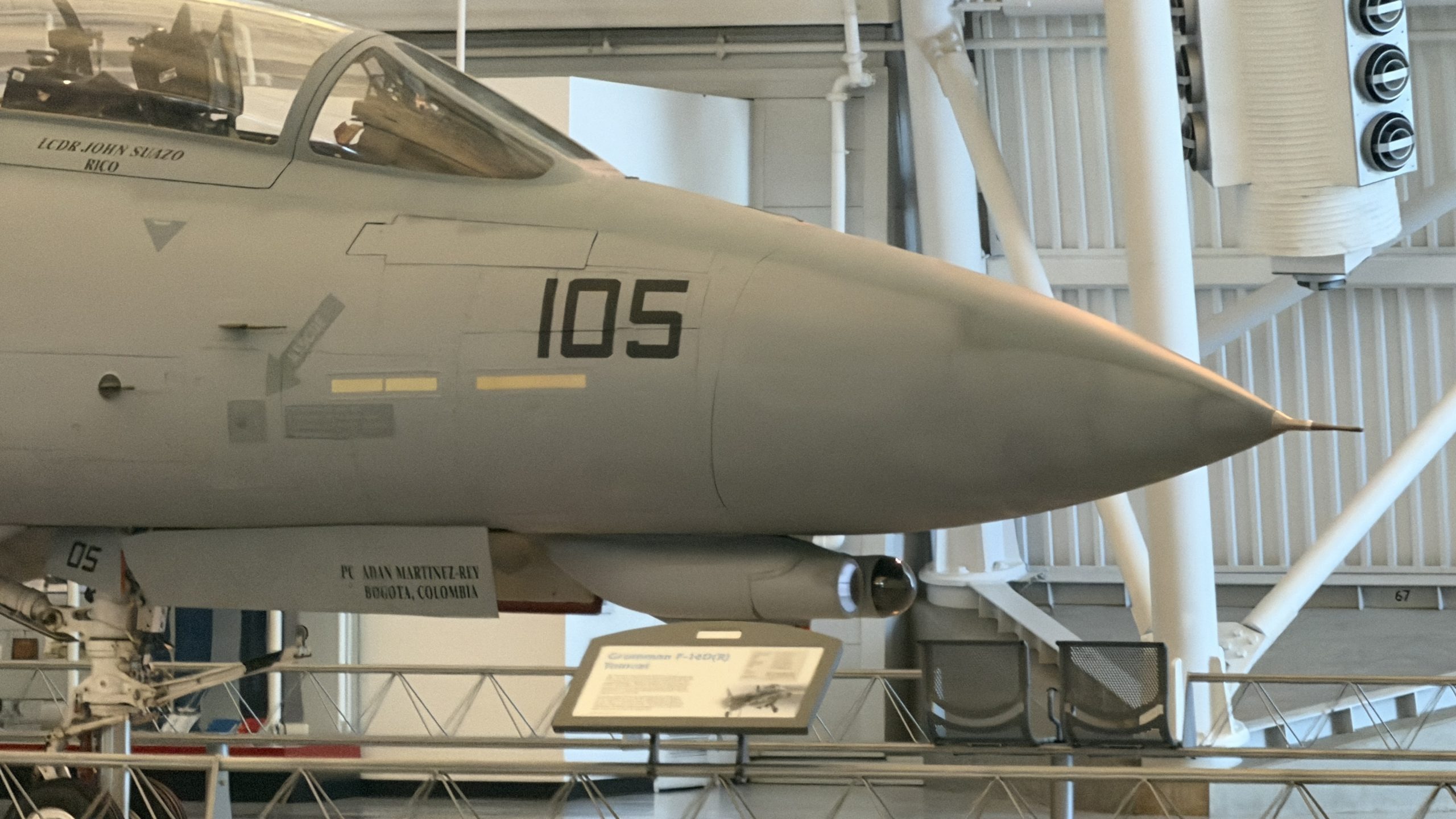
Steven F. Udvar-Hazy Center F-14 Tomcat Exhibit. 19FortyFive Photos by Christian D. Orr.
The legislation is known as the “Maverick Act,” introduced by Senator Tim Sheehy, co-sponsored by Sen. Mark Kelly, on 23 March 2026, and passed by Unanimous Consent on 28 April 2026.
Congressman Abe Hamadeh introduced the House version of the bill, co-sponsored by Congressman Juan Ciscomani, Congresswoman Jen Kiggans, Congressman Austin Scott, Congressman Rich McCormick, Congressman Jack Bergman, Congressman Jake Ellzey, Congressman Don Davis, and Congressman James Moylan.
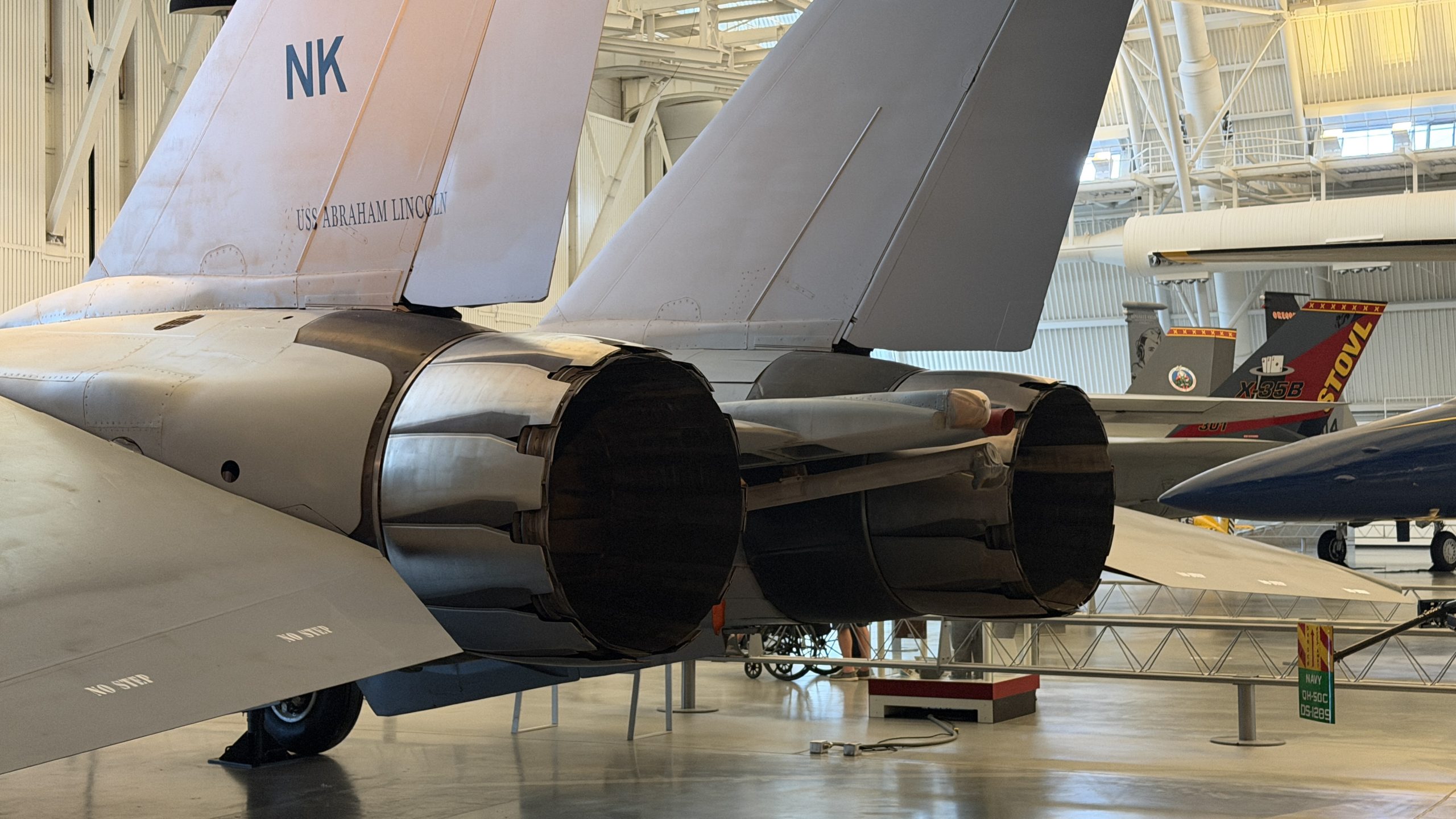
Steven F. Udvar-Hazy Center F-14 Tomcat Exhibit. 19FortyFive Photos by Christian D. Orr.
If signed into law, the bill would transfer three F-14Ds to the U.S. Space and Rocket Center (USSRC) in Huntsville, Alabama, and one might be made flyable again.
The Challenges
As cool and exciting as the prospect of Blackbird and Tomcat resurrections sounds in theory, of course it’d be easier said than done in practice.
As these words are being typed, it’s been less than two weeks since the 20th anniversary of the final flight of a U.S. Navy Tomcat.
Yes, Iranian Air Force F-14s have flown far more recently than that, but that’s a whole ‘nother story.
Knocking both the literal and proverbial rust off those Tomcat engines after 20 years of atrophy would be a laborious, time-consuming, and costly procedure, to say the least.
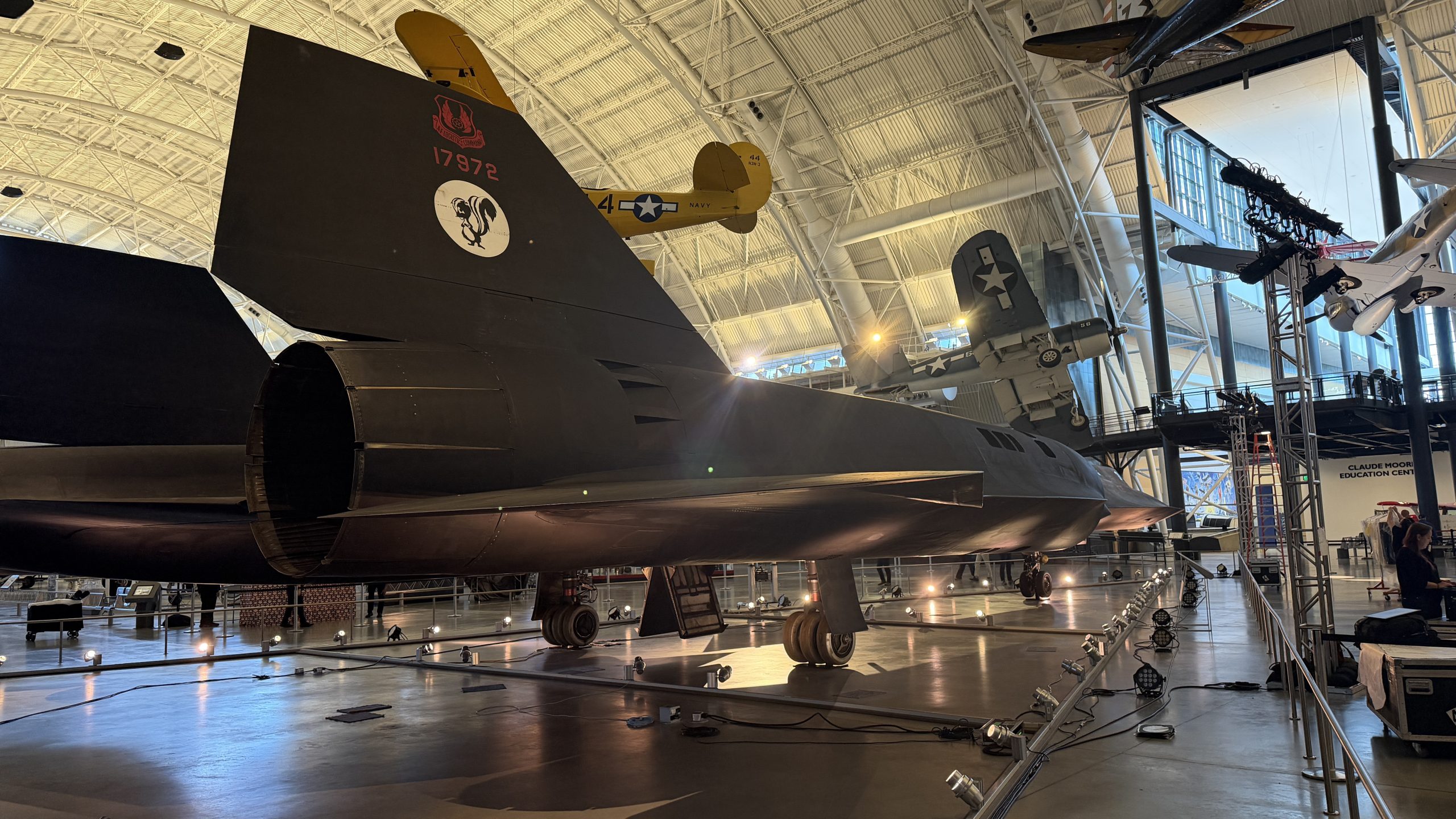
Steven F. Udvar-Hazy Center F-14 Tomcat Exhibit. 19FortyFive Photos by Christian D. Orr.
For the SR-71, the challenges would be even greater. For one thing, it’s been **27** years since its official retirement.
In addition, except for the Blackbird specimens preserved for museum static display, these planes have been sitting outdoors, exposed to the elements for most of those 2.5+ decades of post-retirement inactivity; this most likely means that seals and gaskets have dried out and become brittle, whilst the wiring has been eaten away by Mother Nature.
Furthermore:
-Not anticipating future revival prospects, the US government destroyed some $600 million in Blackbird parts after the planes’ retirement, which makes finding spare parts an extremely dicey prospect; this is particularly true of the Pratt & Whitney J58 engines
-The analog-era instrumentation would all have to be replaced or upgraded with digital instruments
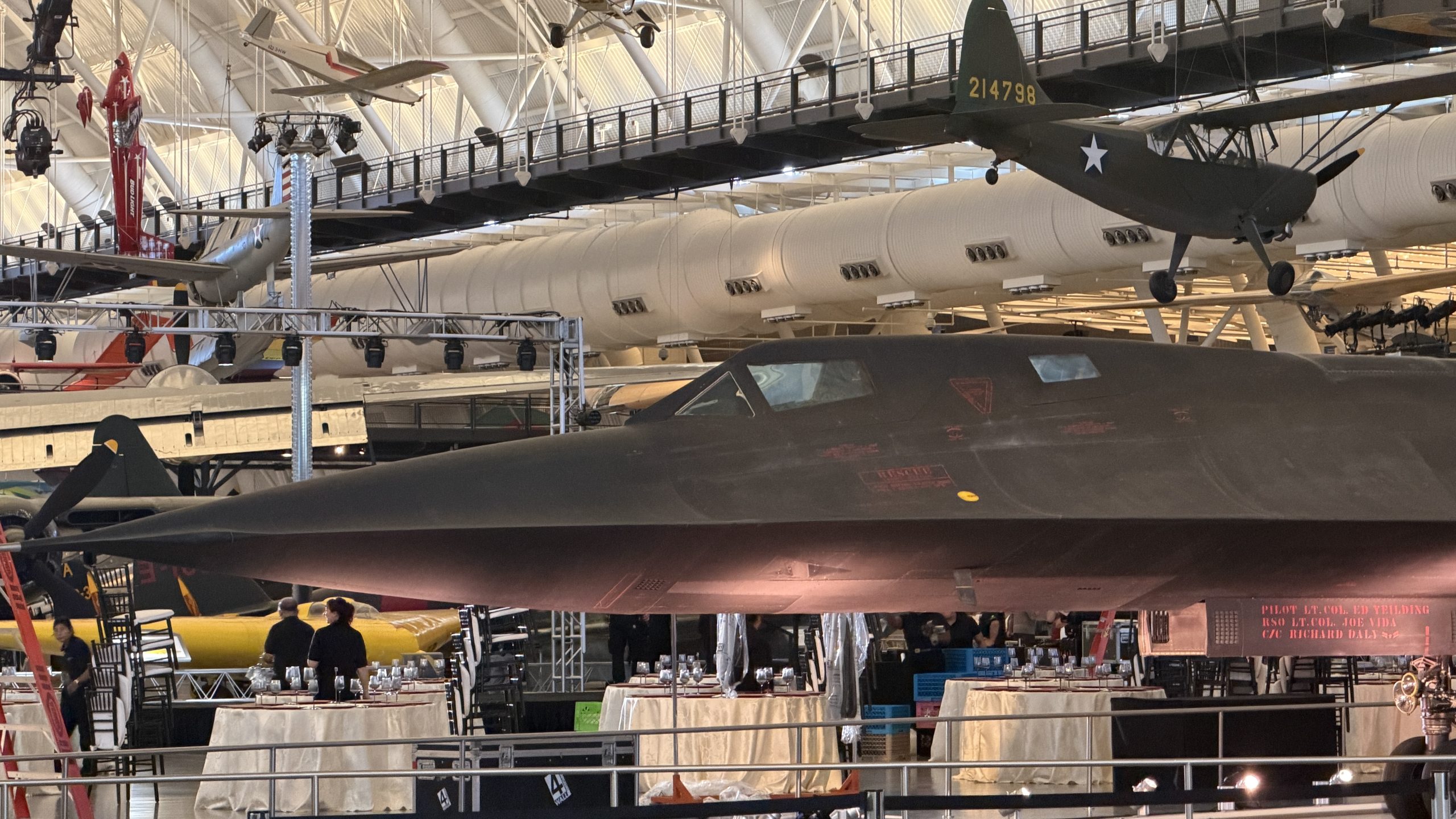
Steven F. Udvar-Hazy Center F-14 Tomcat Exhibit. 19FortyFive Photos by Christian D. Orr.
-Two JP-7 tankers would need to be built in order to provide the SR-71’s specialized fuel
-The Blackbird was a super-high-maintenance aircraft, requiring 300 hours of maintenance on the ground for every one hour spent in flight; given the low readiness rate woes faced by the U.S. Air Force’s current fleet, one can only imagine how adding SR-71s to the maintenance hangars would exacerbate that problem just that much further
But, as they say, “Where there’s a will, there’s a way.”
Editor’s Note: Thanks to the author of this piece for some amazing original photos for both the SR-71 and F-14.
About the Author: Christian D. Orr
Christian D. Orr is a Senior Defense Editor. He is a former Air Force Security Forces officer, Federal law enforcement officer, and private military contractor (with assignments worked in Iraq, the United Arab Emirates, Kosovo, Japan, Germany, and the Pentagon). Chris holds a B.A. in International Relations from the University of Southern California (USC) and an M.A. in Intelligence Studies (with a concentration in Terrorism Studies) from American Military University (AMU). He is also the author of the book “Five Decades of a Fabulous Firearm: Celebrating the 50th Anniversary of the Beretta 92 Pistol Series,” the second edition of which was recently published.