Some rifles get replaced. The Ruger 10/22 gets accessorized. Sturm, Ruger announced the rifle on March 24, 1964, and it reached gun magazines that June. Only three prototypes existed when it debuted at the NRA Annual Meeting that spring. Bill Ruger, Harry Sefried, and Doug McClenahan had worked on the design for years, and Ruger wrote to Jack O’Connor that “from a technological point of view, the new 10/22 is one of the best things we have done.”
The .44 Magnum Carbine from 1960 inspired Ruger, and its owners were an obvious first audience for a rimfire companion.
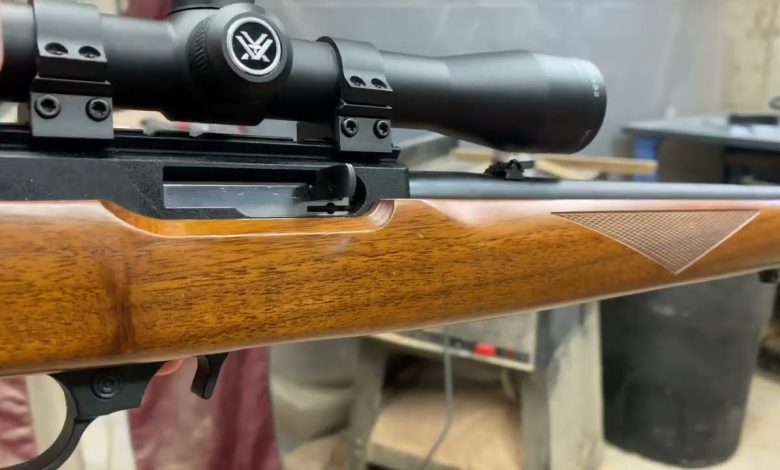
Ruger 10/22. Image Credit: Creative Commons.
Ruger 10/22.
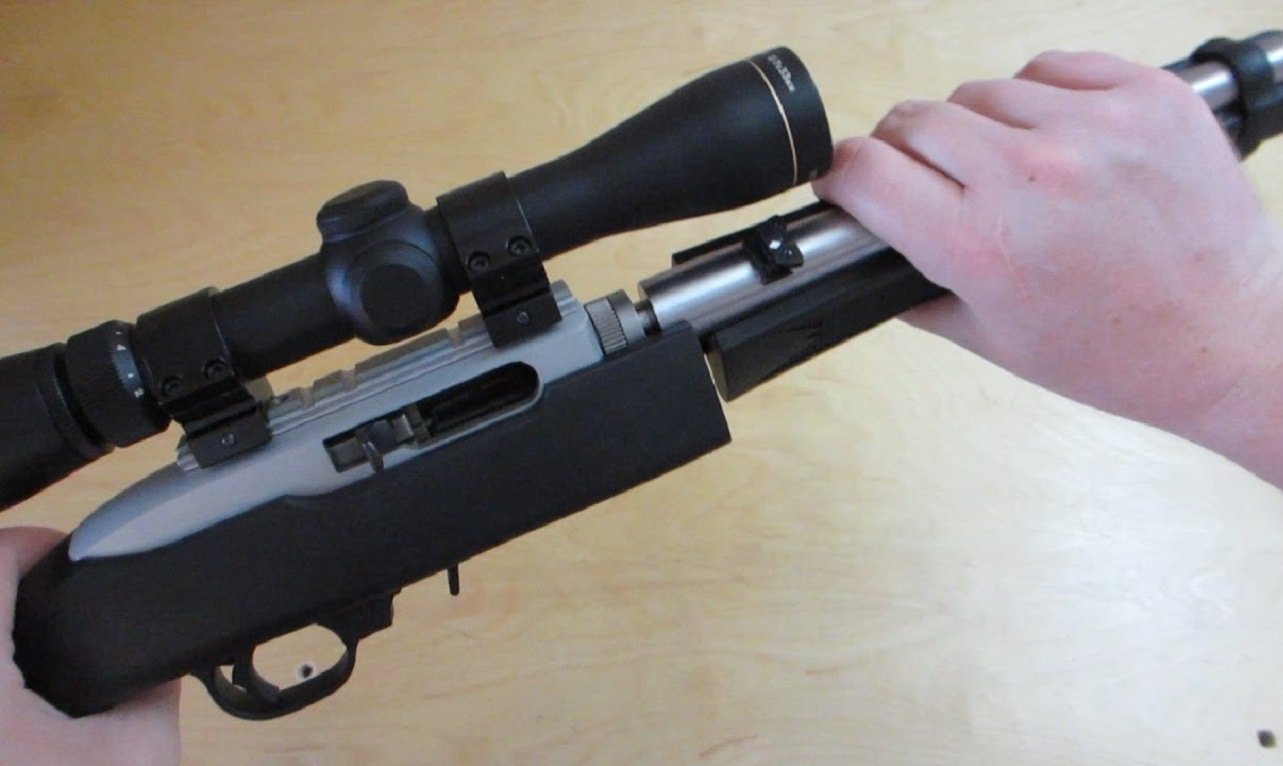
Ruger 10/22 Takedown. Image Credit: Creative Commons.
The launch price was $54.50. That’s roughly $450 in 2019 dollars.
Cheap then, and it has been in continuous production ever since.
Ruger 10/22: The Magazine Is The Whole Story
Semi-auto rimfires had a reliability problem before the 10/22 arrived.
The .22 Long Rifle has a rimmed, heel-based bullet, and that combination gives feeding systems fits.
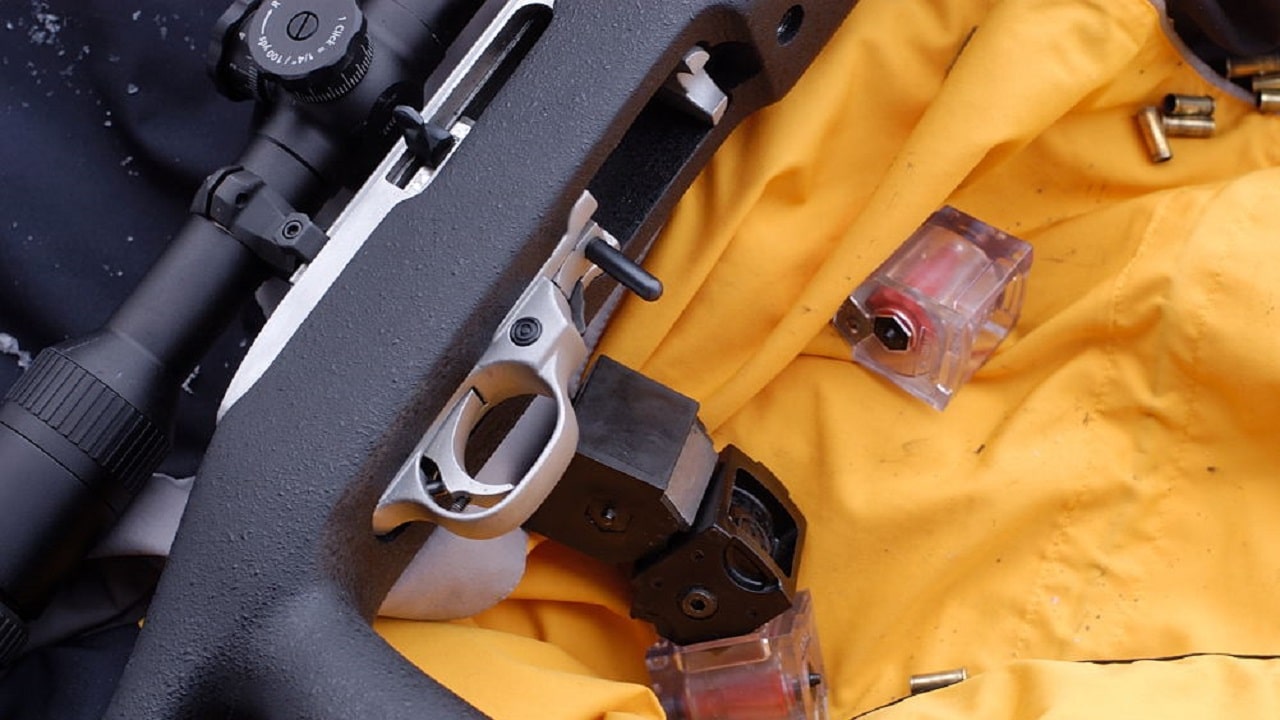
Ruger‘s answer was a 10-round rotary magazine, inspired by the Savage Model 99, that fits flush in the stock.
The cartridges ride in a cogwheel-style holder, which keeps the rifle slim.
Gun Digest says it could be argued the magazine is the real reason for the rifle’s success.
In my opinion, that’s hard to dispute.
The rest of the package was sound.
]]>
The receiver was investment-cast aluminum.
The barrel ran 18.5 inches with a 1:16 twist and sat in a two-screw V-block.
The whole rifle weighed about five pounds and measured 37 inches.
That’s a rifle a kid can carry all day and a grown man won’t be embarrassed to be seen with.
Having plinked with it as both a kid and an adult (although my wife would beg to differ), I’ve always found it a lot of fun to shoot.
What Changed And What Didn’t
Early rifles featured a cast-metal trigger housing, a flat magazine release, and open sights on a dark, hand-checkered walnut stock.
Modern guns use a heat-stabilized, glass-filled polymer housing, a vertical magazine release that’s easier on the thumb, and receivers ready for a scope.
Stocks now run from synthetic to walnut, and many carry a rubber recoil pad. However, the rotary magazine is still, in Handloader’s words, “the heart of all 10/22s.” A 1969 walnut Carbine ran roughly $50, and the 1970 Sporter about $65.
Seven To Ten Million, Give Or Take
Nobody outside Ruger knows the exact number.
Depending on the source, many believe that production of the 10/22 has topped 7 million as of 2015, and Gun Digest ballparks the total between 8 and 10 million.
Ruger now lists more than 60 models.
That’s a lot of rifles for a design that started life as a companion to the .44 Magnum Carbine.
The Aftermarket Is Half The Rifle
However, the factory gun is only part of the story. Gun Digest calls the aftermarket the largest of any rimfire rifle, with Volquartsen, Timney, Magpul, and Faxon all building parts for it.
Shooting Illustrated adds Tactical Solutions, Clark Custom Guns, and Kidd Innovative Design to that list.
Many experts note you can assemble a complete 10/22 without a single Ruger component.
Say what you want about builds that look nothing like the original.
That’s beside the point. Receivers, barrels, triggers, and stocks swap out, and the rifle rewards the effort. Fair warning, one upgrade leads to another (your wallet will notice).
The Trigger Is The Honest Trade-Off
The stock trigger has always been the complaint.
Handloader measured a new Sporter at 5 pounds, 2 ounces, barely better than the 5 pounds, 11 ounces on a 1970s rifle.
That’s a long way from a match trigger.
However, Handloader ran four loads through both rifles at 50 yards, including CCI Mini-Mag and CCI Clean-22, and the old gun and the new gun shot comparably.
Ruger has been working on it.
The BX-Trigger and a match bolt release are standard on the ten upgraded models the company announced on February 25, 2026, and Ruger says features “previously available only in select versions” now reach a broader range of configurations.
The 10/22 is also a blowback autoloader.
Handloader points out that velocities vary far more than they do from a closed-breech bolt action.
That’s physics. So why put up with it?
Because the 10/22 was never meant to be a benchrest gun out of the box.
It’s the standard for plinking, small game, and teaching new shooters the basics.
If you buy one today, budget for a better trigger and a decent optic.
In my opinion, that’s the best money you can spend on it.
But truthfully, those aren’t really necessary, because as a plinker, it is fine as is.
Now It Comes In Short
The family has stretched in every direction.
The Takedown arrived in 2012 and splits into barrel and action components, which is why it packs so easily. The Charger pistol followed in 2007.
There was even a .22 Magnum version for several years.
In January 2026, Ruger added short-barreled versions, that scarcely resemble the original but for those seeking a “tacti-cool” .22, this one is for you.
The Model 33000 has an 8-inch barrel. The Model 33001 is a takedown with a 10-inch barrel.
Both wear reversible folding stocks and threaded ½”-28 barrels.
Remember that SBRs fall under the National Firearms Act, and unauthorized possession is a federal felony.
Do the paperwork.
Personally, I’d opt for a standard Takedown for the truck or the pack.
No stamp required.
Still A Blast To Go Out Plinking
The gun press even marks 10/22 Day every October 22. That’s next month, for those keeping score at home.
Ruger built a rifle to be shot, shared, and tinkered with.
Sixty-two years later, that’s still the appeal.
Some rifles get replaced.
The 10/22 just gets accessorized again.
About the Author: Steve Balestrieri
Steve Balestrieri is a National Security Columnist. He served as a US Army Special Forces NCO and Warrant Officer. In addition to writing on defense, he covers the NFL for PatsFans.com and is a member of the Pro Football Writers of America (PFWA). His work was regularly featured in many military publications.