I Am a Retired US Army Special Forces NCO: There Is Nothing Like the Smith & Wesson Model 642 Ultimate Carry Revolver
The Smith & Wesson 642 Ultimate Carry is the finished snub-nose: The J-frame never needed a redesign. It needed a tune-up. Smith & Wesson has been pursuing the idea behind the Model 642 since 1952, when the Centennial family arrived with a fully enclosed hammer that could not snag on a pocket, waistband, or jacket lining.
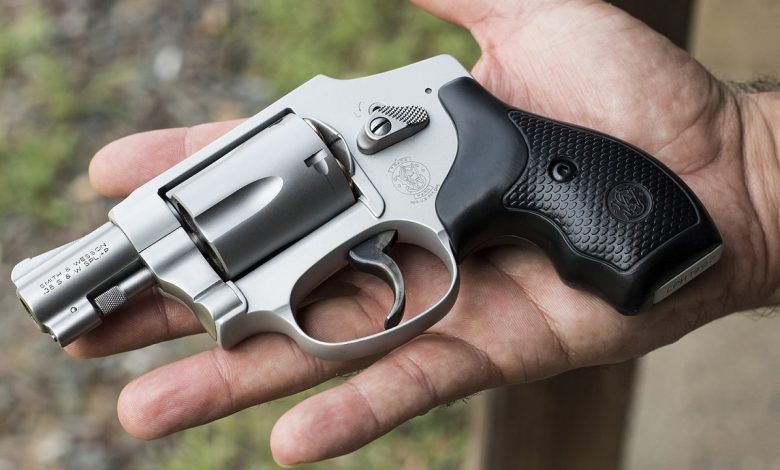
The 642 carries that idea forward with an aluminum frame, a stainless steel barrel and cylinder, and a double-action-only trigger. Five rounds of .38 Special +P. Nothing to cock, nothing to catch.
That formula has worked for decades. However, the standard 642 has always asked its owner to make peace with a few things. The sights are barely there. The grips are small. The trigger is what it is. The Ultimate Carry version, a Lipsey’s exclusive, goes after all three.
What The Ultimate Carry Adds
Start with the sights. The UC wears an XS Yellow Tritium front sight and a black dovetail U-notch rear. One reviewer at GunsAmerica found them dramatically better than conventional J-frame sights. Anyone who has tried to find a factory J-frame sight in dim light will understand why.
Then the grips. The VZ synthetic boot grips are wider than the factory stock grips, built to absorb recoil and give your finger better reach to the trigger. On a gun this light, every bit of that helps.
Then the parts you can’t see. Smith calls it the Endurance Package. That means titanium pins in the action, chamfered charge holes for faster reloads, a fluted stainless cylinder, and a beveled cylinder front that helps the gun slide into a holster or pocket without catching.
The action is tuned as well. That same GunsAmerica reviewer called the trigger “slightly smoother than most J-Frames out of the gate.”
Say what you want about the internal lock on modern Smith & Wesson revolvers. That’s beside the point. The Ultimate Carry doesn’t have one. No keyhole above the cylinder release, and one less thing to argue about.
The Model 642 Specs
The barrel measures 1.88 inches. The gun runs about 6.3 inches long. Weight is listed as 15.3 ounces on the latest spec sheets, although early reviews list it at 16.3 ounces. A standard 642 weighs 14.6 ounces. You’re carrying an extra ounce or two for the upgrades.
In my opinion, that’s a fair price for the sights alone.
The money is a different conversation. The lineup carries a $679 MSRP, down from the $759 the first Ultimate Carry guns cost back in 2024. A standard 642 retails for roughly $500. That’s about $180 for sights, grips, and a tuned action.
Whether that’s worth it depends on how much you plan to shoot the thing.
The Recoil Is The Honest Trade-Off
Fifteen-odd ounces of aluminum and a +P round make an unfriendly pair.
The reviewer at Shoot On managed five solid hits with standard-pressure loads in the time it took to land four with +P. That’s a real difference in a gun this size. He also had reservations about the VZ grips once the shooting started.
He still ranked the revolver “among the finest snubnose .38 Special revolvers ever manufactured.”
The GunsAmerica reviewer landed in a similar place. He recommended the 642 UC for experienced shooters who want discreet carry, then cautioned against making it a first defensive firearm because of the recoil, the trigger, and the challenge of the sights.
I’ve always thought that was the right call for any J-frame.
Personally, I’d opt for standard-pressure defensive loads and a lot of time at the range.
So Who Is The Model 642 Ultimate Carry It For?
Someone who already shoots. A person who wants a revolver that disappears in a pocket, rides comfortably inside the waistband, or serves as a backup gun when the primary is a full-size pistol.
There’s also the matter of reliability when things get ugly. A revolver doesn’t care how you hold it, and it won’t choke because a weak grip or a shirttail pressed against a pistol’s slide keeps the action from cycling. If a round fails to fire, you pull the trigger again.
Smith and Wesson 686 Image Credit – Creative Commons
Pistol shooters can’t say the same, and anyone who has run a tap-rack-bang drill under stress knows how much fun that is (sarcasm, for those keeping score at home).
Five shots. No safety, no magazine, no manipulation beyond pulling the trigger again.
That simplicity is the whole appeal, and at arm’s length it works.
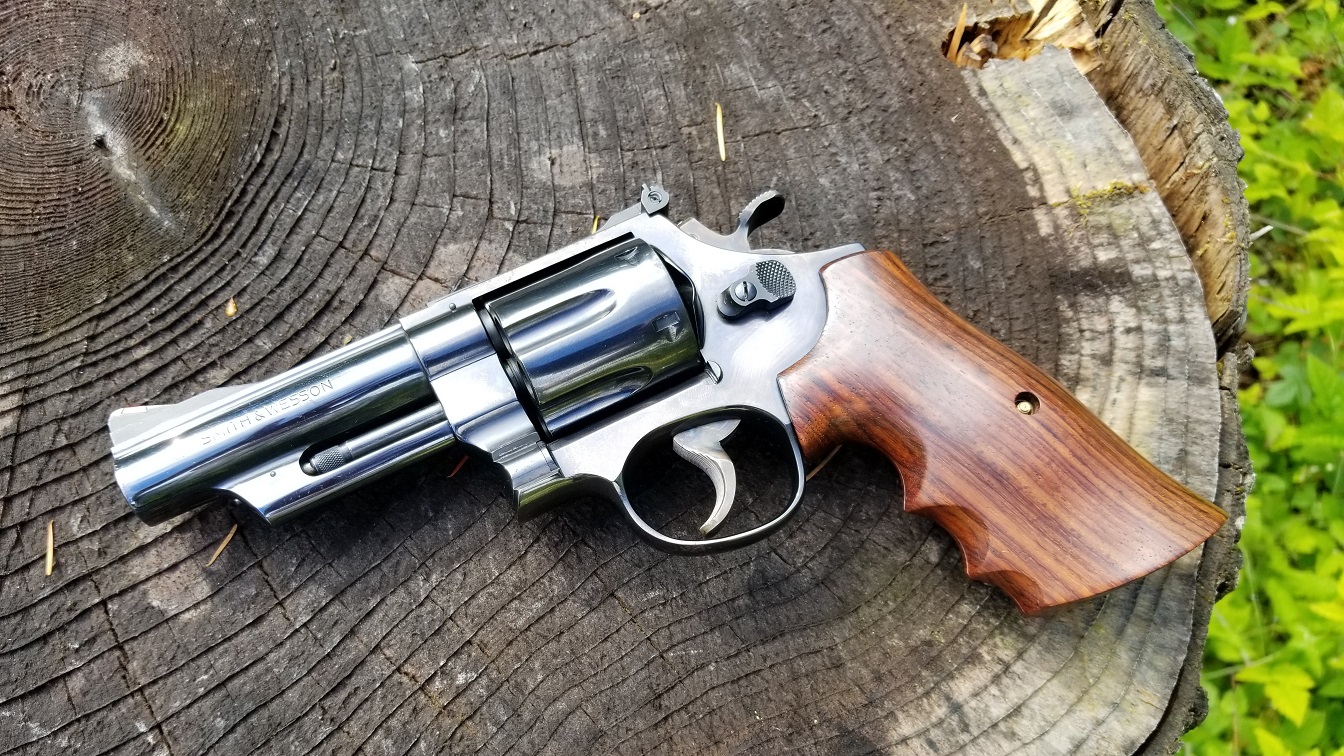
Smith and Wesson Model 57. Image Credit: Creative Commons.
The Shoot On reviewer pushed it out to 15 yards with good results, but he wouldn’t recommend stretching it much further than that.
The J-frame never needed a redesign. It needed a tune-up. Lipsey’s and Smith & Wesson delivered one.
About the Author: Steve Balestrieri
Steve Balestrieri is a National Security Columnist. He served as a US Army Special Forces NCO and Warrant Officer. In addition to writing on defense, he covers the NFL for PatsFans.com and is a member of the Pro Football Writers of America (PFWA). His work was regularly featured in many military publications.