Three days after the Sept. 11 attacks, Mark Olsen walked past cars piled on top of one another near the World Trade Center. Some were taxis. One of the most haunting images he recalls? Headlights still burning bright through the fog of rubble.
The New Jersey Air National Guard technical sergeant had crossed the Hudson River on a state police boat that morning, carrying rolls of film and deciding for himself what to photograph. He wanted to reach Ground Zero, but he kept finding things along the way that needed to be recorded.
“I had never envisioned anything like this,” Olsen told Military.com.
As the country marks the 25th anniversary of 9/11, Olsen’s photographs preserve the wreckage and the faces of people working through it. In a video interview with Military.com, the retired Air Force veteran described how he documented the aftermath, the place he refused to photograph and why he returns to those images every September.
Olsen’s military career began with an Air Force commission in 1982. After leaving active duty in 1986, he earned a master’s degree in fine arts in photography at Washington State University. He joined the New Jersey Air National Guard in 1997 and eventually retired from the Air Force Reserve in 2018.
His experience photographing jazz musicians had helped prepare him for public affairs work. Portraiture taught him to tell people’s stories, including those of airmen whose daily work might otherwise go unseen.
On Sept. 11, 2001, he was in West Trenton, New Jersey, preparing to cover a military helicopter flight for visiting videographers. After the attacks, he photographed preparations for the emergency response.
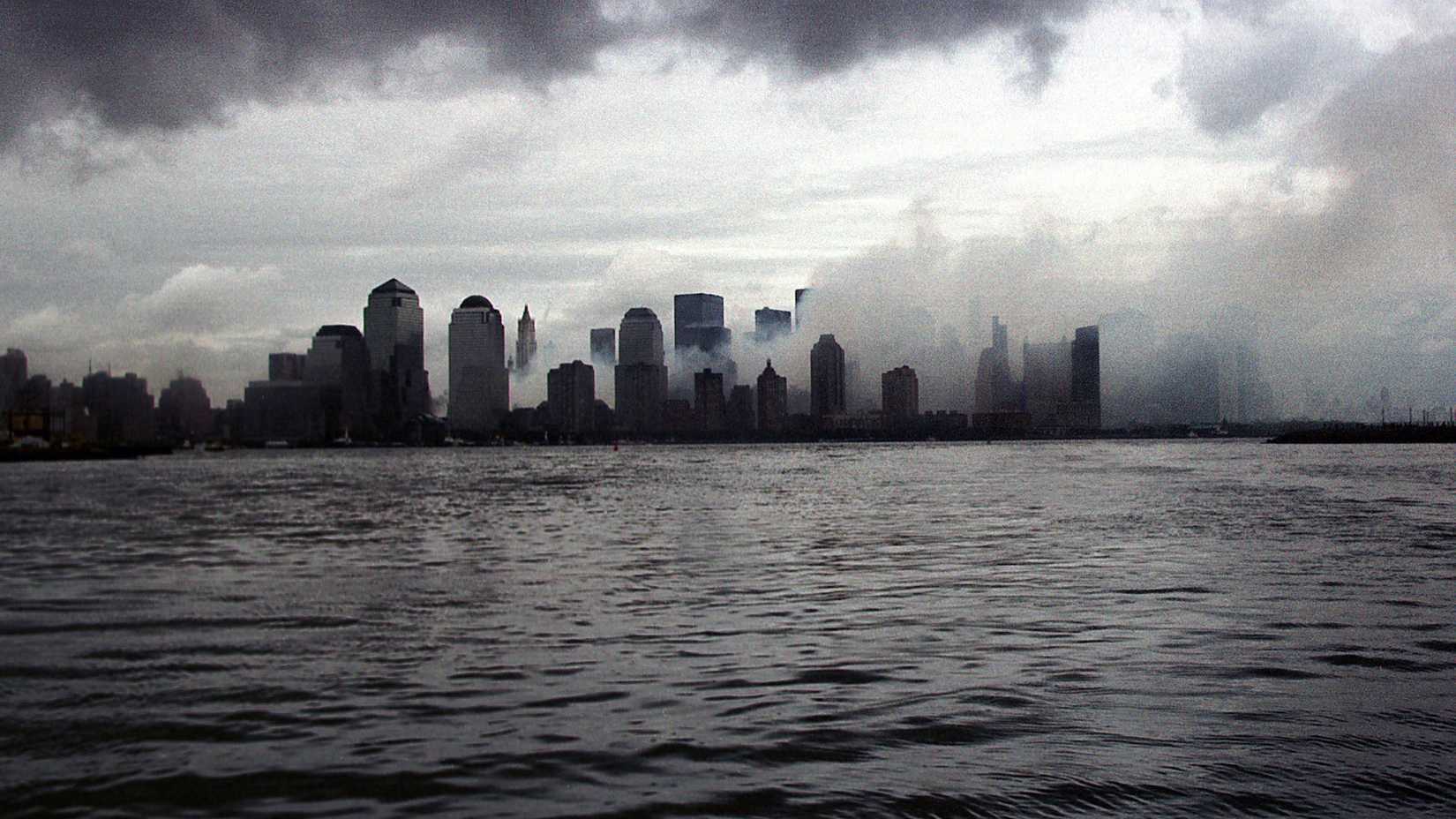
Later that day, he flew to Liberty State Park, across the Hudson from Lower Manhattan. He remembers ambulances, helicopters and gurneys assembled for casualty responders expected to arrive.
On Sept. 14, he returned to the park around dawn and found a boat crew willing to take him across.
“It was all on me. I was by myself. I was a tech sergeant at the time,” Olsen said.
He worked his way toward the ruins, photographing what he encountered while trying to stay clear of the response. His officially archived photographs include construction workers and first responders heading toward Ground Zero that day.
At the site, he photographed New York Army National Guard soldiers and a military public affairs team conducting an interview. The people responsible for documenting others would have a record of their own work.
Among the firefighters and construction workers, Olsen remembers exhaustion written across faces. “They were beat,” he said.
He also made a deliberate choice about where to put his camera away. Someone had spray-painted the word “morgue” with an arrow. Olsen stayed away, concerned that a family could recognize a loved one in a photograph before being notified.

Elsewhere, he kept shooting.
In 2001, his office still used analog film, which meant he had to wait for processing before he could examine what he had captured. He carried multiple boxes of rolls into New York, enough to keep working without constantly worrying about running out.
When he went to collect the photographs from a one-hour processing shop, he recalled, the employees looked shocked. For a moment, he worried something had gone wrong with the film. Their reaction, he said, was to the images themselves.
Was there something wrong with the film? And they said, No, no, it’s not the film. It’s what you took the pictures of. And it was like, okay. I did it right then.
Olsen revisits the photographs every year and posts some on Sept. 11. He thinks about people born after the attacks, whose understanding of that day depends on records and accounts left by others.

Asked why that documentation matters, Olsen pointed to Gen. Dwight D. Eisenhower’s response to the Nazi concentration camps. Eisenhower visited Ohrdruf on April 12, 1945, and later requested that members of Congress and newspaper editors witness the camps themselves. He wanted firsthand evidence that could withstand future attempts to deny the atrocities. Olsen paraphrased Eisenhower’s call for witnesses:
I want, you know, photographers here. I want the people who do newsreels here, I want writers … I want politicians. I want to see the senators. I want to see representatives.
Eisenhower understood “the importance of documenting it because he knew even back then that there would be people later on in history saying, this didn’t happen,” Olsen said.
For Olsen, the film he carried into Ground Zero left a physical record of what he saw. He hopes those photographs will remain available long after he is gone.
“This is in a sense my legacy as a military photographer,” Olsen said.
“As long as people look at these pictures and understand what has happened and are told about what has happened, then that to me is the most important thing.”