F-35 proved combat readiness during Middle East deployments, Air Force officials say

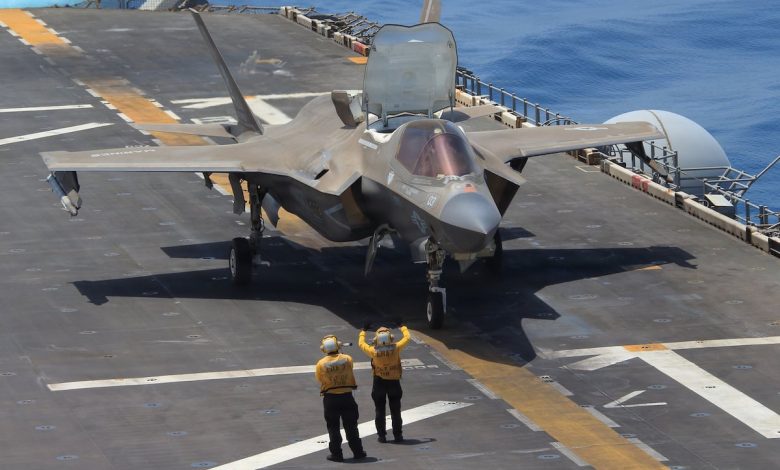
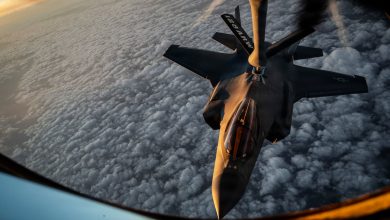
Top Air Force officials on Monday praised the service’s next-gen fighter jet for demonstrating its ability to sustain intense combat operations during Operation Epic Fury and Operation Midnight Hammer.
Speaking at the Air & Space Forces Association’s 2026 Air, Space & Cyber Conference, Maj. Gen. Brian Laidlaw and Col. Charles A. Fallon touted the F-35 Lightning II fleet’s ability to execute missions during armed conflict several months after an independent watchdog questioned the jet’s combat readiness.
“When properly resourced, we showed without a doubt how well this airplane can perform in combat,” said Laidlaw.
The officials listed several positives the jet demonstrated during combat operations in recent months.
Aircraft deployed during contested environments may face a higher need for spare parts that a possibly strained logistics supply chain has to get to them.
But the F-35, Laidlaw pointed out, withstood and maintained high mission-capable rates over a long period of time during intense combat operations, despite these potential challenges.
The jet was also notable for its maintenance profile, said Fallon.
For a fourth-generation flight line, it was common to see hydraulic fluid and oil everywhere with service members cranking wrenches.
But an F-35 flight line was markedly different.
“You go out there on an F-35 flight line in between goes — people are smoking a Lucky,” Fallon said. “There’s nothing going on.”
Either an F-35 is broken and needs some parts before it can re-up for another flight, or it just needs some fuel and hot weapons for a quick 45-minute takeoff turnaround. Those improvements have palpable effects on survivability.
“When we can start cutting down from hours to minutes, that really matters and that equals people’s lives,” Fallon said.
The F-35 also surprised the officials by proving that it was not only survivable but versatile, capable of performing several different types of missions, according to Laidlaw.
This opened up the need to bring in new weapons and certify them quickly to address emerging missions.
A process that would normally take months or years during peacetime moved at lightning speed during the war.
Laidlaw hoped it would serve as a template for how to move swiftly in the future and pull together services, allies, industry and weapons manufacturers to work in tandem toward a shared goal.
This versatility meant that the demand for the plane would only increase over the coming years, according to Fallon.
“More than half the wing has been gone at any time for the past two and a half years, and that’s not going to change anytime soon,” he said.
The praise of the F-35 follows a June Government Accountability Office report that said the full fleet of F-35 Lightning II Joint Strike Fighters’ readiness rates had fallen to 25%.
The Air Force was quoted in the report as saying that the decline in readiness was in part due to software delays, parts availability and issues with corrosion.
Riley Ceder is a Navy reporter at Military Times, where he covers issues directly affecting service members and their families, as well as breaking news.