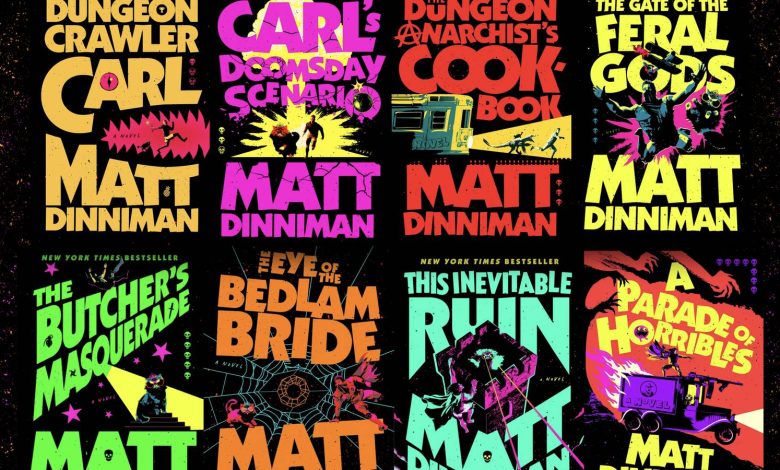
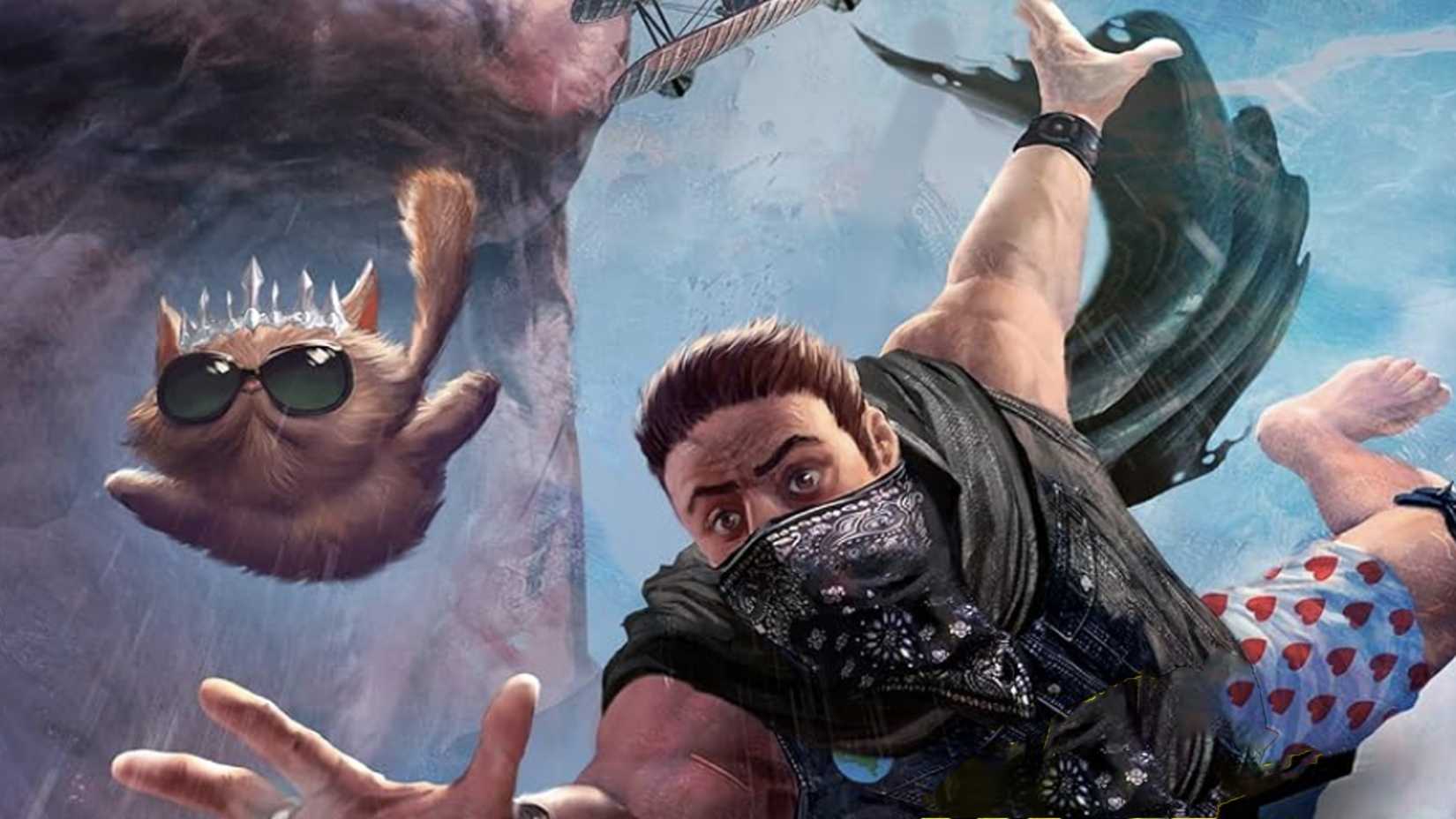
When the world ends in Matt Dinniman’s Dungeon Crawler Carl, its title character enters the apocalypse in boxer shorts, a leather jacket, and a pair of pink Crocs that don’t quite fit. He is also carrying his ex-girlfriend’s prize-winning Persian cat.
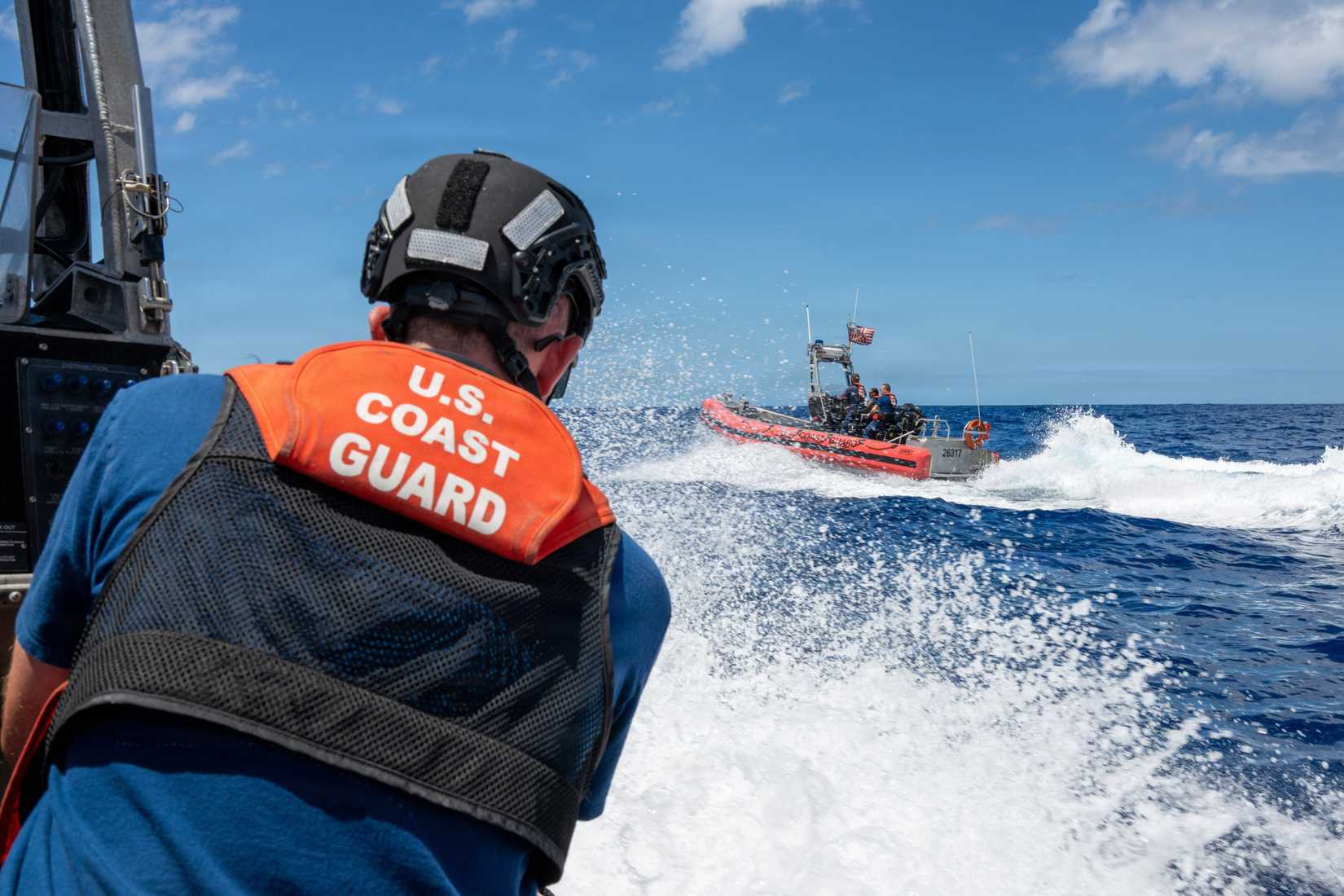
Buried somewhere beneath all that absurdity is a detail that should make the hero feel unique to readers: Carl is a former member of the U.S. Coast Guard.
That background has become increasingly interesting as Dungeon Crawler Carl has grown from a cult LitRPG series into one of the biggest things happening in science fiction. On Audible’s bestseller list for the week ending Sept. 18, seven of the 10 bestselling fiction audiobooks belonged to Dinniman’s series. The first four books occupied spots No. 2 through No. 5.
The eighth installment, A Parade of Horribles, became an instant No. 1 New York Times bestseller following its May release. Peacock has also ordered a live-action television adaptation, with Thor: Ragnarok writer Chris Yost adapting the books and Seth MacFarlane’s Fuzzy Door among the producers.
So, yes, the Coast Guard veteran with the talking cat is having a moment.
Welcome to the Dungeon
For anyone who hasn’t yet fallen down the Dungeon Crawler Carl rabbit hole, the premise requires a little explaining.
Aliens arrive on Earth and promptly flatten nearly every human-made structure on the planet. The survivors who make it underground are dropped into an enormous dungeon governed by video game-style rules, complete with character classes, achievements, bosses, loot boxes and an increasingly unstable artificial intelligence.
That gaming DNA also gives the series another connection to military culture. Veterans have shaped some of gaming’s biggest fictional worlds, including franchises such as Call of Duty and Medal of Honor.
Dungeon Crawler Carl approaches that intersection from the opposite direction, placing a fictional veteran inside a world governed by many of the same mechanics players would recognize from games.
The whole thing is also a television show watched by billions of viewers across the galaxy.
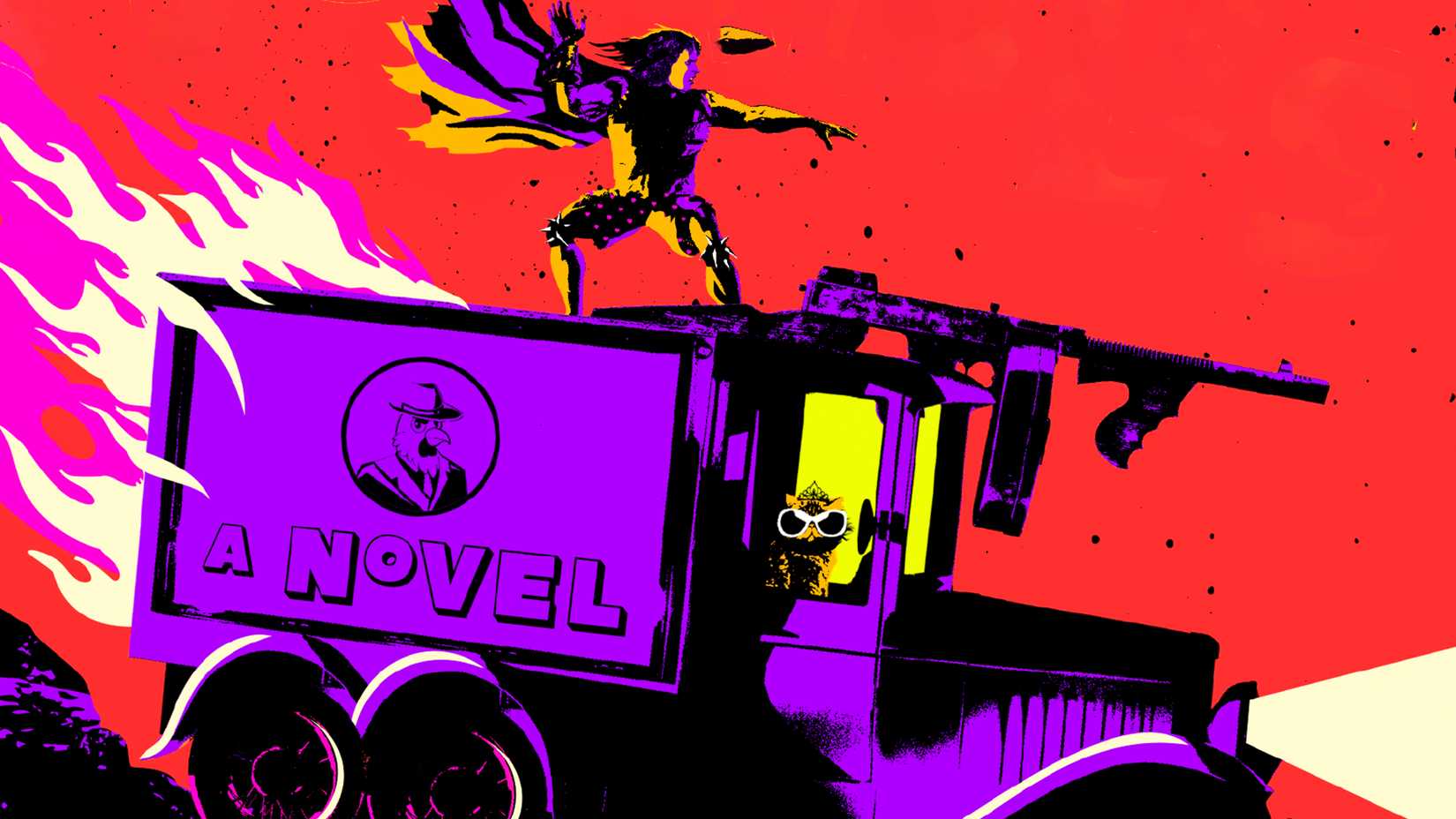
Carl enters the dungeon alongside Princess Donut, the aforementioned Persian show cat, and the two have to become entertaining enough to stay alive while figuring out how to survive monsters, traps, other contestants and the people running the show.
Penguin Random House describes the books as a combination of science fiction, fantasy and the game mechanics that define LitRPG, or “literary role-playing game,” fiction.
It is violent, ridiculous and frequently very funny. As the series continues, however, the joke increasingly shares space with a story about people trying to remain human inside a system designed to turn their suffering into entertainment.
That is where Carl becomes more interesting than the pink Crocs suggest.
Carl Isn’t Written Like the Usual Military Action Hero
Before Earth gets turned into an intergalactic game show, Carl has already served a stint in the Coast Guard.
After leaving the service, he works as a marine technician in Seattle, repairing electrical systems aboard boats. Dinniman establishes both pieces of his background early in the first novel.
His veteran status does not arrive with a classified résumé, a mysterious special operations past, or a closet full of guns. Carl begins the story as a 27-year-old guy trying to get his girlfriend’s cat out of the cold.
That makes him an unusual kind of military veteran for an action-heavy science fiction series. Popular genre stories have no shortage of space Marines, super soldiers and former elite operators.
Carl enters his war carrying practical experience from military service and a technical trade, but neither functions as a magic key that makes him prepared for everything that follows.
Of course, military experience has long found its way into science fiction, including through authors who served themselves. But Carl represents something a little different: a veteran protagonist whose time in uniform informs the character without defining everything about him. Nobody leaves the Coast Guard trained to fight goblins.
What Carl does know how to do is solve problems.
Throughout the series, survival repeatedly comes down to understanding how something works, spotting weaknesses, improvising with whatever is available, and keeping other people alive when a situation goes sideways.
Carl becomes increasingly capable of leading other crawlers, but readers watch that role develop rather than receiving a fully formed warrior on page one.
It would be easy to attribute those traits directly to his time in uniform. Without Dinniman saying so, that would also be reading more authorial intent into the books than the text gives us.
That relationship between military experience and speculative fiction is hardly new.
Veterans have also brought their military experience into modern science fiction, including author Michael Mammay, who has written about how his service in Afghanistan helped shape his military sci-fi novel Planetside. Carl offers a different variation on that tradition: the veteran is the fictional character rather than the author, and his service remains part of a much larger identity.
What the Coast Guard background clearly provides is context.
For veterans, that may be one of the more recognizable things about him. That may also help explain why Carl’s background feels worth paying attention to.
Books can hit differently after military service, especially when they deal with survival, leadership, bureaucracy and the strange ways people adapt under pressure.
A Veteran Character Who Gets to Be Weird
Veteran characters in popular fiction are frequently introduced through their service. Their branch, combat experience or military skills become the quickest way to explain what they can do and why they can do it.
Military experience has long found its way into science fiction, sometimes through veterans such as Vietnam draftee Joe Haldeman, whose own service helped shape his acclaimed novel The Forever War. Carl comes from a different direction. His time in uniform matters, but the books leave plenty of room for him to become something stranger than a conventional military hero.
Carl gets considerably more room to be strange.
He is angry. He is funny. He screws things up. He develops complicated relationships. He becomes attached to people and creatures he never expected to care about. He also spends a surprising amount of time arguing with sentient artificial intelligence that has developed an increasingly uncomfortable interest in his feet. His veteran status remains there through all of it.
That may be one reason Carl feels different from the military archetypes that have populated science fiction for decades. Leaving the service did not end his story, and serving did not become the only interesting thing that ever happened to him. And now the character is headed for an even larger audience.
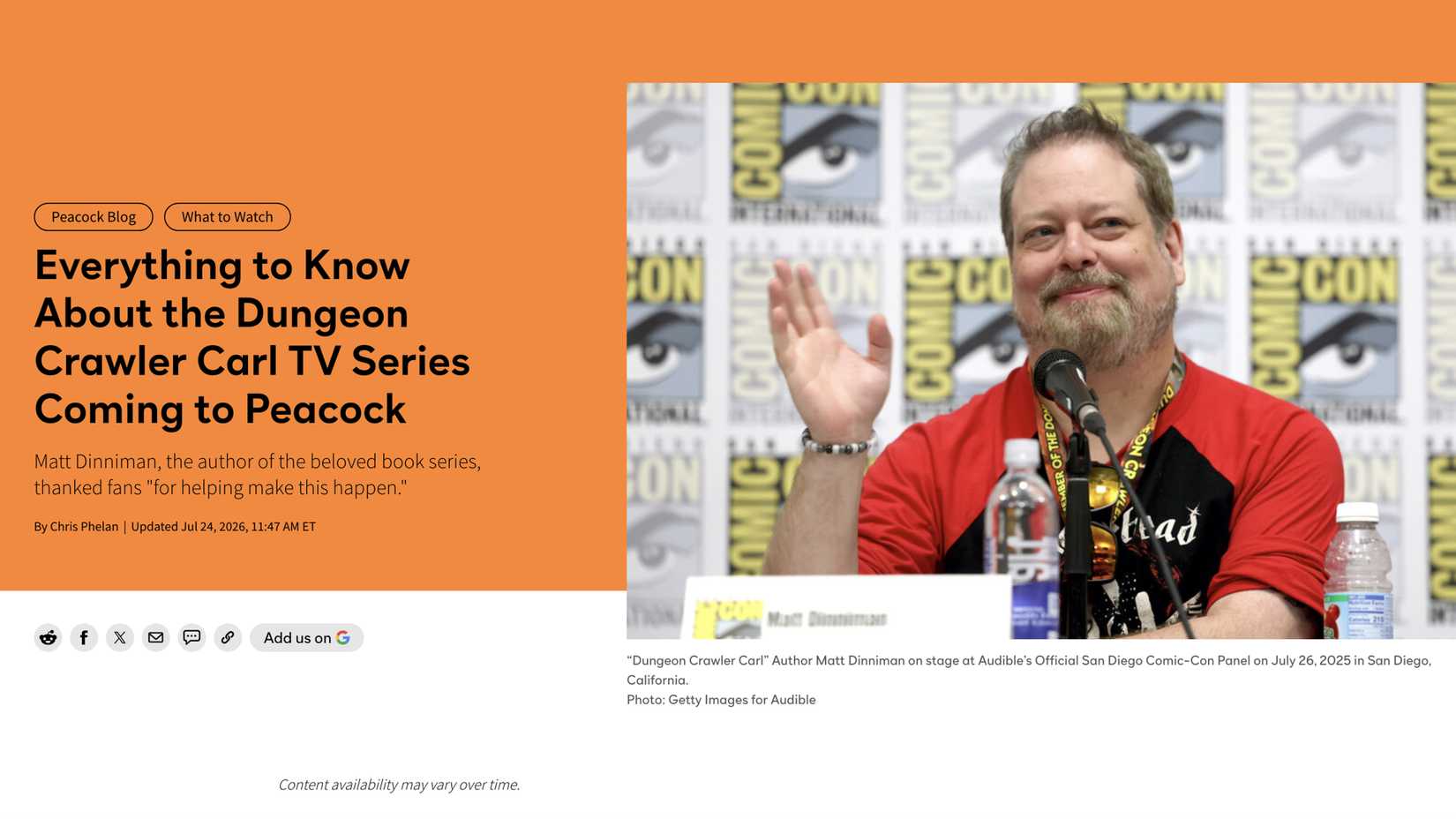
Peacock gave Dungeon Crawler Carl a straight-to-series order earlier this year. Dinniman is a co-executive producer, and audiobook performer Jeff Hays has already been announced as the voice of Princess Donut. A premiere date has not yet been announced.
Whenever Carl eventually crawls out of the books and onto television screens, millions of new viewers may discover the same strange hero readers and audiobook listeners already have.
Just don’t expect him to show up in uniform. The uniform probably wouldn’t survive the dungeon, anyway.