The Mach 3 SR-71 Blackbird’s Ceiling Was Thought to Be 85,000 Feet. In 1965, a Test Pilot Flew It Past 90,000, Felt It Wobble, Lost an Engine and Landed on One at Edwards

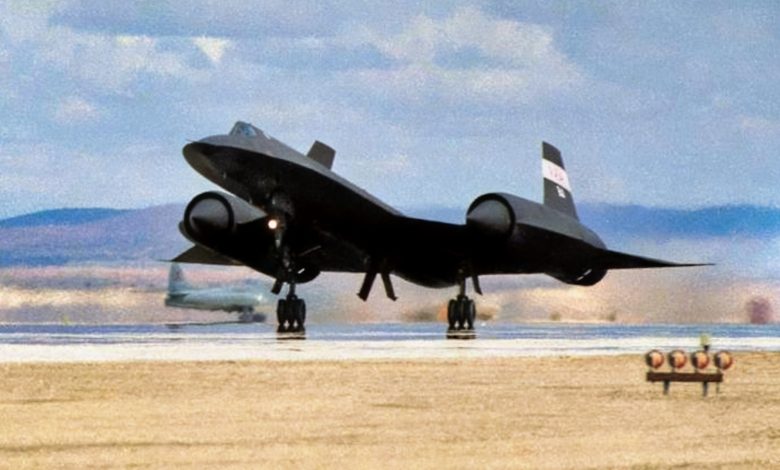
Summary and Key Points: In 1965, the SR-71 Blackbird was still in testing at Lockheed’s Skunk Works when Kelly Johnson asked Air Force Capt. Pete Collins, paid about $600 a month with no life insurance, to fly it past 90,000 feet. With 1 percent of the atmosphere under the wings, the jet began to wobble; a J-58 shed its turbine blades, and Collins landed on one engine at Edwards. The data set the 800-degree inlet limit and 1.5-degree pitch margin in every simulator after.
The SR-71 Blackbird Owns the History Books
In 1965, the famous SR-71 Blackbird was still being tested and developed at Lockheed’s Skunk Works, led by designer Kelly Johnson.
Before digital computers could process numbers and equations at lightning speed, airplane design relied on aeronautical theory and engineering, using draft tables, slide rules, and pencils.
SR-71 Blackbird. Smithsonian Display Photo Taken by 19FortyFive on 9/30/2026.
A designer might have a sound theory about whether the airplane he was sketching on a drafting table might fly.
The engineers could build the engines and controls and instruments for it, but then you had to actually take it into the air as a live experiment and see if you were right about all that.
The Test Pilots Proved The Science Worked
That required a test pilot.
A man who would either turn the designer’s theory about how an airplane would fly into reality or into his own funeral.
Pete Collins was one of the first three test pilots selected to test the Top-Secret spy plane. He was a seasoned Air Force Captain and test pilot.
Unlike civilian test pilots earning big checks from manufacturers, he was paid a base salary.
Captain Collins was earning about $600 a month.
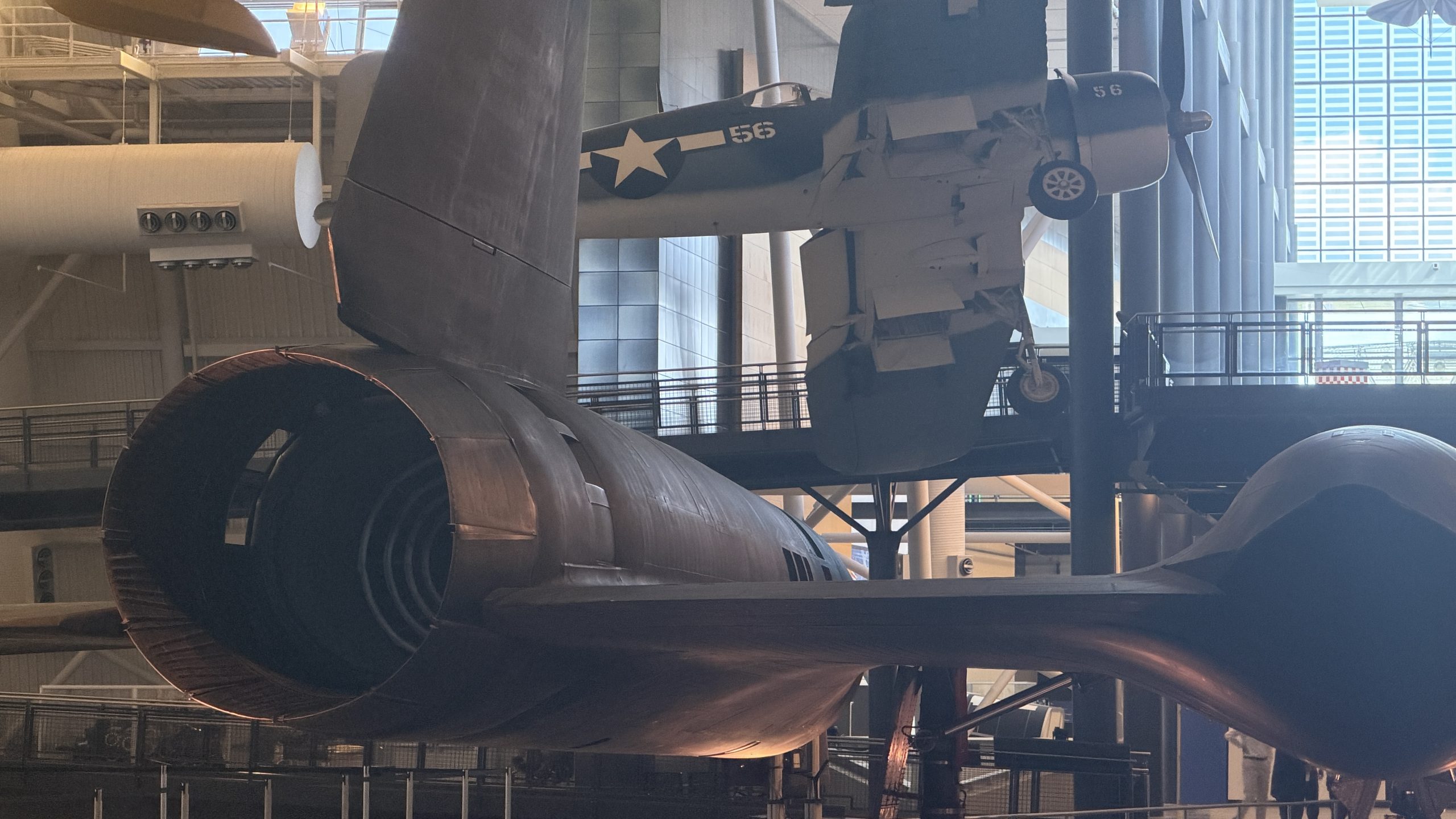
SR-71 Blackbird. Smithsonian Display Photo Taken by 19FortyFive on 9/30/2026.
Because of his occupation, no one would write a life insurance policy on him.
If he died flying as a test pilot for the Air Force, his next of kin would receive a death benefit of just $13,000.
During the 1950s, the test pilots at places like Edwards AFB were being killed at a rate of one a week.
Among pilots already known to be outstanding, he was considered among the very best they had ever seen. The airplane became a part of him.
He was of a rare type who not only could fly but also understood in detail what made an airplane fly.
He was a technician and a scholar, able to explain not only what an airplane was doing, but why.
He and other pilots would write the book on how to fly it, or be in the book for not flying it well enough.
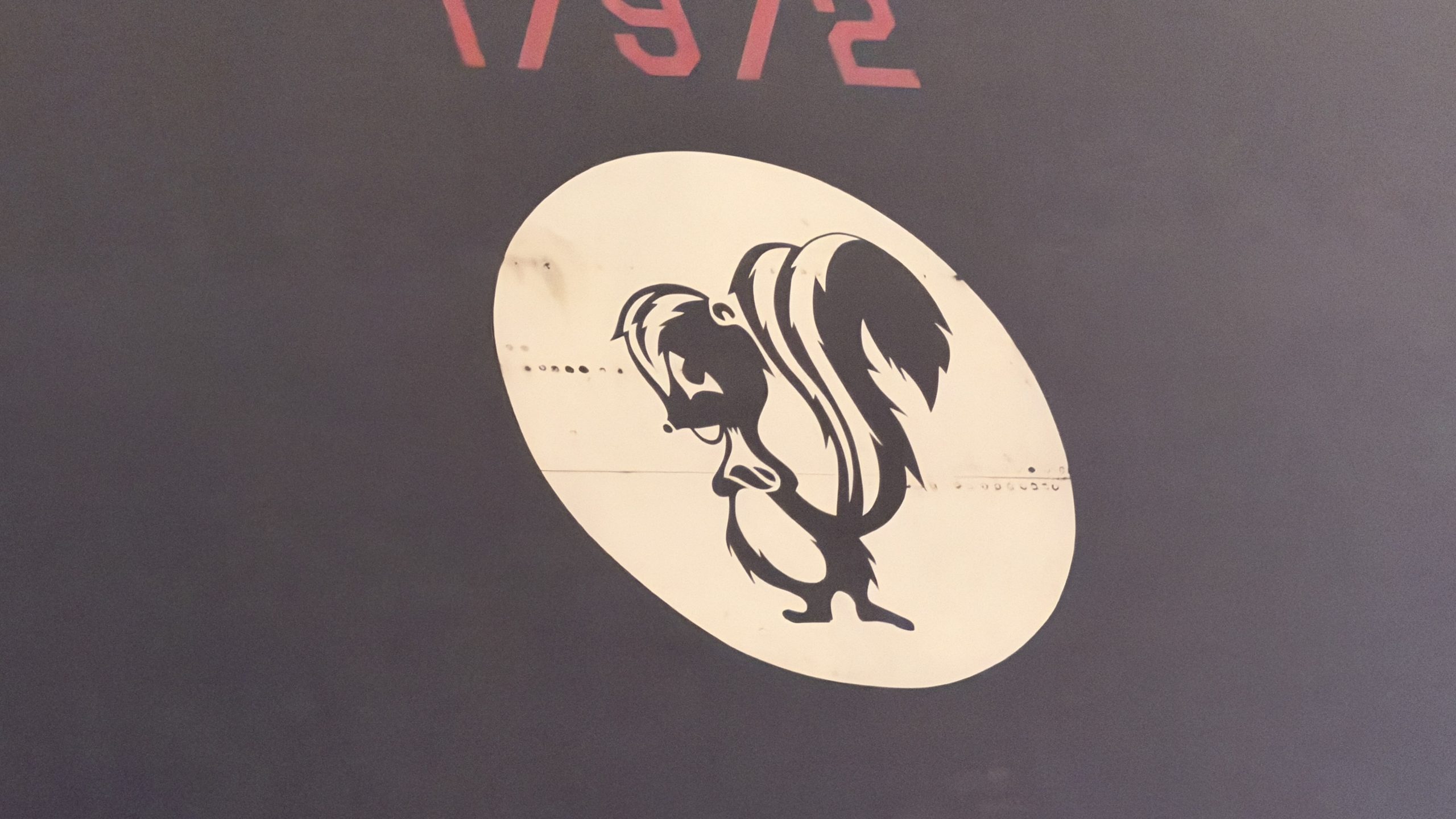
SR-71 Blackbird. Smithsonian Display Photo Taken by 19FortyFive on 9/30/2026.
Testing any new plane was a painstaking series of baby steps before full flight testing.
This involved testing the engines on the ground, from start-up to throttle-up and shutdown, dozens of times to make sure they worked reliably.
They tested the plane’s ability to taxi and turn on a runway to line up for takeoff.
They flew brief hops for takeoffs and landings over and over again to learn the optimal speeds for both.
They tested and scrutinized every detail, inventing the science of high-speed/high-altitude flight as they went.
Finally, they knew enough about the basics to begin testing the plane’s speed and altitude limits, even as the Skunkworks hangars still wrote the manual for flying it.
They knew they could go fast, at least Mach 3 and perhaps faster in the right conditions.
The SR-71 flew more on the temperature of the air it compressed in flight than on the brute force of its engines.
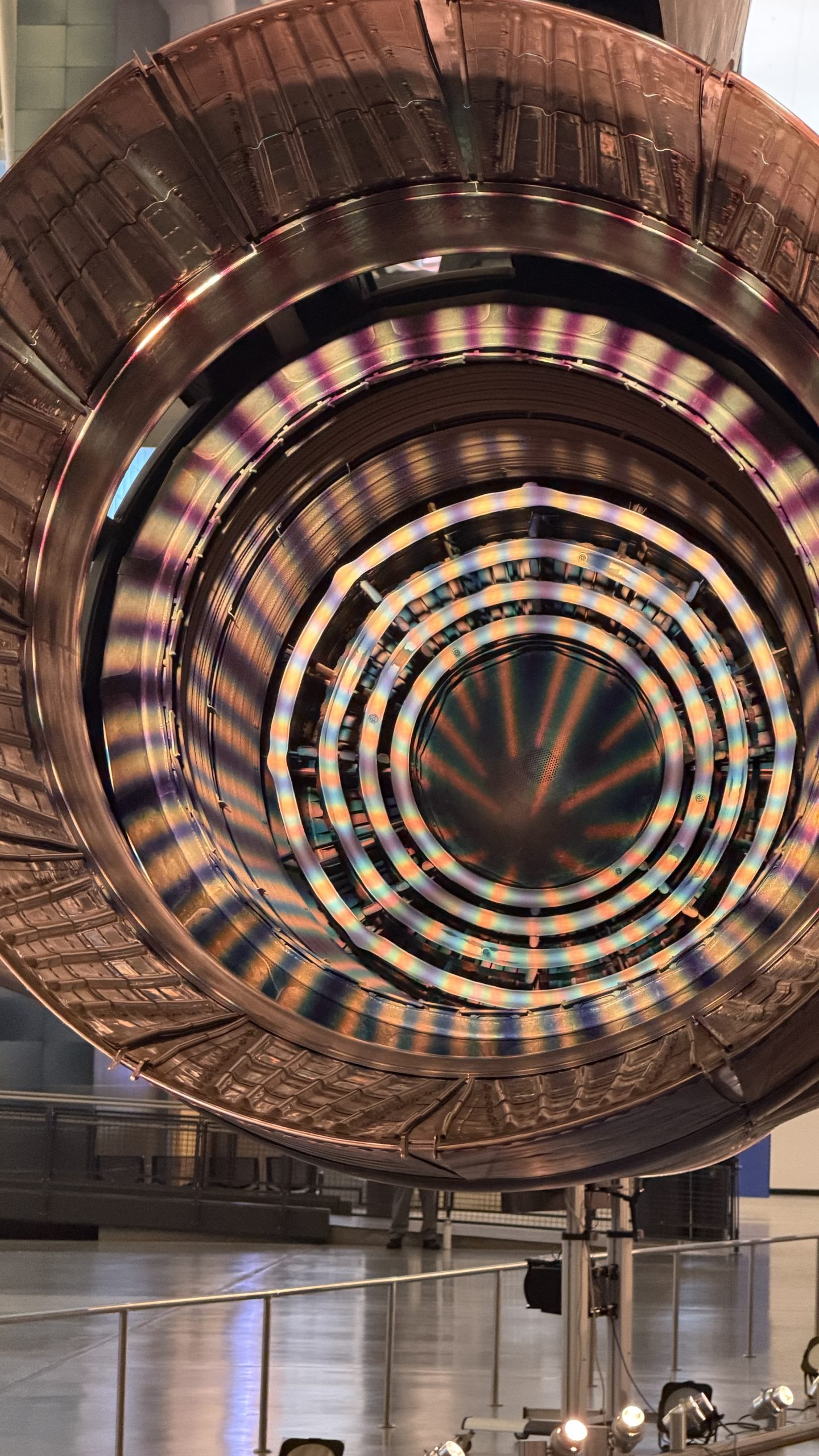
SR-71 Blackbird. Smithsonian Display Photo Taken by 19FortyFive on 9/30/2026.
They weren’t sure why yet, but the plane was a bit faster in
colder air than it was at warmer temps in the high atmosphere.
They knew they could climb pretty high. When 60,000 feet was considered the upper limit for aircraft, the SR-71 could not only reach 85,000 feet, but it could do so at Mach 2.5 and stay there.
Lead Designer Kelly Johnson approached Collins one day in 1965 and asked him to take the Blackbird beyond the 85,000-foot limit, past 90,000 feet.
They theorized the Blackbird might fly that high, but the engineers wanted to know the absolute limit.
Johnson had other test pilots to pick from, but he picked Collins.
There Was No Data For A Simulated Training Flight; The Pilot Would Bring That Data Back With Him
A flight simulator was being developed for the aircraft, but there was no data to train him. He would bring that data back.
He had to go up on gut instinct, fly the fastest, highest-flying jet anyone had ever built, and figure it all out while he was up there.
To 90,000 Feet And Beyond
That morning in 1965, Collins and his Reconnaissance Systems Officer, Conrad Seagroves, took the Blackbird into a bright, clear sky, climbing higher and faster to the known 85,000-foot limit, then he eased back on the stick.
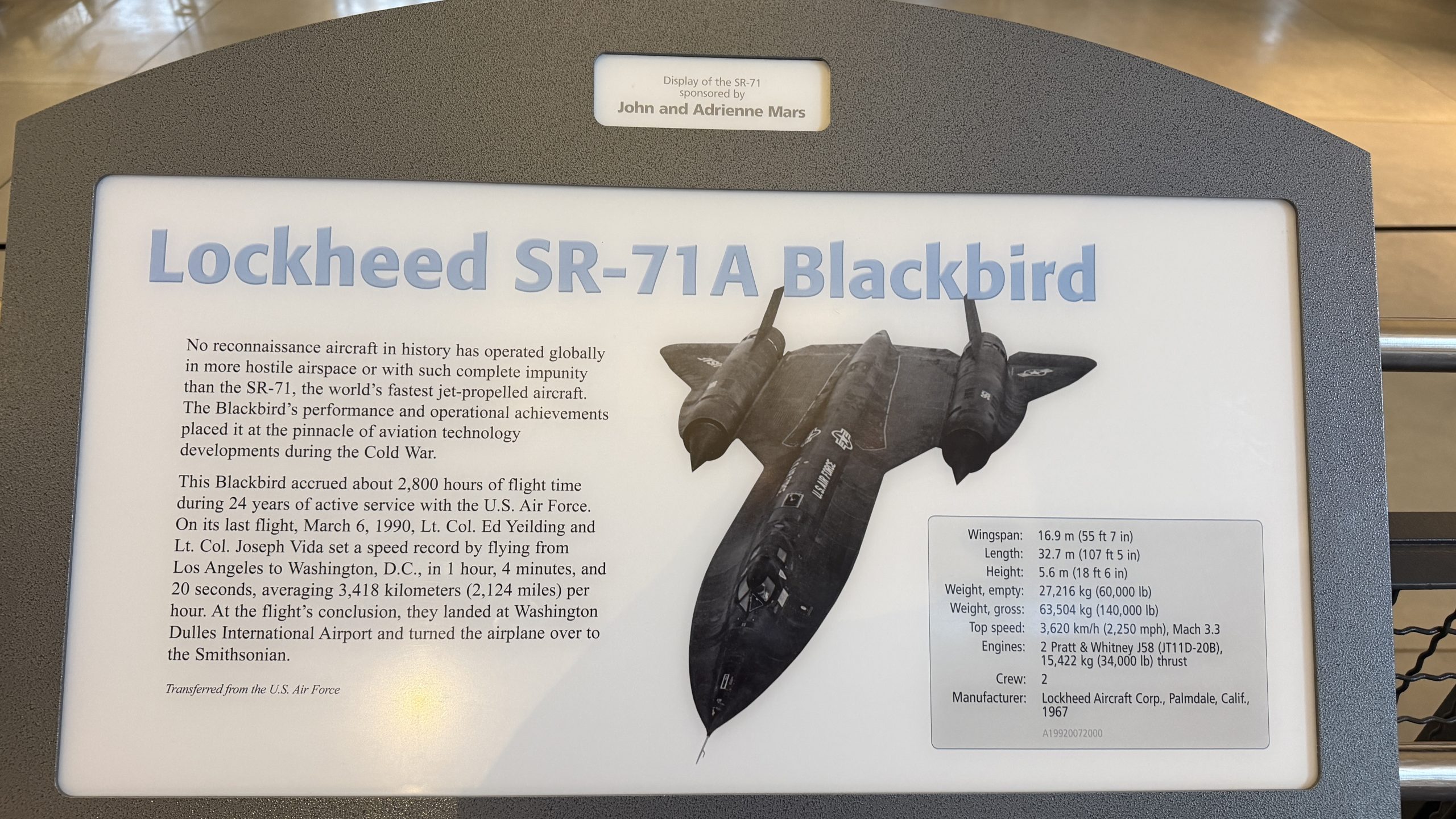
SR-71 Blackbird. Smithsonian Display Photo Taken by 19FortyFive on 9/30/2026.
The aircraft continued to climb until it reached 90,000 feet and kept climbing (no official record exists of how high).
Everything seemed normal, then the Blackbird broke from its smooth, controlled climb and began to wobble.
Collins was so high that only 1% of Earth’s atmosphere was under his wings.
Just that one percent of the air to maintain directional stability.
He was at the limits.
He now had to slow the aircraft by easing off the throttles and slowly lowering the nose to maintain a constant speed while still descending.
This was the exact moment the turbine blades in one of the J-58s came apart and shot out the back of the engine.
Where Did That Engine Go?
Collins and Seagroves now had a second unplanned, unbriefed test on their hands. Could safely land an SR-71 on a single engine?
They managed that remaining engine very carefully and brought the SR-71 to a safe touchdown at Edwards AFB.
Bringing Home The Simulation Data
Here is what Collins didn’t know would happen at 90,000 feet in the SR-71.
The J-58 turbojet engine compressor had an undisclosed inlet-temperature limit of 800 degrees Fahrenheit; go hotter than that, and the engine would eat itself and spit the pieces out the back.
At that altitude and speed, a 1.5-degree variation in nose pitch would drop speed by 90 knots, inducing a high-speed stall.
The nose pitched up violently, exposing the aircraft’s flat bottom to supersonic wind speeds.
The result was a sledgehammer blow of compressed, superheated air turning the Blackbird into a cloud of confetti.
That wobble Collins felt in the controls marked the beginning of the Blackhawk’s high-speed stall.
We know how much of a knife’s edge the SR-71 flew on beyond 90,000 feet because Collins came back alive with the information to put into the simulators other Blackbird pilots would later train on. Simulations that would keep them alive.
About the Author: Sean Spoonts
Sean Spoonts is the former Editor-In-Chief of SOFREP.com. He is a military analyst, writer, and commentator whose work has appeared in Newsweek, CNS News, Ukrinform, and various military/veteran media networks and professional publications, including the Military Intelligence Professional Bulletin. He is a U.S. Navy veteran, having served as an Aviation Anti-Submarine Warfare Operator and Search and Rescue Helicopter Aircrewman.