Beijing to Shanghai In Just 1800 Seconds: China Is Ready to Test Its New Supersonic TMS-10 Plane

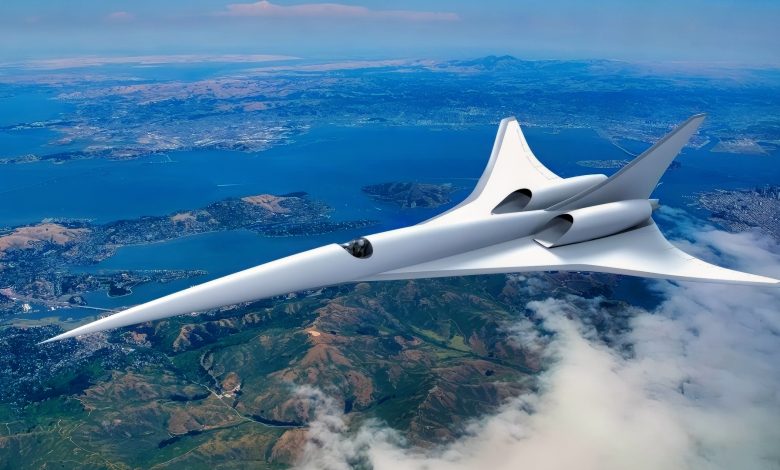
China’s TMS-10 low-boom supersonic demonstrator is entering final assembly. Developed by Tianmushan Laboratory, which was established with support from Beijing University, the program is expected to conduct a supersonic test flight before the end of 2026. So far, researchers have already completed aerodynamic wind-tunnel testing, flight-control design, and airframe manufacturing.
But the ultimate concept holds much higher ambitions—specifically, a ten- to fifteen-seat supersonic business aircraft that can cruise at Mach 2 or operate efficiently at subsonic speeds around Mach 0.95.
]]>
Of course, the key isn’t just speed; the Concorde already demonstrated that a civilian aircraft can sustain Mach 2, and that was fifty years ago.
The problem the TMS-10 will address is packaging that speed in a platform that is quiet, efficient, reliable, and affordable enough to operate routinely.
Concorde. Image Credit: Creative Commons.
Taking Flight
The first demonstrator has already flown. A 1:18-scale demonstrator flew in June 2025 from Dingzhou Airport in Hebei, staying below Mach 0.2.
The purpose here wasn’t to hit top speed but to validate that the aircraft could take off and land and remain stable and controllable.
The next phase is drastically more demanding, however: researchers intend to cross the sound barrier, sustain supersonic flight, measure the sonic boom, evaluate aerodynamics and flight control systems, and test the integration of propulsion and aerodynamic design.
Much of the program’s viability will hinge on shockwave behavior, which researchers won’t understand until the aircraft actually goes supersonic.
Testing the Sonic Boom
An aircraft moving faster than sound creates pressure disturbances that merge into shockwaves.
When a traditional supersonic aircraft reaches supersonic speeds, it produces strong pressure waves, which an observer on the ground hears as the characteristic sonic boom.
The Concorde—commercial aviation’s attempt at making supersonic flight mainstream—was relegated to overwater routes.
Why? Because the aircraft’s sonic boom led to the prohibition of overland flight. Obviously, this had economically negative effects.
When a Mach 2 aircraft has to fly subsonically over populated land masses, it becomes just another commercial aircraft, albeit an expensive one to operate and maintain. Modern low-boom research therefore seeks to reshape a supersonic aircraft’s pressure signature to mitigate the auditory effects, thereby preventing the hallmark sonic boom. This would potentially open up overland options.
Supersonic Solutions
The TMS-10’s demonstrator uses a three-surface configuration to address the sonic boom, including a forward canard, main wing, and rear T-tail.
Tianmushan says that the geometry is intended to prevent shocks around the nose and wings from merging into a stronger shock wave.
The rear configuration further redistributes and weakens pressure waves.
This is fundamentally wave shaping. Instead of one large pressure change reaching the ground, designers aim to create several smaller ones. Aircraft geometry, therefore, isn’t merely optimized for lift, drag, and stability—instead, it’s being designed around the sonic boom heard miles below the airplane by people on the ground.
Meanwhile, at NASA
The US has its own equivalent program: the NASA/Lockheed Martin X-59 QueSST, which reached supersonic flight in 2026, flying around Mach 1.4 at 55,000 feet.
The X-59 is designed specifically to test whether shaped sonic signatures can produce a much quieter “thump” on the ground.
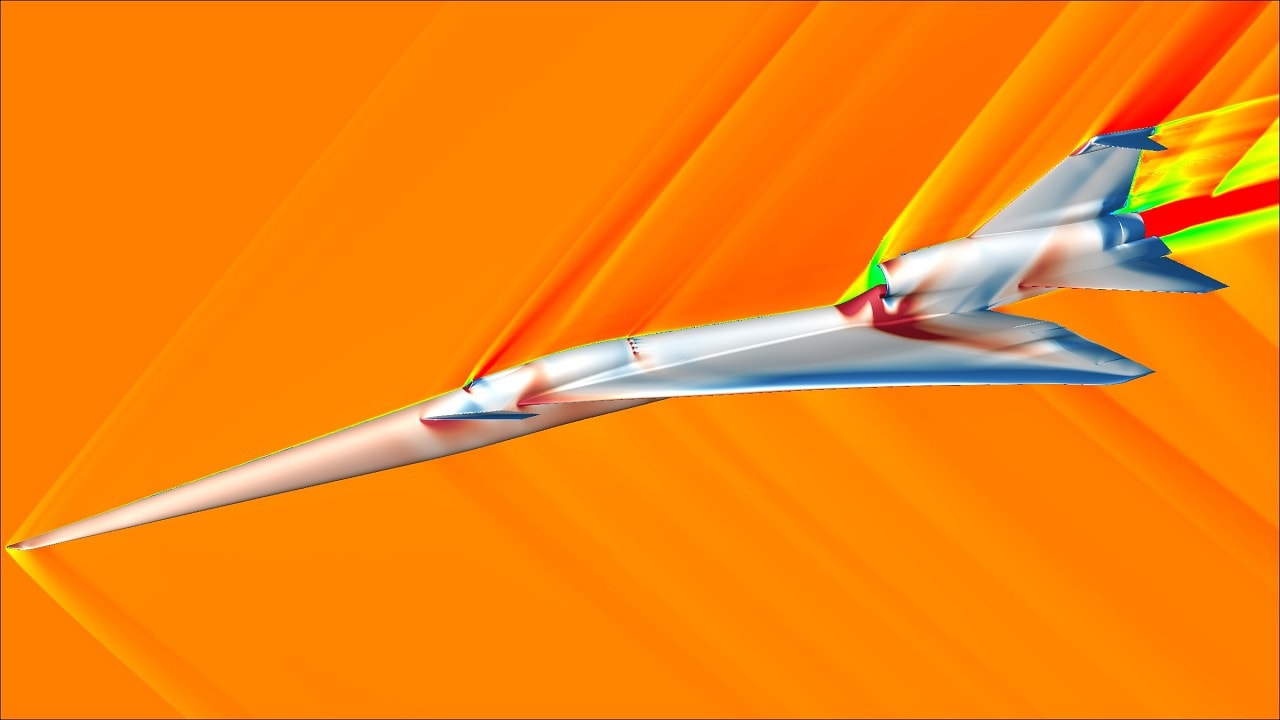
X-59 artist rendering. Image Credit: Creative Commons.
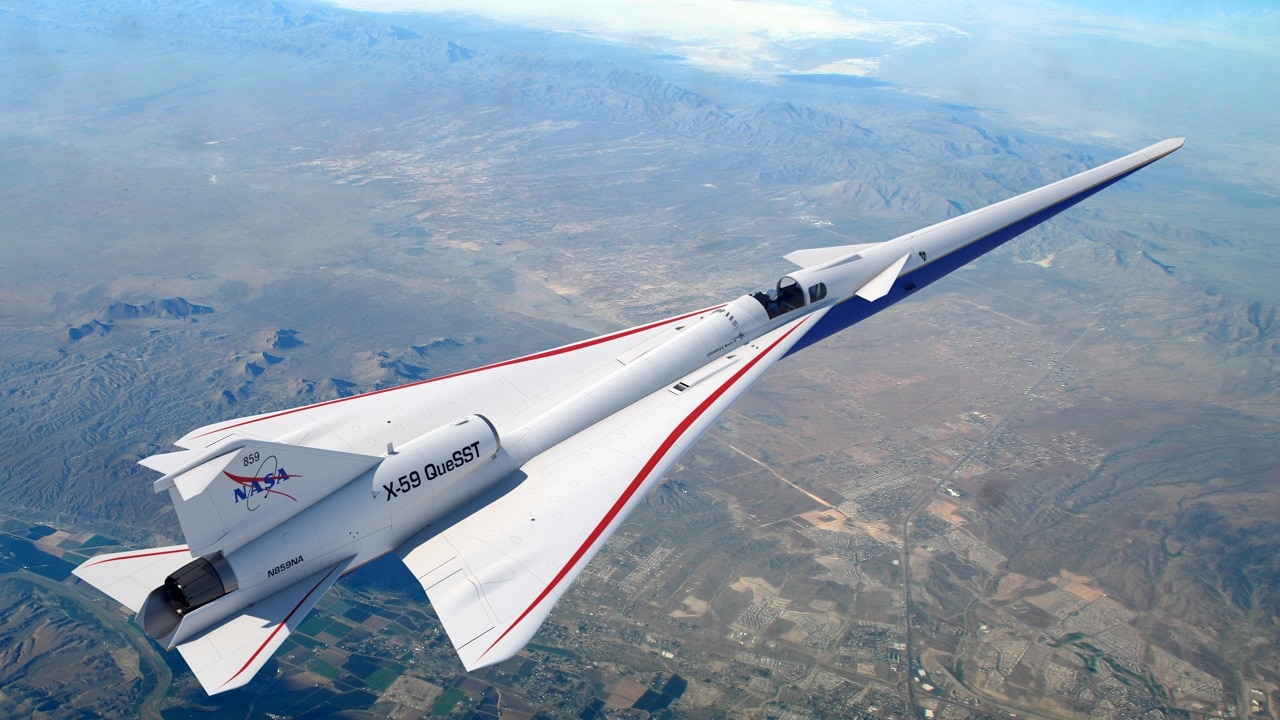
X-59. Image Credit: NASA.
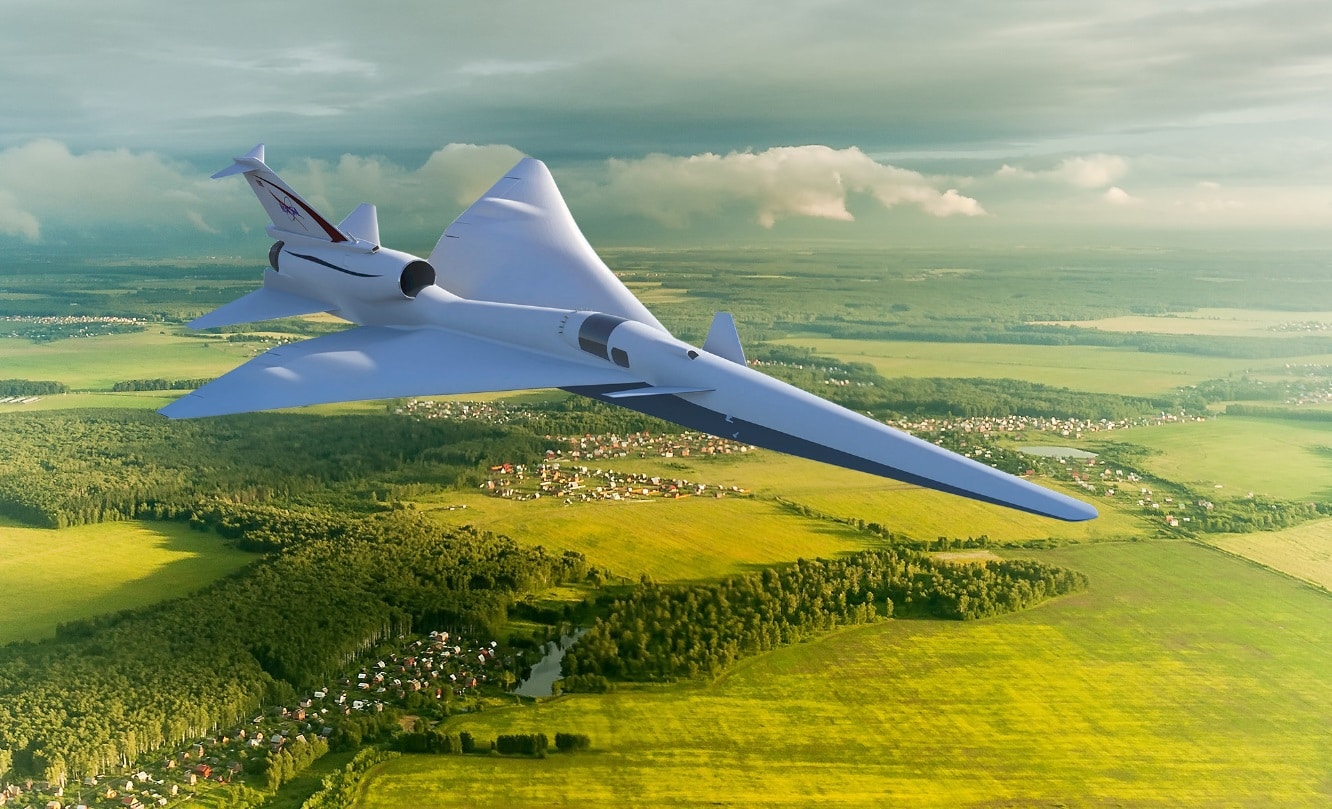
X-59
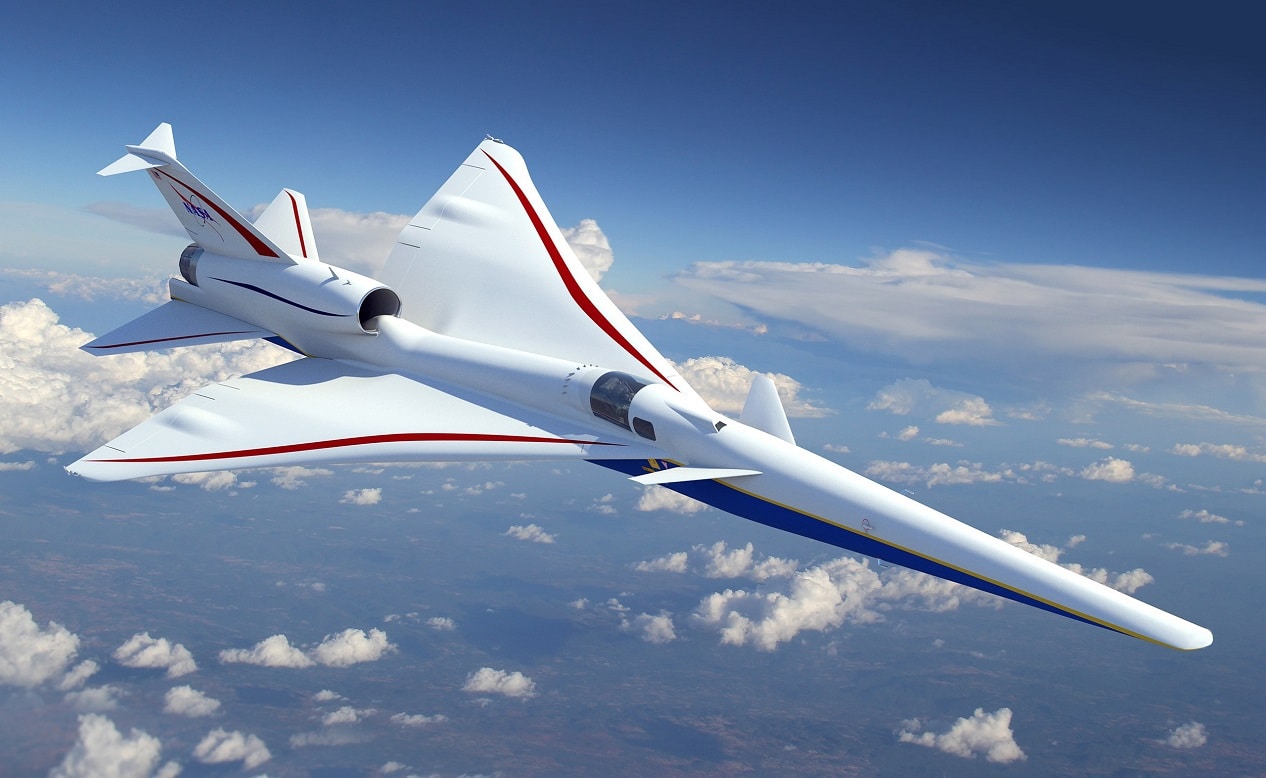
Nasa Quiet Supersonic Technology Low-Boom Flight Demonstrator.
The X-59 is visually distinct, with an unusually long, pointed nose and a carefully sculpted airframe that separates shock waves rather than allowing them to coalesce and create a massive, booming sound.
The TMS-10 appears to attack the same physics problem with a different configuration.
Hitting Mach 2
TMS-10’s eventual target—Mach 2—raises significant engineering problems.
Designers will need to account for changes in drag across the transonic and supersonic flight regimes. Designers will also need to address aerodynamic heating, which becomes a major factor during sustained high-speed flight. So the structure must withstand heating and cooling, as well as expansion and contraction
. And if the TMS-10 ultimately serves as a passenger aircraft, it may need a service life measured in thousands of hours, not just a couple of test flights, meaning the aircraft will have to last while maintaining relative comfort for the people on board.
We already know how to build a Mach 2 passenger aircraft. It has long since been accomplished. But the Concorde wasn’t practical enough to justify its continued operation. The TMS-10 seeks to make supersonic commercial travel enduringly practical.
About the Author: Harrison Kass
Harrison Kass is a writer and attorney focused on national security, technology, and political culture. His work has appeared in Tablet, City Journal, The Hill, The Spectator, and The Cipher Brief. He holds a JD from the University of Oregon and a master’s in Global & Joint Program Studies from NYU. More at harrisonkass.com.