The Eurofighter Typhoon and the Dassault Rafale Fighters Were Never Supposed to Have Been Created

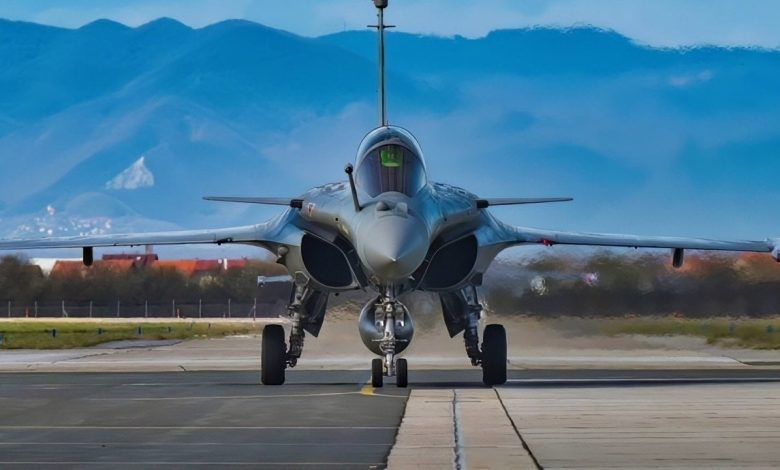
Summary and Key Points: The Eurofighter Typhoon and the Dassault Rafale look almost identical. Both are twin-engine, single-seat, multi-role fighters built around a tailless delta wing with canards and digital fly-by-wire. There is a reason for that resemblance: they started as one program.
Eurofighter Typhoon and the Dassault Rafale: Compare and Contrast
The Eurofighter Typhoon and the Dassault Rafale are two of Europe’s most prominent fighter jets.
On the surface, the two aircraft look very similar.
Both share a delta-canard wing layout, use twin engines, and are single-seat, multi-role fighters.
Despite the visual similarities, the two aircraft reflect distinct design philosophies, and although they may share similar capabilities, each is unique.
But what exactly are the differences between the Eurofighter and the Rafale?
Is one aircraft strictly better? Today, we’ll look at both aircraft and examine their respective strengths and weaknesses to understand the design priorities behind each.
Development of Europe’s Most Powerful Fighters
Dassault Rafale Fighter. Image Credit: Creative Commons.
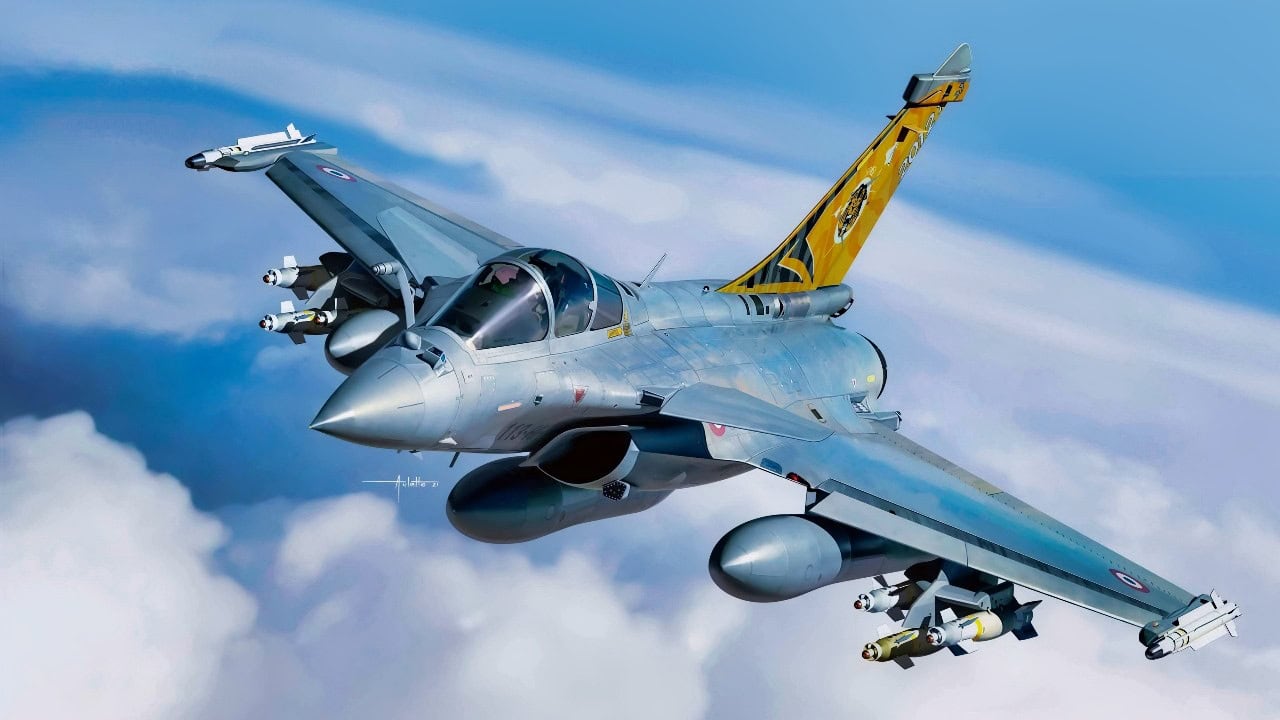
Dassault Rafale. Image Credit: Creative Commons.
The development of the Rafale and the Eurofighter are inherently intertwined.
The Eurofighter emerged from a collaborative effort among multiple European nations.
Originally, the aircraft began as several independent ventures that joined together to form a distinctly European fighter project.
In the 1970s, the UK began work on a new aircraft to replace the SEPECAT Jaguar.
Originally intended as a maneuverable tactical fighter, the program evolved to include air superiority capabilities.
At the same time, West Germany was developing its own fighter, with early designs featuring a delta-canard configuration.
The two nations decided to merge their efforts under a single program titled European Collaborative Fighter, or European Combat Fighter (ECF).
Spain later joined the effort, and the project became the Future European Fighter Aircraft (FEFA) program.
Originally, Dassault was part of the ECF project.
However, like many collaborative programs involving France and Germany, it stalled over disagreements.
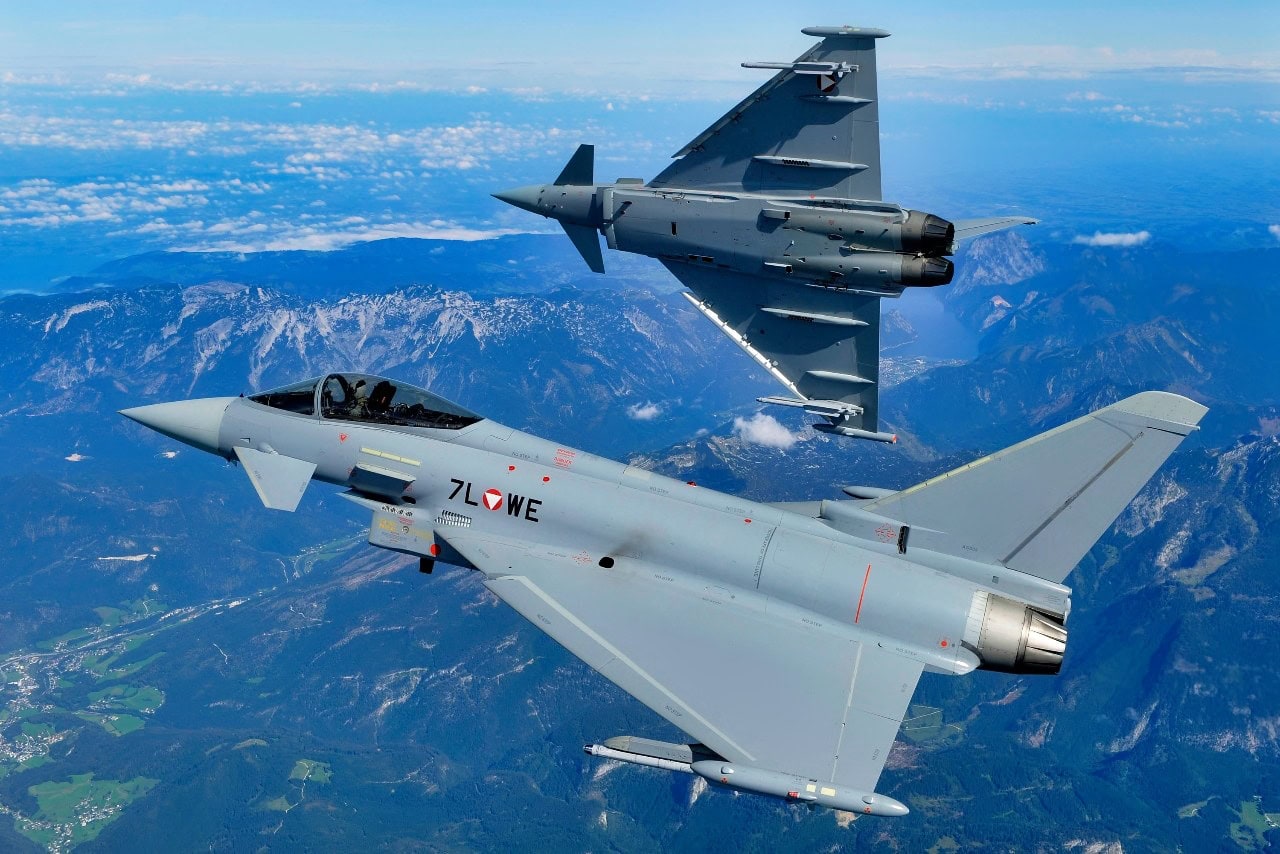
Eurofighter Typhoon. Image Credit: Creative Commons.
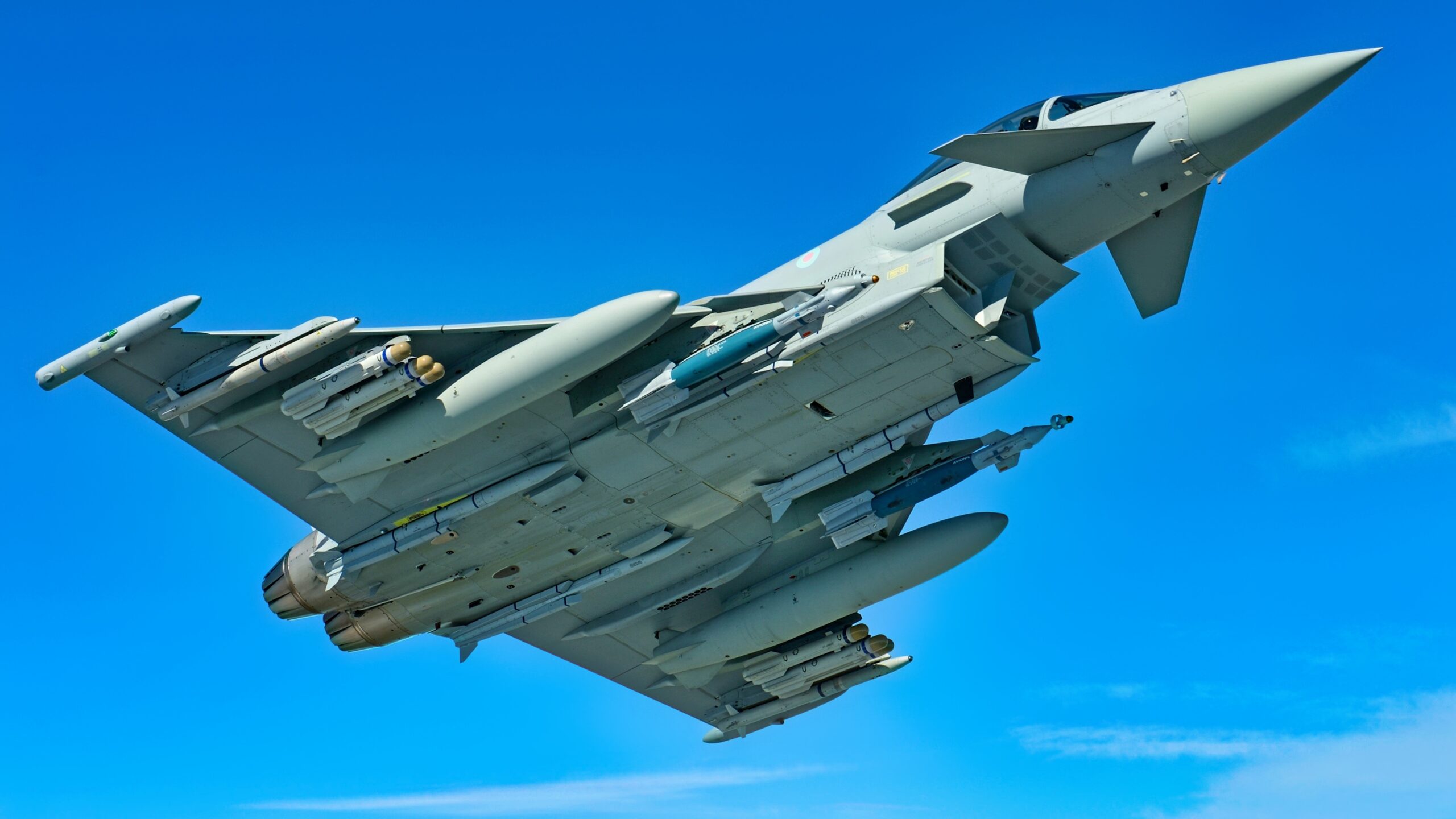
Eurofighter Typhoon. Image Credit: Creative Commons.
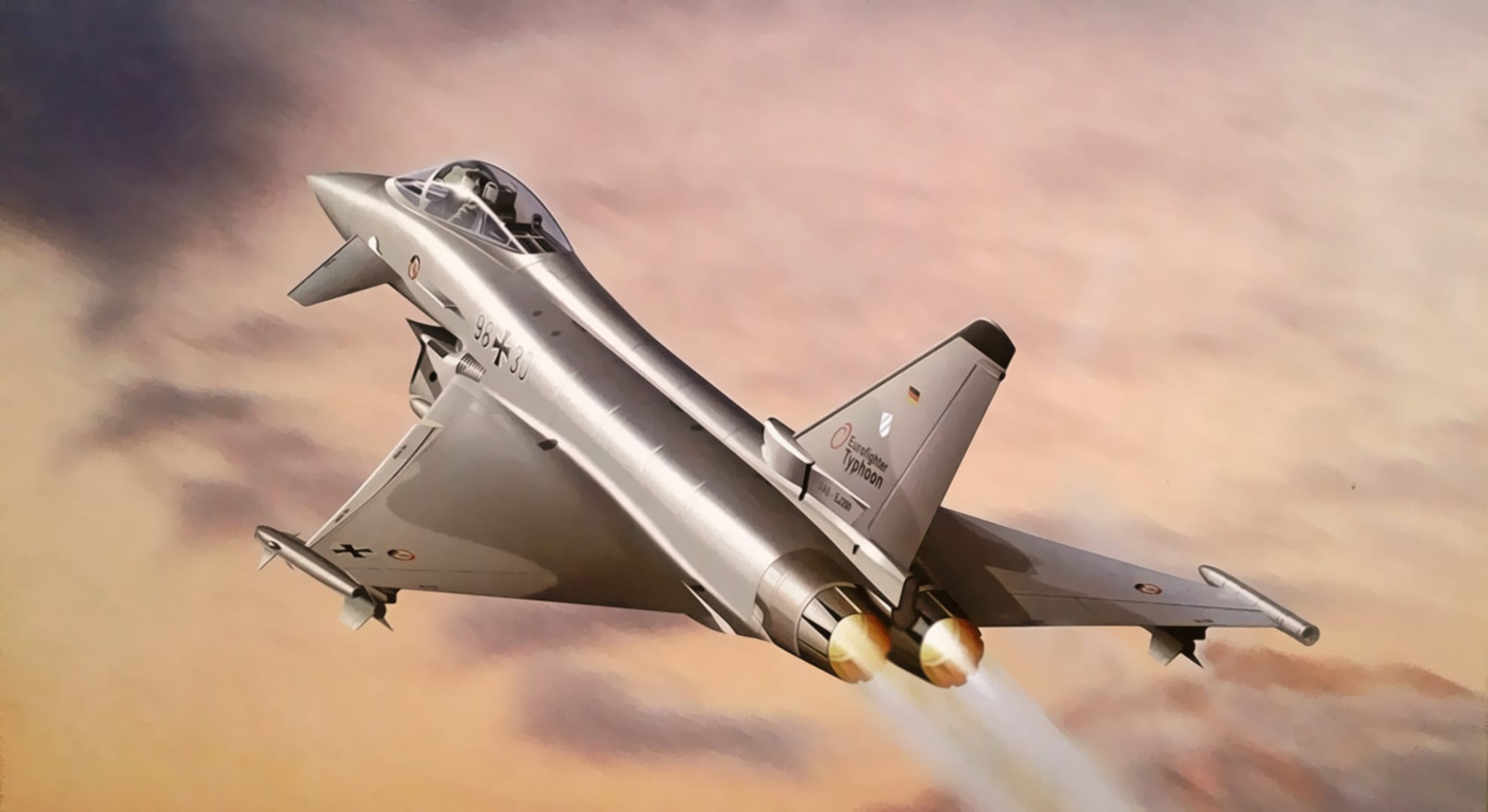
Eurofighter Typhoon. Image Credit: Creative Commons.
France envisioned a lightweight multi-role aircraft that could serve in both ground and naval roles.
This vision stood in stark contrast to the UK’s requirements, which called for a long-range interceptor.
Additionally, France wanted a senior leadership role in the program, owing to its technical and industrial superiority.
Because of these disagreements, France later withdrew from the ECF and continued development of its own fighter.
This effort resulted in the Rafale, while the FEFA program with the UK, West Germany, Italy, and Spain produced the Eurofighter Typhoon.
Design Features
The Eurofighter features a canard-delta tailless layout with digital fly-by-wire systems, making it highly agile at all speeds.
The aircraft uses a variety of lightweight composite materials to reduce weight and extend airframe life.
The Typhoon is by no means a stealth fighter, but it takes several steps to reduce its radar cross-section.
The aircraft utilizes S-duct engine intakes to partially obstruct its engine fans; its wings and canards are swept back to reflect radar waves, and some parts of the aircraft are treated with radar-absorbent materials.
Again, the Eurofighter’s RCS is nowhere near as low as a fifth-generation aircraft’s, but these steps do slightly reduce its detectability.
As said earlier, the Dassault Rafale shares many visual similarities with the Eurofighter.
The Rafale also utilizes a tailless canard-delta configuration with digital fly-by-wire systems.
Like the Typhoon, the aircraft also employs several features to reduce its RCS.
The Rafale uses a blend of composite materials and serrated patterns to scatter radar waves, and its inlets are also designed to obstruct radar returns from the engine blades.
According to some sources, the aircraft also uses RAM coatings for low observability, the capabilities of which are highly classified.
The biggest difference between the Rafale and the Eurofighter is the Rafale’s naval capabilities.
The Rafale-M incorporates an arrestor tail hook and a reinforced undercarriage for carrier operations.
Avionics and Engine Performance
The newest variants of the Eurofighter and the Rafale feature advanced avionics.
Both aircraft are fitted with advanced AESA radars and infrared search-and-track (IRST) capabilities.
The Eurofighter is equipped with the Praetorian Defensive Aids Sub-System (DAAS), which includes missile-warning systems, electronic countermeasures, and laser-warning systems.
Its Captor-E radar can process and fuse data from all these sources to create a complete picture of the battlefield and reduce pilot workload.
Meanwhile, the Rafale is fitted with the SPECRTA defensive aids system, which also includes LWS, MWS, and various electronic jamming and decoy systems.
Like the Typhoon, the Rafale’s radar also has sensor-fusion capabilities to reduce pilot workload.
The Eurofighter is powered by two EJ200 Afterburning engines.
This gives the aircraft a top speed of Mach 2.35 with the ability to supercruise at Mach 1.5.
It has a combat range between 325 and 750 nautical miles, depending on its configuration. Because of its wing layout, the aircraft is remarkably maneuverable and can withstand up to 9Gs.
Likewise, the Rafale is powered by two Snecma M88-4E turbofan engines, which give it a top speed of Mach 1.8 and an average combat range of 570 nautical miles.
With a similar canard-delta layout, the Rafale is also highly maneuverable, like the Eurofighter. Overall, the Eurofighter is faster and has greater range.
Is One Aircraft Better?
From the start, the Rafale was designed as a lightweight multi-role aircraft, while the Eurofighter began as a superior-supremacy fighter and gradually became a multi-role fighter through subsequent upgrades.
One could say the Eurofighter is better because of its engine performance, but I see this as an oversimplification.
This isn’t a case where one aircraft clearly trumps the other. Both aircraft offer excellent multi-role capabilities thanks to their onboard electronics.
Both can carry a diverse range of weaponry, are highly maneuverable, and are remarkably expensive.
About the Author: Isaac Seitz
Isaac Seitz, a Defense Columnist, graduated from Patrick Henry College’s Strategic Intelligence and National Security program. He has also studied Russian at Middlebury Language Schools and has worked as an intelligence Analyst in the private sector.