The Youngest B-52 Was Built in 1962 and the US Air Force Plans to Fly It Until 2050 — 88 Years in Service. In Early March 2026, B-52s Struck Ballistic Missile Sites Inside Iran for the First Time.

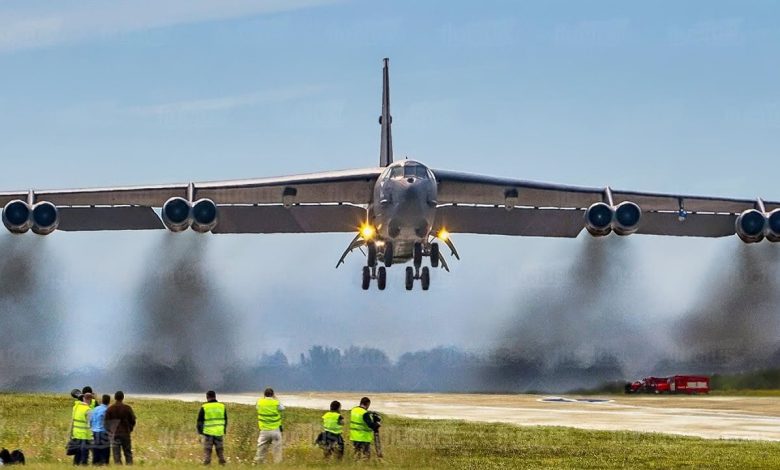
Summary and Key Points: The B-52 entered US Air Force service in 1955. The last one ever built came off the line in 1962. The Air Force intends to keep flying them until 2050, which would make the youngest airframe in the fleet 88 years old on the day it retires. And it is not being kept around as a museum piece. In early March 2026, B-52s deployed to the Middle East and began striking targets inside Iran — ballistic missile production sites, launch complexes and the command nodes coordinating Iran’s missile forces — in what CENTCOM commander Admiral Brad Cooper announced as Operation Epic Fury.
The US Air Force B-52 Bomber Will Fly for Decades More
B-52 Bomber. Image Credit: 19FortyFive.com Taken at the National Museum of the Air Force.
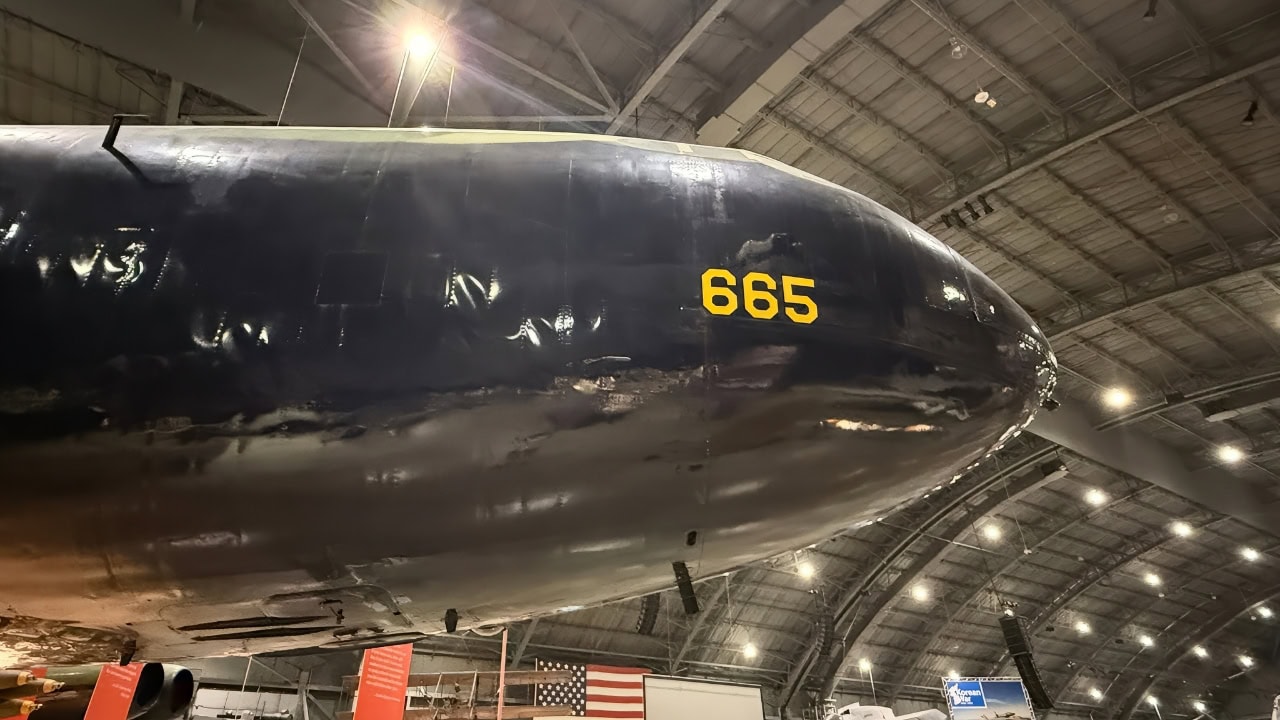
B-52D Bomber at USAF Museum. Photo by Harry J. Kazianis for 19FortyFive.
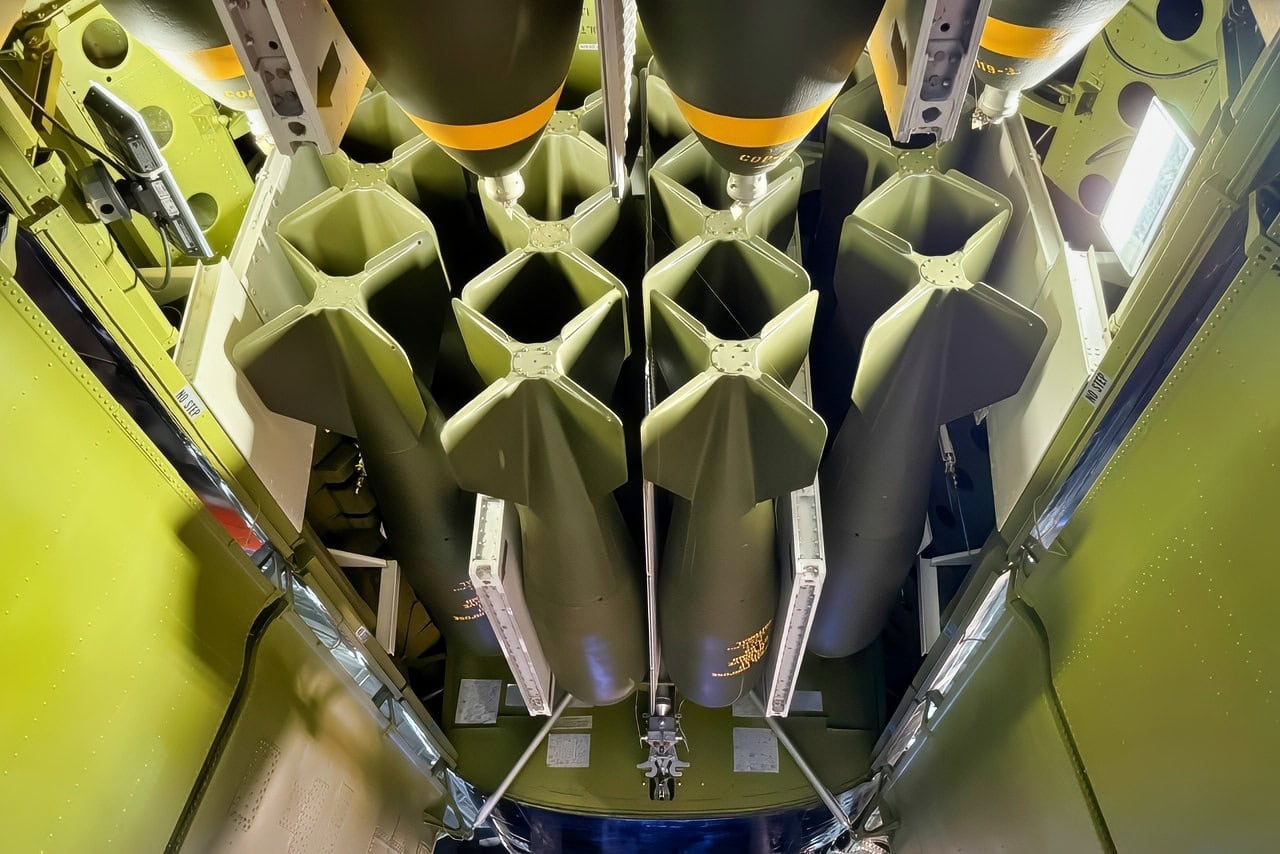
B-52 bombs. Image Credit: 19FortyFive.com Taken at the National Museum of the Air Force.
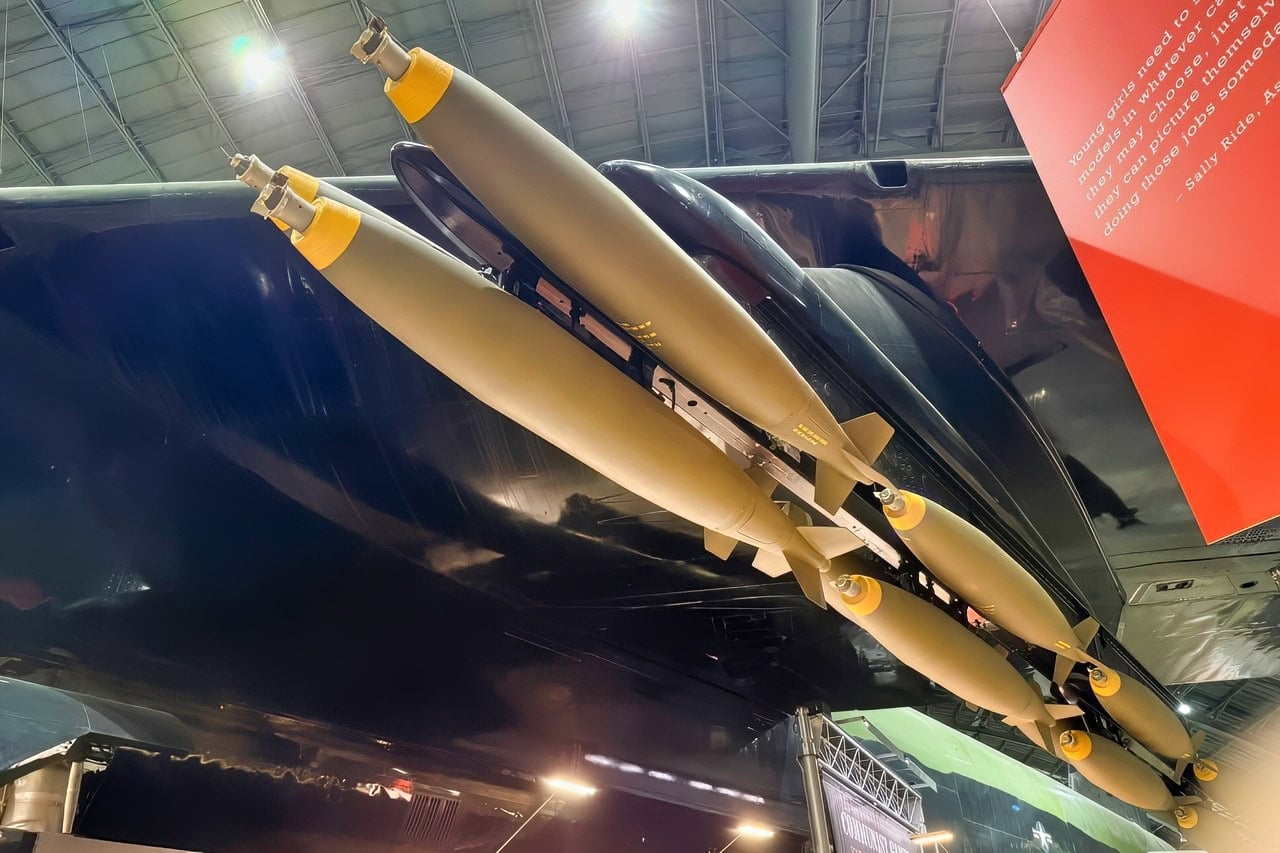
B-52 bombs. Image Credit: 19FortyFive.com Taken at the National Museum of the Air Force.
The B-52 Stratofortress bomber has been in the American inventory since 1955, when the B-52B became operational with the Air Force.
The only B-52s still in service are the B-52H models, the last of which was built in 1962.
The B-52H can carry and launch the widest variety of weapons in the US inventory, including nuclear weapons, gravity bombs, cluster bombs, precision-guided missiles, and joint direct attack munitions; it carries a massive payload.
The Air Force currently expects to operate B-52s through 2050.
The B-52H doesn’t get retired; it gets rebuilt. And right now, it’s actively fighting.
The B-52 can still fight in a place like Iran, and it’s not hypothetical. In early March 2026, B-52s deployed to the Middle East and started hitting Iranian targets directly, reportedly the first time B-52s themselves had struck inside Iran in the current fighting.
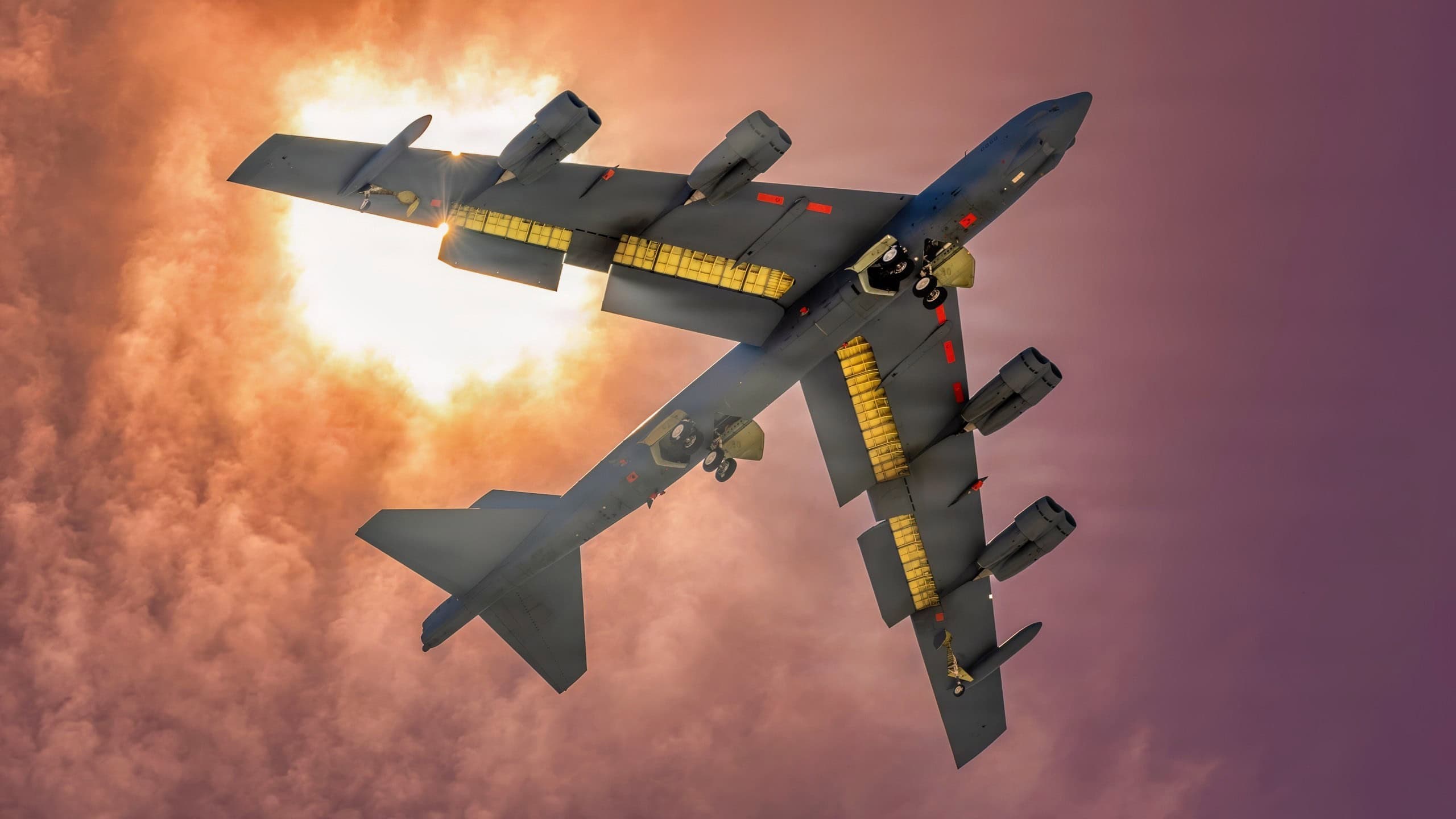
A B-52H Stratofortress assigned to the 419th Flight Test Squadron at Edwards Air Force Base, California, departs for an evening test mission over the Mojave Desert. The B-52H test fleet is in high demand, testing a variety of advanced capabilities for the joint-force. The 412th Test Wing will soon begin developmental test work on new avionics, radar, and engines as part of the B-52J effort, allowing the Stratofortress to serve the warfighter into the 2050’s. (Air Force photo by Todd Schannuth)
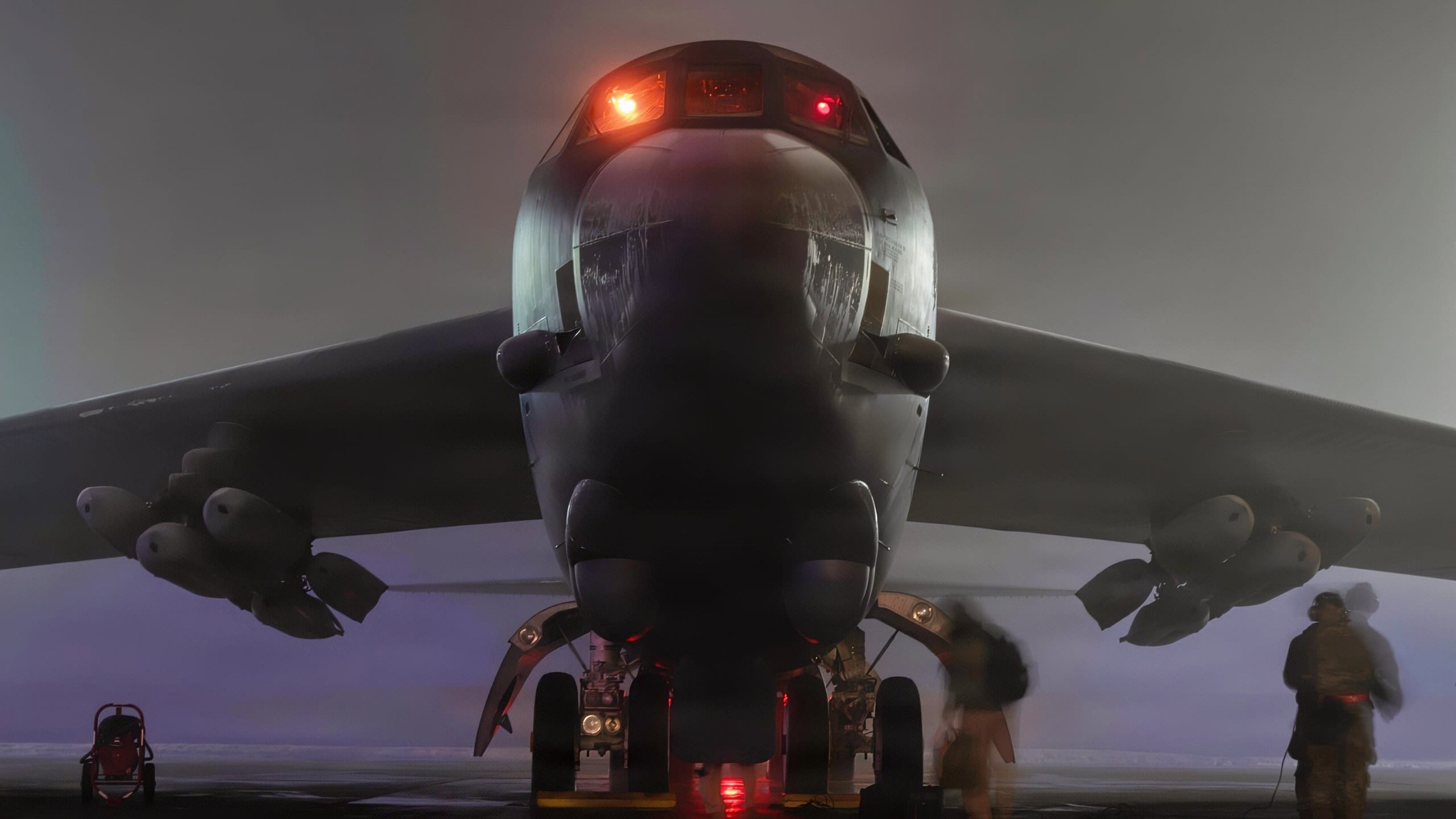
Aircrew members board a B-52H Stratofortress prior to taking off in support of Operation Epic Fury, March 4, 2026. (U.S. Air Force photo)
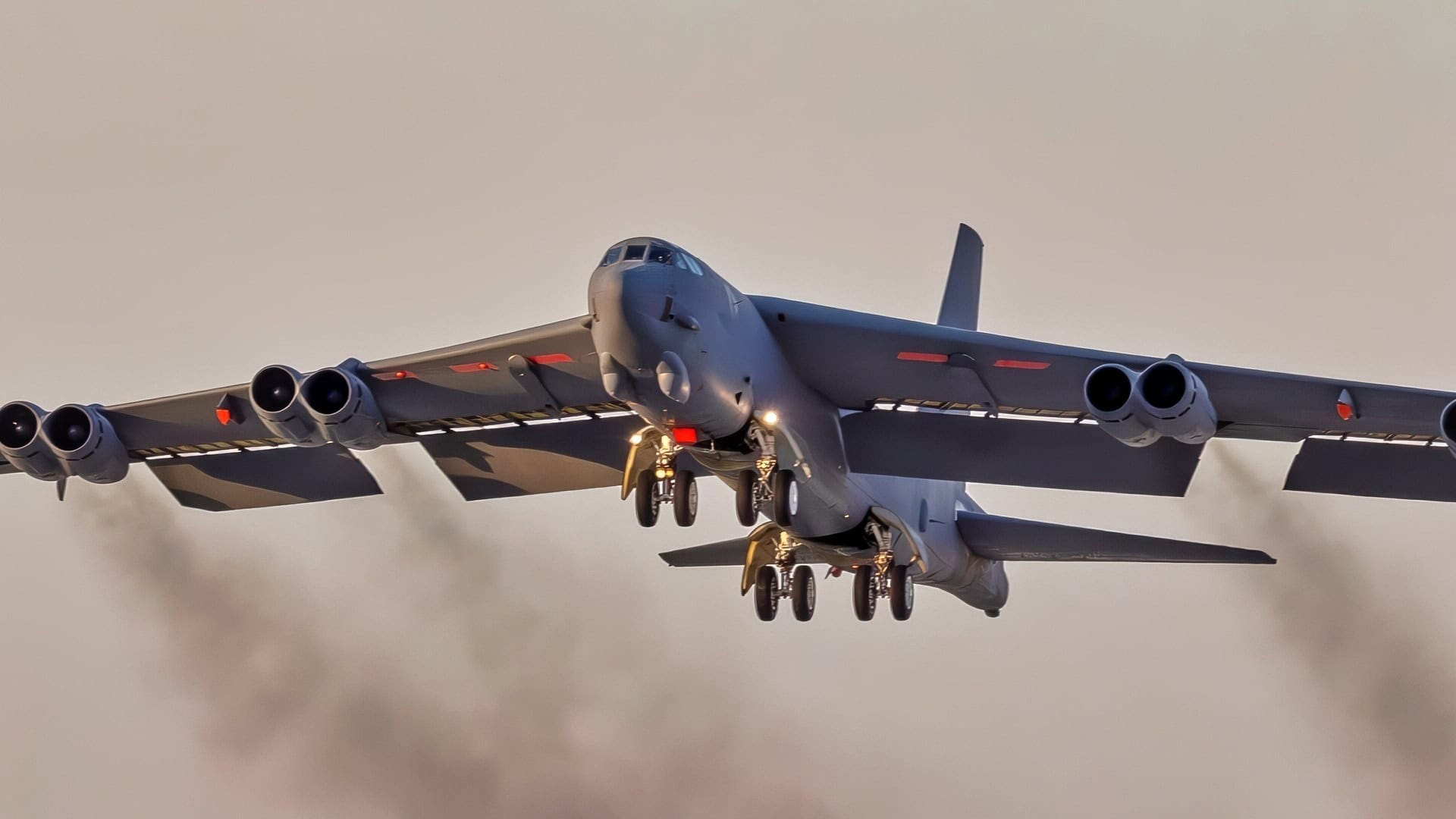
A modified B-52H Stratofortress departs Edwards Air Force Base for an evening training mission on June 25, 2025. The aircraft is assigned to the 419th Flight Test Squadron, Global Power Bombers Combined Test Force, tasked with supporting developmental testing across the B-52, B-1, and B-2 bomber portfolio. Along with most 412th Test Wing aircraft, B-52H bombers at Edwards include special instrumentation to conduct a variety of testing activities. (Air Force photo by Chase Kohler)
CENTCOM commander Admiral Brad Cooper announced what’s being called Operation Epic Fury, with B-52s going after ballistic-missile production sites, launch complexes, and the command-and-control nodes that coordinate Iran’s missile forces. The stated goal is blunt: degrade Iran’s ability to launch regional missile attacks at all.
Worth separating this from what happened back in June 2025, when it was B-2 stealth bombers, not B-52s, that dropped 30,000-pound bunker busters on Iran’s hardened nuclear sites in Operation Midnight Hammer. That job needed stealth to punch through air defenses undetected.
The B-52 isn’t stealthy; it’s basically a flying billboard on radar.
So why send it into contested airspace at all?
Because it doesn’t need to sneak in. A B-52 can haul roughly 70,000 pounds of munitions between its internal bay and external pylons, and fly it there and back over 8,000 miles without refueling.
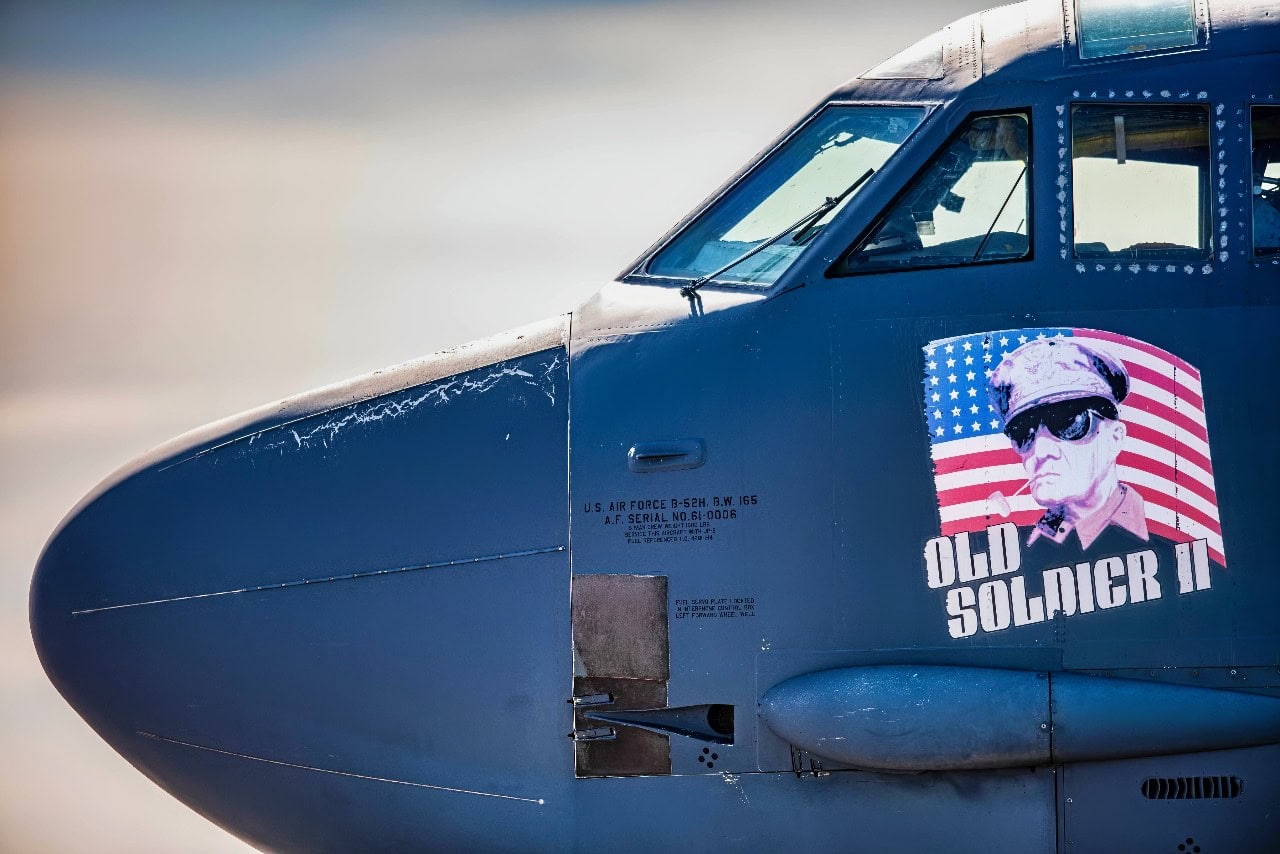
A U.S. Air Force B-52H Stratofortress assigned to the 96th Bomb Squadron, Barksdale Air Force Base, Louisiana, sits on the flightline during exercise Prairie Vigilance 25-1 at Minot Air Force Base, North Dakota, April 12, 2025. For more than 60 years, the B-52 has been the backbone of the strategic bomber force of the United States. As a routine training mission, PV 25-1 enhances the safety, security, and reliability of the bomber leg of the U.S. nuclear triad. (U.S. Air Force photo by Senior Airman Kyle Wilson)
Loaded up with JDAMs, JASSM cruise missiles, and standoff weapons that launch from well outside enemy air defense range, it doesn’t have to get close to be dangerous; it just has to be the bomb truck.
Let the F-35s and F-15Es and defense-suppression missions clear the path; the B-52 shows up behind them and dumps an enormous amount of ordnance on a target list.
B-52H Is Being Re-engineered Into The B-52J
The B-52H is being modernized with new Rolls-Royce F130 engines, which will improve fuel efficiency by 30 percent, state-of-the-art radar systems, engine pylons, digital engine controls, and other upgrades to the venerable bomber, extending its service life into the 2050s.
The planned Initial Operational Capability for the new radar is 2027.
Led by US defense contractor Raytheon in collaboration with aerospace giant Boeing, the upgrade replaces the aging AN/APQ-166 with a new active electronically scanned array (AESA) radar, designated AN/APQ-188.
This hybrid system is based on radars used in the F-15 and F/A-18.
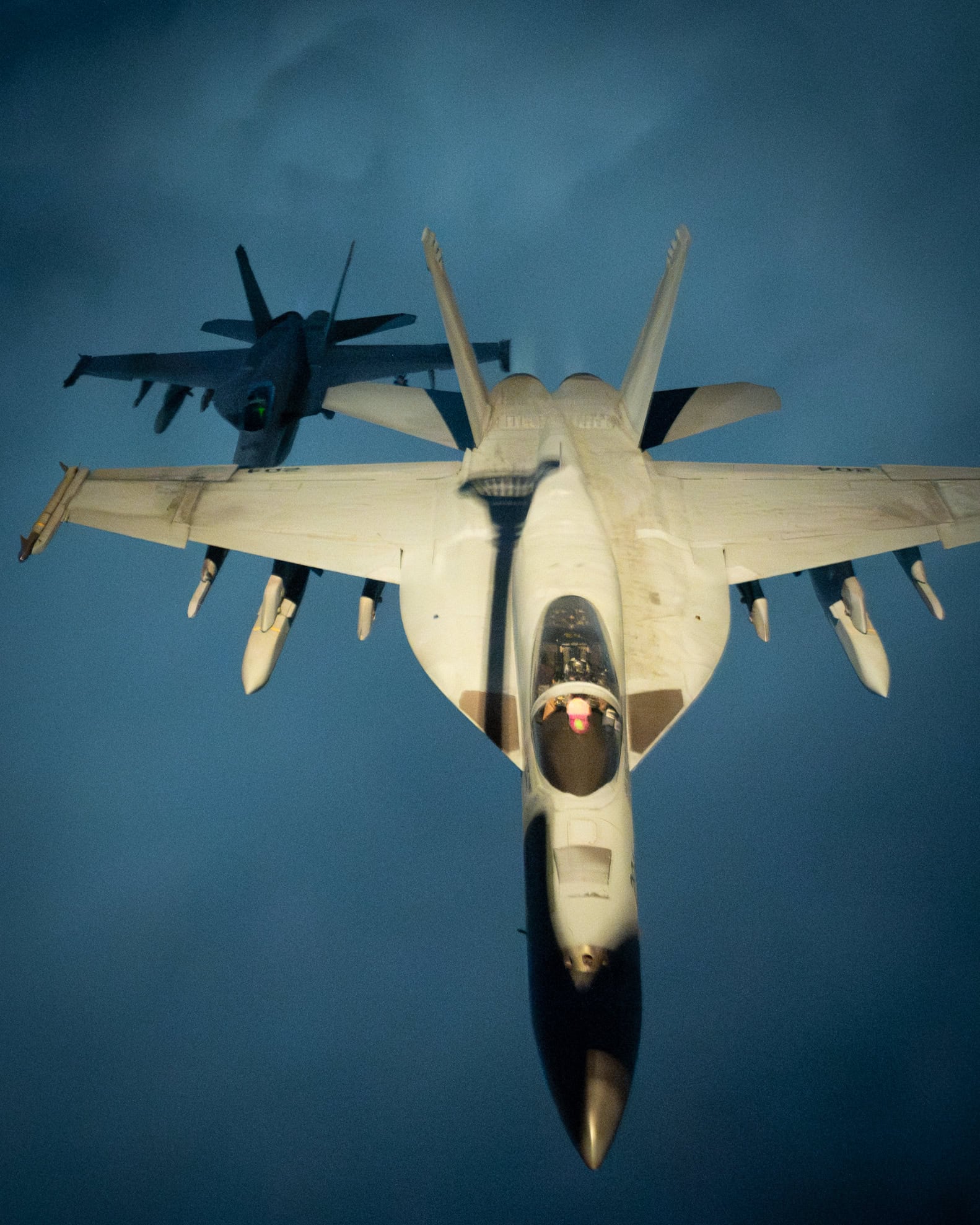
Two U.S. Navy F/A-18 Super Hornets fly in formation over the U.S. Central Command area of responsibility, April 5, 2025. The Super Hornets are assigned to the Truman Carrier Strike Group, which is responsible for patrolling approximately 2.5 million square miles of water space and includes the Arabian Gulf, Gulf of Oman, Red Sea, parts of the Indian Ocean and three critical choke points at the Strait of Hormuz, Suez Canal and Strait of Bab al-Mandeb (U.S. Air Force photo by Staff Sgt. Gerald R. Willis)
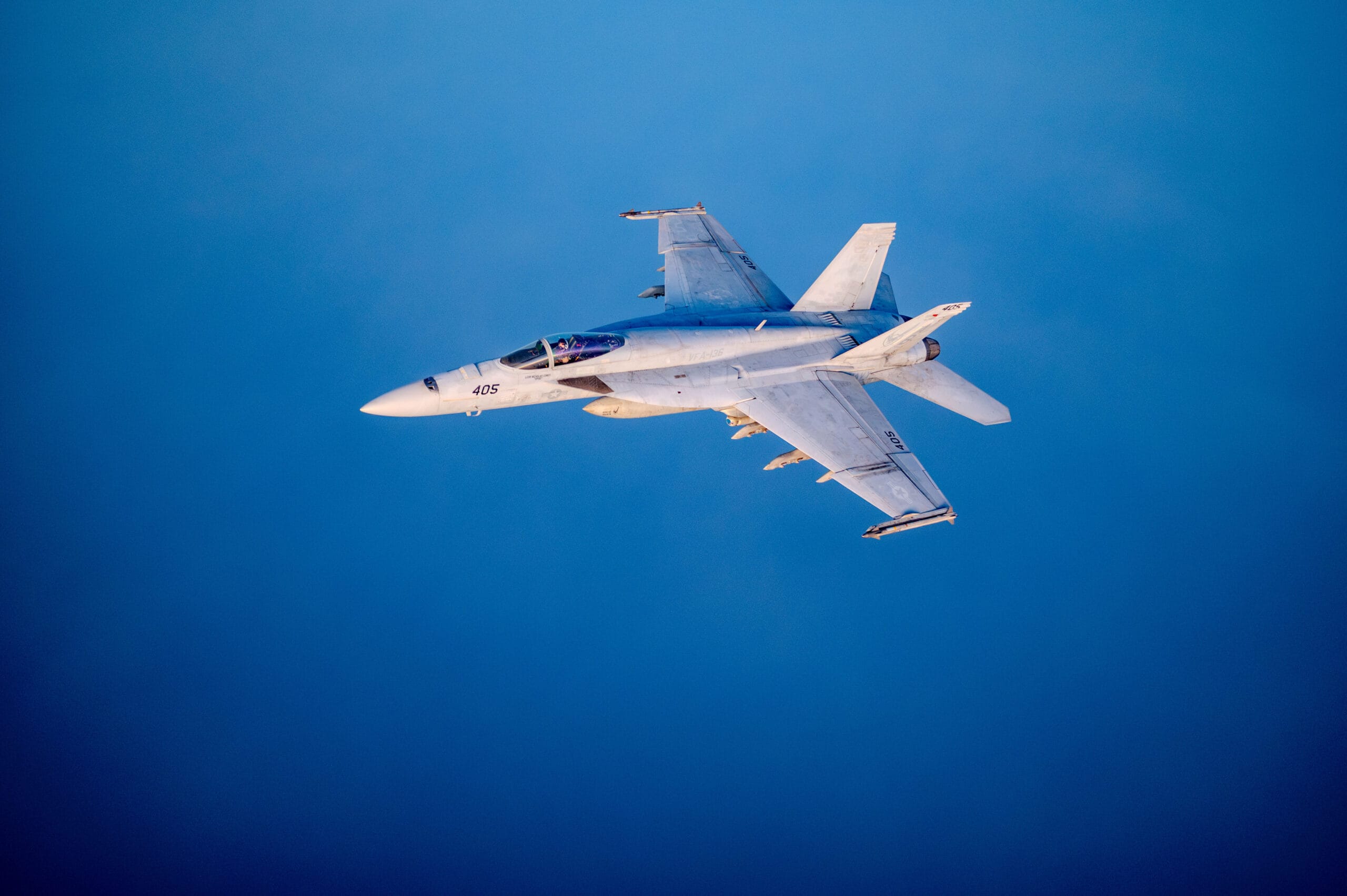
A U.S. Navy F/A-18 Super Hornet, assigned to the Harry S. Truman Carrier Strike Group, flies a mission over the U.S. Central Command area of responsibility, April 8, 2025. The HSTCSG is responsible for patrolling approximately 2.5 million square miles of ocean and includes the Arabian Gulf, Gulf of Oman, Red Sea, parts of the Indian Ocean and three critical choke points at the Strait of Hormuz, Suez Canal and Strait of Bab al-Mandeb. (U.S. Air Force photo by Staff Sgt. Jackson Manske)
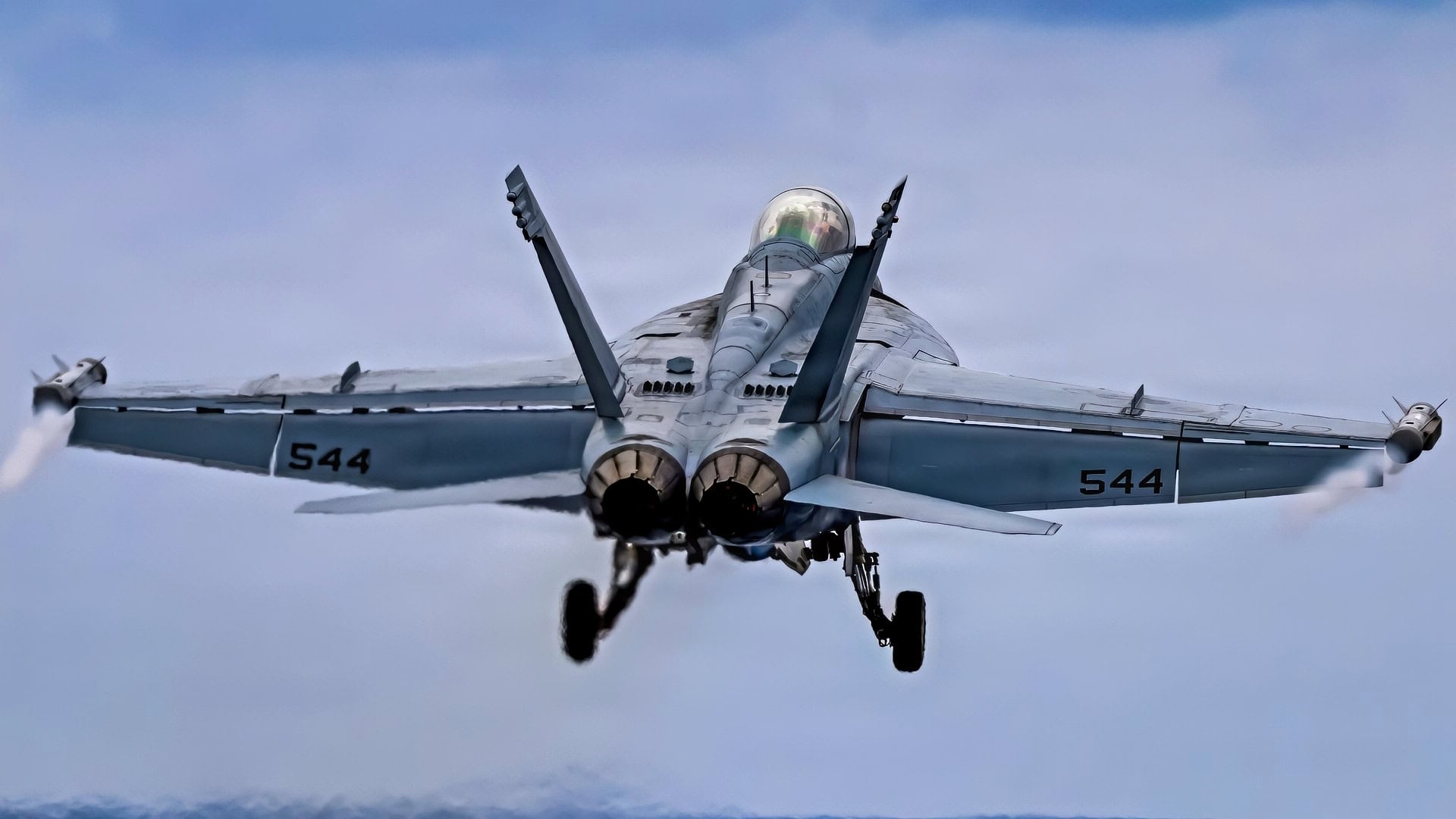
PACIFIC OCEAN (March 31, 2026) –U.S. Navy Capt. William Mathis, commanding officer of the Nimitz-class aircraft carrier USS Theodore Roosevelt (CVN 71), pilots a E/A-18G Growler assigned to Electronic Attack Squadron (VAQ) 129, March 31, 2026. Theodore Roosevelt, flagship of Carrier Strike Group (CSG) 9, is underway conducting exercises to bolster strike group readiness and capability in the U.S. 3rd Fleet area of operations. (U.S. Navy Photo by Mass Communication Specialist 2nd Class Ryan Holloway)
Once complete, the aircraft will be redesignated as the B-52J, a name befitting a bomber expected to remain in service until at least 2050, when the youngest of these airframes will be approaching their 100th birthday.
B-52H’s Incredible Payload
The B-52H variant was introduced in 1961 and featured significant improvements over earlier models, including more efficient turbofan engines, upgraded avionics, and enhanced weapons capabilities.
The Air Force built 102 B-52H aircraft, all of which were delivered to the Strategic Air Command, which later became part of the Air Force Global Strike Command.
The B-52H is a large, subsonic, long-range bomber with a high-wing design and eight engines mounted in four twin pods beneath the wings.
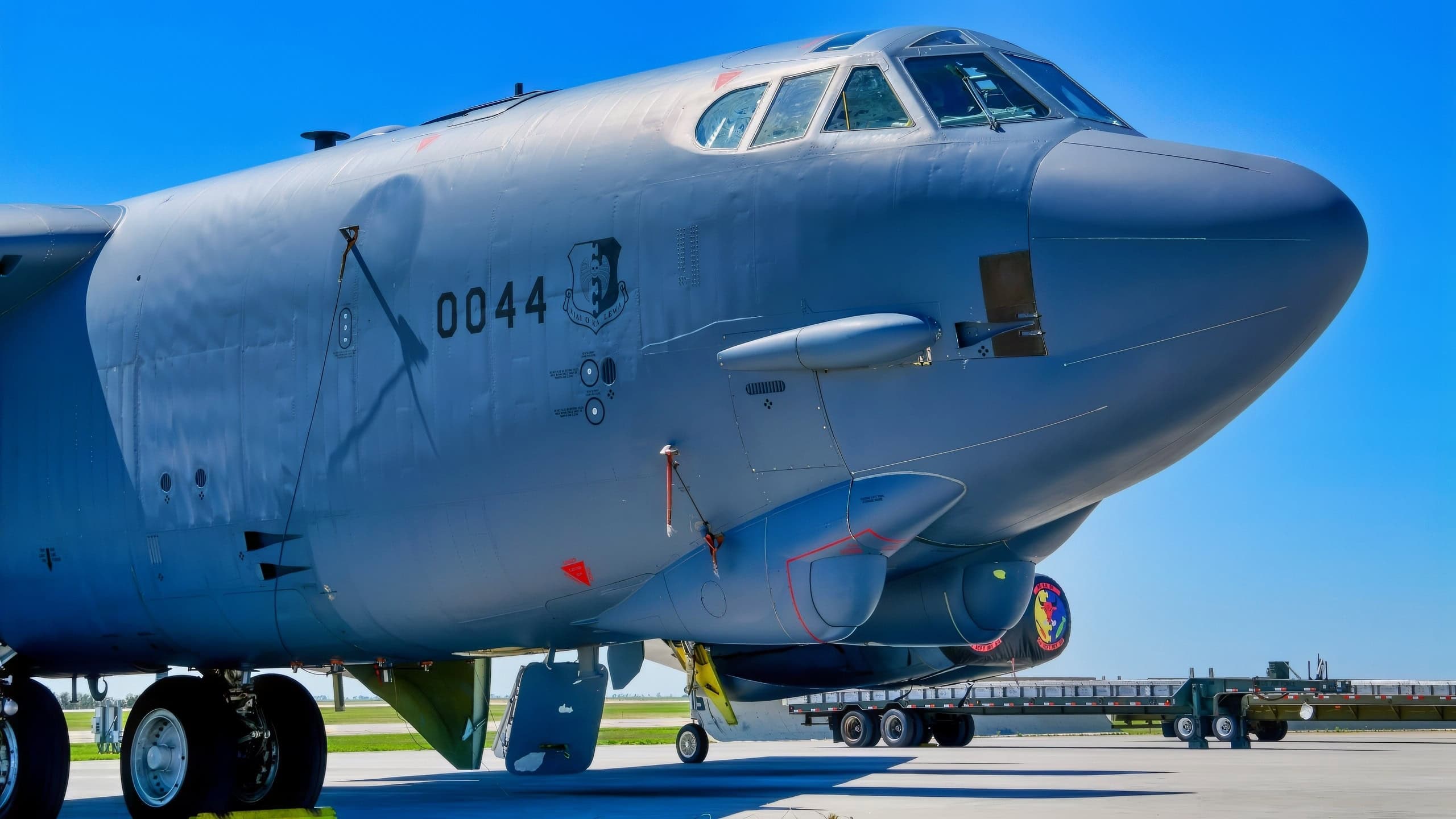
A B-52H Stratofortress sit parked on the flight line at Minot Air Force Base, North Dakota, Aug. 8, 2022. The B-52 is capable of dropping or launching gravity bombs, cluster bombs, precision-guided missiles and joint direct attack munitions. (U.S. Air Force photo by Airman Alysa Knott)
Its spacious airframe lets it carry a massive payload over intercontinental distances, with a range of 8,800 miles, without aerial refueling.
The B-52H can carry approximately 70,000 lbs (35 tons) of mixed ordnance, including unguided bombs, laser-guided bombs, Joint Direct Attack Munitions (JDAMs), and standoff weapons such as the AGM-158 Joint Air-to-Surface Standoff Missile (JASSM).
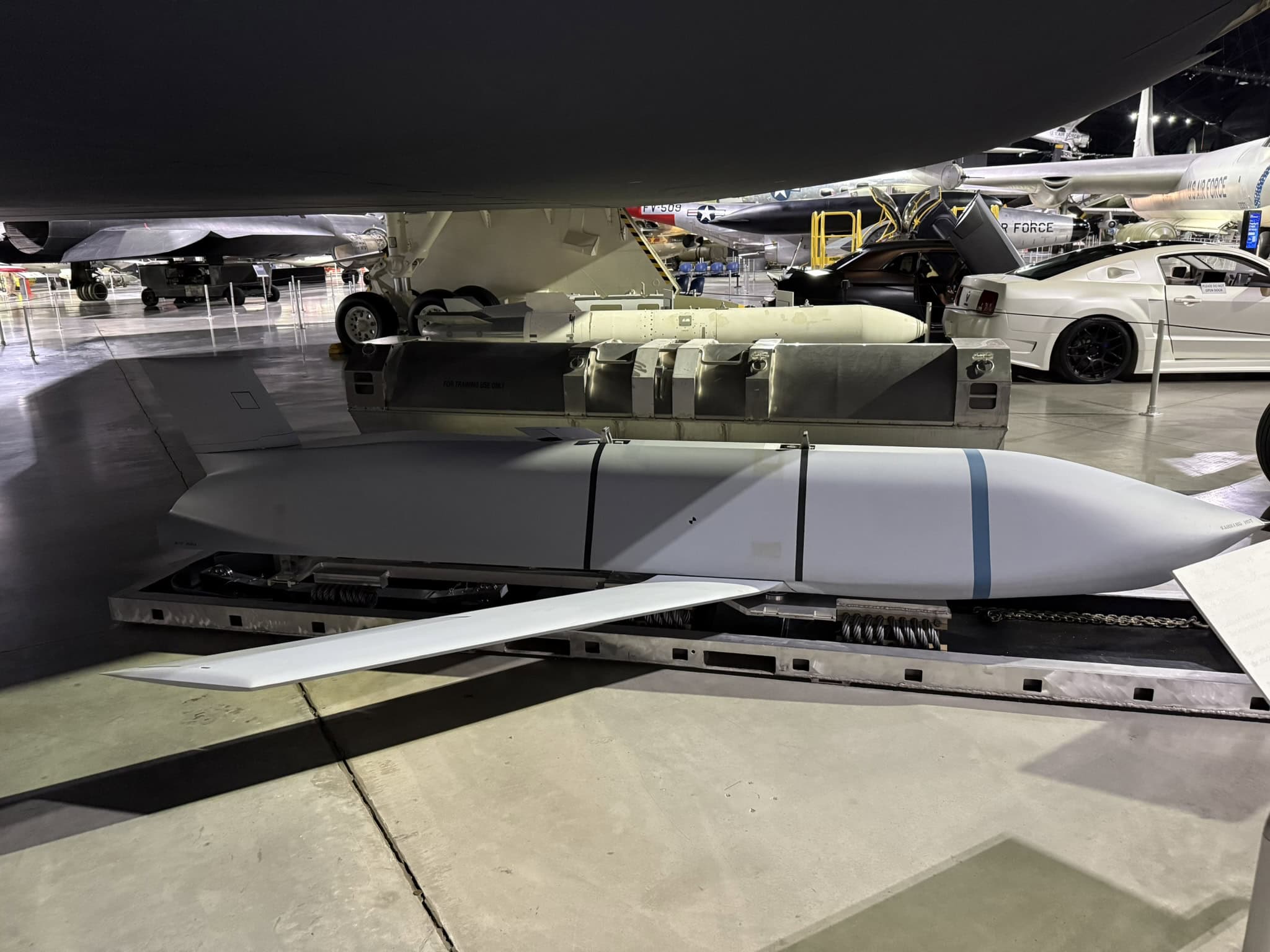
JASSM Cruise Missile. 19FortyFive.com Image.
It is also capable of launching air-launched cruise missiles (ALCMs), including nuclear-capable variants, and the Miniature Air-Launched Decoy.
According to Airforce Technology, the B-52H’s conventional weapons payload includes eight AGM-84 Harpoon missiles, four AGM-142 Raptor missiles, fifty-one 500 lb bombs, thirty 1,000 lb bombs, 20 AGM-86C conventional air-launched cruise missiles, 12 joint stand-off weapons (JSOW), 12 joint direct-attack munitions, and 16 wind-corrected munitions dispensers (WCMD).
Additionally, the B-52H can deliver 20 2,000-lb navy mines.
The B-52 will also carry the Hypersonic Attack Cruise Missile (HACM). The HACM is a U.S. Air Force project focused on developing a scramjet-powered hypersonic weapon.
It’s designed as an air-launched cruise missile capable of exceeding Mach 5, making it a strategically important weapon.
The HACM’s high speed and maneuverability of HACM are intended to make it harder for adversaries to intercept.
The B-52 Has A Long, Distinguished Combat Record
During the Cold War, the B-52 served as a nuclear deterrent against the Soviet Union. The Vietnam War saw extensive use of the B-52 as both a strategic and tactical support bomber.
The bomber conducted its first Arc Light mission in June 1965, where 27 bombers flattened a wide swath of territory that Viet Cong guerrillas were reported to be massing.
Later that year, in November 1965, B-52s supported the 7th Cavalry during the Battle of Ia Drang Valley, in its first use as a tactical support weapon.
In the late stages of the war, during Operation Linebacker II, B-52s bombed Hanoi and mined Haiphong Harbor. Losses were heavy, but it was soon after the operation that North Vietnam signed the peace treaty that ended American involvement.
B-52 airstrikes were a large part of Operation Desert Storm. Starting on January 16, 1991, a flight of B-52Gs flew from Barksdale Air Force Base, Louisiana, air-refueled en route, struck targets in Iraq, and returned home, a journey of 35 hours and 14,000 miles (23,000 km) round trip.
It set a record for the longest-distance combat mission, breaking the record previously held by an RAF Vulcan bomber in 1982; however, it achieved this using forward refueling.
During Operation Desert Storm, B-52s flew about 1,620 sorties and delivered 40 percent of the weapons dropped by coalition forces.
The “BUFF” served in the wars in Afghanistan, Iraq, Yugoslavia, and Syria during operations against ISIS.
So no, it’s not fast, it’s not sneaky, and it wasn’t built for this era of warfare.
But as Iran has found out this spring, once the US achieved air superiority, none of that has stopped it from doing exactly what it was built to do: show up, carry an incredible payload, and deliver it on target.
About the Author: Steve Balestrieri
Steve Balestrieri is a National Security Columnist. He served as a US Army Special Forces NCO and Warrant Officer. In addition to writing on defense, he covers the NFL for PatsFans.com and is a member of the Pro Football Writers of America (PFWA). His work was regularly featured in many military publications.