A $68,000,000 US Navy EA-18G Growler Simulated the Shootdown of a $143,000,000 US Air Force F-22 Raptor at Nellis in 2009. The Navy Pilot Painted an F-22 Silhouette on His Cockpit.

Summary and Key Points: The F-22 Raptor was built so that American pilots could kill enemy fighters before those pilots ever saw them, at nearly $143,000,000 per aircraft. In 2009 at Nellis Air Force Base, a US Navy EA-18G Growler — a fourth-generation electronic attack jet costing about $68,000,000 — scored a simulated AIM-120 kill on one. The Growler pilot painted an F-22 silhouette on the side of his cockpit.
F-22 vs. EA-18G Growler: Who Wins?
When the United States Air Force developed the F-22 Raptor with Lockheed Martin, the idea was that American pilots could shoot down enemy fighter jets before their pilots even saw the American fifth-generation stealth air superiority warplane.
That’s why the Pentagon spent time, resources, and nearly $143 million per plane developing the F-22 Raptor program in the first place.
Embarrassment for the F-22?
Sometime in 2009, though, a US Navy fourth-generation electronic-warfare (EW) aircraft, the EA-18G Growler, turned the tables on the expensive, more advanced F-22.
The event occurred at Nellis Air Force Base just outside Las Vegas, Nevada, in 2009. At that time, an EA-18G Growler managed to simulate a successful shootdown of a USAF F-22 Raptor using an AIM-120 AMRAAM.
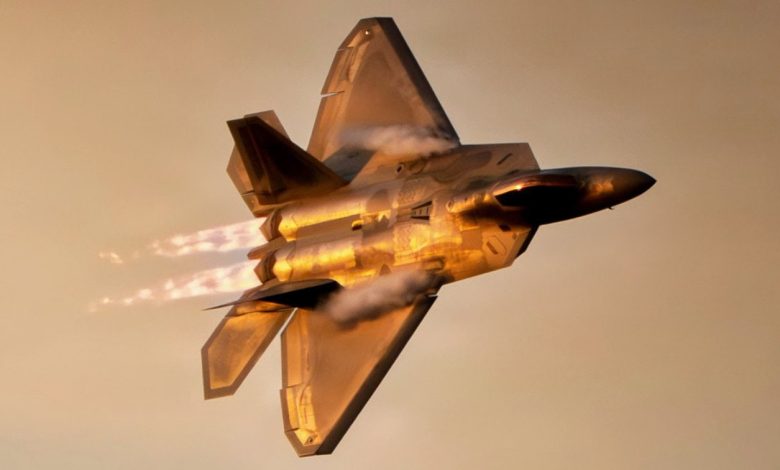
An F-22 Raptor fighter jet assigned to the 433rd Weapons Squadron pops flares during the Aviation Nation 2019 air show at Nellis Air Force Base, Nevada, Nov. 16, 2019. The F-22’s combination of stealth, supercruise, maneuverability, and integrated avionics, coupled with improved supportability, represents an exponential leap in warfighting capabilities. (U.S. Air Force photo by Airman 1st Class Bryan Guthrie)
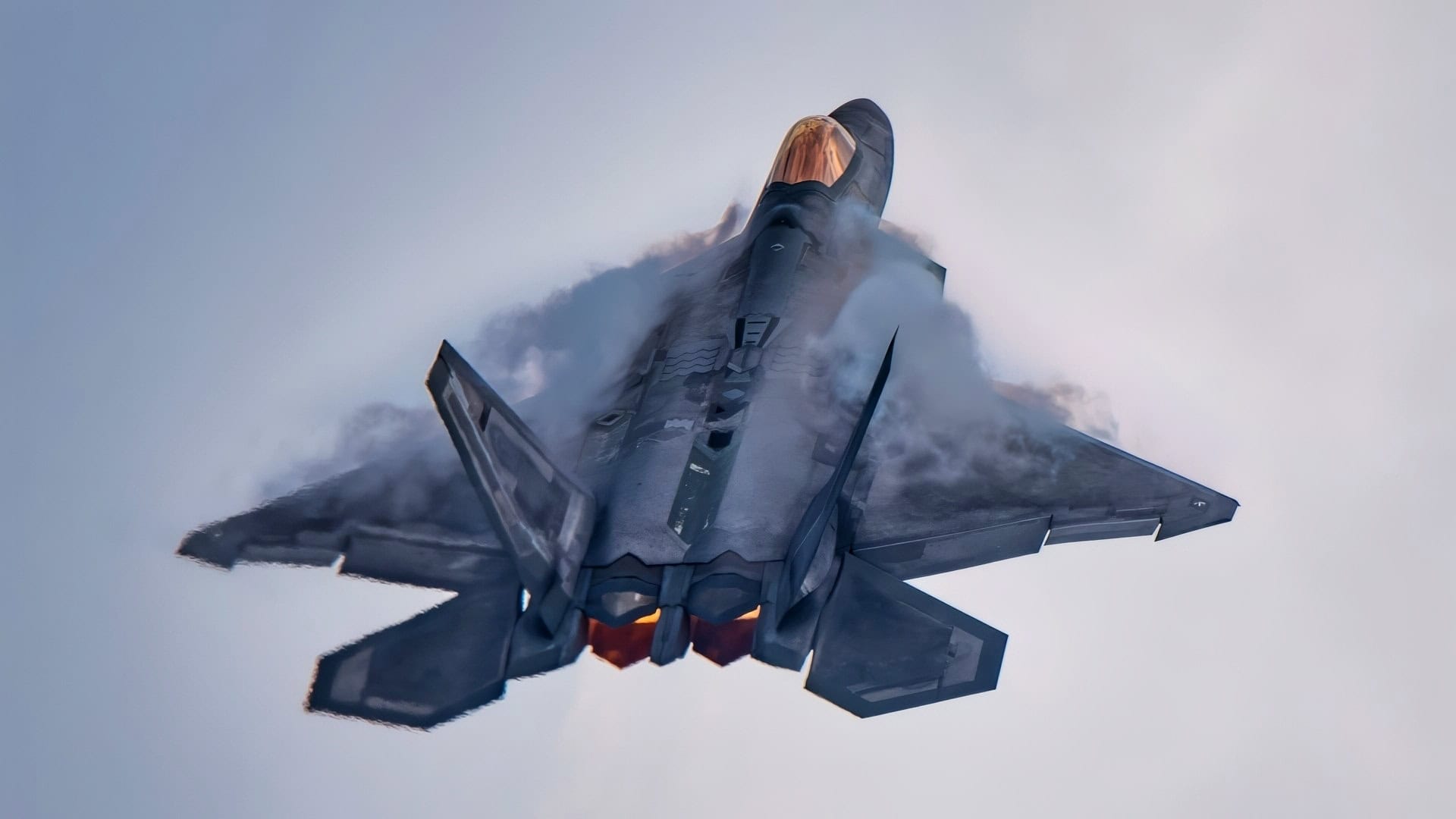
Maj. Paul Lopez, F-22 Raptor Demonstration Team commander, performs during the Chicago Air and Water Show, Aug. 17, 2019. Founded in 2007, the F-22 Demo Team showcases the unique capabilities of the world’s premier fifth-generation fighter aircraft. (U.S. Air Force photo by 2nd Lt. Samuel Eckholm)
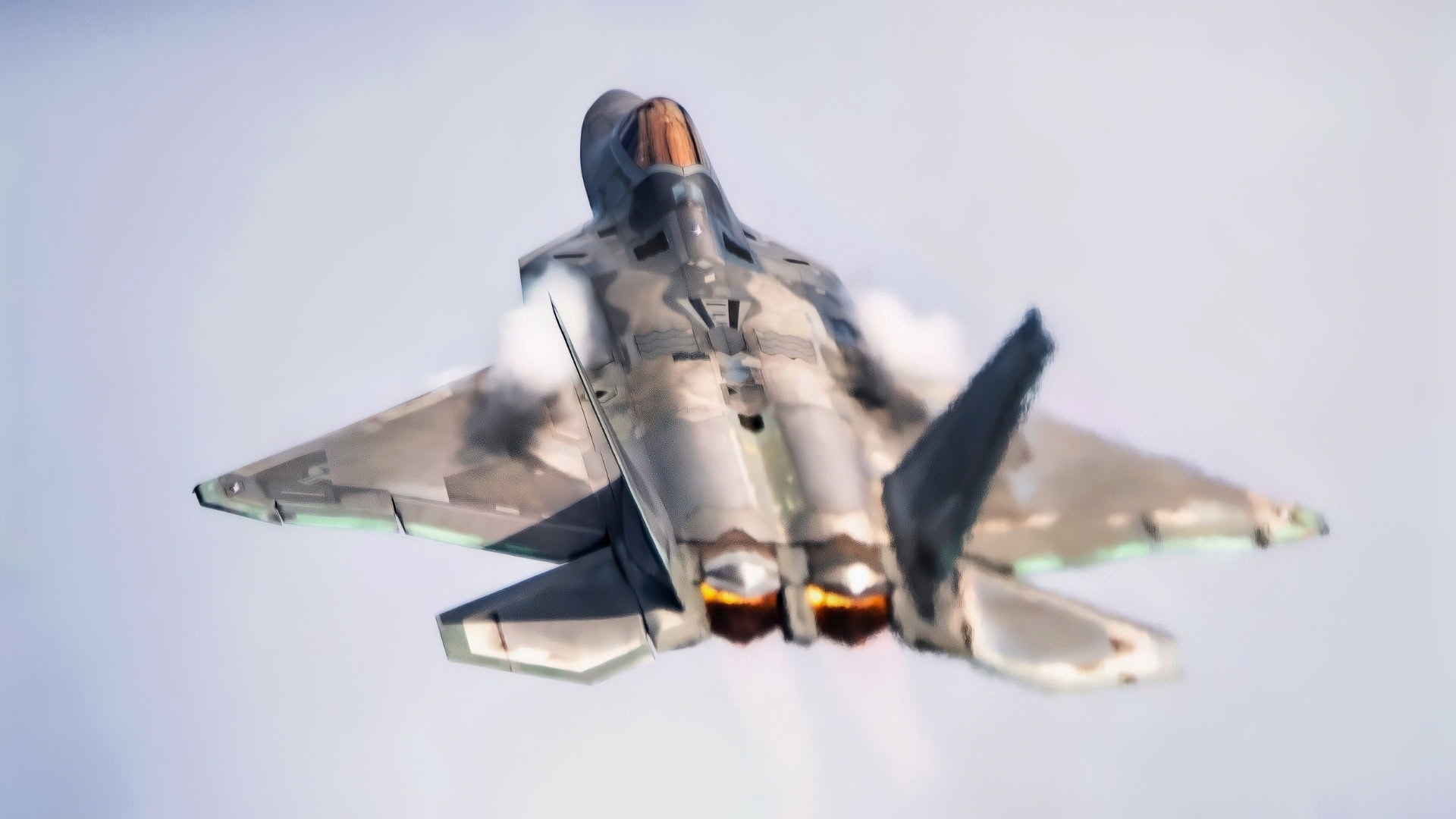
U.S. Air Force Maj. Paul Lopez, F-22 Demo Team commander, performs an aerial demonstration during the Thunder over Georgia Air Show at Robins Air Force Base, Sept. 28, 2019. Founded in 2007, the F-22 Raptor Demo Team showcases the unique capabilities of the world’s premier 5th-generation fighter aircraft. (U.S. Air Force photo by 2nd Lt. Sam Eckholm)
Cost Imbalance
For comparison, while the F-22 costs the Pentagon about $143 million per plane, the Navy spends just $68 million per EA-18G Growler.
Despite the cost imbalance and the technological edge that the F-22 enjoys over the Growler, the EA-18G still won.
The F-22 traces its roots to the Air Force’s Advanced Tactical Fighter program of the 1980s. In 1986, as development was underway, the Pentagon expected the program to take only nine years and cost the service $12.6 billion.
By 2004, however, the development costs had reached $28.7 billion — an increase of around 127 percent from original assessments.
The Growler followed a much different development path than did the F-22.
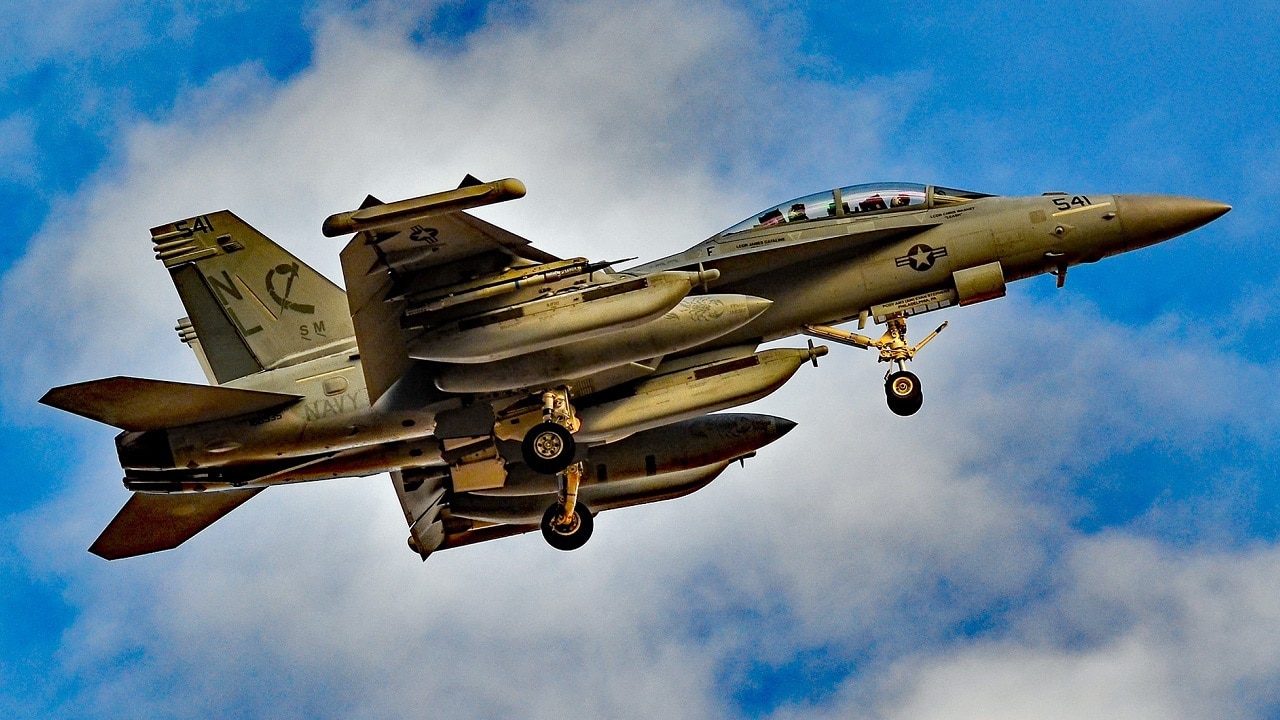
EA-18G Growler. Image Credit: Creative Commons.
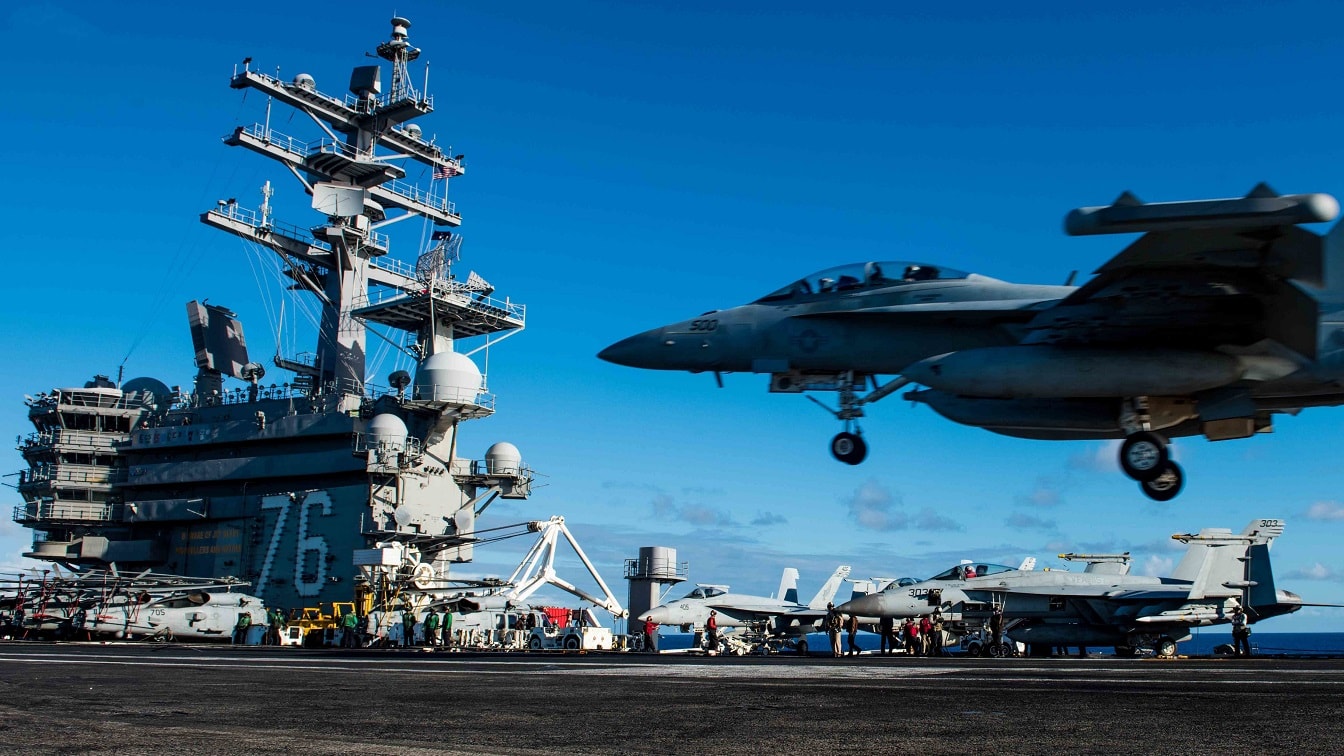
(June 20, 2018) An EA-18G Growler assigned to Electronic Attack Squadron (VFA) 141 lands on the flight deck of the Navy’s forward-deployed aircraft carrier, USS Ronald Reagan (CVN 76). Ronald Reagan, the flagship of Carrier Strike Group 5, provides a combat-ready force that protects and defends the collective maritime interests of its allies and partners in the Indo-Pacific region. (U.S. Navy photo by Mass Communication Specialist 2nd Class Kenneth Abbate/Released)
Boeing adapted the two-seat F/A-18F Super Hornet into an electronic attack platform to replace the EA-6B Prowler.
The EA-18G program began in August 2002; it entered development by December 2003, and it reached its ultimate design review in April 2005. Initial operational capability followed in 2009.
An individual Growler carries two General F414-GE-400 engines, each producing 22,000 pounds of thrust, and can operate above 50,000 feet.
Its combat range exceeds 850 nautical miles.
The key to understanding the Growler, though, is its ability to wage war in the electromagnetic (EM) spectrum, which is a singularly critical capability in today’s form of war.
Technological Mismatch?
Three AN/ALQ-99 tactical jamming pods are employed by a Growler when on mission.
These planes carry the Navy’s usual arsenal of weapons, too.
These include the aforementioned AIM-120 AMRAAM and two AGM-88 HARM anti-radiation missiles.
Even though the Growler is still a fourth-generation warplane and the F-22 is a fifth-generation stealth plane, the Growler program wasn’t cheap.
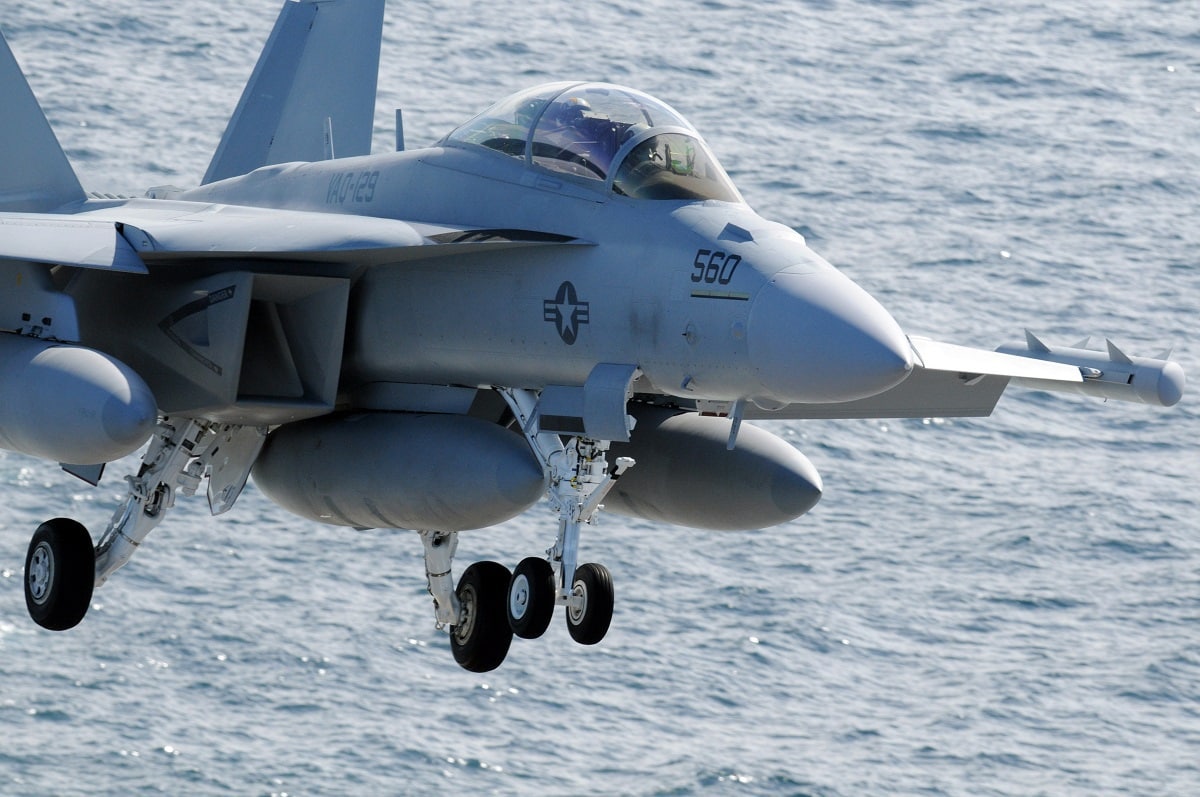
PACIFIC OCEAN (Feb. 17, 2009) An EA-18G Growler assigned to the “Vikings” of Tactical Electronic Warfare Squadron (VAQ) 129 aligns itself for an at sea landing aboard the Nimitz-class aircraft carrier USS Ronald Reagan (CVN 76). The Growler is the replacement for the EA-6B Prowler, which will be replaced in the 2010 timeframe. Ronald Reagan is underway performing Fleet Replacement Squadron Carrier Qualifications in the Pacific. (U.S. Navy photo by Mass Communication Specialist 3rd Class Torrey W. Lee/Released)
It cost $9.85 billion, including $1.92 billion in research and development and $6.987 billion in procurement.
By 2016, the Pentagon rapidly expanded the fleet to 160 planes, costing the taxpayer $15.67 billion.
Even though the Growler is a tough bird, it still should not have defeated the F-22.
Indeed, the Growler’s potent AN/ALQ-99 system, which dominates so much of the modern EM spectrum warfare, was never supposed to threaten the F-22.
The Raptor was designed to fight in such degraded electronic environments.
An F-22’s combination of stealth, advanced sensors, and next-generation integrated avionics meant that Raptor pilots could detect–and engage–threats while minimizing the risk to the F-22 itself.
Plus, the F-22 carries six AIM-120 radar-guided missiles, two AIM-9 infrared missiles internally, as well as a 20mm M61A2 cannon carrying 480 rounds.
What’s more, Raptors are fast. They can hit Mach 1.5 and have a range of around 1,850 miles. So the Growler wasn’t the superior plane on paper.
Hard Lessons Learned for the Air Force in 2009
Here’s where the conditions of the combat exercise over Nellis mattered.
Factors such as starting positions, engagement distances, weapon restrictions, objectives, and whether each aircraft is meant to use its full capabilities will affect the outcome.
Nevertheless, the outcome was shocking — so much so that the Growler pilot who scored the simulated kill apparently painted the silhouette of an F-22 on the side of his cockpit, indicating a degree of professional pride at having shot the iconic Air Force fifth-generation warplane down.
But it wasn’t only sheer luck that allowed the Navy fourth-generation EW plane to get the beat on the F-22.
It is quite likely that the Navy’s AN/ALQ-99 jammers played a substantial role in confusing the targeted F-22 long enough to allow for the pilot of the Growler pilot to successfully down the F-22.
The lessons learned from this exercise were hopefully integrated into the Air Force training for F-22 pilots, and adaptations to whatever the Growler pilot employed were installed on the F-22 because US rivals would undoubtedly attempt similar attacks on the F-22 in combat.
About the Author: Brandon J. Weichert
Brandon J. Weichert is the Senior National Security Editor at 19FortyFive.com. He also manages The Weichert Brief on Substack. Weichert also hosts “National Security Talk” on Rumble. He is the author of four bestselling national security books, the most recent of which is A Disaster of Our Own Making: How the West Lost Ukraine (Encounter Books). Follow him via Twitter/X @WeTheBrandon.