The United States and South Korea (ROK) have published their deterrence declaratory doctrine against North Korean (DPRK) nuclear weapon attacks. “…any nuclear attack by the DPRK against the ROK will be met with a swift, overwhelming, and decisive response, … and will result in the end of that regime.” This threat defines the essence of the U.S. extended nuclear deterrence that protects South Korea. It specifically targets the life and regime of North Korea’s dictator, Kim Jong-un, thus endangering his top priorities. This doctrine has historically been a powerful deterrent against North Korean nuclear weapon attacks. Notwithstanding the doctrine’s past effectiveness, the United States now needs to reconsider this nuclear deterrent threat given current conditions that are now undermining it.
Questioning the U.S. Deterrence Threat
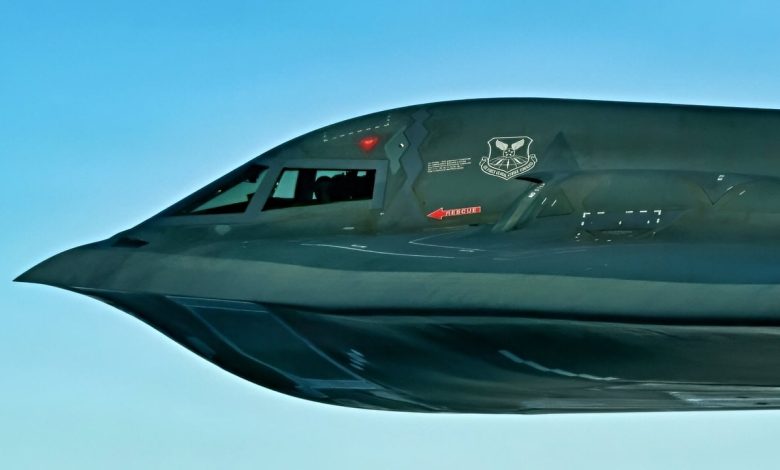
A U.S. Air Force pilots assigned to the 393rd Bomb Squadron prepare a B-2 Spirit aircraft for hot-pit refueling at Pease Air National Guard Base, New Hampshire, Sept. 20, 2025. The aircraft is the first operated by the 509th Bomb Wing to land at Pease ANGB, formerly Pease Air Force Base, since the 509 BW, formerly 509th Bombardment Wing, was stationed at Pease AFB and the active-duty base closed nearly 35 years ago. The lineage of the 509th BW traces back to the World War II Era when the 509th Composite Group dropped the atomic bombs on Japan. (U.S. Air Force photo by Staff Sgt. Joshua Hastings)
For a deterrence threat to work, the United States must have both the will and capability to implement it. The United States faces two specific issues with regard to the U.S. will to respond with an attack should Kim launch a nuclear provocation.
First, questions in the defense community are arising relative to the U.S. commitment to extended deterrence, particularly given the risk it raises to the United States. The potential for American reluctance regarding nuclear weapons employment mirrors the Cold War discussion of whether the United States was prepared to trade the demolition of New York for the survival of Paris. Today, would the United States trade the demolition of San Francisco for the survival of Seoul? The growth of the North Korean nuclear weapons arsenal exacerbates this concern.
Second, given current American public and military aversion to U.S. nuclear weapon employment in general, would a U.S. president be willing to respond with a massive nuclear attack against a North Korean limited nuclear weapon strike? Achieving the goal of eliminating the North Korean regime would likely require attacks on hundreds of targets in North Korea, including at least some (especially deep underground facilities) with nuclear weapons. Such attacks would probably cause the death of thousands, if not hundreds of thousands, of North Koreans. The United States undoubtedly would have the will to execute such an attack if North Korea launched a major nuclear weapon attack against the United States homeland or the territory of our allies. But would a U.S. president execute a highly disproportionate response if North Korea launched only one or two nuclear weapons that caused low collateral damage?
A major part of this deterrence problem is with the U.S. government’s penchant for extreme strategic ambiguity. By threatening terrible consequences to North Korea, the United States strives to enhance deterrence. But any appearance that the United States could falter from such an extreme response in some circumstances could cause the American nuclear deterrent threat against North Korea to fail.
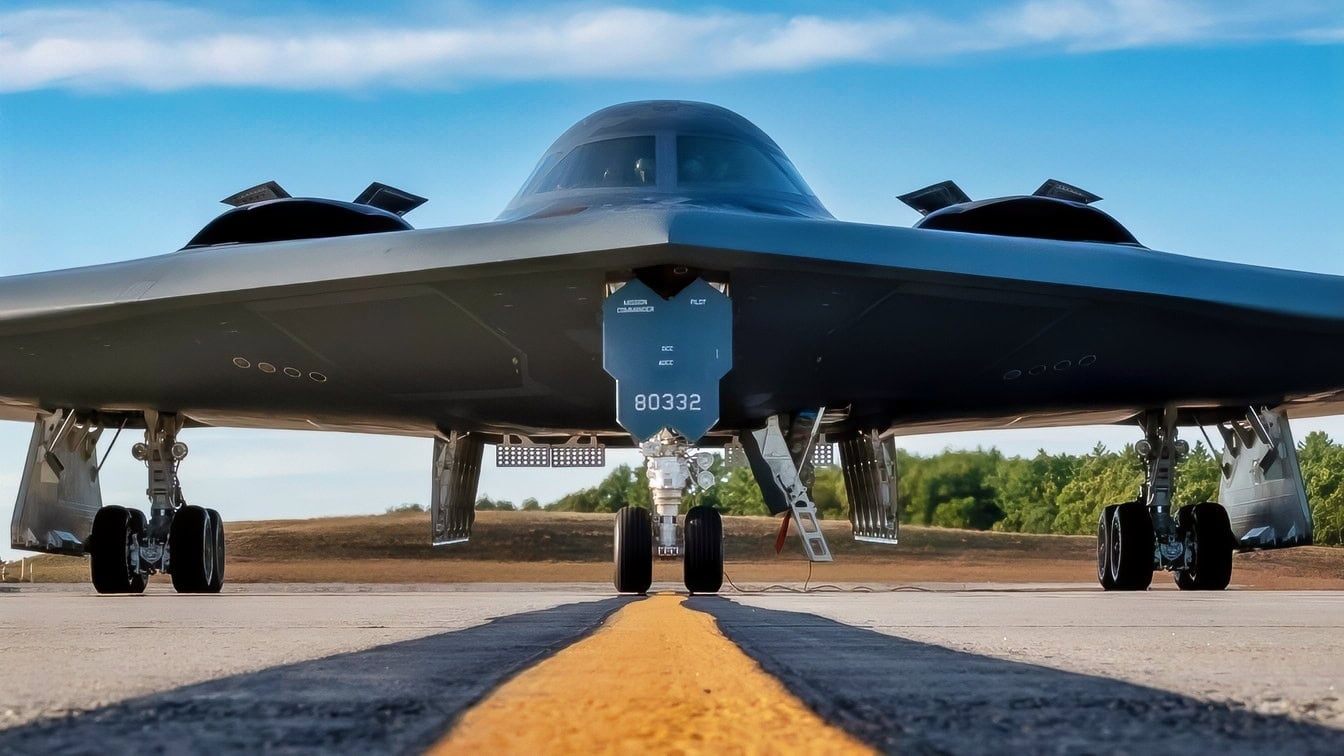
A U.S Air Force B-2 Spirit aircraft is shown on the flight line at Pease Air National Guard Base, New Hampshire, Sept. 20, 2025. The aircraft is the first operated by the 509th Bomb Wing to land at Pease ANGB, formerly Pease Air Force Base, since the 509 BW, formerly 509th Bombardment Wing, was stationed at Pease AFB and the active-duty base closed nearly 35 years ago. The lineage of the 509th BW traces back to the World War II Era when the 509th Composite Group dropped the atomic bombs on Japan. (U.S. Air Force photo by Staff Sgt. Joshua Hastings)
The Challenge of Preventing Regime Survival
The other challenge of the current U.S. deterrent threat against North Korea is skepticism regarding the U.S. capability to successfully destroy the North Korean regime. The recent U.S./Israeli war against Iran started by attempting to destroy that regime. The alliance did kill many of the senior leaders of the Iranian regime, but it failed to prevent the regime’s governmental structure from surviving despite an overwhelming attack. This attack included the United States hitting some 1,000 targets in the first day of the conflict and Israel conducting 700 fighter sorties in Iran that same day. Admittedly, not all these attacks were directed specifically against the regime leadership, but many were. Moreover, the United States and Israel had unprecedented intelligence on the location of the Iranian leaders.
It is unclear whether the United States will ever have that exceptional level of intelligence against the North Korean leadership. The United States would need to know the relationships among the leaders and potential successors, identify all their locations, and be willing and able to effectively attack all these locations, including using nuclear weapons as needed. The potential for any key leaders surviving could require a significant number of follow-on attacks. Unless the North Korean regime is much more fragile than currently perceived, an American attack plan that only resulted in the death of Kim Jong-un and a few other senior leaders would not likely bring down the entire governmental structure.
North Korea has been very clear that if it sees such an attack coming, it will launch a preemptive strike against the United States and South Korea likely employing many nuclear weapons. Even now, the number of North Korean nuclear weapons has risen to the point where such an attack could cause immense damage in South Korea and possibly even in the United States. As the size of the North Korean nuclear weapon inventory grows, that threat becomes ever more serious. Even more concerning is the possibility that Kim Jong-un might, at some point in the future, question the American deterrent threat altogether, concluding that the U.S. lacks the will or capability to execute it.
A New Strategy for Deterring North Korean Nuclear Employment
Twenty years ago, the U.S. Joint Chiefs of Staff published a Deterrence Operations Joint Operating Concept. This document explains that deterrence of a North Korean attack is achieved by some combination of the North perceiving that it cannot achieve the benefits of an attack, that it will pay too high a price for such an attack, and that it can continue to live reasonably without launching one.
Fortunately, the U.S. Department of War understands these deterrence options. In two recent speeches, the Undersecretary of War for Policy, Elbridge Colby, has described the U.S. evolving deterrence concepts against adversary nuclear weapon use. Colby outlined four key points.
First, deterrence threats should focus on deterrence by denial. “We will make clear that any attempt at aggression against U.S. interests will fail and is therefore not worth attempting in the first place. That is the essence of deterrence by denial.” The U.S. National Intelligence Council believes that North Korea is most likely to use its nuclear weapons for coercion, and thus the United States must be prepared to overcome the coercive effect of any likely North Korean limited nuclear weapon attack.
Kim and his regime have been trying to coerce the United States and South Korea into decoupling the U.S./ROK alliance. Anxious to carry out a summit meeting with Kim Jong-un, the current U.S. administration has already undermined the alliance by concessions such as recognizing North Korea as a nuclear power and curtailing U.S./ROK military training. If the United States responds inadequately to a North Korean limited nuclear weapon attack against South Korea, the U.S./ROK alliance would be in serious jeopardy. Moreover, worldwide U.S. extended deterrence commitments would lose credibility—exactly the outcome desired by North Korea and its Russian and Chinese allies who would attempt to delay and constrain any U.S. response.
Second, the United States must act with “favorable escalation management.” North Korea could choose a major escalation if the U.S. is not careful with its response to a North Korean limited nuclear weapon attack. But an inadequate U.S. response could possibly persuade Kim that American policy allows him to get away with even more nuclear weapon employment. Still, in light of North Korea’s 2022 nuclear law, the United States may find it challenging to achieve escalation management. This law says that “North Korea’s nuclear weapons would be ‘launched automatically’ if the country’s ‘command and control system over the state nuclear forces is placed in danger’”—exactly what the current U.S. declaratory deterrent threatens to do, even if the U.S. only targets Kim Jong-un. Admittedly, the North Korean nuclear law is undoubtedly an extreme statement to maximize deterrence against any U.S. response. Still, any U.S. response to a North Korean nuclear attack needs to be very carefully chosen to maximize the potential for escalation management.
Third, the U.S. military needs to provide the president with flexible response options. Colby notes that this was done during the Cold War. For example, the United States prepared limited nuclear options to respond to potential Soviet limited nuclear attacks.
Fourth, the United States needs to pursue a “binding” strategy that links U.S. and allied interests, especially in response to North Korean nuclear weapon employment. The foundation of this strategy must “derive from a concrete, flexible realism characterized by strategic clarity and a focus on Americans’ practical interests.” It is critical that the United States maintains shared perspectives and interests with its allies when seeking to address North Korean nuclear weapon employment.
Further Elements
While these principles are clearly vital, Undersecretary Colby limited the level of strategic clarity he offered on the developing U.S. plans. This author’s perspective is that these approaches to nuclear deterrence can be enhanced by several additional elements.
The U.S. military needs to prepare a range of conventional and nuclear flexible response options that could be tailored to potential North Korean aggression. These would allow the U.S. president to meet the U.S. swift response commitment by immediately executing one of these options. Military planners must prepare such options now because the United States cannot afford the time to formulate options after a North Korean attack. These options should identify for the president:
-the damage to be done against North Korea,
-how that damage will potentially affect North Korean military and other capabilities,
-how much collateral damage would be done,
-which options would be more likely to trigger North Korean preemption or other major escalation (seeking to manage escalation).
The challenges of such options are illustrated in my graduate school class on “Wargaming Limited Nuclear Weapon Employment,” where our wargames postulate North Korean limited nuclear weapon employment. Our students often respond by preferring to execute a large conventional attack with no nuclear component, reflecting their aversion to U.S. nuclear weapon use and options they think will manage escalation. We then ask them whether the North will be able to tell whether inbound U.S./allied fighters, cruise missiles, and/or ballistic missiles are carrying conventional or nuclear warheads. They believe the North may well be unable to differentiate. If so, as soon as the North sees a significant number of potential nuclear weapon delivery means inbound, it may well attempt to preempt with many nuclear weapons against South Korea, Japan, and even the United States. Since that escalation would be undesirable, the students often reevaluate their approach and recommend launching only a very small number of nuclear delivery systems in hopes of achieving escalation management.
Interestingly, North Korea has gone well beyond any U.S. efforts on strategic clarity of nuclear weapon employment. In 2022, North Korean media said that North Korean missile tests “were rehearsals for tactical nuclear weapon strikes against neighboring enemy airports, airfields, military command facilities and ports.” The United States could apply similar clarity to identify target types that the United States is prepared to threaten with a limited nuclear response to a North Korean nuclear attack. This information might also enhance deterrence by Kim Jong-un knowing that he could be hurt by various well-defined American limited response options.
Doing so would also strengthen the binding strategy discussed above. U.S. strategic clarity on potential target types for a nuclear response against North Korea could strengthen U.S. extended deterrence commitments. Such assurance is needed because allied trust has significantly declined in recent years and is often questioned. U.S. sharing of the target types for its nuclear targeting options would allow valuable alliance feedback, the very type of information that may be difficult to collect in a timely manner after North Korean nuclear weapon use.
For example, the United States could tell South Korea that it has prepared options to use nuclear weapons in targeting North Korean uranium enrichment facilities, nuclear weapon storage, and/or ICBM storage facilities, without specifying exactly which ones. North Korea uses this type of approach when it announces that its nuclear targets would include airfields, ports, and military command facilities. If the South Korean government has objections to any of these target types, it could be invited to air those objections. Implementing the binding strategy by this sharing would also co-opt the South Korean government, avoiding potential post-conflict claims that the South’s government was not involved in U.S. nuclear weapon employment planning.
Finally, as noted above, one means of achieving deterrence is encouraging North Korean restraint. Some national security experts have argued for this kind of effort, including the recent article by Victor Cha arguing for creating a “Cold Peace” with North Korea. Cha is right in advocating U.S. tension reduction with North Korea to avoid misunderstandings that could lead to North Korean nuclear weapon use. U.S. “carrot and stick” offers might achieve this effect while avoiding the North Korean refusal to negotiate with the United States.
But Cha’s argument that South Korea should unilaterally abandon its “kill chain” to counter North Korean threats seems extreme. After all, North Korea, the United States, and most major countries also have a kill chain of some form. Asking only South Korea to give up theirs is dangerous to the South and perhaps even to deterrence of North Korea.
Conclusions
The current U.S. declaratory doctrine against North Korean nuclear weapon employment has been losing credibility. The U.S. Department of War recognizes this quandary and is working on revised deterrence doctrine and strategy. Several of the elements they have recently introduced should be effective in this revision, but several others also appear to be needed.
The growing size of the North Korean nuclear weapon force increases the risk of a North Korean employment of nuclear weapons, making the ongoing efforts critical to preventing such employment.
About the Author: Bruce W. Bennett
Dr. Bruce W. Bennett is a senior defense analyst with extensive experience in Korean military affairs. He works primarily on research topics such as strategy, force planning, and counterproliferation, specializing in Korean security. He also teaches graduate school classes on “Understanding Nuclear Forces” and “Wargaming Limited Nuclear Weapon Employment.”