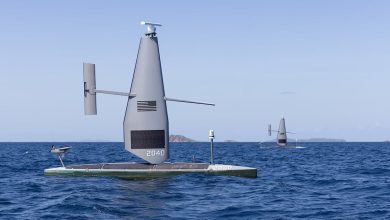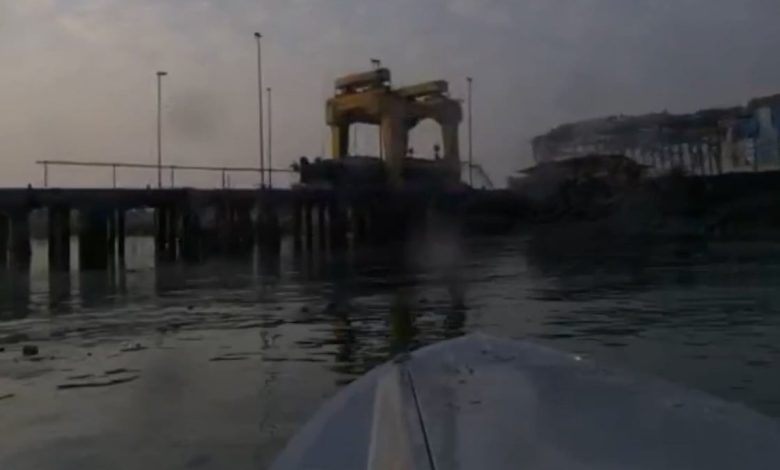
U.S. Central Command utilized three Corsair unmanned surface vessels to strike a submarine and ship maintenance facility at the Bandar Abbas naval base in Iran, marking the “first time American forces have employed sea drones in combat operations,” CENTCOM confirmed on X on Monday.
The latest round of strikes by the U.S. comes after it revoked a license on July 7 that allowed Iran to sell oil. U.S. President Donald Trump declared the ceasefire between the two nations — which began on April 8 — to be over, but ceded that Iran had agreed to continue to negotiate.
The U.S. military said it hit dozens of Iranian military targets on Sunday, which included the first-ever combat use of Corsair USVs to assist in degrading Iran’s ability to continue to attack commercial shipping through the Strait of Hormuz.
Built by Saronic, the Corsair is a 24-foot USV that has a range of over 1,000 nautical miles and a payload capacity of 1,000 pounds while surging at 35 knots.
According to the company, “it supports a variety of missions including ISR, surface surveillance, and logistics in both permissive and contested environments. Its embedded AI stack and open architecture allow rapid integration of sensors and autonomy software, making it a flexible platform for modern naval and defense applications.”
While it is the USVs first display in combat, the U.S. Navy has been testing and utilizing Corsair vessels for various missions over the past two years.
Just last month, two soldiers were picked up by a Navy-operated Corsair USV after their Army AH-64 Apache helicopter crashed during a patrol operation near the Strait of Hormuz.
The unique mission marked the first publicized use of the craft outside of testing.
“The surface drone that assisted in last night’s rescue of the Apache crew off the coast of Oman was a U.S. Navy Corsair unmanned surface vessel operated by U.S. 5th Fleet’s Task Force 59,” Capt. Tim Hawkins, a U.S. Central Command spokesperson, said in a statement in June. “The Task Force began fielding these drones in theater in late March.”
In January 2024 the Navy stood up Unmanned Task Group 59.1, nicknamed “The Pioneers,” to focus on the deployment of unmanned systems in maritime operations teamed that can be teamed with specialized operators to “bolster maritime security across the Middle East region,” according to a press release.
Unmanned Task Group 59.1 is under the aegis of Task Force 59 in the U.S. Fifth Fleet Area of Operations.
At the time, Lt. Luis Echeverria, the commanding officer of the Navy’s Bahrain-based Pioneers, was assigned to “stress-test” unmanned surface vessels.
According to previous Navy Times reporting, a handful of unmanned vessels were launched from Aqaba, Jordan, into the Red Sea with a broad-edged surveillance mission: to observe the “pattern of life” in the region and increase maritime domain awareness.
With the latest Corsair attacks on the Iranian port, that mission has shifted to incorporate strikes.
Claire Barrett is an editor and military history correspondent for Military Times. She is also a World War II researcher with an unparalleled affinity for Sir Winston Churchill and Michigan football.