On April 26, 1971 an SR-71 Blackbird Flew More Than 15,000 Miles in 10 Hours and 30 Minutes With 5 Aerial Refuelings. The Limit Was Not Fuel, Not the Engines, and Not the Crew. It Was 212 Liters of Liquid Nitrogen.

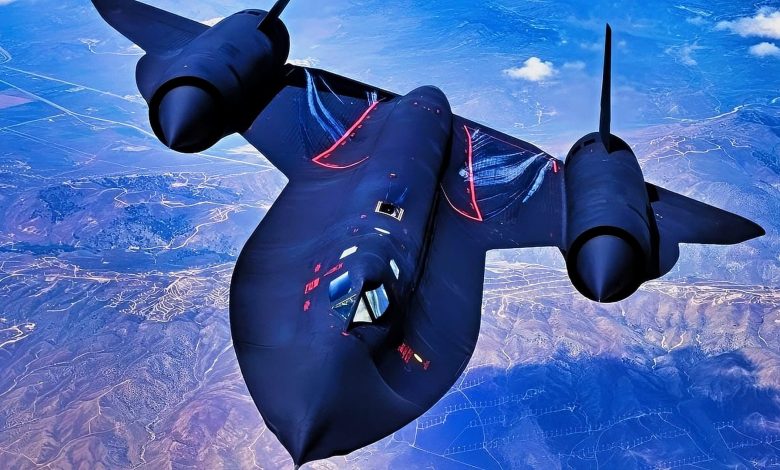
Summary and Key Points: Just after dawn on April 26, 1971, SR-71 Blackbird number 61-7968 lifted off from Beale Air Force Base in California carrying a question no one had answered. The Blackbird’s speed was settled science. Its ceiling was settled. What nobody knew was how long one could stay up, and the answer the crew brought home ten hours and thirty minutes later — over 15,000 miles of it — turned out to hinge on the least glamorous fluid aboard: liquid nitrogen.
The Question a General Wanted Answered on the SR-71 Blackbird
]]>
The order came down from Gen. P.K. Carlton, commander of Fifteenth Air Force, who wanted to know the aircraft’s true endurance, a number the program had never tested.
The 9th Strategic Reconnaissance Wing received permission to attempt its first public-record flight, and the mission went to two then-majors: pilot Thomas B. Estes and reconnaissance systems officer Dewain C. Vick.
The stated purpose covered the J58 engines and the airframe under marathon stress, but the crew and the planners understood the real experiment, preserved in the account the Blackbird community keeps: fly until the nitrogen ran out, refueling as many times as the supply allowed.
SR-71 Blackbird: Why a Mach 3 Airplane Runs on Nitrogen
The nitrogen mattered because of heat.
At cruise, the Blackbird’s skin reached 800 degrees Fahrenheit, by NASA’s accounting, and its six fuel tanks were bare titanium structures, unlined because no bladder of the 1960s could survive the temperatures.
Hot JP-7 vapor sitting above ordinary air becomes a bomb waiting for a spark.
The Skunk Works answer was to banish oxygen entirely: liquid nitrogen, carried in Dewar flasks in the nose wheel well, boiled off into gas, filling the space above the fuel at 1.5 psi above ambient pressure and making ignition chemically impossible.
SR-71 Blackbird at the Smithsonian. 19FortyFive image taken back in 2025.
The same gas performed a second job on the way down, filling empty tanks so rising outside pressure could not crush them during descents.
On the 1971 flight, the aircraft carried two 106-liter flasks, 212 liters in all, and when that supply ended, so did the mission, regardless of fuel, engines, or crew.
The airplane carried a second consumable clock beside the first. JP-7 was blended so stable that the engineers had to invent a chemical just to ignite it — triethylborane, injected in small shots that burst into green flame on contact with air.
Each engine’s sealed flask held enough for roughly sixteen ignitions by the standard accounts of the J58’s systems, and every refueling descent spent shots from it relighting the afterburners for the climb. Endurance, in a Blackbird, was an inventory of exotic chemistry.
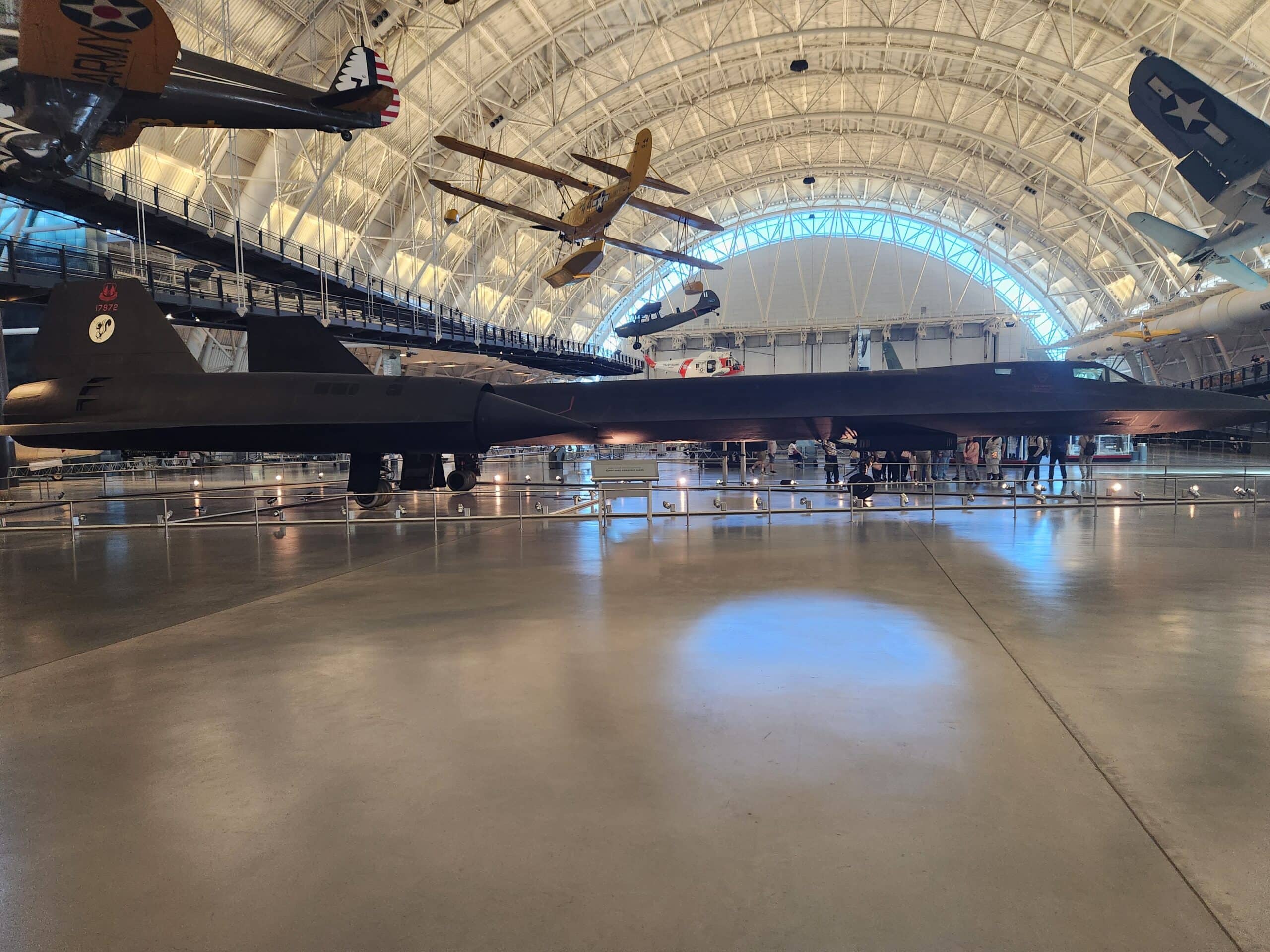
SR-71 Blackbird at the Smithsonian. 19FortyFive image taken back in 2025.
Ten and a Half Hours, Five Tankers
The route drawn by the planners looped the continental United States twice — Beale to Montana, across the northern tier to Ohio, down the Atlantic coast to Cape Hatteras and Florida, west through Texas to California, and around again — before a shortened third lap turned south at Bismarck for Santa Fe, Las Vegas, and home.
The flight required five aerial refuelings, each one a descent from the eighty-thousand-foot world to a tanker’s altitude and airspeed, a slow drink of JP-7, and a climb back into afterburner.
The burner is what made the profile possible at all.
The J58 stands as the sole engine ever configured for continuous afterburning at cruise, and at speed the propulsion system barely resembled a jet: the basic engine contributed under 20 percent of total thrust by NASA’s studies, the inlet spike supplied 54 percent at Mach 3.2, and the afterburner section ran near 3,200 degrees Fahrenheit for hours at a stretch.
Estes and Vick held that regime through every high-Mach leg, five separate times, with tanker intervals between.
Postflight inspection found the airframe entirely sound.
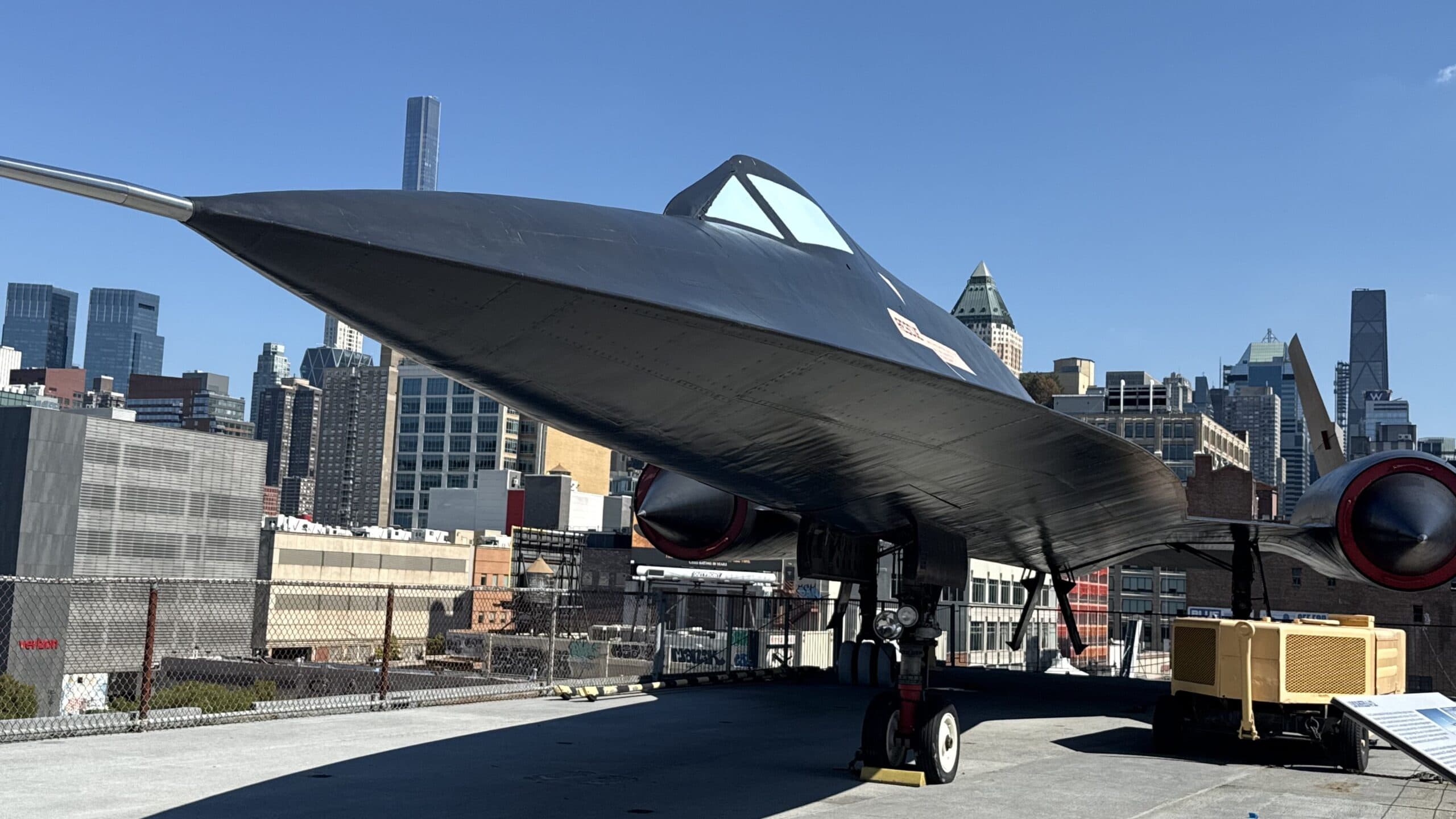
A-12, a plane from the same lineage as the SR-71 Blackbird, aboard the USS Intrepid. 19FortyFive Photo.
What the Average Speed Reveals
One piece of arithmetic corrects the way this story usually gets told.
Fifteen thousand miles in ten and a half hours averages 1,428 miles per hour.
At cruise, the Blackbird covered 36 miles every minute, roughly 2,160 miles per hour.
The gap between those two numbers is the five refuelings made visible: hours of the flight passed at tanker speeds, below the sound barrier, with the burners out.
The record’s own fine print says so directly — the time includes subsonic refueling.
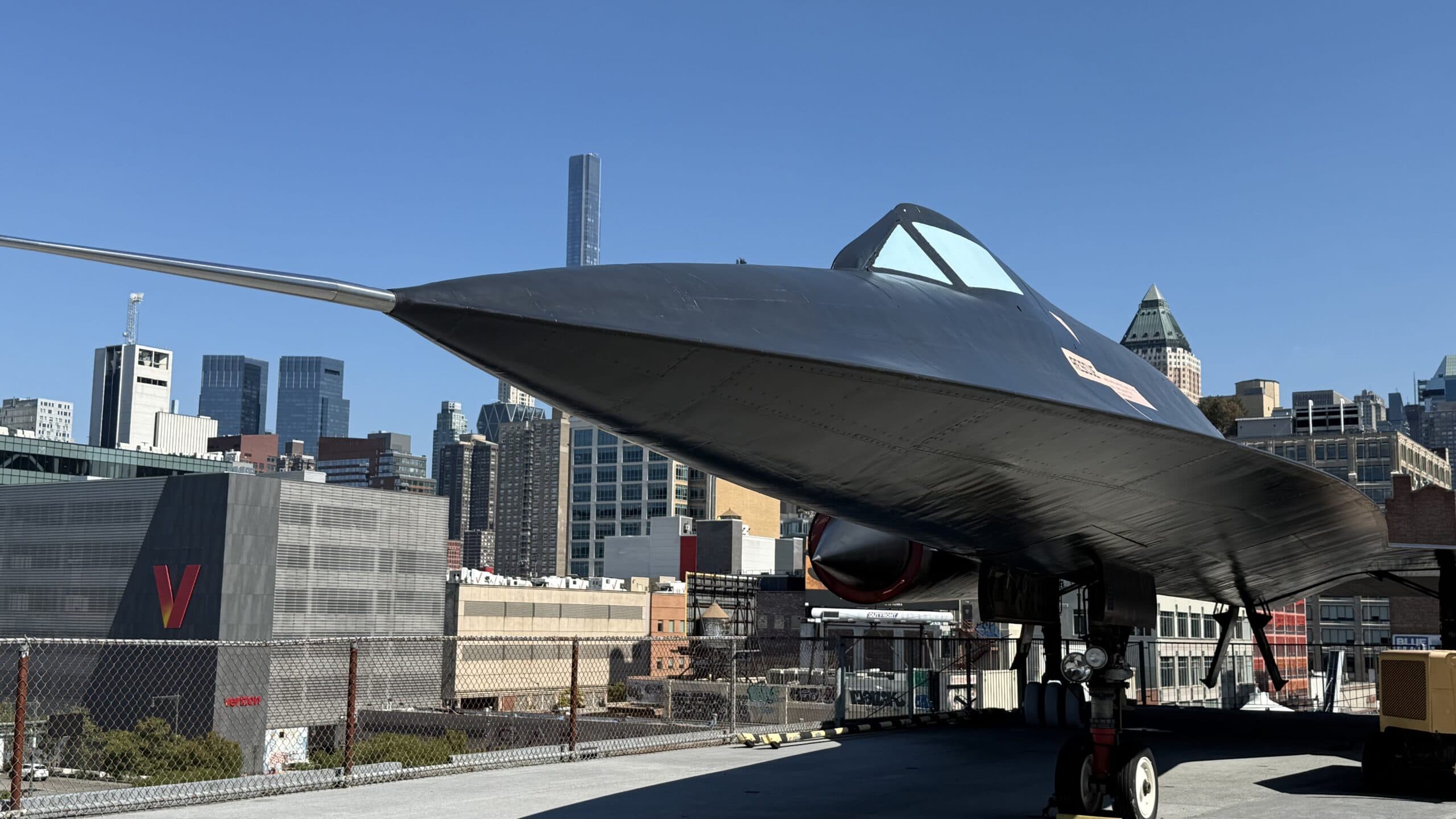
A-12, a plane from the same lineage as the SR-71 Blackbird, aboard the USS Intrepid. 19FortyFive Photo.
The popular retelling that the crew flew the entire mission in continuous afterburner is a compression of a true and stranger fact: the airplane was certified to cruise that way indefinitely, and did, in five long installments, until the nitrogen said stop.
The Trophies and the Corrected Calendar
The awards followed, and the dates deserve to be explained in detail, because even the account that popularized the story compresses them.
The flight won the 1971 Mackay Trophy, whose official citation in the National Aeronautic Association’s registry honors the crew for establishing “new world records for duration and distance covered,” with the presentation made on July 18, 1972.
The Harmon International Trophy for 1972 came separately: President Nixon presented it at the White House on September 20, 1973, with Senator Barry Goldwater in attendance.
Two trophies, two ceremonies, twenty-nine months between the flight and the second handshake.
Sixteen Days Later
The timing of that White House ceremony carries its own weight for sure.
Sixteen days after Nixon handed over the trophy, the Yom Kippur War began, and the capability Estes and Vick had proved became an operational necessity: Blackbird crews flew reconnaissance missions to the Middle East that autumn lasting up to thirteen hours, flights so draining that one pilot, in the interviews Linda Sheffield Miller has preserved, described walking for hours afterward to bring his adrenaline down enough to sleep.
The heat-stretched jets came home inches longer after every mission, their engines kept within strict temperature limits, and the fleet flew those marathon profiles for two more decades.
The engineers delivered their own verdict on where a Blackbird’s endurance truly lived: in the mid-1980s they added a third Dewar to every aircraft, fifty more liters of liquid nitrogen, bought by the lesson of April 26, 1971.
About the Author: Harry J. Kazianis
Harry J. Kazianis (@Grecianformula) was the former Senior Director of National Security Affairs at the Center for the National Interest (CFTNI), a foreign policy think tank founded by Richard Nixon based in Washington, DC. Harry has over a decade of experience in think tanks and national security publishing. His ideas have been published in the NY Times, The Washington Post, The Wall Street Journal, CNN, and many other outlets worldwide. He has held positions at CSIS, the Heritage Foundation, the University of Nottingham, and several other institutions related to national security research and studies. He is the former Executive Editor of the National Interest and the Diplomat. He holds a Master’s degree focusing on international affairs from Harvard University.