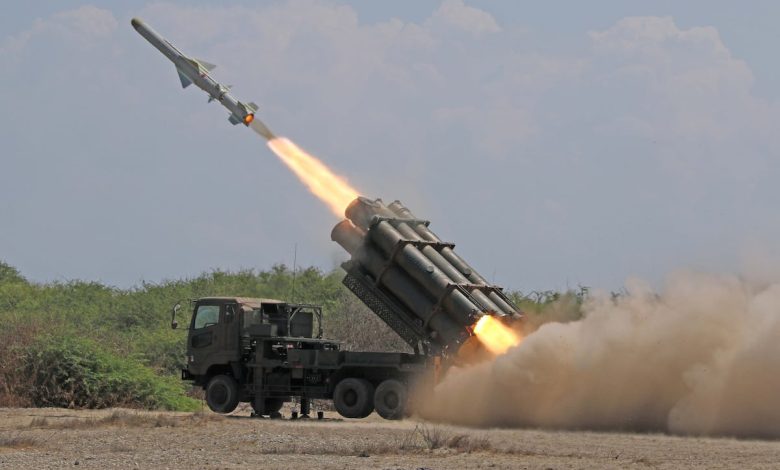
LAOAG, Philippines — A Japanese anti-ship missile smashed into and sunk a decommissioned Philippine naval vessel afloat in the South China Sea, headlining a culminating event of Exercise Balikatan 2026.
This missile firing of the Japan Ground Self-Defense Force’s Type 88 surface-to-ship system from sand dunes near Laoag in northwest Luzon on May 6 was significant for several reasons.
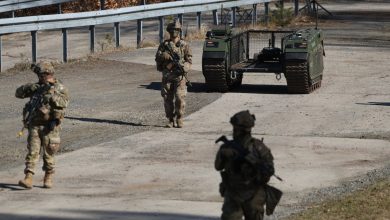
Firstly, this was the maiden deployment of Japanese combat troops on Philippine soil since the end of World War II. Abetted by a reciprocal access agreement ratified by Manila and Tokyo on Sep. 11, 2025, approximately 1,400 Japanese soldiers exercised in the Philippines.
Secondly, the firing of anti-ship missiles presages growing cooperation between Japan and the Philippines, especially as both nations grapple with the specter of an aggressive China in waters around both countries.
If an imaginary curved line is drawn north to south from the Japanese mainland, it would first pass through Taiwan and then continue on to the Philippines. These land masses, plus their archipelagic territories, form a key part of what military planners call the First Island Chain.
Anti-ship missiles positioned on Japanese islands north of Taiwan, and on Philippine islands south of it, have the ability to control who passes through the maritime straits near this democratically governed country that Beijing covets for itself.
In a time of conflict, if the People’s Liberation Army ever invaded Taiwan, the race would be on for either China or the United States and its allies to control these maritime chokepoints.
This is why the deployment and firing of two Japanese Type 88 anti-ship missiles was so important. Such weapons could target any Chinese invasion fleet, or help prevent the passage of Chinese warships into the Western Pacific.
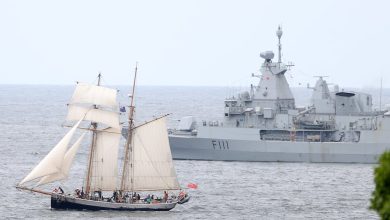
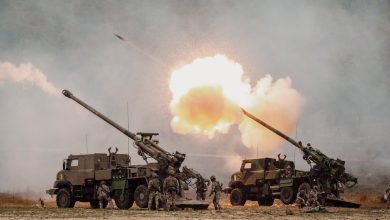
Although only two missiles were fired, as well as a GMLRS rocket from a U.S. Army HIMARS, other anti-ship missile systems such as a U.S. Marine Corps NMESIS and a ship-based Philippine Navy C-Star simulated attacks, too.
The first Type 88 missile hit its target – a former minesweeper dating from WWII – 47 miles away after a six-minute flight.
The Philippines possesses a similar anti-ship missile system – the BrahMos acquired from India – but it did not join in the firing on this occasion.
Meanwhile, the Hawaii-based 3rd Marine Littoral Regiment of the U.S. Marine Corps oversaw command and control of this maritime strike exercise.
Philippine Defense Secretary Gilberto Teodoro Jr. and his Japanese counterpart, Shinjiro Koizumi, attended the missile firing, a day after they met in Manila. One topic of their discussion was Tokyo’s recently relaxed policy on selling lethal weapons.
The Philippines is already planning to buy second-hand equipment like Beechcraft King Air light aircraft and Abukuma-class destroyers from Japan.
Highlighting the bilateral friendship, Teodoro said, “No one country can do deterrence, and the more partners that are converged … the stronger we are.”
Exercise Balikatan took place from Apr. 20 to May 8. It involved approximately 17,000 troops from seven countries.
Gordon Arthur is an Asia correspondent for Defense News. After a 20-year stint working in Hong Kong, he now resides in New Zealand. He has attended military exercises and defense exhibitions in about 20 countries around the Asia-Pacific region.