I Am a Retired US Army Special Forces NCO: There Is Nothing Like ‘Baby’ Glock 26 Even After over 30 Years for Concealed Carry

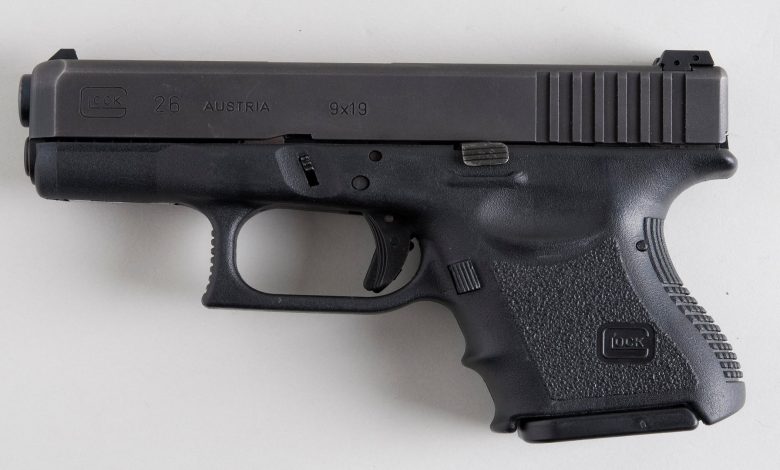
The Glock 26: How Does the “Baby Glock” Still Rate After 30+ Years – When Glock introduced the Model 26 in the mid-1990s, the goal was simple: take the proven 9mm platform that law enforcement agencies across the country had already adopted and shrink it down into something a civilian could carry comfortably, every day, without printing through a shirt.
It was Glock’s first subcompact pistol. Three decades and five generations later, the “Baby Glock” is still one of the most popular subcompact pistols on the market.
Image: Creative Commons.
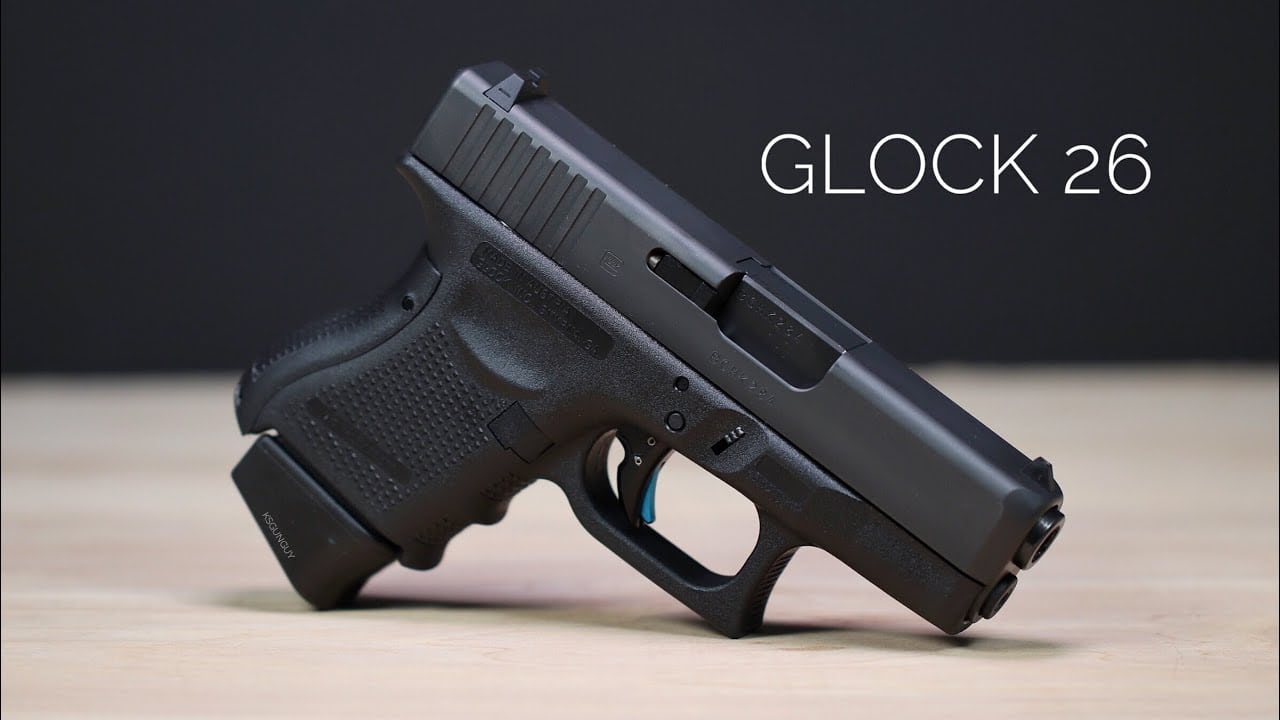
Glock 26. Image: Screenshot.
But is it still the right call today, when the concealed carry market is flooded with slimmer single-stacks and optics-ready micro-compacts? Here’s an honest look at where the G26 shines and where it shows its age.
Meet The Glock 26
The Glock 26 is a striker-fired, double-stack 9mm subcompact. It runs a barrel just under 3.5 inches long, an overall length of roughly 6.5 inches, and a standard magazine capacity of 10 rounds.
However, it has the versatility and option to run 12, 15, 17, or even 19-round Glock 19/17 magazines for a deeper grip when concealment isn’t the top priority.
It’s a great pistol for beginners and women whose hands aren’t big enough to handle “Bullet Tooth Tony’s” Desert Eagle .50.
It shares Glock’s Safe Action trigger system, the same basic controls, and the same field-strip procedure as every other Glock, which matters more than it might seem.
Glock 26 Pros
Capacity for its size. Most subcompacts in this class are single-stack designs holding 6-8 rounds. The G26’s double-stack magazine gives you 10 rounds standard, which is a meaningful advantage in a defensive gun this small.
The flared magazine well also aids in quicker reloads, which in a self-defense situation could save a life.
Magazine and holster compatibility. Because the G26 shares its magazine well architecture with the Glock 19 and 17, owners can top off with full-size magazines for reserve capacity or range use, and can draw from an enormous ecosystem of aftermarket holsters, sights, and triggers built for the broader Glock lineup.
Reliability. Glock’s reputation here is earned. The design tolerates neglect, generic ammunition, and minimal maintenance better than most of its competitors, which matters a great deal in a gun meant to work without fail in an emergency.
Simplicity. One trigger pull, no external manual safety to remember under stress, and a straightforward disassembly process. For many people, especially those new to firearms, that simplicity translates directly into confidence.
Familiarity and training carryover. If you’ve trained on a Glock 19 or 17, common range and duty guns, the Glock 26 handles almost identically, just with a shorter grip and sight radius. That transfer of muscle memory is a real, underrated benefit.
Price and support. The G26 typically lands in the $450-$650 range, depending on the generation and retailer, and because it’s been in continuous production for so long, parts, magazines, and gunsmithing support are widely available.
Glock 26 Cons
Short sight radius and grip. The tradeoff for concealability is a shorter sight radius, which can make precise shots at distance harder than with a Glock 19. The stubby grip also means most shooters will have their pinkies off the frame when using the flush 10-round magazine, which affects recoil control for people with average or larger hands.
Snappier recoil. Because the G26 is lighter and shorter than a full-size or compact Glock but fires the same 9mm cartridge, felt recoil is more pronounced. It’s manageable with practice, but it’s not as soft-shooting as a Glock 19.
No optics-ready cut from the factory on most configurations, unlike newer MOS-equipped Glocks. Aftermarket slide milling is available, but it’s an added cost and step if you want a red dot.
Blocky, dated grip texture compared to newer competitors. Glock’s ergonomics have improved from generation to generation, but the company still lags behind some rivals in outright hand feel and grip texture.
Trigger. It’s serviceable and consistent, but the stock Glock trigger is not considered a strong point compared to some newer designs, and many owners upgrade it.
Is It Still A Worthwhile Concealed Carry Pistol?
For most people, yes. The Glock 26 remains a genuinely strong, arguably default choice in the subcompact 9mm category, and there’s a reason it still shows up on “best concealed carry” lists three decades after launch.
Its combination of double-stack capacity, bulletproof reliability, simple manual of arms, and compatibility with Glock 19/17 magazines and holsters is hard to match at its price point.
Where it loses ground is against the newest generation of micro-compacts — guns like the Glock 43X MOS, SIG P365, or others which offer comparable or greater capacity in a slimmer, sometimes lighter package, several with factory optics cuts.
If flush concealability and a red dot are your top priorities, it’s worth cross-shopping those. But if you value proven reliability, an established support ecosystem, and a gun you can train on interchangeably with a duty-size Glock, the G26 still earns its reputation as a smart, no-nonsense carry pistol.
In my opinion, I’d opt for a different Glock for a CCW choice.
However, as with any defensive firearm, the gun itself is only part of the equation; proper training, a quality holster, and practice, practice, and more practice matter just as much as which model you choose.
About the Author: Steve Balestrieri
Steve Balestrieri is a National Security Columnist. He served as a US Army Special Forces NCO and Warrant Officer. In addition to writing on defense, he covers the NFL for PatsFans.com and is a member of the Pro Football Writers of America (PFWA). His work was regularly featured in many military publications