Firecraft In Community Life – How Native, Pioneer, and Amish Families Used Fire Beyond Cooking – Survivopedia

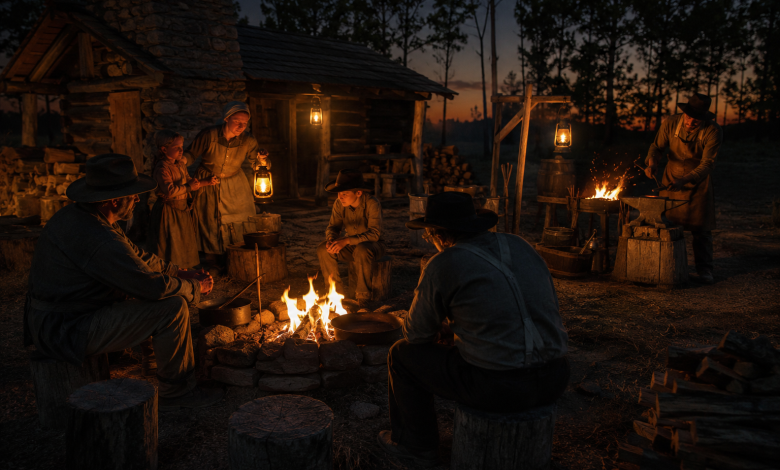
Whether you are of Indigenous, Pioneer, Amish or other heritage, they used fire for far more than just cooking. One of the first things was light.
Light
Indigenous fat lamps and torches and Pioneer and Amish pine pitch torches and oil lamps served the same purposes. Light from fire gave them the ability to work past dark and before sunup. Just as importantly, it gave our ancestors situational awareness and fended off the dangers of the night.
Light also gave our ancestors the ability to feed themselves by attracting fish and catching birds in their roosts and nests. Flying off into the dark of night is a last resort for diurnal bird species as it is likely to end in injury.
Heat
Indigenous campfires, heated stones and soil and fat lamps provided heat camps and homes as did Amish and pioneer wood burning and coal stoves, masonry ovens and fireplaces. As the Pioneers crossed the plains and then Rockies the spot where the fire had burned was often the only place they could bury their dead in the otherwise frozen ground.
Metal Working
The Amish, Pioneers and many Indigenous cultures also used fire to smelt and work metals. Indigenous peoples of the Americas used fire to smelt and work copper, gold, silver, lead, bronze and alloys. There is no evidence that they smelted iron in the pre-Columbian era, but the Inuit made harpoons and tools using iron recovered from the Cape York Meteorite in Greenland and pieces of the iron were traded to Indigenous Peoples in the North American mainland prior to contact with Europeans. (Wikipedia, Cape York Meteorite, 2026)
Like their counterparts in other parts of the world, Native Americans made metal weapons, armor and a variety of tools, as well as kitchenware and art. They also used lost wax casting to make metal objects.
Chemistry
Fire also enabled varying applications of primitive chemistry amongst all three cultures.
Pyrolysis is the thermal decomposition of wood between 300-700 °C (572-1292 °F) in an oxygen-poor environment, and it produces an array of products that were just as useful to our ancestors, and they are to us today.
Products of pyrolysis of different species of wood:
- Biochar – Used in fire making and water filtration and as a soil additive to help soil absorb and retain water. (Fergerson, MBA, Freire, MBA/MEng, & Sievert, MBA, 2024)
- Charcoal – Used for fuel, drawing, writing and camouflage.
- Turpentine – The fraction of oils that is lighter than water. It was used for a range of medical applications, as waterproofing, insecticide, pest deterrent, and to preserve rope and sails and was later used as a solvent, lamp fuel, varnish and in the creation of oil paints, rubber and perfume, among other uses. (Wikipedia, Turpentine, 2026)
- Creosote – Heavy oils were used in medicines, as a wood preservative and to create wood vinegar.
- Various Wood Pitches and Tars – The dark, viscous, oily organic compounds that are heavier than water.
- Wood Vinegar or Pyroligneous Acid – Creates a liquid rich in acetic acid, which was used as a substitute for vinegar, as a soil additive, pesticide, wood preservative, and in medicine.
- Embalming Fluid – The Ancient Egyptians used the liquid product of pyrolysis of cedar in embalming bodies.
- Wood Ash – Wood ash was used in soap making and as a soil additive for acidic soil.
Fire was also used to create earthenware and ceramics, in food preservation, leather tanning, to make adhesives and in many other primitive chemical processes.
Farming, Foraging and Hunting
The judicious use of fire was good for the soil, plants, trees, animals, and humans. While I have not found any evidence that the Amish used controlled burns in farming, Native Americans used it quite extensively and passed on their knowledge of the use of controlled burns in agriculture and hunting to Pioneers. (Anderson & Moratto, 1996) Biochar saw extensive use in the Amazon Basin where it was used to improve the soil, which normally loses fertility within a few years of clearing, which is also done with fire. Surprisingly, soil treated with biochar is still fertile 500 years after treatment. (Wikipedia, Native American use of fire in ecosystems, 2026) (ScienceArray, 2025)
Small fires burn off excess fuel and ground cover, create openings in the forest canopy so sunlight can hit the ground and open up meadows and transition zones that many plant and animal species depend on to survive. We, in turn, hunt the animals and forage the fungi and plants that appear after a fire.
If the day comes that you need to expand your garden and can no longer just run down to the nursery and pick up the soil amendments that you need to transform whatever passes for soil in your neck of the woods into rich, productive garden soil, you will have to do an your ancestors did and use fire to make biochar or heat crushed seashells or use wood ash to adjust the soil’s pH. Like the Indigenous Peoples of the Amazon, you should make your biochar from a combination of wood waste, manure, animal bones, food waste, and apparently pottery shards if you have some, but it is important to test your soil. So either invest in test soil test kits and learn to use them or experiment now, while it’s easy to do.
Fire and smoke were also used to drive animals into fences, nets, off cliffs or to lines of hunters as well as to drive burrowing animals out of their holes. Fire was also used to burn brush to eliminate cover that would interfere with hunting, and charcoal was used for camouflage.
Reduce the Risk of Extreme Fires
Regular small fires burned much of the fuel, ensuring that that fires didn’t grow so big and too hot that they killed large number of mature trees. Certain species of trees in fire prone environments are dependent on fire to reproduce, but if the fire is too high and too hot, it can kill them.
Religious Rituals and Cremation
Fire was also important to some Native American cultures for certain rituals including cremation.
Wood Working
Felling a suitable tree and then hollowing out a dugout canoe with stone tools was extremely labor intensive. Skillfully applied, fire was a labor-saving tool. Hot coals were also used to hollow out wooden bowls, cups and other concave wooden products.
Fire was also used to fire harden wood, to make wood preservatives, and as a wood preservative by itself, as in the Japanese technique of Sou Sugi Ban.
Tanning Hides
Native Americans used fire to smoke buckskin in the brain tanning process and all three cultures used it to extract tannins from tree bark for “tanning” hides.
Purification
Some Native American tribes had an annual ritual of renewal and purification that entailed burning their shelters and virtually all their possessions in the spring, then moving to another site and making and building everything anew for the coming year. While it may sound like a lot of work, I think it is the epitome of self-reliance and living in harmony with nature. This tradition would have also promoted good hygiene by getting rid of any old food and shelter or bedding that may have housed parasites or vermin.
While the Pioneers and Amish didn’t have this particular ritual, I have read of homes and their contents being put to the torch after being ravaged by certain diseases which are now known to be highly contagious. Taking a bath and burning all your clothing and everything you own was perhaps a method to escape a terrible disease outbreak with your life, and sometimes that’s all you can ask for.
Insect & Vermin Control
Native Americans also used fire and smoke, specifically smudge, to rid shelters and homes of insects, vermin, and evil spirits.
Gift Giving
In some tribal cultures, fire is also a gift, and a very practical one if you have ever made fire by friction. Embers where packed in a loose bark bundle on a string, which would swing from the belt while walking, feeding the embers. When they got to camp, they put them in a tinder bundle and blew it into a flame, saving both time and work.

Smoking
Fire was also used in smoking tobacco and certain other dried plants which was an important peace ritual, as was the gifting of tobacco and other items, between the Great Plains Tribes and Pioneers.
Medicine
Last but not least, fire was used to heal. It was used to make various concoctions, boil water to make vapors, heat stones for sweat lodges, heat compresses and hot water before removing splinters or lancing boils and even to cauterize wounds.
Summary
The cultural roles of fire included heat, light, ceremony, work, and protection, and fire continues to be one of the survivalist’s most fundamental and multipurpose tools, so be sure to factor in safe, efficient, multi-purpose fire use into your own emergency preparations and self-reliance efforts.




References
Anderson, M. K., & Moratto, M. J. (1996). Native American Land-Use Practices and Ecological Impacts. Davis, CA: University of California, Davis: Sierra Nevada Ecosystem Project: Final Report to Congress.
Fergerson, M., Freire, R., & Sievert, L. (2024, July 9). Rediscovering the Ancient Wisdom of Biochar. Retrieved from berc.berkeley.edu:
https://berc.berkeley.edu/news/rediscovering-ancient-wisdom-biochar
ScienceArray. (2025, September 26). Ancient Biochar: A Modern Climate Solution from the Past. Retrieved from environment.sciencearray.com:
https://environment.sciencearray.com/biochar-carbon-sequestration-climate-solution
Wikipedia. (2026, May 24). Cape York Meteorite. Retrieved from wikipedia.org:
https://en.wikipedia.org/wiki/Cape_York_meteorite
Wikipedia. (2026, May 30). Native American use of fire in ecosystems. Retrieved from wikipedia.org:
https://en.wikipedia.org/wiki/Native_American_use_of_fire_in_ecosystems
Wikipedia. (2026, May 15). Turpentine. Retrieved from wikipedia.org:
https://en.wikipedia.org/wiki/Turpentine