VIENNA — Dueling ceasefire proposals by Ukraine and Russia surrounding Victory Day seem to have all but collapsed amid escalating air strikes and rhetoric of a “massive missile strike” on central Kyiv.
Both sides had proclaimed a ceasefire surrounding the important celebration marking the capitulation of Nazi Germany, but said that it was incumbent on the other side not to break the truce or there would have to be a response.
Russia officially declared a ceasefire for 8 and 9 May, timed to coincide with the Victory Day celebrations, though it added that should there be any strikes on Russia during that period, the response would be a “massive missile strike on the center of Kyiv.” On its Telegram channel, the Russian ministry of defense issued an evacuation warning, telling residents of the Ukrainian capital and embassy staff to leave the city.
Ukraine countered the Russian proposal with its own unilateral ceasefire declaration that was supposed to start at midnight on 6 May, with Zelensky adding that he had not received any form of official proposal from the Russian side. Ukraine would, however, have to mirror Russian actions should there be any breach of the likewise unilateral ceasefire.
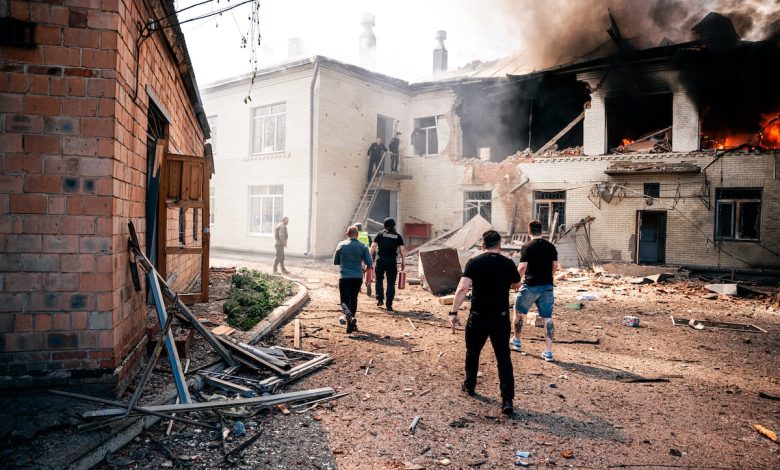
The ceasefire collapsed almost immediately, with Russia launching 108 combat drones and three missiles overnight between 5 and 6 May, striking major cities including Kharkiv. By 10:00 a.m. on May 6, Zelenskyy reported 1,820 ceasefire violations by Russian forces, including nearly 30 assault operations and more than 20 airstrikes using over 70 guided glide bombs. A kindergarten in the Sumy border region was struck, reportedly killing two people.
The dueling, one-sided declarations of ceasefires are by now an established pattern and a key play in the information warfare that both Kyiv and Moscow are engaged in surrounding the war. Authorities in both capitals are able to use them to prove that the other side isn’t serious about peace. A 32-hour ceasefire surrounding Orthodox Easter collapsed similarly, with Ukraine accusing Russia of 2,299 violations and Moscow accusing Kyiv of 1,971 by the end. Kyiv has since revised its number up to 10,721 violations by Russia.
The Victory Day parade in Moscow, which takes place annually on May 9 on the city’s iconic Red Square, will go ahead but in a much reduced format. For the first time, armored vehicles, tanks and missile carriers will be absent, and even the participation by military academies will be scaled back. Russian authorities said this was due to the “operational situation” and “terrorist threats.” An aircraft flyby will still take place.
The parade in St. Petersburg has similarly been scaled back.
Last year, 29 heads of government came to Moscow to marvel at the parade, including Xi Jinping of China, Lula da Silva of Brazil, and Nicolas Maduro, the now-deposed Venezuelan president. This year, so far, only a handful of leaders are expected to attend. Robert Fico, the Russia-friendly premier of Slovakia, an EU and NATO member, is confirmed to travel to Moscow, although he contradicted earlier Russian statements in saying he will not attend the parade. Alexander Lukashenko of Belarus is also confirmed to attend.
Meanwhile, internet restrictions, anti-drone systems and heightened security measures have gone up around Moscow in an attempt to shield the highly symbolic parade from any possible Ukrainian interference.
Zelensky has said that Russia “cannot hold a parade in Moscow without Ukraine’s goodwill.”
Linus Höller is Defense News’ Europe correspondent and OSINT investigator. He reports on the arms deals, sanctions, and geopolitics shaping Europe and the world. He holds master’s degrees in WMD nonproliferation, terrorism studies, and international relations, and works in four languages: English, German, Russian, and Spanish.