CHRISTCHURCH, New Zealand — Satellite imagery appears to show China is set to reclaim land on another reef in the South China Sea for yet another military base.
Simultaneously, China demonstrated the use of hundreds of fishing boats to support future combat operations against Taiwan.
The coral reef in question is Antelope Reef, located at 16°27’45”N, 111°35’20”E in the Paracel Islands. It is 250 miles east of Hue in Vietnam, and about 175 miles southeast of Sanya Naval Base on China’s Hainan Island.
According to the Asia Maritime Transparency Initiative – AMTI for short – China has military outposts, including sophisticated military bases such as Woody Island, on 20 islands in the Paracels. Beijing seized the Paracel chain from Vietnam in 1974.
Dredging of the eastern and southern edges of the lagoon started after mid-October 2025, and satellite images taken in January 2026 showed substantial changes such as new infrastructure and an access way for roll-on/roll-off berths, Newsweek reported this month. Such works allow the arrival of heavy equipment for dredging and land reclamation.
AMTI describes Antelope Island as “little more than a sandbar,” and previously it had just a couple of buildings on it. If China turns it into a military base, it could act as a helipad, radar station and anchorage for Chinese warships and coast guard vessels.
China also has seven military outposts in the Spratly Island chain due south of the Paracels, according to analysts. China has created 3,200 acres of new land there. Additionally, China controls Scarborough Shoal, which it seized from the Philippines in 2012.
Meanwhile, Vietnam is also strengthening its infrastructure in the Spratly Islands.
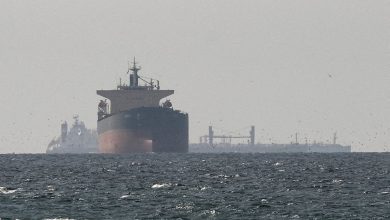
Besides nursing a growing network of lily-pad installations, China rehearsed a new tactic late last year by mobilizing hundreds of fishing boats to create two massive L-shaped “floating barriers” 290 miles long.
The geospatial firm ingeniSPACE first noticed the phenomenon, as 2,000 Chinese vessels created this formation from Dec. 25-27 in waters northeast of Taiwan.
This coordinated activity occurred just three days before China announced a major exercise circumscribing Taiwan. Dubbed Justice Mission-2025, the PLA exercise was designed to browbeat Taiwan and rehearse the implementation of a naval blockade.
Something similar took place from Jan. 9-12, when some 1,400 Chinese fishing boats formed a 200-mile-long “barrier” for more than 30 hours, according to automatic identification system data.
Such floating “walls” of fishing boats demonstrate a new level of coordination that offers Beijing more ways to impose control in contested seas. These maneuvers are complex and massive, as these vessels halted normal activities and assembled into a dense formation.
These events illustrate how the Chinese military controls fishing fleets via the People’s Armed Forces Maritime Militia (PAFMM).
A U.S. Congressional Research Service report published in May 2025 acknowledged that the PAFMM’s role is to defend Chinese maritime claims.
It said, “In the view of some observers, the PAFMM – even more than China’s navy or coast guard – is the leading component of China’s maritime forces for asserting its maritime claims, particularly in the South China Sea.”
The report’s authors remarked that in peacetime the PAFMM advances Beijing’s maritime territorial claims, and that in war it would “support combat operations by conducting reconnaissance or creating obstacles and providing logistical support to other PLA forces.”
During a Taiwan contingency, for example, such floating barriers could overwhelm shipping lanes, block ports, disrupt naval and legitimate commercial traffic, act as decoys and overwhelm an adversary with too many targets.
Gordon Arthur is an Asia correspondent for Defense News. After a 20-year stint working in Hong Kong, he now resides in New Zealand. He has attended military exercises and defense exhibitions in about 20 countries around the Asia-Pacific region.