The Air Force wants 100 new low-cost, long-range autonomous aircraft in its fleet by 2029 and 500 just three years later.
One floor away from where Air Force Secretary Troy Meink laid out that goal Monday, a California startup was showing off what it believes one of those aircraft could look like.
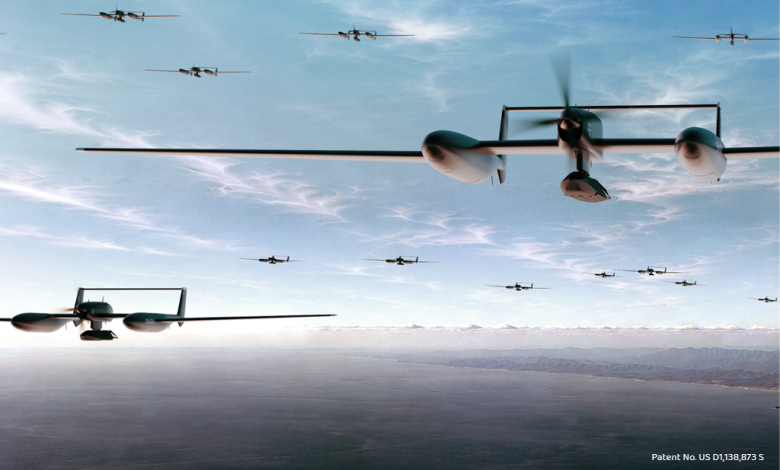
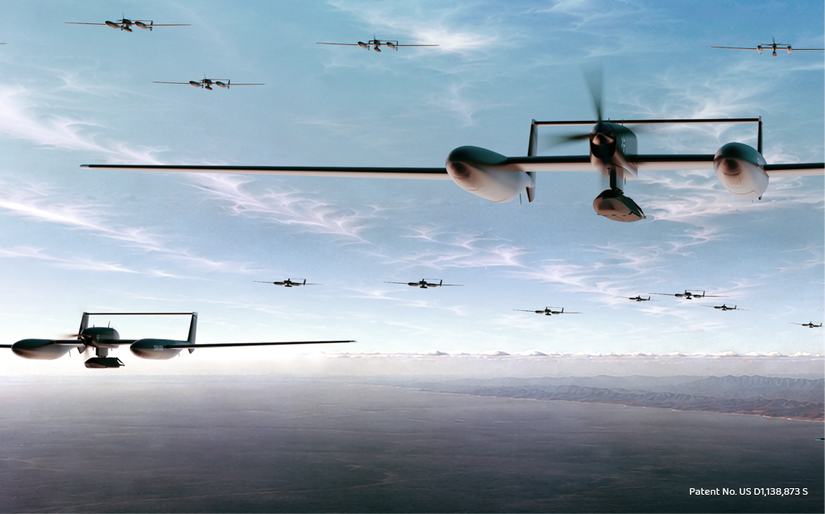
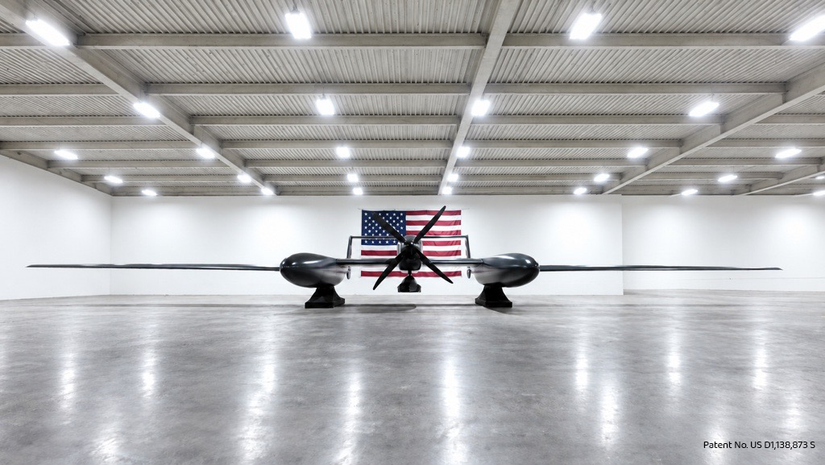
Swarm Aero’s newly unveiled Gamera has roughly the wingspan of a Boeing 737, a projected unrefueled range of 9,000 nautical miles and seven hardpoints capable of carrying different combinations of weapons and sensors.
The company says the aircraft was designed to carry long-range weapons such as the Long-Range Anti-Ship Missile and Joint Air-to-Surface Standoff Missile-Extended Range while delivering comparable long-range strike effects at a fraction of the cost of traditional approaches.
Gamera hasn’t flown yet, meaning Swarm still has to demonstrate its projected range, cost and operational performance. But the timing of its unveiling at the Air & Space Forces Association’s Air, Space & Cyber Conference was notable.
Meink said Monday that Massed Modular Aircraft, or MMAs, will provide “affordable, attritable, long-range combat power.” With congressional funding, he said, the Air Force intends to field 100 by 2029 and 500 by 2032, at half the cost of its Collaborative Combat Aircraft and roughly one-tenth the cost of a fifth-generation fighter.
“When we pair manned aircraft with low-cost autonomous systems, we will be able to unlock combat power at scale,” Meink said.
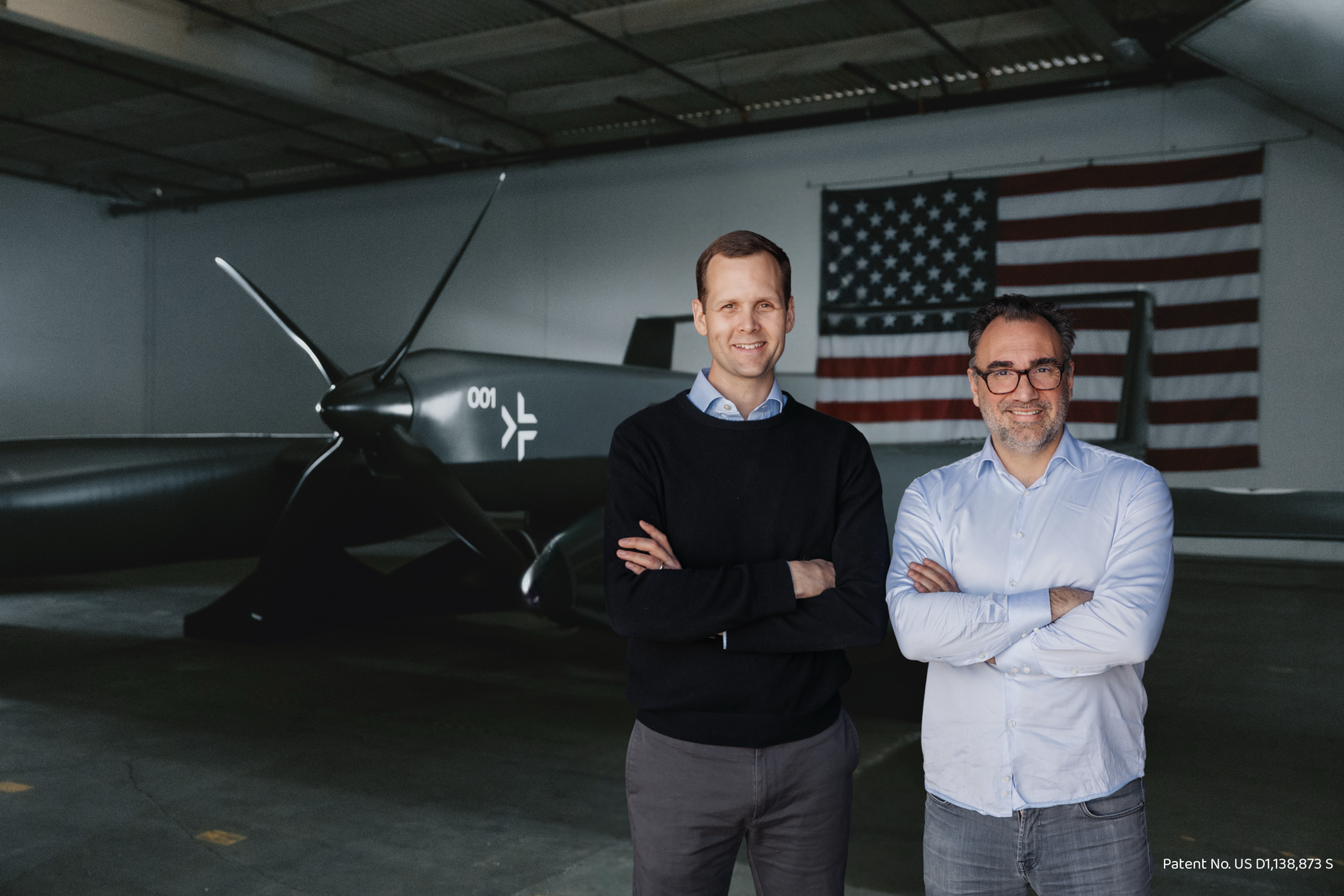
Swarm Aero CEO and co-founder Peter Kalogiannis and Chief Revenue Officer and co-founder and CRO Oliver Palmer told Military.com they began pursuing that idea roughly four years before the Air Force publicly articulated the requirement Gamera is now positioned to compete for.
“This is a very risky go-to-market motion,” Palmer told Military.com. “As a startup, we bet that the customers would get there.” Now, the customer appears to be getting there.
A Bet Made Before There Was a Requirement
Palmer said the idea for Gamera began taking shape in 2021, drawing partly on his experience working in the Pentagon and Kalogiannis’ background building large aircraft.
About a decade earlier, Palmer said, he had served in the Pentagon, an experience that helped shape his thinking about what might be needed in a high-end conflict.
“The idea kind of clicked in 2021 that it’s possible to manufacture this large class of aircraft for significantly less, and we could design them to carry the kind of payload you’d need for a high-end contingency like Taiwan,” Palmer said.
Swarm was founded in 2022. The company then spent years developing the aircraft and working with the military before the Air Force’s Massed Modular Aircraft effort began lining up with what it had already built.
“We’ve been at this for four years,” Palmer said. “We’ve done the engineering, we’ve done the analysis, we’ve done the work, and we’ve collaborated with the military, multiple services, and across the department in that process.”
Because the approach was unconventional, Palmer said, convincing people took time. “We’ve had to use copious amounts of data to convince people,” he said.
The Air Force’s direction now looks markedly similar to Swarm’s early bet. Meink said the service wants at least 500 MMAs by 2032 in addition to at least 500 Collaborative Combat Aircraft, giving the Air Force a goal of 1,000 aircraft across the two autonomous fleets.
“Because of the steps we’re taking today, we’ll have a radically different looking Air Force by 2032,” Meink said.
From the Best Aircraft to the Best System
For Swarm’s founders, the important change isn’t simply replacing one aircraft with a cheaper one. It’s reconsidering how military aircraft work together.
“The idea of the best aircraft is not the legacy idea that this aircraft is the best aircraft,” Kalogiannis told Military.com. “What is the best system, right? And that’s why we built a swarming company, not an aircraft company.” Gamera is a Group 5 uncrewed aircraft, the military’s largest drone classification.
The company says it will have more than 2,800 pounds of payload capacity, with seven hardpoints allowing different combinations of strike weapons, sensors and other payloads. But Gamera was not designed to operate alone.
“We designed not just an individual aircraft that could carry these,” Kalogiannis said of the long-range weapons, “but really the swarm, that overall system that would be multiple aircraft together, orchestrated and coordinated with our command.”
That concept echoes another message Air Force leaders delivered at AFA.
Air Force Chief of Staff Gen. Ken Wilsbach told the conference that recent combat operations demonstrated the importance of integrating aircraft, weapons, people and information rather than viewing individual platforms in isolation.
We must be ready to fight, built to endure, and integrated to win, Wilsbach said.
Describing lessons from Operation Epic Fury, Wilsbach said the campaign “was not the story of one airplane, one weapon or one career field.” Instead, he pointed to fighters, bombers, tankers, ISR aircraft, cyber, space, logistics and Airmen working together across time and distance.
For Swarm, autonomy is intended to extend that concept to larger numbers of uncrewed systems.

One Operator, Dozens of Systems
More aircraft, however, could create another problem: needing substantially more people to operate them. Swarm’s answer is Legion, its command-and-control software.
Rather than assigning an operator to continuously control each aircraft, Legion is designed to allow one person to oversee numerous autonomous systems working together across multiple domains. Swarm says it has already demonstrated the technology during military exercises.
During a Navy exercise off Key West, Florida, in April, the company continued work it had performed as part of the Pentagon’s Replicator initiative. Palmer said Swarm was one of three companies selected from roughly 130 considered for command-and-control software for the effort.
The company says the technology has reached the point where operators with relatively little training can control large numbers of systems.
A single operator with a relatively short amount of training can take over control of dozens of live assets in very complex operations, Palmer said.
That could prove as consequential as Gamera’s 9,000-nautical-mile range.
It shifts the human role from controlling an individual aircraft toward supervising and orchestrating groups of autonomous systems. The concept could allow the Air Force to increase the number of aircraft it can put into a fight without increasing operators at the same rate.
Building for Mass From Day One
Doing that also requires actually producing aircraft in large numbers. Kalogiannis said Swarm approached manufacturing differently by treating cost and production speed as design requirements rather than problems to address once an aircraft was finished.
We’ve designed this for manufacturability from day one, he said. That’s an easy thing to say, but the truth is that’s not something that you kind of sprinkle on when a design effort is done.
The question from the beginning, he said, was: “How do we design this so we can build it quickly and efficiently?”
The company received more than $10 million in Air Force Research Laboratory contracts this summer to develop high-rate composite manufacturing techniques and produce aircraft components.
Swarm says that approach is intended to help it produce large aircraft at significantly lower cost and higher volume than traditional manufacturing methods. That matters because “affordable mass” has increasingly become part of the Air Force’s vocabulary.
Meink said Monday that rapidly evolving technologies are allowing adversaries to adapt and scale their combat capabilities faster than before.
“We must increase our combat power and innovate faster than anyone else, affordably,” Meink said. “We need cost-effective combat power.”
Now Gamera Has to Prove It
Swarm’s early bet aligning with the Air Force’s new strategy doesn’t guarantee Gamera a place in the future force. The aircraft still has to be built, flown and tested. Swarm must demonstrate that it can deliver the promised range, payload and affordability and then manufacture the aircraft at the scale its concept requires.
It will also face established competitors. General Atomics, maker of the MQ-9 Reaper, has unveiled its Wildfire concept for the Massed Modular Aircraft effort. But the larger shift is already underway.
The Air Force is explicitly planning for hundreds of lower-cost autonomous aircraft that can supplement its increasingly sophisticated crewed fleet. Swarm’s founders are betting that the next step is not simply building another unmanned aircraft, but changing the economics and organization of airpower itself.
Palmer said Gamera is designed to provide the type of long-range strike effects examined in Air Force war games and studies at dramatically lower cost.
It’s conservatively 10 times lower cost per effect for the same effect, he said.
That remains Swarm’s claim to prove.
But four years after the company’s founders bet that the military would eventually want long-range autonomous aircraft it could buy and operate in large numbers, Meink stood on an AFA stage and put a number on that future: 500 Massed Modular Aircraft by 2032.