A US Air Force F-106 Delta Dart Went Into a Flat Spin at 35,000 Feet Over Montana on February 2, 1970. The Pilot Ejected at 15,000 Feet. The Aircraft Recovered on Its Own, Landed in a Snow-Covered Field, and Flew for 16 More Years.

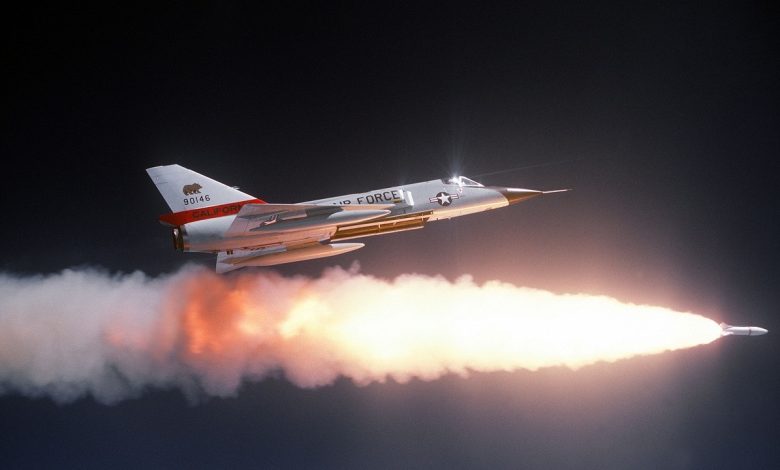
California’s Castle Air Museum featured an F-106 Delta Dart at an open-cockpit event on September 5, 2026, giving attendees a chance to see a legendary Cold War interceptor in person. It’s an interceptor built to pursue Soviet bombers and a piece of American aviation history. But another F-106 is displayed over 2,000 miles away in Ohio, with a particularly unique history.
Image: Creative Commons.
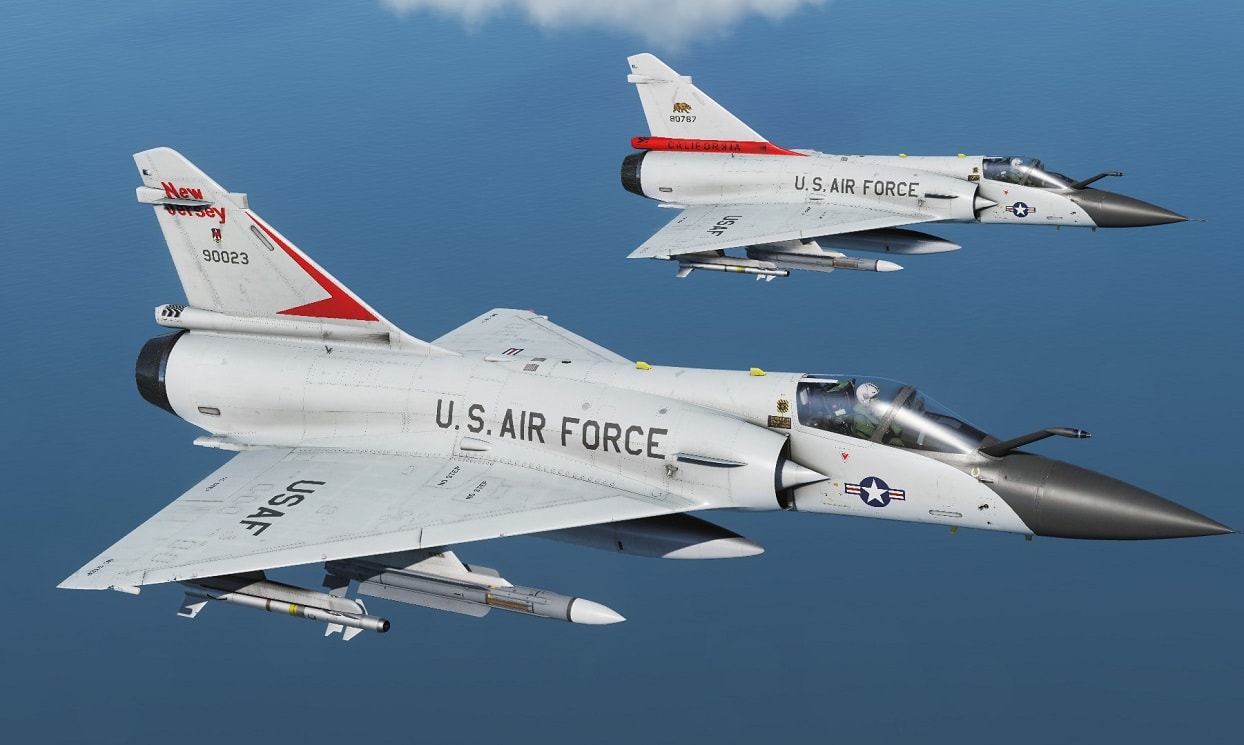
F-106 Delta Dart. Image: Creative Commons.
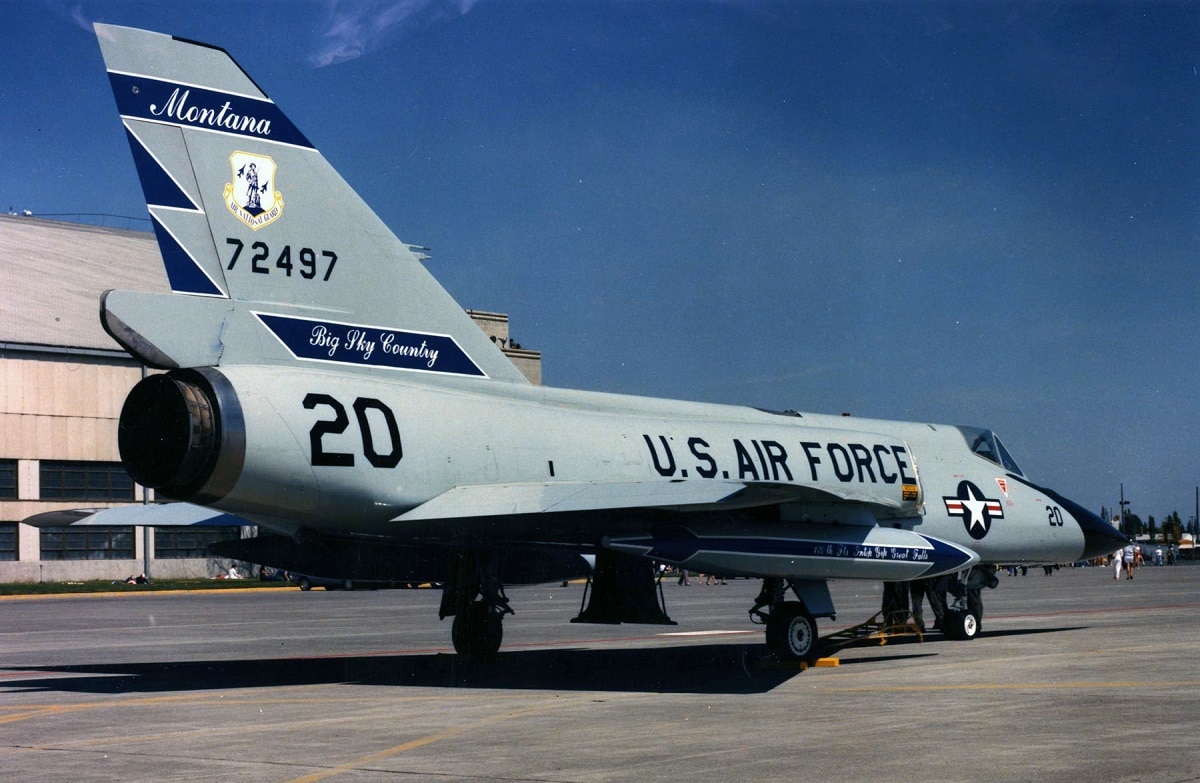
Convair F-106A. (U.S. Air Force photo)
That aircraft is remembered for the time that it landed after its pilot ejected — without crashing.
The aircraft miraculously landed in a Montana field and was ultimately returned to service.
The Ohio aircraft, an F-106A with the serial number 58-0787, is a remarkable piece of history — and its story has been told in both museums and accounts published online and in books.
A Cold War Interceptor
The F-106 was designed of defend North American airspace.
It evolved from the F-102 Delta Dagger and first flew in 1956, before Air Force units deployed it in 1959.
It was a single-seat aircraft, a fast one at that, tasked with reaching incoming targets before they could strike.
By early 1970, 58-0787 was serving with the 71st Fighter-Interceptor Squadron at Malmstrom Air Force Base in Montana. On February 2, its pilot, 1st Lt. Gary Foust, took off for an air combat training exercise in which four F-106s were expected to participate.
One of those aircraft could not join the exercise due to a drag-chute malfunction, so it became a two-against-one fight.
An Uncontrollable Spin
Pilots Foust and Maj. Jim Lowe were flying against Tom Curtis.
In his own account of what happened, Curtis described a steep maneuver in which Foust’s aircraft lost control.
The F-106 then reportedly entered a flat spin at about 35,000 feet and descended while rotating.
Foust attempted all available recovery procedures to regain full control of the aircraft lost altitude, and Lowe, who was nearby, suggested deploying the drag chute. But those efforts failed, and they could not control the spin.
Ultimately, Foust ejected at about 15,000 feet, landed safely, and was brought out of the mountainous terrain by local people who found him on snowmobiles.
The Aircraft Kept Flying
Incredibly, after Foust ejected from the cockpit, the F-106 stopped spinning and simply flew away.
According to the best accounts of what happened, the recovery appeared to result from the way the ejection changed the aircraft’s balance in the air.
In his account, Curtis said that the jet’s trim setting, which refers to secondary flight control that cancels out aerodynamic forces, helped the situation.
“When Gary ejected, the aircraft was trimmed wings-level for about 175 knots [200 mph], a very nice glide setting,” Curtis said.
That means that, when Foust ejected from the aircraft, it headed off straight toward the horizon, flying level the entire time.
Landing in the Snow
The aircraft could not remain level indefinitely, of course, and it gradually descended toward a snow-covered field close to Big Sandy, Montana.
It touched down on its belly and simply slid across the ground.
According to a 1978 account in the Griffiss Air Force Base newspaper, the Mohawk Flyer veered around a pile of rocks before coming to a stop about 400 yards from a paved road.
A local law enforcement officer then found it with its engine still running.
The officer called Malmstrom Air Force Base to ask how to shut it down, and they told him to leave it alone and let it run out of fuel.
The aircraft continued to operate for another hour and 45 minutes before it shut down.
Incredibly, it was intact, despite damage to its underside.
Sixteen Years Of Additional Service
The damage was repairable, and it made economic sense to return the aircraft to service.
Technicians from the Sacramento Air Logistics Center were tasked with partially dismantling the plane in Montana.
They then took it to a nearby rail line and shipped it to California, where Air Force workers fully repaired the aircraft.
It later served in both New York and California.
58-0787 last served with the 49th Fighter-Interceptor Squadron before it was transferred to the National Museum of the United States Air Force in 1986.
It means that an aircraft that lost control in the air and ultimately landed on its own served for an additional 16 years, even though it could well have simply crashed.
Today, it remains on display at Wright-Patterson Air Force Base in Ohio.
In the wake of the incident, the plane became known as the “Cornfield Bomber.”
The F-106 left service in 1988, though some were later flown remotely as military practice targets until 1998.
About the Author: Jack Buckby
Jack Buckby is a British researcher and analyst specializing in defense and national security, based in New York. His work focuses on military capability, procurement, and strategic competition, and he produces and edits analysis for policy and defense audiences. He brings extensive editorial experience, with a career output spanning over 1,000 articles at 19FortyFive, and has previously authored books and papers on extremism and deradicalization.