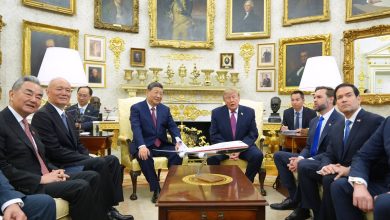
‘A More Capable and Lethal Carrier’: USS John F. Kennedy Will Be Built for the F-35C. Supercarrier USS Gerald R. Ford Was Not.

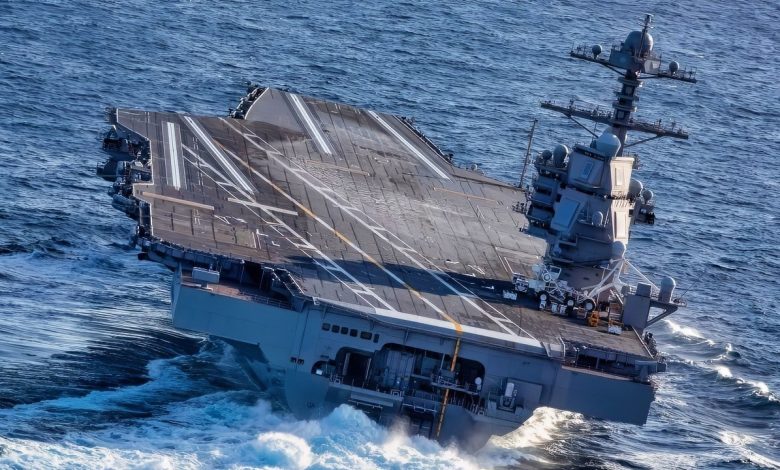
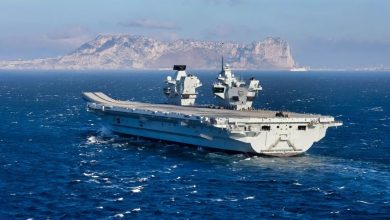
Why the USS John F. Kennedy Will Be Commissioned With More Capabilities Than USS Gerald R. Ford: The U.S. Navy’s newest aircraft carrier is being built to support one of America’s most advanced fighter jets from the outset. USS John F. Kennedy, the second Gerald R. Ford-class carrier, is being completed with the systems needed to operate and sustain the F-35C Lightning II during deployments. The lead ship in class, USS Gerald R. Ford, was not.
Complex Fighters
The F-35C is the carrier-based variant of the Lockheed Martin F-35 Lightning II. It was first introduced to the U.S. Navy in February 2019 – 13 years after the original F-35 first flew.
The F-35C is designed for catapult-assisted takeoff and barrier-arrested recovery (CATOBAR), allowing it to take off and land safely on the comparatively short flight deck.
Compared to the F-35A, the F-35C features larger wings with foldable wingtips for easier storage, enlarged control surfaces for better low-speed handling, and reinforced landing gear to withstand the additional stresses of arrested landings.
The greater wing area also allows for lower landing speeds and improves both range and payload capacity.
The Ford-class Carriers
USS Gerald R. Ford was intended to introduce a new generation of American aircraft carriers when it was commissioned in 2017.
The ship replaced traditional steam catapults with the Electromagnetic Aircraft Launch System, introduced new arresting gear, and was designed to support more aircraft sorties while requiring fewer sailors than the Nimitz-class ships that came before it.
Compared to other vessels in its class, Ford was introduced into active service much later. USS John F. Kennedy, the second in the Ford-class, experienced certification delays for the Advanced Arresting Gear and Advanced Weapons Elevators – two systems central to the carrier’s operations.
USS Enterprise and USS Doris Miller, the third and fourth ships in the class, respectively, have suffered problems similar to Kennedy’s.
Enterprise is not expected to be commissioned until 2031, with Miller due three years later.
The F-35 Problem
Ford was always designed with the Navy’s next-generation aircraft in mind, including the F-35C.
However, the ship was not built in a way that made it physically impossible to launch or recover the aircraft. Alas, additional modifications have been required to employ the fighter’s capabilities and support it through to full deployment.
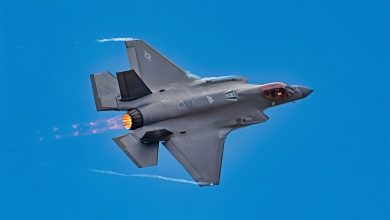
US F-35. Image Credit: Lockheed Martin.
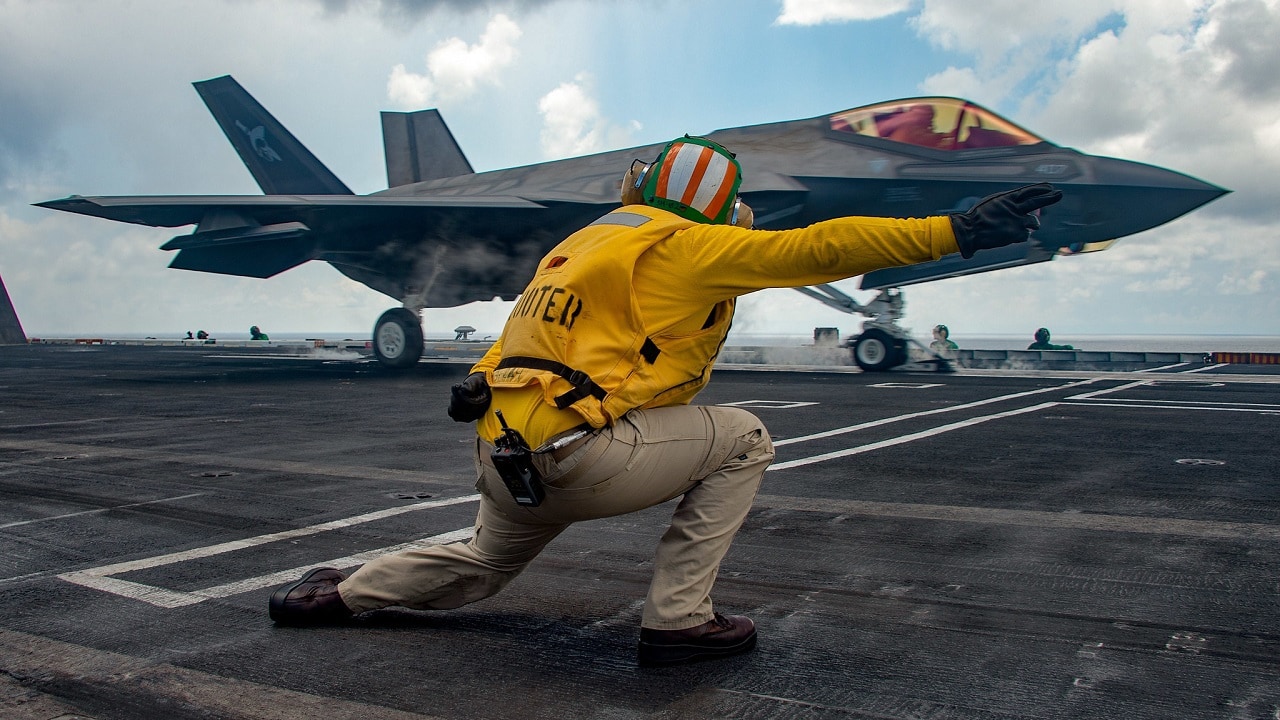
SOUTH CHINA SEA (Oct. 25, 2021) Lt. Nicholas Eppler, from Exeter, Calif., directs flight operations as an F-35C Lightning II assigned to the “Argonauts” of Strike Fighter Squadron (VFA) 147 launches from the Nimitz-class aircraft carrier USS Carl Vinson (CVN 70), Oct. 25, 2021. The Carl Vinson Carrier Strike Group is on a scheduled deployment in the U.S. 7th Fleet area of operations to enhance interoperability through alliances and partnerships while serving as a ready-response force in support of a free and open Indo-Pacific region. (U.S. Navy photo by Mass Communication Specialist Seaman Emily Claire Bennett) 211025-N-TY704-1241
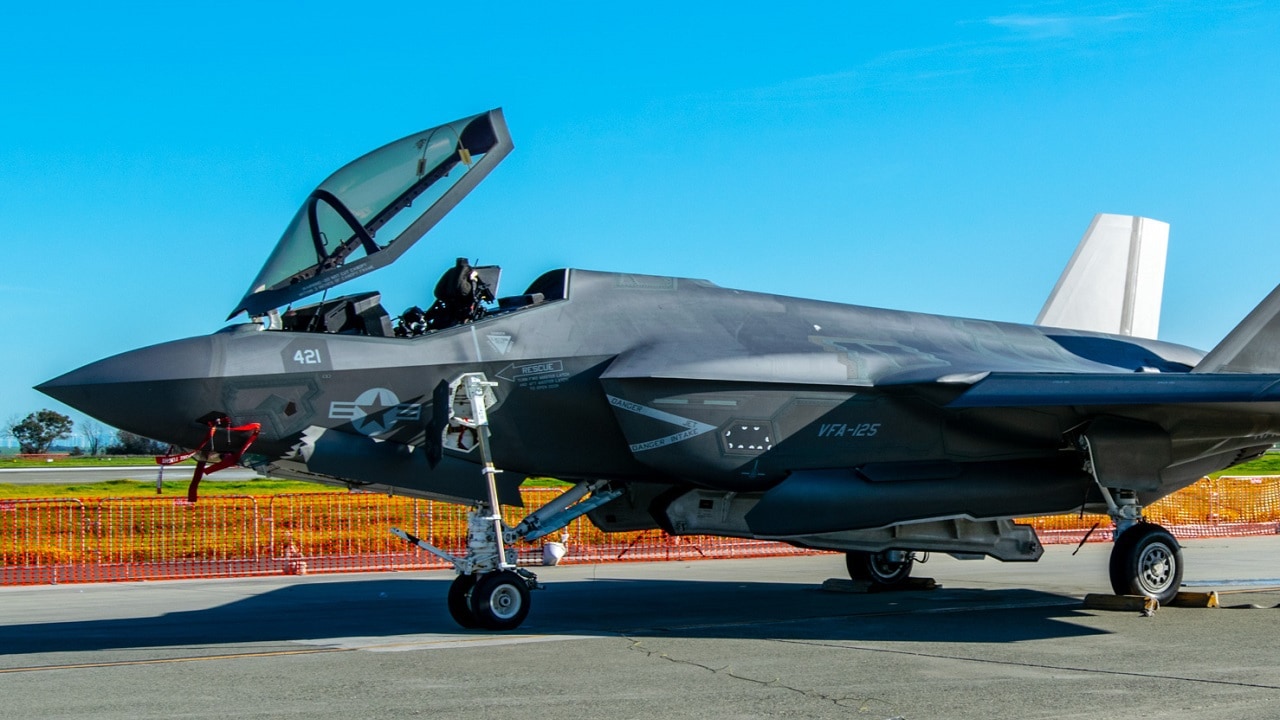
F-35C on Static Display. Image Credit: Creative Commons.
The modifications are not easy fixes, either. The F-35 is heavily dependent on digital maintenance, logistics, and mission-data systems that older carrier air wings did not require in the same form. However, Ford was delivered before all those systems had been incorporated, resulting in a peculiar situation: the flagship vessel was completed without the necessary infrastructure, whereas the second-in-class will be.
Kennedy’s Difference
The Navy decided to upgrade Ford with the required modifications during a routine maintenance period – an approach that Kennedy was due to follow. It effectively led to a two-stage approach, in which a carrier would be commissioned before the finishing touches are made at a later date.
However, in 2019, Congress passed the National Defense Authorization Act, requiring Kennedy to be capable of deploying with the F-35C before completing its post-shakedown availability. As such, Kennedy would be switched to a single-phase delivery, with the required F-35C modifications included in the carrier’s construction period.
“Shifting to single phase and incorporating the F-35C modifications will enable the delivery of a more capable and lethal carrier,” said James Geurts, assistant secretary of the Navy for Research, Development and Acquisition, in 2020. “Initiating this work now will build on the lessons learned from USS Gerald R. Ford to maintain the optimal construction timeline for the shipyard and to avoid inefficiencies.”
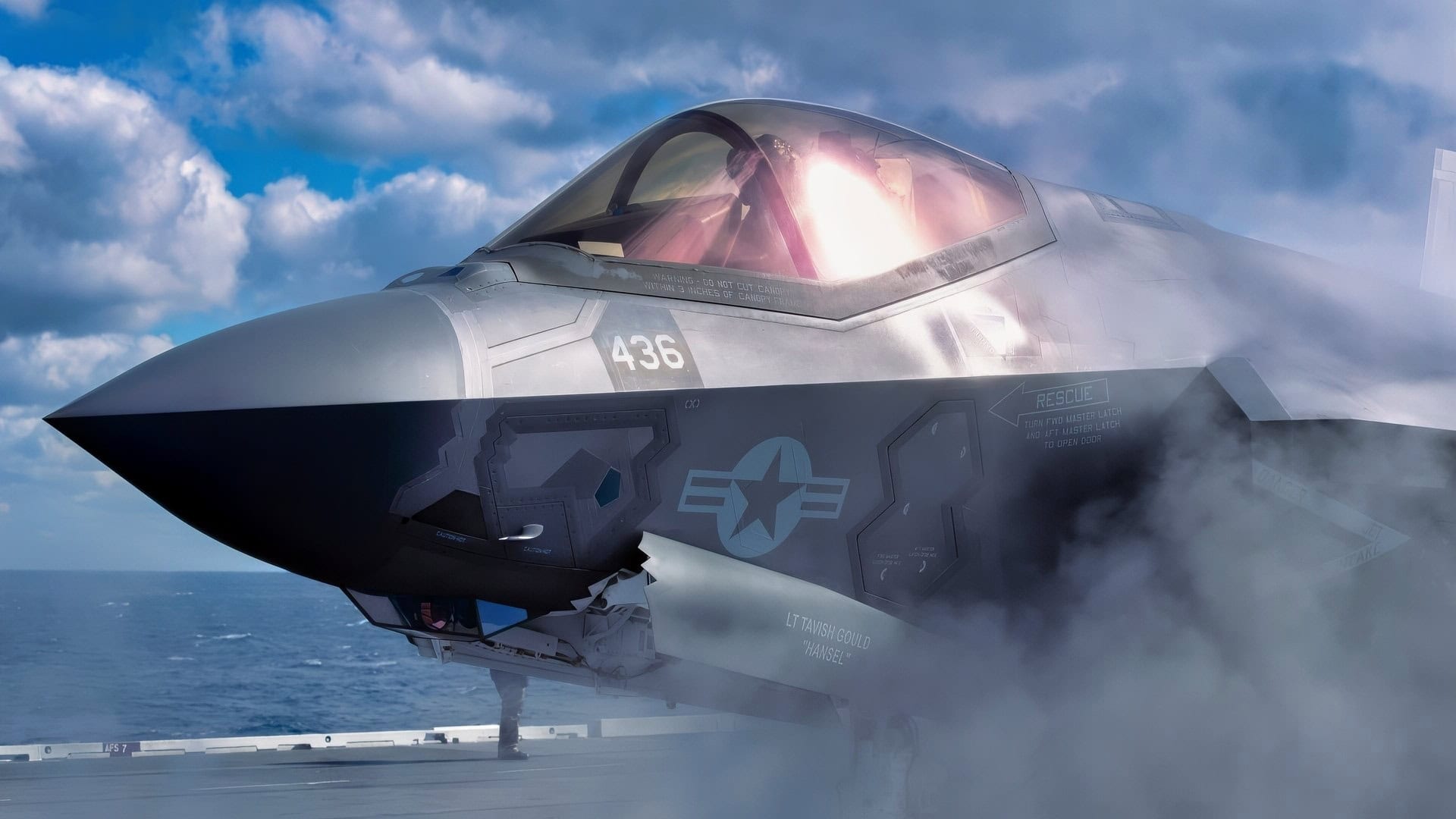
An F-35C Lightning II assigned to Strike Fighter Squadron (VFA) 147 taxis on the flight deck of Nimitz-class aircraft carrier USS George Washington (CVN 73) during flight operations in the Atlantic Ocean, Jan. 17, 2024. George Washington is underway in support of carrier qualifications. (U.S. Navy photo by Mass Communication Specialist 2nd Class John T. Jarrett)
He added: “From the shipbuilder’s and Navy’s perspective, this is the most efficient and effective way to get this capability quickest into the hands of our warfighters.”
Nevertheless, it’s created an unusual scenario in which the second-in-class carrier will enter service with greater capability than the flagship vessel.
Ford and the Nimitz-class carriers, which are due to be decommissioned starting next year, are being equipped with the modifications required to operate the F-35C. Kennedy, Enterprise and Miller, meanwhile, will see the capability installed during the construction period.
After lengthy delays, Kennedy is expected to enter service in March 2027. Earlier this year, the carrier completed its builder’s and acceptance trials, more than 15 years after construction began.
About the Author: Shay Bottomley
Shay Bottomley is a British journalist. He has written for the Western Standard, Business Insider, Maidenhead Advertiser, Slough Express, Windsor Express, Berkshire Live and Southend Echo.