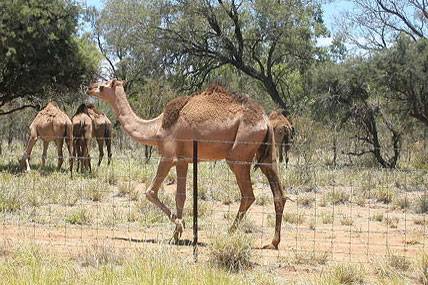
In September 1857, a government survey expedition crossing the Southwest was running dangerously short of water. Its mules crowded around a small barrel, desperately trying to drink through the opening. The camels kept browsing.
The leader of the expedition, Edward Fitzgerald Beale, saw this contrast as the perfect reason that the Army imported the desert animals. They were strong and could carry supplies without being exhausted like horses and mules, all the while surviving in conditions that could stop military options in their tracks.
Within a decade of receiving them in Texas, the Army was sick of them. The experiment, commonly known as the U.S. Camel Corps, really never got the opportunity to be great. While they had initial success, they failed to secure a long-term place in military transportation methods.
The Hump Is The Way
After the end of the Mexican-American War, the United States received swaths of western land that they were unfamiliar with. They needed to supply military posts across these territories, and this meant logistical problems they had not dealt with before. Dry, difficult terrain was unfit for the current transportation means they had at the time.
Horses and mules needed water and forage. Carrying those necessities reduced the space available for everything else. Maj. Henry C. Wayne advocated testing camels, finding an influential supporter in Jefferson Davis, the future Confederate president who became U.S. Secretary of War. In 1855, Congress appropriated $30,000 to acquire animals for the experiment.
Wayne and Navy Lt. David Dixon Porter ventured out of the United States to obtain the animals. Porter then brought them over with stalls and the proper equipment needed for the successful storage and supplies necessary for their survival.
This first shipment of animals arrived in May 1856, in Texas. The animals settled at Camp Verde, northwest of San Antonio, where the army could then evaluate them further. Another shipment of camels hit Texas in 1857.
Delivering The Promise
The first question was: could the camels move military supplies in an effective way, without falling behind like the horses and mules they had already used? Early on, they were satisfied.
Wayne reported successful hauling between San Antonio and Camp Verde. Beale’s 1857 expedition provided a more demanding test, taking 25 camels westward during a wagon-road survey.
Initially skeptical, Beale grew impressed. The animals carried heavy loads, handled punishing ground and ate vegetation along the route. His journal described camels carrying roughly 750 to 1,000 pounds apiece.
At the start of fall, he was very happy with their progress. When there was a water shortage, their ability to stay calm and carry on offered another demonstration of their superiority.
Another set of missions involving reconnaissance tested the camels in Western Texas. This was in the region that is now occupied by Big Bend National Park. The National Park Service maintains that the camels marched over the tough terrain that horses and the men with them were unable to climb out of.
The Troops Were Not Satisfied
These metrics did not impress the troops who used them, though. Soldiers who were used to dealing with horses and mules did not know how to adapt to the new animal.
Camels could be stubborn and would sometimes bite their new owners. They also have a disgusting habit of throwing up cud, throwing the troops off in their focus as well. Riders also tended to feel motion sickness, due to the rocking and swaying of the humped animals.
Their odor presented another obstacle. Horses could become frightened around them, complicating their use alongside conventional Army transportation. The Army Transportation Corps’ history describes resistance among officers and enlisted men as a major weakness of the experiment. It also records mistreatment, including a camel that died after being beaten.
Camels are known as a pack animal, which is like horses. Unfortunately, this was a problem for being a replacement for the regular cavalry horse used by the troops.
The history of the Army and their operations at the time did not jibe well with the physiology of the humped crusader. To successfully adopt them would have required the proper time and training with the animals, of which the enlisted and the officers of the time had no patience for.
Civil War Rained On The Parade
After the reports from Beale, the Secretary of War sought funding for an extra 1,000 camels. Congress was not happy or satisfied with the reports, and the tensions in the government at the time were too much to help the success of the service. Then the Civil War broke out.
Confederate forces took Camp Verde and its camels in 1861. A separate group in California remained under Union control. Davis became Confederate president, while Wayne also entered Confederate service.
An experimental transportation program for the Southwest had little chance of commanding attention during a massive war fought largely elsewhere. An Army Sustainment history identifies the conflict’s reliance on horses, mules, railroads and waterways as a likely reason the camel project failed to advance.
Precious Commodities To Useless Supplies
The California herd was auctioned in 1864. The surviving Texas camels, recovered after the war, were sold in 1866. Some animals went to circuses or other private owners; others escaped or were abandoned. Reports of roaming camels persisted long afterward.
The Army gave up on the project and decided to go with what they knew. Soldier resistance, interrupted funding, and the Civil War were all major factors in this decision.
The further upgrade or change of an already successful transportation system was not in the cards, and the camels were sold to separate buyers. They had shown that their backs could handle it, but the institutions could not change.