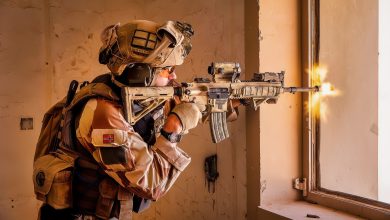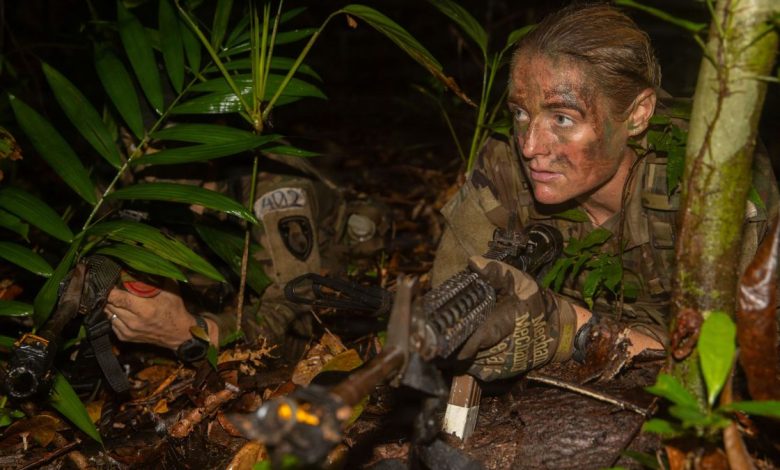
Space Force guardians are now getting certified in jungle warfare. This month, two officers with the Space Force became the first guardians to graduate from the U.S. Army’s Jungle Operations Training Course-Panama.
Maj. Alyson Gleason and Capt. Stephen Brown graduated from the jungle warfare school on Sept. 25, having finished the 18-day course alongside other U.S. and Panamanian troops. The course, held at Panama’s Aeronaval Base Cristóbal Colón, puts participants through a series of lessons, teaching them both combat tactics in the jungle as well as navigation and survival skills, such as foraging. Troops are trained on small-unit tactics such as ambushes and waterborne missions, as well as how to use a machete. The final event, known as the “Green Mile,” tests them on all that they have learned.
“I’m always interested in challenging myself and the jungle is a beast that we don’t get to tackle very often as Space Force Officers,” Gleason said in a news release. “I saw the opportunity, I wanted the chance to work with the Army and the Panamanian partners down here, and I thought this would be a unique place to challenge myself.”
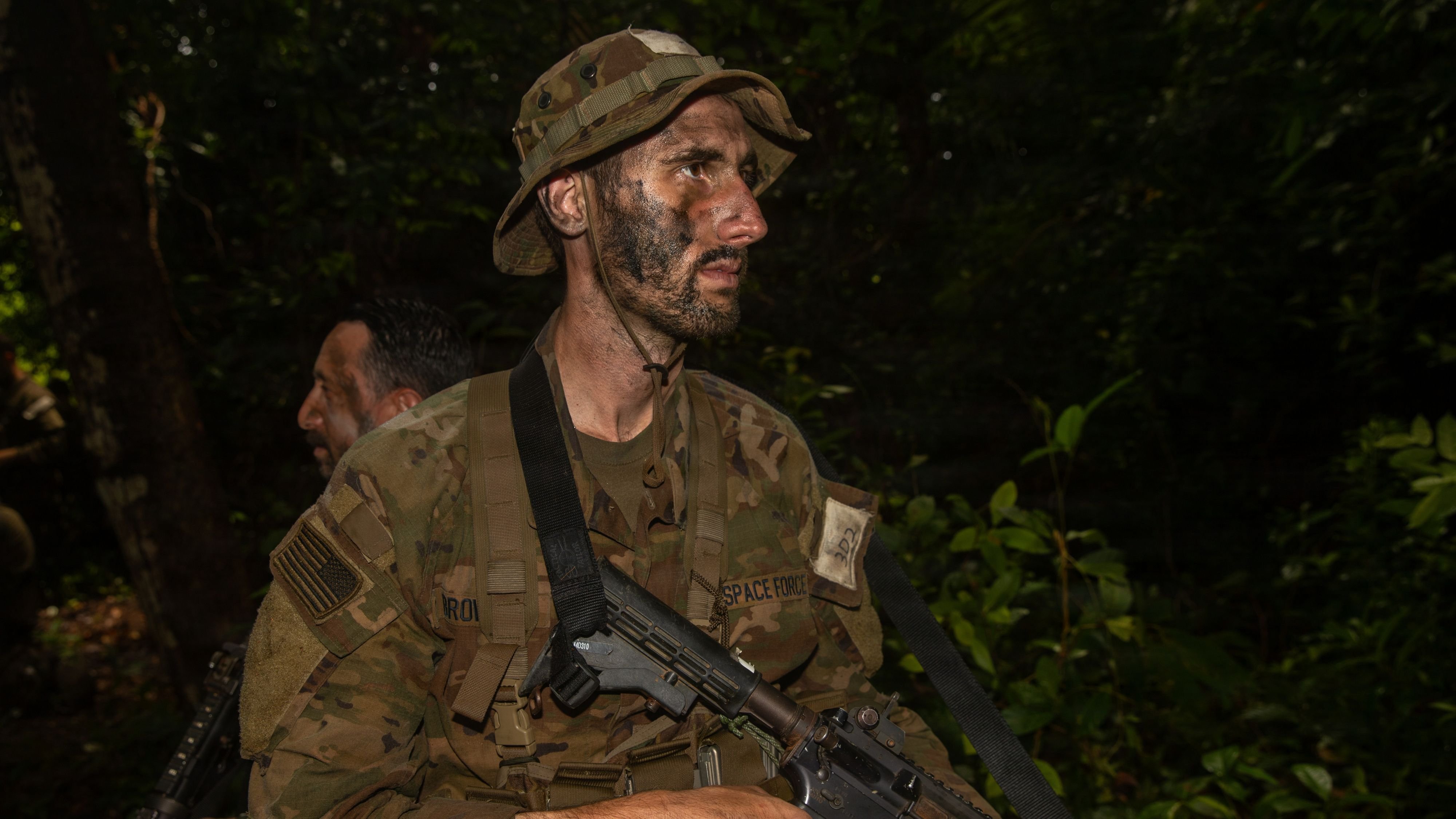
The Space Force’s focus is on what is in orbit, but guardians are terrestrial, not in space yet. Its members operate the service’s satellites, but also deploy in the field to direct communication systems and tools such as jammers. Gleason, assigned to United States Space Force Headquarters, and Brown, with the 392nd Combat Training Squadron based out of Schriever Space Force Base in Colorado, are the first guardians to earn the Jungle tab.
As of mid-August, more than 200 U.S. troops had graduated from the course, as well as dozens of Panamanian service members. More than two-thirds of the U.S. graduates were from the Army, with Marines and airmen making up the balance, according to a U.S. Southern Command spokesperson. The first airman graduated from the course in May. In July, the Army approved soldiers to wear the tab as an official skill badge across the service.
“I feel grateful for coming here to the jungle, because I try to go through every experience I can,” said Brown. “Not everybody is going to get the opportunity, so when that door opens I think you should always take it.”
The jungle course, long nicknamed the “Green Hell,” had been held at the then-Fort Sherman for years, until the base closed and was handed over to Panama in 199. U.S. troops then trained in Hawaii. Last year, the Army restarted the center in a joint effort with Panama. The renewed focus on jungle operations came as the U.S. military shifted resources, personnel and attention to Latin America.
Last year the military built up its forces in the Caribbean, reopening old bases and the jungle course. It launched Operation Southern Spear, a campaign targeting and destroying several small boats that the Pentagon claims are transporting drugs. In January, the U.S. launched a raid to abduct Venezuela’s President Nicolás Maduro. This summer, Southern Command established Southern Spear’s successor, Joint Task Force-Western Hemisphere, under which Army Special Forces, Marines and at least two Navy warships are carrying out operations in and around South American countries.
Ahead of the raid on Venezuela, Space Force personnel began operating in Southern Command’s area of operations in December. This January, the service officially established a component under the command, following guardians’ involvement in the operation in Caracas.