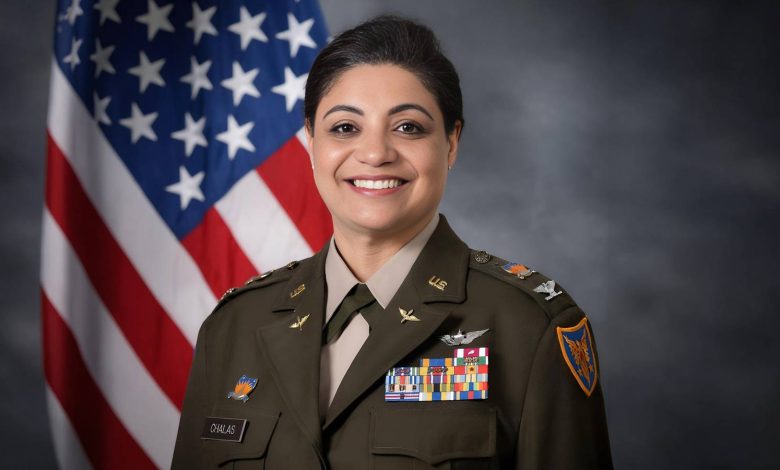
U.S. Army Col. Marisol Chalas has accomplished a lot in her decades of service to the nation. Today, she’s focusing on new efforts to help children affected by a rare and aggressive type of brain tumor.
Chalas is one of the most decorated Latina leaders in the U.S. military, as well as the first Latina to pilot a Black Hawk in the Army National Guard. The Dominican-born immigrant raised in Massachusetts enlisted at age 17 and broke barriers in Army aviation, earning national recognition including honors from the White House and the Smithsonian.
Today, she is deputy chief of staff for operations and planning at the U.S. Army Reserve Aviation Command, where she leads large-scale logistics, modernization and congressional engagement efforts.
She also serves on the board of the Cristian Rivera Foundation, which is part of Chalas’ ongoing efforts to help accelerate research and support systems for children fighting Diffuse Intrinsic Pontine Glioma (DIPG).
“[There’s] only a 10% survival rate, that’s the percentage of survival rate for kids who’ve been diagnosed [for] two years,” Chalas, who has no children of her own, told Military.com. “And for five years, it’s only 2%. So, it’s definitely a pediatric cancer.
“One of the colonels that worked here, he just lost his daughter last year to DIPG. If I were to leave this world tomorrow, I think I’d lived a pretty good life. But it really breaks your heart and it hits the core when you know a 6-month-old child has died, a 9-year-old child has died, never had the opportunity to live their life.”
What is DIPG?
The National Cancer Institute describes DIPG as a fast-growing type of brain tumor that starts in the part of the brain stem called the pons, located above the back of the neck and connected to the spinal cord.
Pons control many vital functions including breathing, heart rate and blood pressure, as well the nerves and muscles used in seeing, hearing, walking, talking and eating.
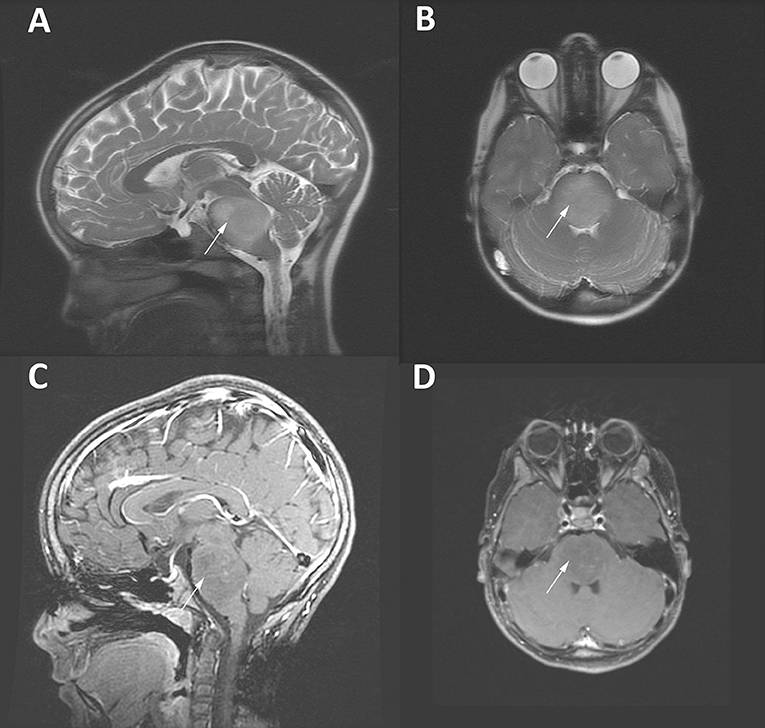
It is referred to as a glioma due to starting in the brain stem’s glial cells, which support and protect the brain’s nerve cells.
About 300 children in the United States are diagnosed annually with DIPG, primarily affecting those between the ages of 5 and 10 years—though the cancer can occur in younger children and teens. DIPG is rare in adults.
How Chalas Became an Advocate
Chalas currently serves on the board of the Cristian Rivera Foundation.
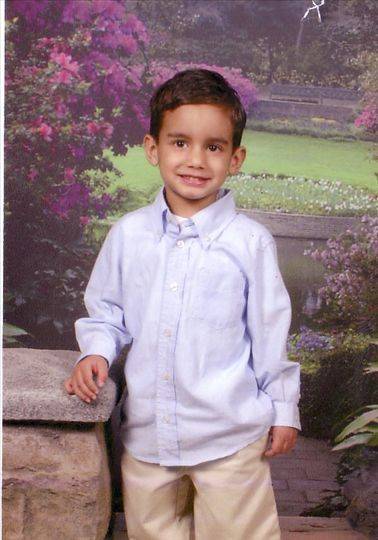
The foundation is a nonprofit that started in 2009 in New Jersey after John “Gungie” Rivera lost his son to DIPG. Cristian, according to the foundation’s website, was described as “an extremely smart, incredibly happy boy” who was diagnosed with the disease on Jan. 22, 2007.
He received care at Memorial Sloan Kettering and Weill Cornell Medical Center and was treated with promising medicines and alternative therapies to combat the tumor. But after two years of fighting, he died on Jan. 25, 2009.
Chalas attended the organization’s gala in 2025 almost on a whim, as she was in town to attend a separate meeting as part of unrelated efforts. But the experience deeply moved her.
After the gala, Chalas reached out to the board chair, Melinda Colon Cox, to see how she could help in any way.
“I reached out and said, ‘Hey, I know I’m not the caliber of the members that you have on your board, but give me an opportunity [to help],'” Chalas told Military.com. “I don’t even have kids, but just to see the suffering of the parents, the warriors. They were so emotional seeing the video as to how the Christian Rivera Foundation has changed lives.”
The foundation, according to Chalas, has donated more than $4 million to try to find a cure for this cancer. Since Chalas joined the board less than a year ago, she’s seen two young girls—Maria and Sophia—pass away from the illness.
“The military, we serve,” she said. “The calling is much higher than us. But when I sat at that table and just listened—I was in tears. And that’s one of the reasons tying in my military service is about…trying to change people’s lives.”
Chalas Has Always Put in the Work
Chalas started her military career as an enlisted soldier in July 1990 and was commissioned in 2001 as a Second Lieutenant in Aviation after graduating from Officer Candidate School at the Georgia Military Institute.
The immigrant from the Dominican Republic moved to Boston in 1982 when she was 9 years old.
“My parents just wanted us to stay out of trouble,” she said. “They didn’t know any better. They just knew the culture that they were learning. My best friend and I thought, ‘Hey, why not go to the military? I don’t have the money for college, it’s a good opportunity.'”
She said a physics teacher of hers, after she mentioned to him her military plans, encouraged her to go to college. She ended up joining the National Guard in Massachusetts, but also applied to Massachusetts Maritime Academy to become an engineer due to the potential observed by that same educator.
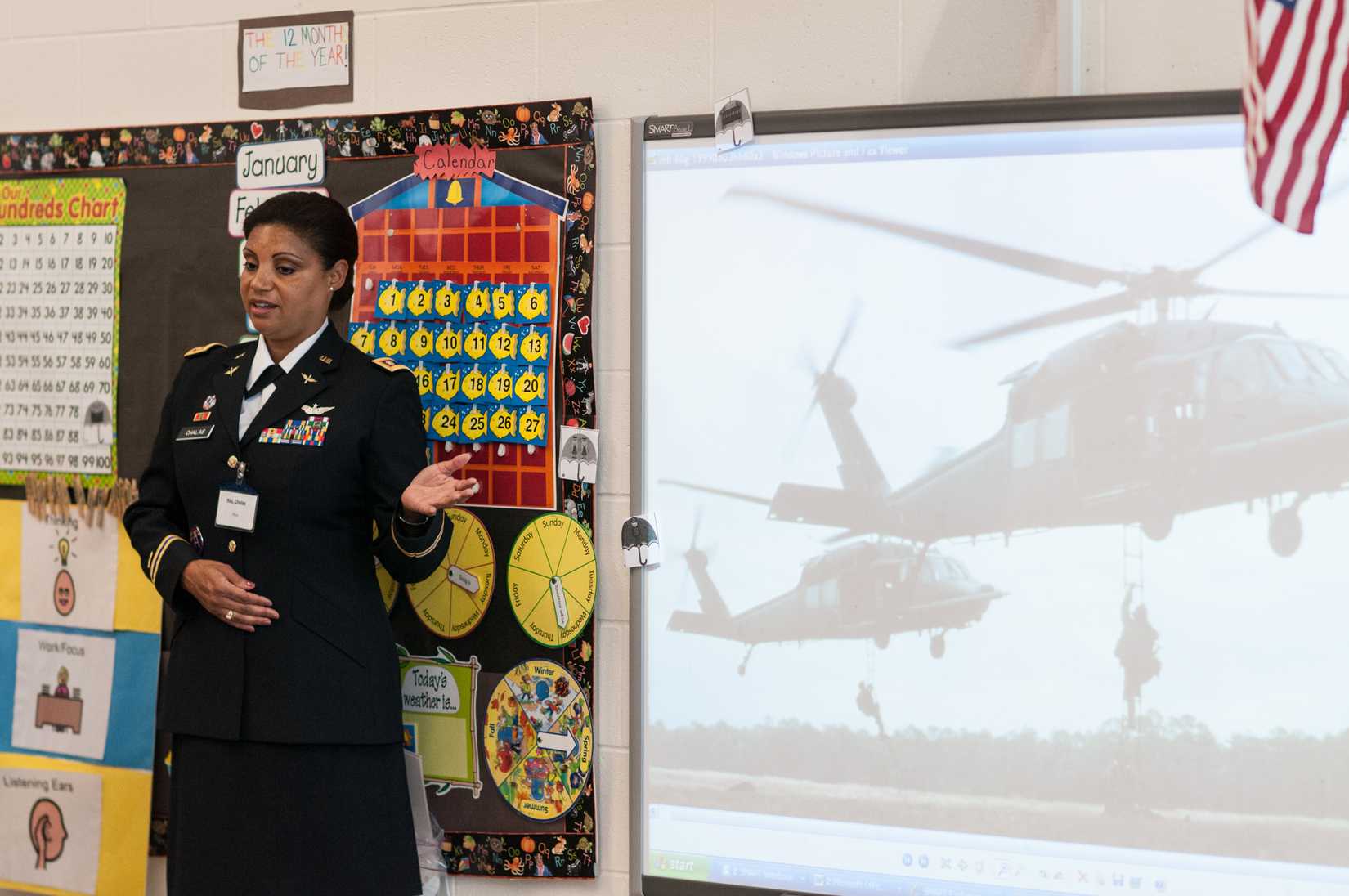
After receiving a bachelor’s degree from the academy, she attained a master’s in business administration from Georgia State University, a master’s in legislative affairs from George Washington University, and a master’s in strategic studies from the U.S. Army War College. In 2026, she received an Honorary Doctorate Degree in Public Administration from Massachusetts Maritime Academy.
Her military and professional training includes the Aviation Officer Basic Course, the UH-60 Aviator Qualification Course, the Army Force Management Course, and the Strategic Fellows Program at The Institute of World Politics in Washington, DC. She is a Level III Joint Qualified Officer and a certified Lean Six Sigma Black Belt.
She’s also held senior management roles at GE across Asia, Latin America and Europe.
‘You Can Achieve’
When she was first accepted into aviation, Chalas recalls not knowing she was the first Latina to fly a Black Hawk in the National Guard.
“When I first tried to pursue aviation while I lived in California, I was told that I would never get in, that I didn’t have the aptitude, etc.,” she said. “But when I did join, at first, like when I learned, when I went to flight school, my primary concern was learning how to be competent and be able to assist my crew in any missions that we carried out.
“But once I did learn that I am the first Latina Black Hawk posture guard, I know with that comes some responsibility. And that is for me to serve as a mentor and to remind everyone—whether you’re a girl, boy, U.S. born or immigrant—that you can achieve. There’s no limits for you, whether it’s in the cockpit or in the room.”
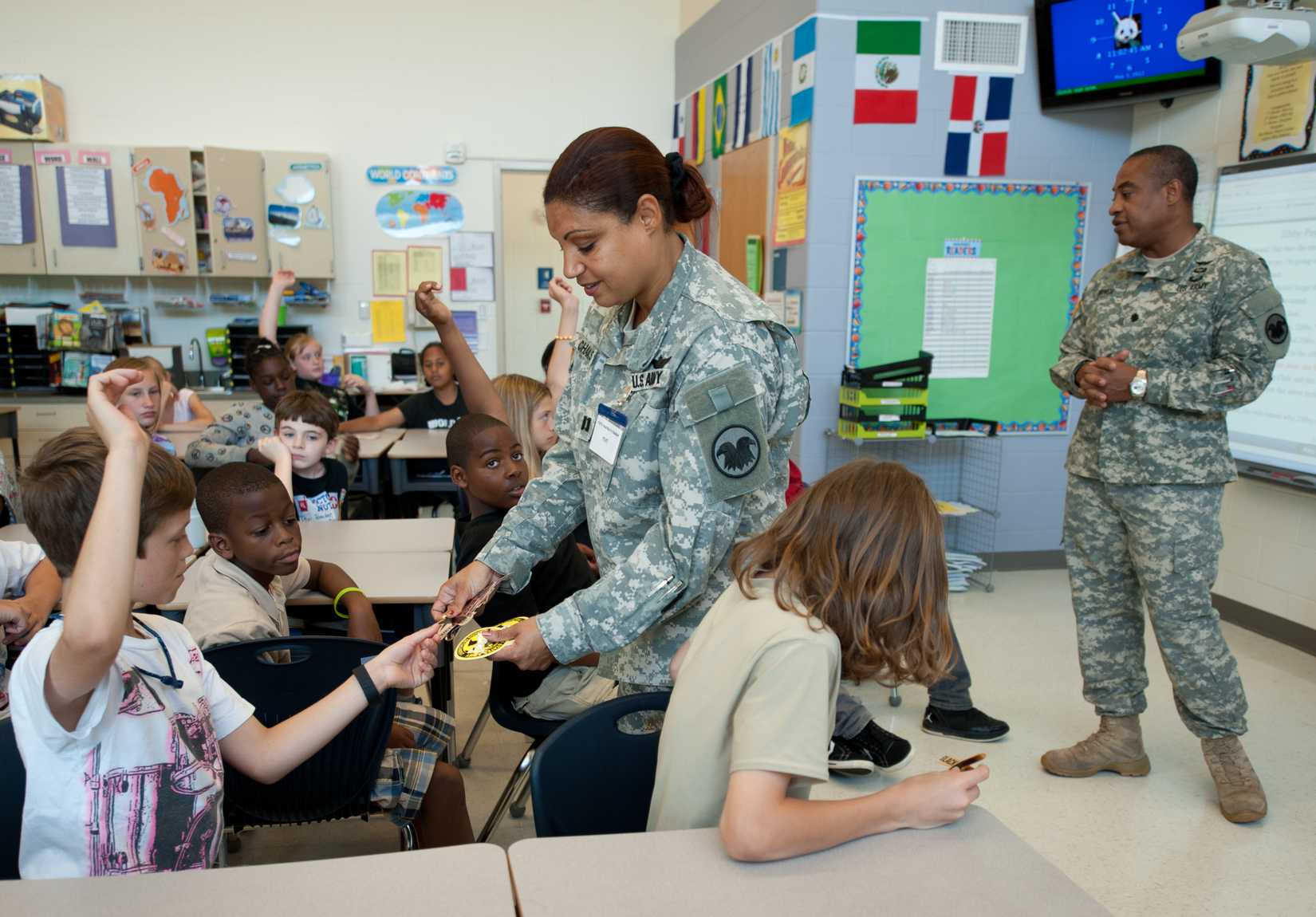
She’s made it part of her “personal agenda” to pay it forward and inspire. Whether that was a combat deployment to Iraq, being stationed in Canada for two years and working with the Canadian Army, or conducting humanitarian missions in the Dominican Republic, she keeps forging ahead.
But she also remembers how she got here. On Aug. 11, 2001, she was commissioned as a second lieutenant in the National Guard while also working for General Electric.
Exactly one month later, the world changed.
“I still worked for General Electric and I remember it was a Tuesday morning, and at the time we had TVs throughout the area and the building I worked in,” she said. “I just remember seeing the headline, ‘America Under Attack. I still get goosebumps, and it was so surreal. I just remember all of us around looking at the TV, thinking this cannot be happening in America.
“Today, 25 years later, I still feel that way. I still feel for the over 3,000 lives that we lost. I think one thing that we can say as Americans is, although that was such a tragic day for so many, it reminds us how resilient we are.”
Her personal resiliency continues to catapult her, working to make children and families whole against a treacherous disease.