An Investigation Found Both Propeller Shafts on the 65,000-Ton HMS Prince of Wales Royal Navy Aircraft Carrier Had Been Misaligned When the Aircraft Carrier Was Built

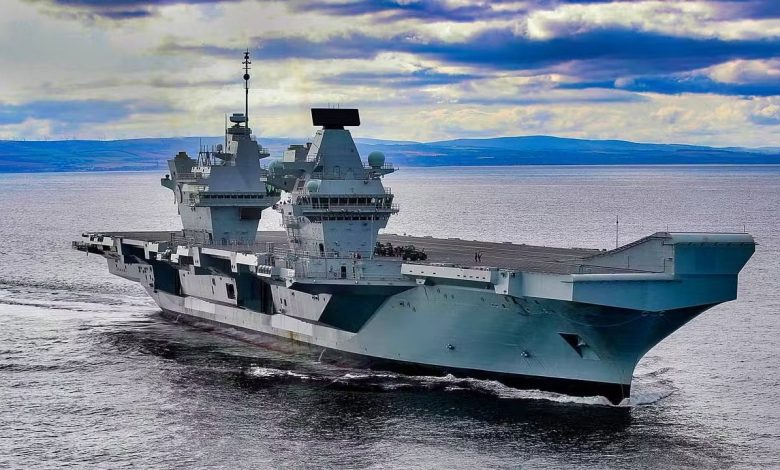
Though one of the crown jewels of the Royal Navy, the HMS Prince of Wales has had an unusually troubled career.
The 65,000-ton aircraft carrier was commissioned into the Royal Navy in 2019, after a build program marked by political about-faces, a not-insignificant redesign, and ballooning costs.
HMS Prince of Wales Aircraft Carrier.
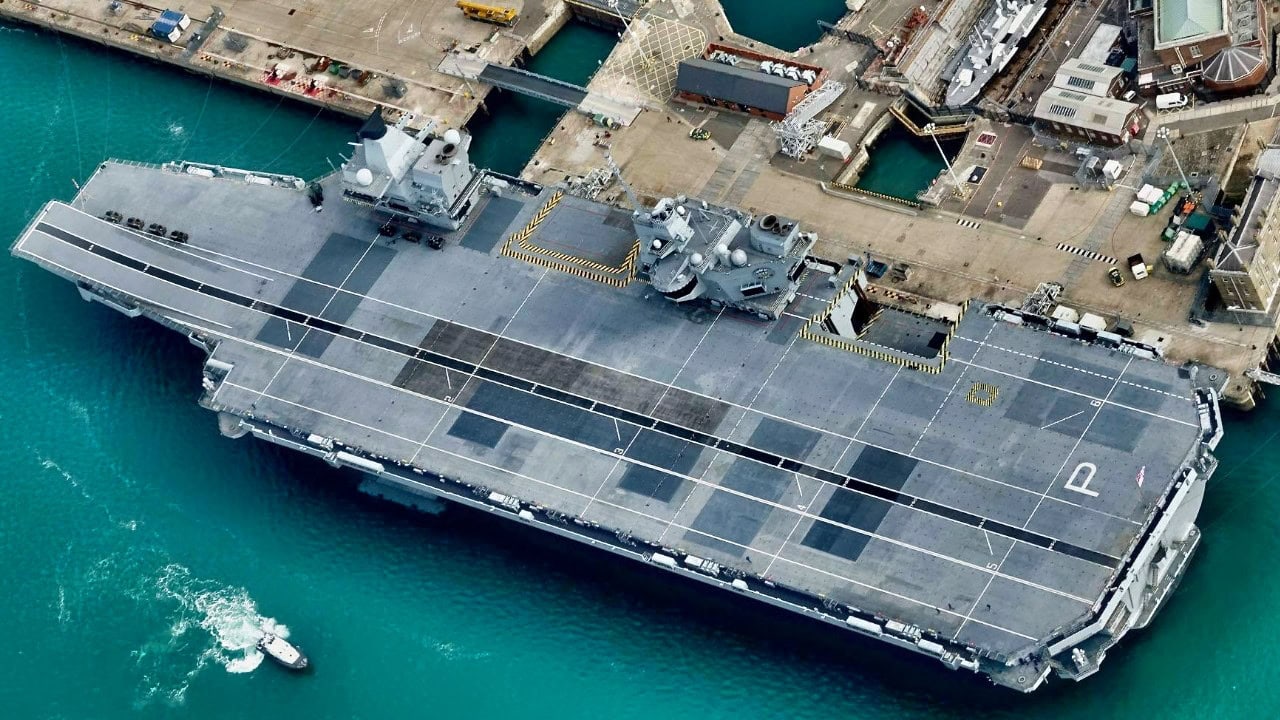
Royal Navy HMS Prince of Wales Aircraft Carrier. Image Credit: Creative Commons.
Since its entry into service, the troubling saga has not ended, and the ship has suffered a pair of significant flooding incidents, a major propulsion failure, and, more recently, a technical fault while on deployment to Norway.
Budgetary Mishaps
The HMS Prince of Wales problems began well before the ship entered service. The Queen Elizabeth-class aircraft carrier program was repeatedly delayed as the government struggled with affordability, industrial organization, and the choice of aircraft.
In 2010, the then-governing coalition opted to convert one aircraft carrier to operate the catapult-launched F-35C in lieu of the short-takeoff-and-landing F-35B.
The conversion was, perhaps unsurprisingly, enormously expensive, and the conversion decision was reversed in 2012. The flip-flop would ultimately add an estimated £120 million to the carrier’s costs, and £55 million in earlier work would be written off.
Later, the United Kingdom’s National Audit Office said the aircraft carrier program’s cost increase was propelled by schedule delays, immature design and industry underestimates of labor as well as materials, and in 2013, a contract renegotiation would raise the carrier’s costs by £754 million.
Ultimately, the two-ship aircraft carrier program would reach £7.6 billion, nearly double the initial cost estimate of £3.9 billion.
A Host of Problems
The HMS Prince of Wales was delivered in late 2019, but the carrier program had fallen far behind its original timetable. The delay was not attributable to a single technical flaw, but reflected the aircraft carrier program’s shifting design. But the carrier’s problems did not end with its entry into Royal Navy service.
During the HMS Prince of Wales’ sea trials just prior to its service entry, vibration from the carrier’s starboard shaft was deemed to be within acceptable limits. But an investigation after the shaft’s later breakdown found that the shaft had been misaligned during construction and that some crucial components had been incorrectly installed. The port shaft also exhibited a similar misalignment.
After commissioning, another major setback occurred in 2020, when a leak flooded a part of the carrier. A second problem later that year, however, was much more serious.
A fire-safety pipe inside the ship burst, flooding the machinery spaces and causing extensive damage to the electrical systems.
Subsequent repairs were successful, but lasted six months, added several million pounds to the HMS Prince of Wales’ price tag, and put the kibosh on a previously planned voyage to the United States for F-35B aviation trials aboard the carrier.
Ultimately, the HMS Prince of Wales was declared fully operational in September of 2021, and in early 2022 became the flagship for NATO’s Maritime High Readiness Force — but the carrier’s plague of problems did not end there.
Another Voyage Aborted
The most damaging incident to the HMS Prince of Wales happened in the summer of 2022, just a few days after the warship left Portsmouth for a North American deployment.
A coupling component that joined sections of the starboard propeller shaft failed while underway off the Isle of Wight.
The HMS Prince of Wales’ shaft and propeller suffered significant damage, and the carrier’s rudder suffered some superficial damage.
The carrier was forced to return to port by tugboat for dry dock repairs, and the trip to North America was canceled.
Ultimately, the repair was more extensive than initial assessments suggested.
Naval engineers found that the ship’s port shaft needed repair, and the starboard shaft needed replacement.
The ship would not emerge from its berth at the dry dock for nine months, when it was deemed repaired in the summer of 2023. Repairs ultimately cost £25 million.
Another issue occurred just this summer during the HMS Prince of Wales’ stopover in Norway as part of operations in the North Atlantic.
The U.K.’s Ministry of Defence described the problem as a “minor technical issue,” but did not explicitly elaborate on what the exact problem was. In any event, the carrier returned to sea.
While the HMS Prince of Wales has certainly experienced a host of problems related to construction and machinery defects that led to flooding and costly repairs, this latest issue may, in fact, have been relatively minor.
What the future ultimately holds for the aircraft carrier remains to be seen, but tentative optimism notes that the most recent incident was evidently rather minor and suggests the ship’s extensive teething issues may have been largely sorted.
About the Author: Caleb Larson
Caleb Larson is an American multiformat journalist based in Berlin, Germany. His work covers the intersection of conflict and society, focusing on American foreign policy and European security. He has reported from Germany, Russia, and the United States. Most recently, he covered the war in Ukraine, reporting extensively on the war’s shifting battle lines from Donbas and writing on the war’s civilian and humanitarian toll. Previously, he worked as a Defense Reporter for POLITICO Europe. You can follow his latest work on X.