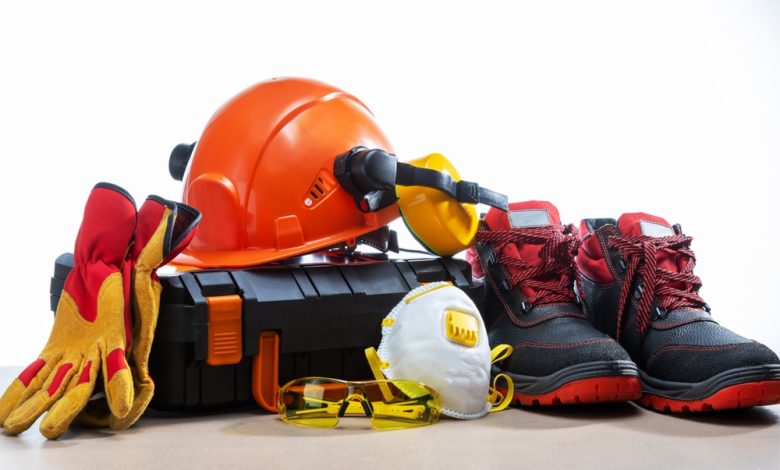
Personal Protective Equipment (PPE) is basic not only to survival, but all things DIY. Your eyes, ears and hands are among your most important tools, and they are not easily replaced. Some basic PPE and a little first aid knowledge go a long way toward protecting them and keeping them functional.
Protecting Vision, Hearing & Hands
These are the big three.
Eye Protection
Losing your ability to see during a survival ordeal is catastrophic, whether it’s because you aren’t carrying a light source or your eyesight is damaged by eye particles or photokeratitis (an eye injury sometimes called snow blindness.)
Eye injuries are common. Someone bends back a tree branch as they pass it and it whips the person behind them in the eye. Or it can happen shooting, while you are defending yourself, high wind can send particles airborne at high velocity, or it can happen a thousand other ways.
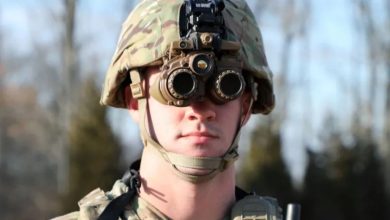
Wearing eye protection is the best protection. I prefer light adjusting eye protection, but the important thing is that eyewear protects your eyes against eye particles and UV light and that it obstructs your field of vision as little as possible, so wrap-around eye protection is best if you can find it and afford it.
Hearing Protection
The simplest form of hearing protection is perhaps to carry earplugs, but now there are many options that provide hearing protection, enhancement, Bluetooth connectivity, noise canceling technology, radio connectors, a variety of microphones, and whatever else you need. Solutions range from foam plugs that cost pennies, to electronic in-ear or over-the-ear headsets that cost thousands of dollars.
The important thing is that they have an adequate Noise Reduction Rating for your application and that you use them! Today we have so many wonderful hearing protection solutions available. Loud music, shooting, high explosives, commercial fireworks, engine and tool noise no longer have to cost you your hearing and leave you with ringing in your ears for the rest of your life.
Gloves
Survivalists and homesteaders work with our hands. Especially if you don’t work with your hands for a living, but you engage in activities like gardening, DIY projects, camping, bushcraft and shooting, you should be protecting your hands with gloves to help prevent blisters, splinters and cuts.
Gloves or mittens are also important for protection against extreme cold weather. A combination of a merino wool glove liner and a leather glove shell is one solution.
Some survivalists opt for two pair of work glove such as Mechanix gloves, one insulated and the other not insulated. I have a pair of Kevlar-lined tactical gloves that give a measure of both cut and fire resistance.
Basic First Aid for Vision & Hands
A little first-aid knowledge is also helpful for keeping your eyes and hands in working order. Unfortunately, there isn’t much you can do for hearing damage, except to get fitted for hearing aids.
Eye Particle Removal
If you have a foreign object in your eye, such as an eyelash or a speck of dust, you can probably remove it yourself. If the cornea is lacerated, get to an ophthalmologist or other healthcare professional if possible. If you have ophthalmic ointment, apply it. Then cover the eye and get to an eye doctor.
The eye is covered by a convex eye shield, which is taped in place. This helps keep the patient from using or rubbing the eye, which can worsen the laceration. If you don’t have one, an eye shield is easily improvised by cutting an oval out of a plastic water bottle or similar object, making ventilation holes, and taping it over the eye to create a domed cover over it. The edges can be padded with tape and gauze to make it more comfortable.
If you have to treat a minor eye particle yourself, the first thing to try is eye wash. Try holding your eye open and rinsing it with saline solution or potable water. If you don’t have eyewash, you can use an ordinary bottle of drinking water.
If the particle is not flushed out by eyewash, you can attempt an eye particle removal. A healthcare professional would use an ophthalmoscope (an instrument with a magnifying lens and a light) and an eye particle remover, which has a rounded magnet on one end for removing ferrous metal particles such as metal shavings, and a loop of monofilament on the other end for removing particles that are not attracted by the magnet. They will avoid using point objects like tweezers.
Unless you have them in your first aid kit, you probably won’t have these tools, but you can improvise the tools you need. I carry a thin metal mirror and a Fresnel lens in my wallet, and a small LED on my keychain. You can use a small light source and a magnifying lens in place of the ophthalmoscope, and the mirror to self-treat.
If you are carrying a Pocket Survival Kit (PSK), a rod magnet SERE compass will work for the magnetic end of the eye particle mover, and a loop of monofilament fishing line will work for the loop end.
Photokeratitis
Photokeratitis is sometimes called snow blindness but can also be caused by sunlight reflected off water or arc welding and is like sunburn of the cornea and conjunctiva, but it can be avoided by wearing quality sunglasses. The condition is painful and more common at high altitudes. The patient’s eyes will tear up, become red, and swell. The eyes will feel gritty, vision will become blurry, and they will not want to expose their eyes to sunlight.
Treatment includes cold compresses, OTC pain relief, covering covering the eyes so they can rest, and then using sunglasses.
Backup Eyeglasses and Eyeglass Repair Kits
If you are dependent on prescription eyeglasses to see, it is smart to carry extra pair of eyeglasses in your Go Bag and your vehicle and include eyeglass repair tools in your pocket survival kit. Eyeglass repair kits are tiny. You don’t need parts to repair every kind of eyeglasses, although someone may thank you for doing so, but you should include the parts you need to repair the most common failures of the models of eyeglasses that you own.
It should include:
- Adhesive Tape – For securing temples to frames, lenses to frames, or padding missing nose pieces.
- Small Rubber or Silicone Bands – For securing split temples or earpieces.
- Replacement Screws
- Replacement Nose Pieces
- Adhesive Nose Pads – In case the wire supporting the nose piece gets broken off.
- Screwdriver Bit – The bit should fit the multitool or pin vise that you carry or you can carry a tiny screwdriver.
- Small Safety Pin – In some cases a small safety pin can temporarily fill in for a missing screw, and you probably already care a couple in your PSK or First Aid Kit.
- 50 Lbs Monofilament Fishing Line, 12” – For reattaching lenses to semi-rimless frames.
You may also need a magnifying lens to see the tiny parts, especially without your glasses, but as mentioned previously, a Frensel lens doesn’t take up much room in a wallet or PSK.
Prescription eyewear can also be protected against loss by adding a neck strap or a floating neck strap if there is a chance that your eyewear could be dropped into a river or a body of water.
First Aid for Hands
The most common injury by far to hands is lacerations or cuts.
The vast majority of cuts to the hands and fingers are minor. The bleeding should first be stopped with the application of direct pressure. They can be disinfected with a mixture of benzalkonium chloride and lidocaine. To close a cut, apply a band of benzoin tincture about 1” wide on each side of the laceration, gently bring the sides together and apply wound closure strips.
In rare cases where direct pressure is not sufficient to stop bleeding, a hemostatic agent can be applied to promote clotting. If bleeding still doesn’t stop, apply a pressure bandage and the apply pressure to pressure points. If none of that works, a torniquet must be applied, but such cases are exceedingly rare.
Also, in cases where wound closure strips are insufficient, surgical staples or sutures can be applied, but these should only be applied by personnel who have been trained to do so or they can cause more harm than good.
After lacerations, the next most common injuries to hands are splinters, blisters and burns.
Splinters can be located and removed with the help of the Fresnel lens and a safety pin or a good pair of tweezers.
Blisters to the hands can be mitigated by wearing gloves, but if they do occur, leave do not lance them. Cover them and allow the body to reabsorb the fluid. Lancing them can result in infection. If the blister does break, cut away the dead skin, disinfect the wound, and apply a 2nd Skin Moist Dressing followed by a breathable knit dressing. If this is not available using a hydrocolloid blister dressing. In either case, use benzoin tincture on the undamaged skin to ensure adhesion.
For burns, whatever caused the burn should be removed and the area should be cooled. Rings or other jewelry must be removed. If you have ice packs they will help prevent more damage. This is especially important in the case of hot liquids.
Once cool, the burn can be loosely dressed in clean gauze. Elevate the hand. Watch for signs of shock. For serious burns, get the patient to a medical professional for treatment with topical medication such as refrigerated silver sulfadiazine.
Summary
PPE provides protection for eyes, ears, and hands, three tools that survivalists cannot easily replace. Learning basic first aid is the first line of defense when injuries do occur.