It is the greatest concentration of American airpower in the Middle East since the 2003 invasion of Iraq — assembled to prepare for possible military strikes on Iran, even as diplomacy continues.
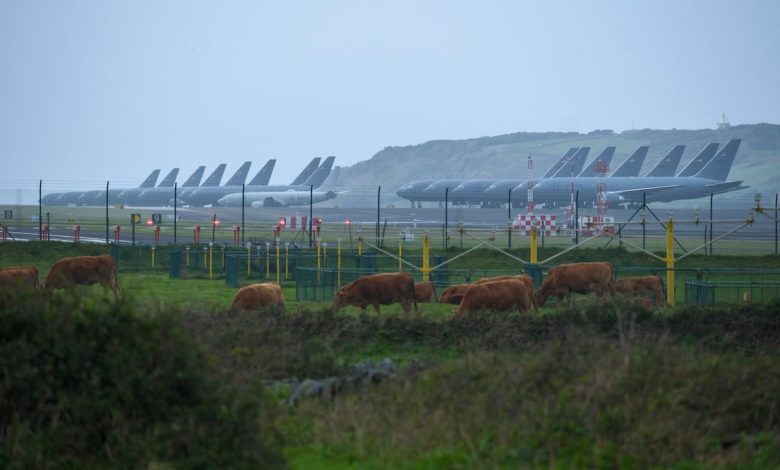
Two carrier strike groups are converging on the region. Fighter squadrons are flowing into bases from Jordan to Qatar, bridged across the Atlantic by aerial refueling. Submarines and destroyers armed with Tomahawk cruise missiles patrol nearby waters. Patriot and THAAD batteries have been rushed forward. B-2 stealth bombers stand ready in Missouri.
Now consider how long it has taken to assemble.
The buildup began in late January. The full force will not be in place until mid-March. This is six to seven weeks to assemble a force capable of imposing meaningful costs on Iran. The reason is simple: aircraft fly, but mass sails. When commanders needed more airpower, they drew on the joint force — two carrier air wings, surface ships, Army interceptors, and sixty-plus land-based strike aircraft sent to Jordan — proving that airpower is bigger than the Air Force.
RELATED
Some analysts will see this surge as proof the United States needs a larger Air Force. They misdiagnose the problem. Airpower is not the same as the Air Force, and the pursuit of ever more exquisite aircraft has left the service less relevant to the airpower mission it claims to own. Air denial increasingly falls to the Army, electronic warfare to the Navy, and persistent strike capacity to ships and submarines.
Consider each service’s contribution. Air control remains the Air Force’s core mission — but it is increasingly a joint effort. In the event of Iranian retaliation, air control means air denial, defeating the ballistic missiles, cruise missiles, and long-range drones Iran is most likely to fire. That mission runs primarily through Army Patriot and THAAD batteries, backed by Navy destroyers. Air Force fighters play a supporting role, intercepting drones and slower missiles first, reducing the volume that surface-based interceptors must engage. That is not the offense-first, air-superiority mission the Air Force prizes. It is a layered defensive fight in which the Air Force is one layer among several — and not necessarily the most important one.
Electronic warfare (EW) tells a similar story. The most capable tactical EW platform in the joint inventory is the Navy’s EA-18G Growler. Six of them operate from Jordan alongside Air Force Wild Weasel F-16CJs armed with high-speed anti-radiation (HARM) missiles and Angry Kitten jamming pods. The F-35 still lacks a fully integrated anti-radiation missile like the AGM-88 HARM or its successor. If Washington strikes Iran, destroying Iranian radar sites depends on a Navy platform. Electronic warfare was once an Air Force strength. The Navy now leads its most critical element.
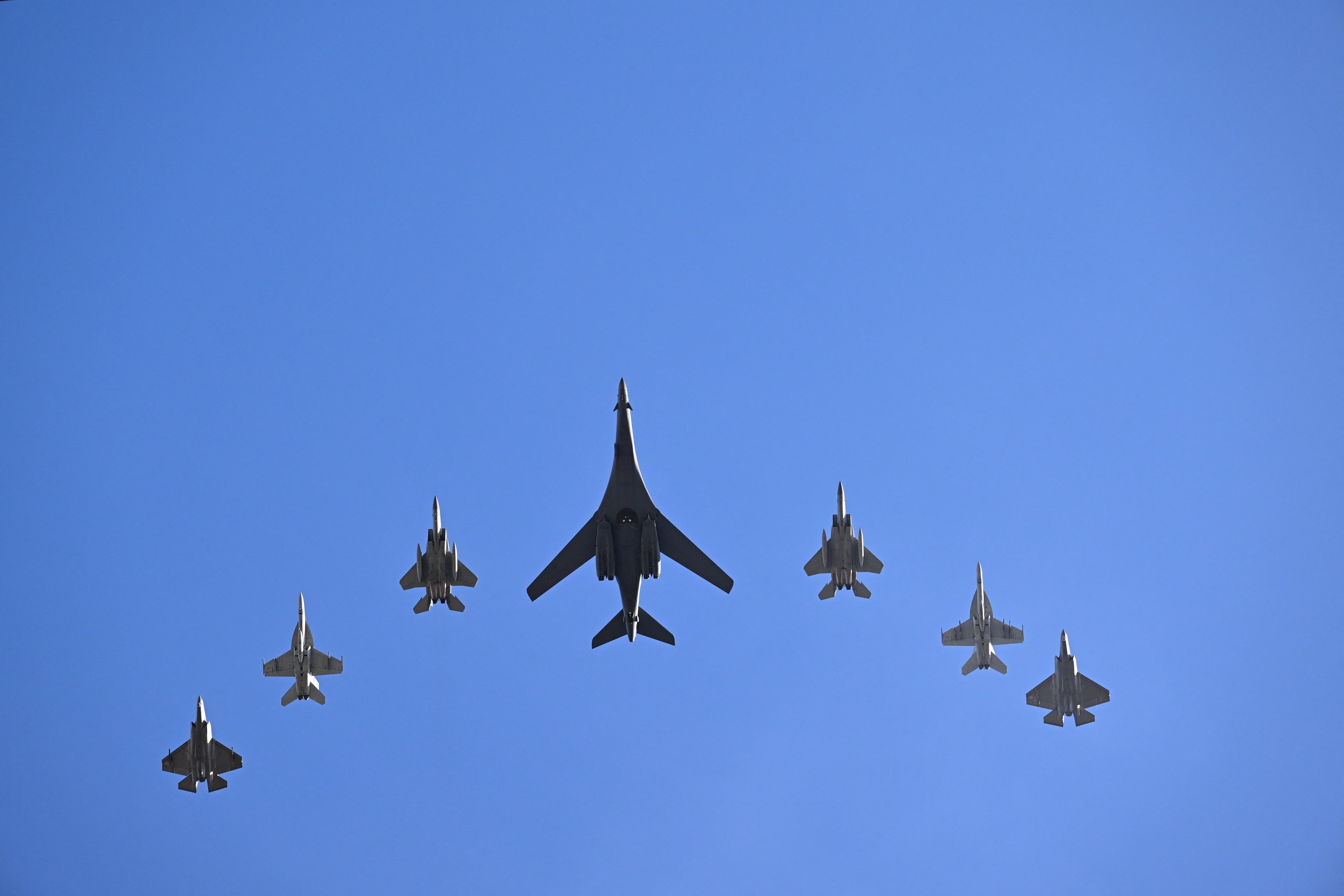
Exquisite platforms buy exquisite capability for a narrow target set. They do not buy persistence — and persistence is what strategically effective airpower requires. Punishment, as Thomas Schelling argued, depends on the credible threat of continuing pain. What compels an adversary is not a single devastating blow, but the belief that costs will keep coming. Denial aims to degrade capabilities and foreclose retaliation. Both require sustained presence over time, which in turn demands mass.
Washington should have learned this lesson from the last strike on Iran. After a long planning and buildup period, the single night of B-2 strikes last June damaged facilities Iran had spent years building. Months later, however, the United States is assembling its largest regional military force since 2003 to re-engage. The parallel to the no-fly zone over Iraq in the 1990s is hard to ignore: Episodic airpower, while tactically impressive, is strategically inconclusive. Strategic effects require sustained pressure, persistent presence, and continuous operations that force an adversary to make acute choices rather than simply absorb a blow and wait.
The gaps this buildup exposes are not in Air Force strike capabilities. They are in the Army’s ability to sustain air denial at scale, in the munition inventories required for persistence, and in the tanker fleet that keeps U.S. warplanes airborne. More B-21s and F-47s address none of these shortfalls. No procurement strategy centered on $700 million bombers or $300 million fighters can generate sustained presence at scale.
The Air Force does need more airpower—but not the kind it is buying. Persistent presence requires large numbers of lower-cost drones that can absorb losses, deep stockpiles of low-cost munitions that can sustain fires over time, and uncrewed aerial refuelers that can keep fighters and bombers over target areas. These are the capabilities that generate sustained effects at affordable cost—and they are consistently deprioritized in favor of the next exquisite crewed platform.
The deeper problem runs beneath procurement. Washington has long treated “airpower” and “Air Force” as synonymous. They are not. Air control — the ability to deny an adversary the use of the domain while preserving one’s own — is increasingly accomplished by Army interceptors, Navy strike platforms, drones, and munitions fired from ships and submarines. The Air Force’s preferred model — manned fighters striving for air superiority so manned bombers can reach their targets — has yet to demonstrate the scale and stamina needed to bring a conflict to an end.
Until budget priorities reflect that reality, the United States will keep buying the Air Force it prizes and underinvesting in the airpower it needs.
Maximilian K. Bremer is a nonresident fellow with the Reimagining US Grand Strategy Program at the Stimson Center and head of Mission Engineering and Strategy for Atropos Group.
Kelly A. Grieco is a senior fellow with the Reimagining US Grand Strategy Program at the Stimson Center and adjunct professor in the Center for Security Studies at Georgetown University.