BERLIN — Several NATO countries have announced they are sending troops to Greenland amid the Trump administration’s rhetoric of a potential annexation, continuing a balancing act of offering a win to Washington while preserving Denmark’s territorial integrity.
Germany’s armed forces, the Bundeswehr, announced it would send an expeditionary group of soldiers to Greenland along with “further European countries” in a short statement late on Wednesday. Sweden, Norway and France, too, have confirmed they have ordered soldiers to the Arctic island.
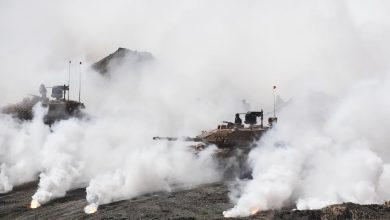
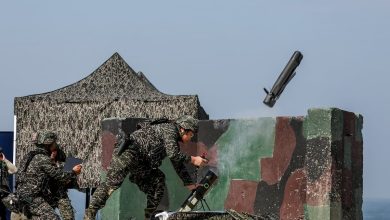
Additionally, the Netherlands and Canada will be deploying forces to the Danish territory in the high North, officially to take part in a planned NATO military exercise, Operation Arctic Endurance.
The operation does not appear to have any publicly communicated start or end dates, atypical for NATO exercises, which are usually communicated well in advance. There does not appear to be an online record of an operation by that name being publicly discussed prior to Jan. 14. A search of the NATO website similarly returned no results.
Denmark, whose realm the self-administered territory is a part of, had previously announced it would “immediately” bolster its defenses there.
European capitals have been scrambling to make sense of the martial rhetoric out of the White House and find a potential route for de-escalation by touting their efforts to boost Arctic defenses against Russian and Chinese ships around Greenland. They have appealed to U.S. leaders to respect Danish sovereignty while boosting Arctic defenses under a joint NATO push.
At the same time, they have reaffirmed their commitment to Denmark’s territorial integrity, and the EU has said it is looking at potential countermeasures behind closed doors.
The German government initially said 13 Bundeswehr soldiers would depart for Nuuk aboard an A400M transport plane and remain there through Jan. 17. The plans changed on Thursday, with Germany saying its expeditionary team would now fly to Denmark instead and go from there to Greenland aboard a civilian aircraft on Friday, together with Danish forces.
“The aim is to explore the framework conditions for possible military contributions to support Denmark in ensuring security in the region,” the Bundeswehr said in its nocturnal press statement on Wednesday, “for example, for maritime surveillance capabilities.”
On Thursday, the German defense ministry said “specific skill contributions are not yet the focus” of the mission and that, instead, “the task is to gather fundamental insights into the local conditions for deployment and training opportunities” in preparation for further talks and planning within NATO.
In the latest statement, German Minister of Defense Pistorius also called out an alleged threat by Russia and China in the Arctic, in an apparent olive branch to the United States.
Danish officials have pushed back against the U.S. assertion that the waters around Greenland are swarming with Russian and Chinese vessels.
Pistorius had previously name-checked the country’s brand-new P-8A Poseidon maritime patrol aircraft in the context of a discussion about Greenland and protecting the high North.
Swedish Prime Minister Ulf Kristersson confirmed that Stockholm, too, had sent soldiers to Greenland as early as Wednesday, although the government maintains they were dispatched to “prepare for upcoming elements within the framework of the Danish exercise Operation Arctic Endurance.”
Both Sweden and Germany said Denmark had requested that the allied countries’ armed forces be sent.
Norway has confirmed two military service members have been sent to Greenland “to map out the further cooperation between (NATO) allies,” Tore Sandvik, Oslo’s defense minister, said in an email to Reuters.
French President Emmanuel Macron confirmed his country’s sending of troops 18 minutes past midnight local time on Thursday, saying on X that “at the request of Denmark, I have decided that France will participate in the joint exercises organized by Denmark in Greenland.” At the time, he said that “the first French military elements are already on their way. Others will follow.”
On Wednesday, representatives of Greenland, Denmark, and the United States met at the White House, but the meeting failed to resolve the standoff.
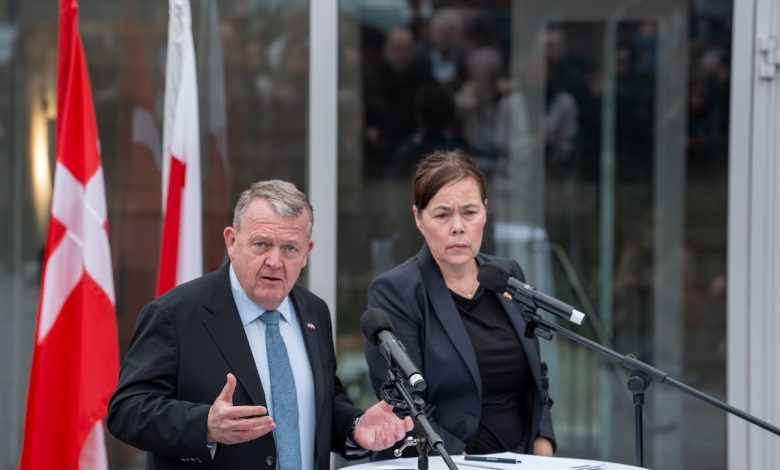
“We agreed to disagree,” Danish foreign minister Lars Lökke Rasmussen told reporters after the “frank but constructive” talks concluded. He said there was a “fundamental disagreement” between Copenhagen and Washington about the future of the world’s largest island.
The countries agreed to create a high-level working group tasked with finding a common path forward, while Trump reiterated his intention for the U.S. to take possession of the island after the meeting concluded.
Linus Höller is Defense News’ Europe correspondent and OSINT investigator. He reports on the arms deals, sanctions, and geopolitics shaping Europe and the world. He holds a master’s degrees in WMD nonproliferation, terrorism studies, and international relations, and works in four languages: English, German, Russian, and Spanish.