100,000-Ton US Navy Nimitz-Class Nuclear Aircraft Carrier Returns to the Fleet, Critical Systems Upgraded to Boost Battle Readiness

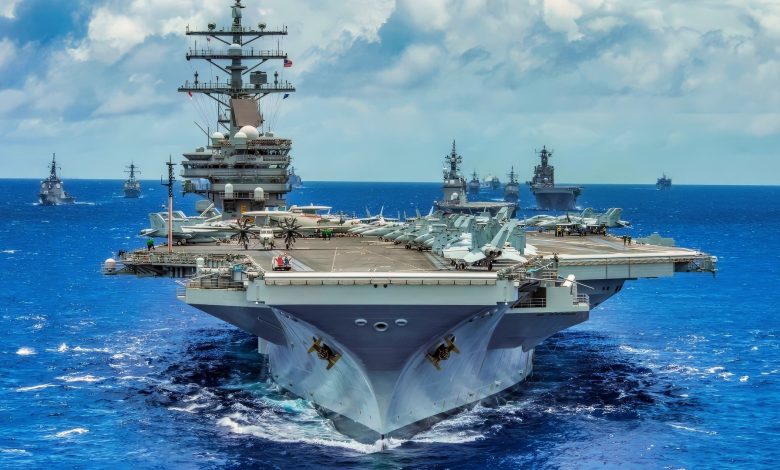
USS Ronald Reagan Returns – The USS Ronald Reagan aircraft carrier has returned to the fleet after 18 months of maintenance and modernization at Puget Sound Naval Shipyard in Bremerton, Washington. The roughly 100,000-ton nuclear-powered aircraft carrier completed sea trials in early September, giving sailors and shipyard personnel an opportunity to test its equipment after extensive work was conducted on the vessel.
The Navy has since declared the carrier mission-ready and returned it to the fleet.
Designated CVN-76, the USS Ronald Reagan entered the shipyard in March 2025 for its first Docked Planned Incremental Availability, or DPIA, since 2012. The maintenance period came after roughly nine years of forward deployment to Japan, during which it operated extensively throughout the Indo-Pacific.
Aircraft Carrier Overhaul Completed
During a DPIA, an aircraft carrier enters dry dock so that workers can reach parts of the ship that are normally underwater and therefore inaccessible during less extensive maintenance periods. It is far more extensive than maintenance performed while a vessel is docked at a pier and usually includes inspections and repairs to the hull, propellers, rudders, and shafts.
The work on Ronald Reagan was extensive, covering hull maintenance, flight deck repairs, reactor support and upgrades to combat systems, and more. Living and working spaces used by the carrier’s crew were also reportedly refurbished as part of the process.
When deployed, the ship can carry around 5,000 sailors with its embarked air wing. Maintaining the carrier requires far more than repairing its nuclear propulsion and aviation systems; maintenance must also cover its electrical systems, weapons, sensors, communications equipment, accommodations, aircraft support machinery, and more.
(June 20, 2018) An EA-18G Growler assigned to Electronic Attack Squadron (VFA) 141 lands on the flight deck of the Navy’s forward-deployed aircraft carrier, USS Ronald Reagan (CVN 76). Ronald Reagan, the flagship of Carrier Strike Group 5, provides a combat-ready force that protects and defends the collective maritime interests of its allies and partners in the Indo-Pacific region. (U.S. Navy photo by Mass Communication Specialist 2nd Class Kenneth Abbate/Released)
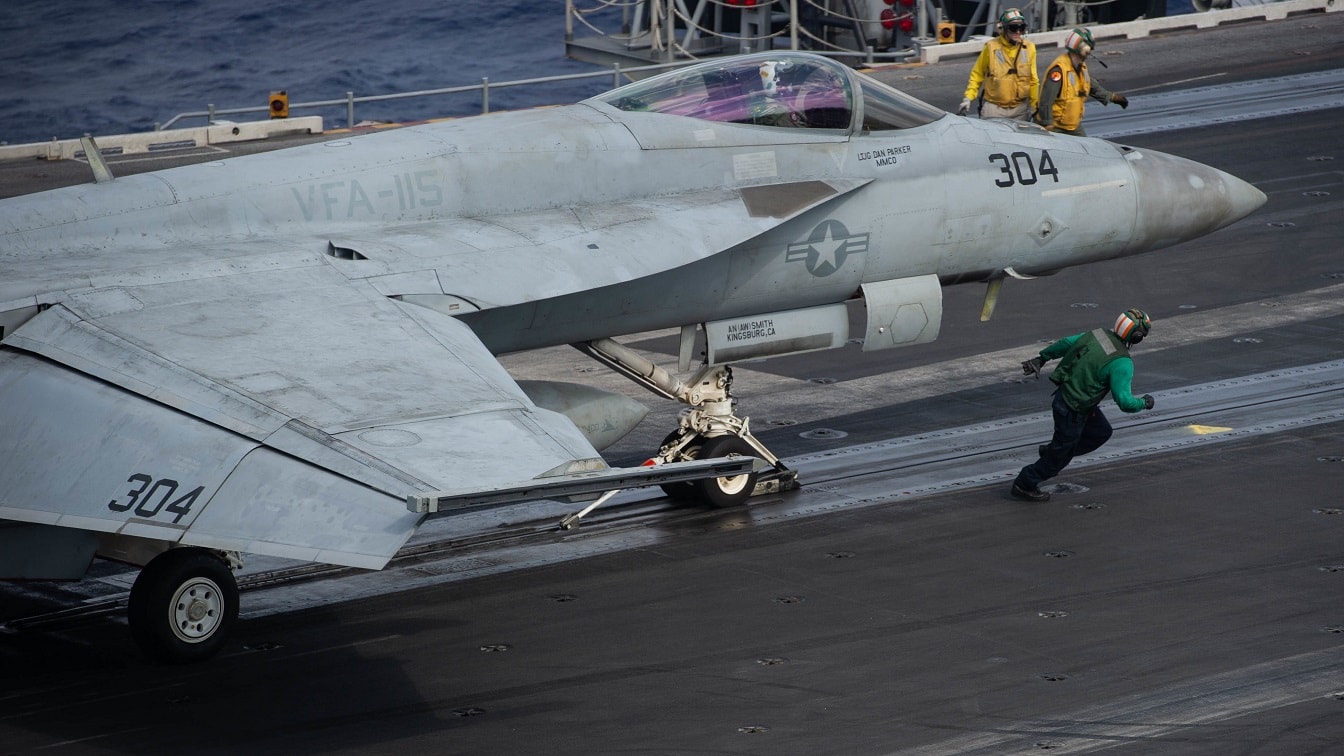
PHILIPPINE SEA (Nov. 15, 2018) Sailors prepare an F/A-18 Super Hornet, attached to Strike Fighter Squadron (VFA) 115, for take-off from the flight deck of the forward-deployed aircraft carrier USS Ronald Reagan (CVN 76) during dual carrier operations with USS John C. Stennis (CVN 74). Ronald Reagan and John C. Stennis are underway and conducting operations, in international waters as part of a dual carrier strike force operations. The U.S. Navy has patrolled the Indo-Pacific region routinely for more than 70 years promoting regional security, stability, and prosperity. (U.S. Navy photo by Mass Communication Specialist Seaman Jason N. Tarleton/Released)
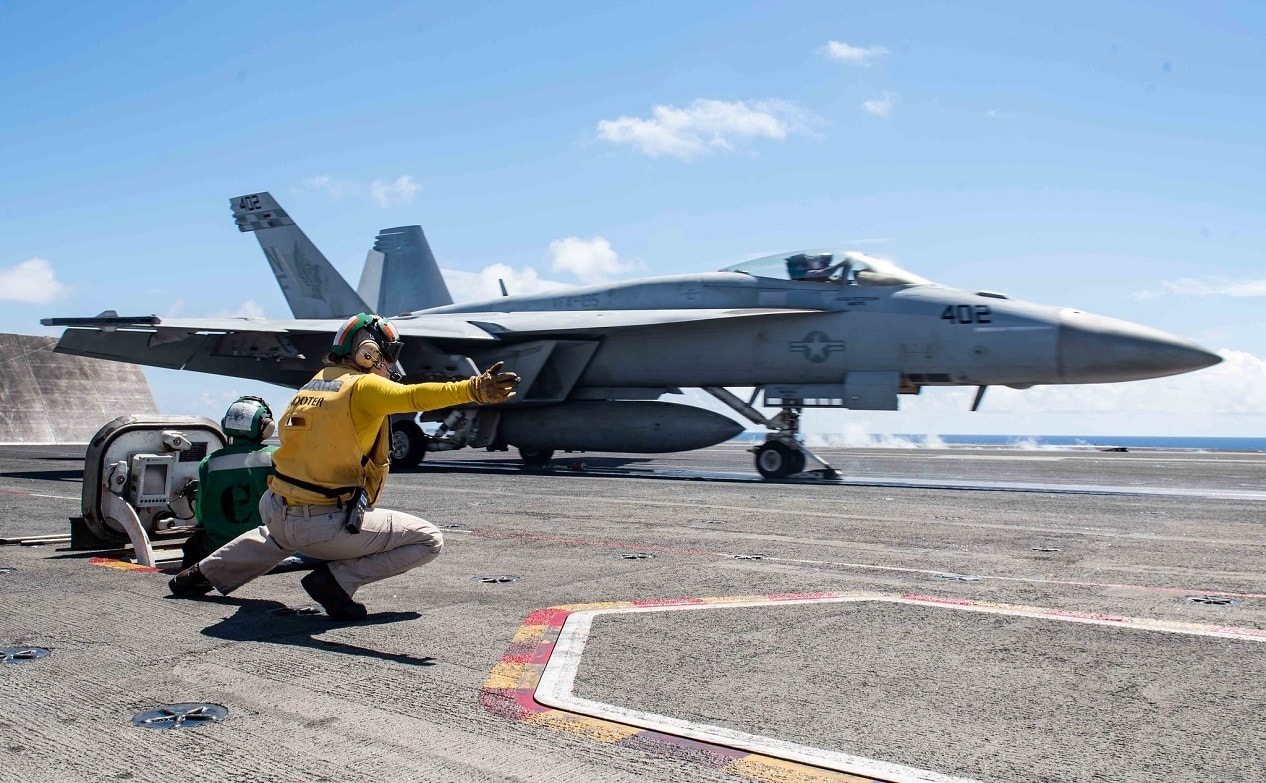
U.S. Navy Lt. Kristin Hope, from Ogden, Utah, signals to launch an F/A-18E Super Hornet from Strike Fighter Squadron (VFA) 195 from the flight deck aboard the Navy’s forward-deployed aircraft carrier USS Ronald Reagan (CVN 76) during flight operations in the East China Sea, Aug. 22, 2019. Ronald Reagan, the flagship of Carrier Strike Group 5, provides a combat-ready force that protects and defends the collective maritime interests of its allies and partners in the Indo-Pacific region. (U.S. Navy photo by Mass Communication Specialist 2nd Class Janweb B. Lagazo)
The availability appears to have been completed roughly on schedule, with a shipyard spokesperson saying in August that the Navy had expected to finish the work by the end of that month.
Sea Trials
The carrier departed Bremerton on September 3 and sailed under its own power for the first time since it entered the shipyard.
During that four-day voyage, known as sea trials, the crew tested the ship to confirm that it had been repaired safely and that its upgraded equipment worked correctly before the Navy formally returned it to service.
Those sea trials are essential because they serve as a large-scale inspection of the work carried out on the ship at sea, ensuring it is fully functional under real-world conditions. During this period, sailors test the carrier’s engines, steering and navigation equipment, communications systems, and defensive weapons.
The sailors also conduct emergency exercises to ensure that the crew can respond to potential equipment failures, fires, or floods.
The trials are important after a long period in dry dock because machinery may have been disassembled and repaired, or even replaced entirely — and even systems not directly modified may have been disconnected while other work was underway.
Nine Years In Japan
Ronald Reagan was commissioned in July 2003. It is the ninth of the Navy’s 10 Nimitz-class aircraft carriers and the second-youngest in the class, behind USS George H.W. Bush.
The carrier became the Navy’s forward-deployed carrier in Japan in 2015, replacing USS George Washington at Yokosuka Naval Base.
Its time on that assignment meant the ship was positioned closer to potential crisis areas, including the Taiwan Strait, the South China Sea, and the Korean Peninsula.
Ronald Reagan was the flagship of Carrier Strike Group 5. It regularly operated with Japan and other American allies in the region, and in 2024 it participated in Valiant Shield, a multinational exercise conducted around Guam, Palau, and the Northern Mariana Islands.
The ship’s deployment ended in 2024, with George Washington returning to Yokosuka and assuming Reagan’s forward-deployed role.
The Current State of the Navy Carrier Fleet
At present, Ronald Reagan is the only aircraft carrier homeported at Naval Base Kitsap, which is located on the Kitsap Peninsula in Washington state.
USS Nimitz previously shared the base but was moved to Norfolk, Virginia, as the Navy prepares to retire the vessel in March 2027.
There are more changes coming, too, with Chief of Naval Operations Adm. Daryl Caudle stating in June that USS Abraham Lincoln would likely be transferred from San Diego to the Bremerton area in the near future. The Navy is also planning to base the future USS John F. Kennedy, the second ship in the Gerald R. Ford-class, at Kitsap starting in 2029.
As part of the ongoing preparations for John F. Kennedy’s planned 2029 arrival, the Navy is investing $145 million in electrical upgrades at the Kitsap base. Those upgrades are necessary because the Ford-class carrier uses substantially more electrical power than the Nimitz-class ships.
About the Author: Jack Buckby
Jack Buckby is a British researcher and analyst specializing in defense and national security, based in New York. His work focuses on military capability, procurement, and strategic competition, and he produces and edits analysis for policy and defense audiences. He brings extensive editorial experience, with a career output spanning over 1,000 articles at 19FortyFive, and has previously authored books and papers on extremism and deradicalization.