The U.S. Air Force wants small one-way attack drones for its special operations forces, according to an Air Force Request for Information.
“Air Force Special Operations Command (AFSOC) and Special Tactics (ST) units currently lack a purpose-built First-Person View (FPV) unmanned capability,” warned the RFI, which is due April 17. “This deficit restricts the force’s ability to employ FPV systems in specialized mission sets and limits the development of standardized Tactics, Techniques, and Procedures (TTPs) essential for modern, high-intensity conflict.”
The service is looking for a drone with a range of at least 10 kilometers, and ideally more than 20 kilometers. It would be armed with a fragmentation warhead of 1.5 to 3 kilograms. Flight time should be 15 to 30 minutes.
Guidance would be via GPS, and include the ability to function in GPS-denied environments.
“This system needs to integrate Global Positioning System (GPS), 4G/LTE/5G cellular connectivity, true frequency hopping between bands, and an optional repeater to extend operational range to over 20 kilometers,” the RFI said.
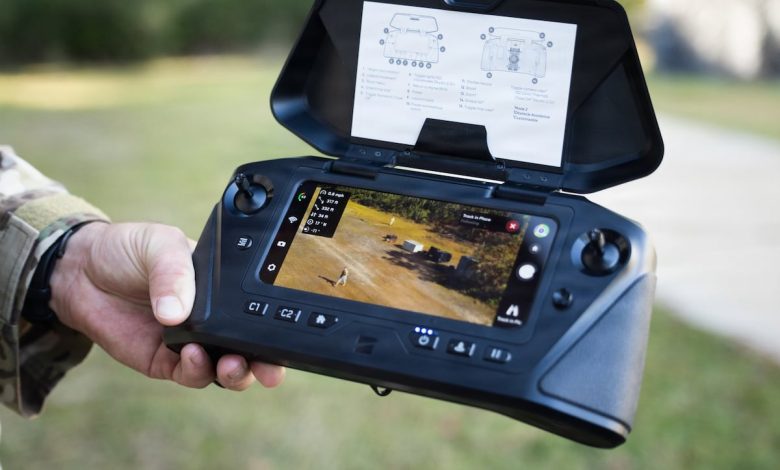
The initial weight limit is no more than 30 pounds, including two drones and a ground control system, all of which would be hauled by two operators with backpacks. The final goal is a 10-pound system that can be carried by a single operator.
The drones should be ready for launch under three minutes, with an ideal setup time of less than a minute. The controller device would use the Android Team Awareness Kit UAS interface.
The attack drones will equip “specialized individuals” within AFSOC Special Tactics Teams, which normally comprise combat controllers, pararescuemen, Tactical Air Control specialists and special tactics officers. These teams perform missions such as coordinating close air support and assisting airfield seizure operations.
But armed with kamikaze drones that can hit targets 12 miles away, Special Tactics Teams will have their own strike capability to assist capturing objectives, or defending those that have been captured. The drones will enable integration of first-person attack drones “into core mission sets, including Global Access, Precision Strike, and Personnel Recovery,” the Air Force noted.
With drones dominating the battlefield in Ukraine and elsewhere, the U.S. special operations community is devoting a great deal of attention to UAVs. This includes small missiles that can be launched from drones, and drones that can be used inside caves. SOCOM also wants to teach some of its personnel to build and repair drones.
Michael Peck is a correspondent for Defense News and a columnist for the Center for European Policy Analysis. He holds an M.A. in political science from Rutgers University. Find him on X at @Mipeck1. His email is [email protected].