To ensure future missions such as last summer’s strikes on Iranian nuclear facilities can succeed, the U.S. Air Force must improve the way it securely transmits critical information with bombers and other aircraft securely transmit critical information, a top general said Thursday.
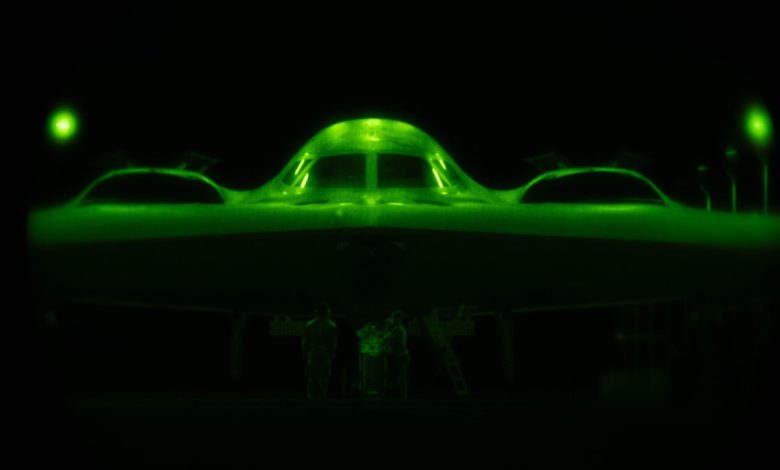
The June 22 B-2 Spirit bomber-led strikes dubbed Operation Midnight Hammer — which used Massive Ordnance Penetrator weapons encased in nearly 26,000 pounds of steel to drive through 200 feet of mountain rock and destroy three deeply buried nuclear facilities — were a success of engineering, intelligence and coordination, Lt. Gen. Jason Armagost, deputy commander of Air Force Global Strike Command, said at a Mitchell Institute for Aerospace Studies conference in Arlington, Virginia.
But if the Air Force is going to maintain that kind of advantage, Armagost said, it has to ensure its command-and-control networks and communications architectures are able to securely transmit critical instructions and status updates to and from bombers and other aircraft.
“If that [strike] package is not able to … communicate the status of their forces and the ‘go’ from the mission commander, then that is a foul on all of us,” Armagost said during a panel about the Midnight Hammer operation and lessons learned.
Maj. Claire Randolph, chief of weapons and tactics for U.S. Air Forces Central Command, agreed that communications capabilities and intelligence sharing needs to improve during combat operations. But, she cautioned, the Air Force needs to take care that giving combatant commanders a direct pipeline to the cockpits does not lead to them making operational decisions and eroding the authority of air crew commanders.
“Let’s imagine you have a wire direct from the CENTCOM commander to the cockpit of every B-2 or the cockpit of every F-16,” Randolph said. “There’s a liability there to add … decision-making authority without all the awareness. We have to improve our communications capabilities, but we also have to be very careful to bound the authority that ends up touching the cockpit.”
Otherwise, Randolph said, there’s a risk of involving people outside of the aircraft who should not be part of the decision-making process.
While the B-2 — currently the only stealth bomber in the Air Force’s fleet — carried out the strikes, the Air Force plans for its in-development successor, the B-21 Raider, to play a central role in future penetrating strike missions.
Northrop Grumman, the maker of the B-21, has touted it as the world’s first sixth-generation aircraft, in part because of its advanced data-sharing capabilities.
In a conversation on the sidelines of the conference, Armagost said that as the Air Force plans for the future, it’s looking to take advantage of those capabilities as a way to improve command and control and communications.
“It’s definitely how we’re configuring going forward,” Armagost told Defense News when asked about the B-21 and the Air Force’s desire to improve how it communicates in combat.
Armagost said an operation like Midnight Hammer will look different — and in some ways, be easier to carry out — once the Raider is integrated into the Air Force’s fleet.
Stephen Losey is the air warfare reporter for Defense News. He previously covered leadership and personnel issues at Air Force Times, and the Pentagon, special operations and air warfare at Military.com. He has traveled to the Middle East to cover U.S. Air Force operations.