KYIV, Ukraine — A maximum of 800,000. That’s how many soldiers Ukraine’s military would be authorized to have under the current 20-point peace framework — a 20% cut from the roughly one million currently under arms, but a significant increase over the 600,000 originally proposed.
That higher number was a concession Ukrainian President Volodymyr Zelenskyy won after weeks of pushing back. But it’s still a ceiling on a force built over almost four years of war with Western weapons, Western training and Western intelligence.
Russia faces no equivalent limit.
Almost four years ago, Moscow expected Kyiv to fall in three days. Instead, Ukraine buried its dead in mass graves from Bucha to Izium, watched Mariupol’s defenders disappear into Russian filtration camps, counted the tens of thousands of children, according to Yale’s Humanitarian Research Lab, who were taken across the border — and kept fighting.
Zelenskyy said more than 45,000 Ukrainian soldiers had been killed and 390,000 wounded in a February interview with Piers Morgan — roughly 1 in 20 fighting-age men in the country, according to The Economist.
The army that paid for every kilometer in bodies is now being asked to shrink, to cede ground it’s still holding and to accept guarantees that even its allies can’t explain.
It’s one of many sticking points that have hounded negotiators since November — dismissed as a nonstarter by Ukrainians and treated as a baseline demand by Moscow. The 800,000 figure is supposed to be the compromise.
Retired Lt. Gen. Ben Hodges, former commander of U.S. Army Europe and one of NATO’s most experienced voices on the alliance’s Eastern flank, told Military Times the current peace frameworks fail all three.
“Who benefits from that?” he told Military Times. “Russia.”
The framework, delivered to Moscow on Dec. 24, proposes a demilitarized zone along a line Russia hasn’t captured on the battlefield, according to The Washington Post. It offers “Article 5-like” security guarantees, Hodges noted, that even U.S. officials have struggled to explain.
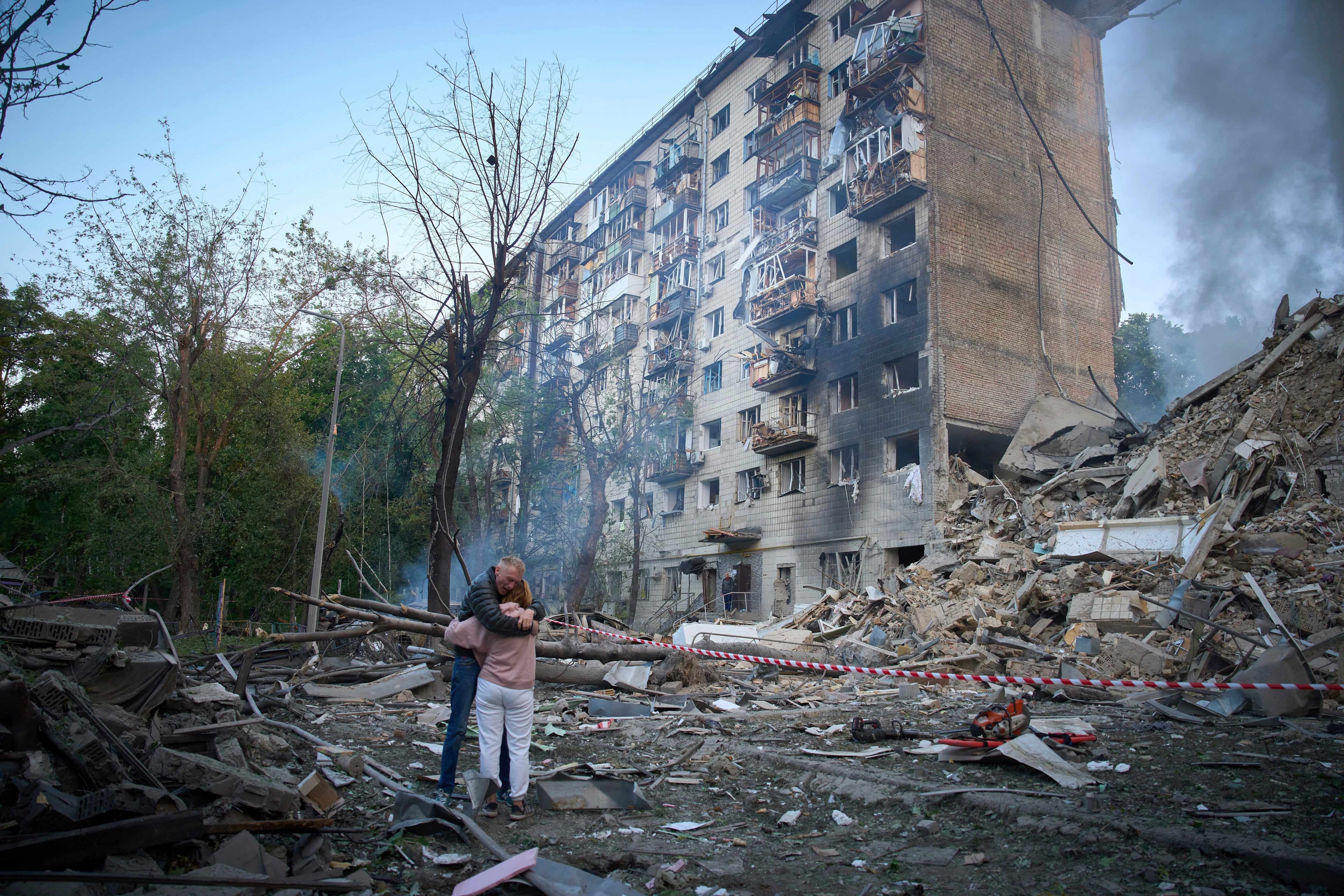
It also requires Ukraine to hold the line against an adversary whose answer to current peace talks, according to Zelenskyy, came in the form of nearly 500 drones and 40 missiles over Kyiv last weekend, an attack that killed two and left a third of the capital without heat, according to Reuters. The wartime leader arrived in Mar-a-Lago the next day.
“Russian representatives engage in lengthy talks,” Zelenskyy posted Saturday, “but in reality, Kinzhals and Shaheds [drones] speak for them.”
The pattern continued on Monday, when Russian Foreign Minister Sergei Lavrov claimed Ukraine attacked Putin’s residence in Novgorod with 91 drones overnight — an accusation Zelenskyy called a lie and “an attempt to undermine peace talks,” according to Reuters.
In response, Lavrov said Moscow would “review” its negotiating position and that targets for retaliatory strikes had already been selected.
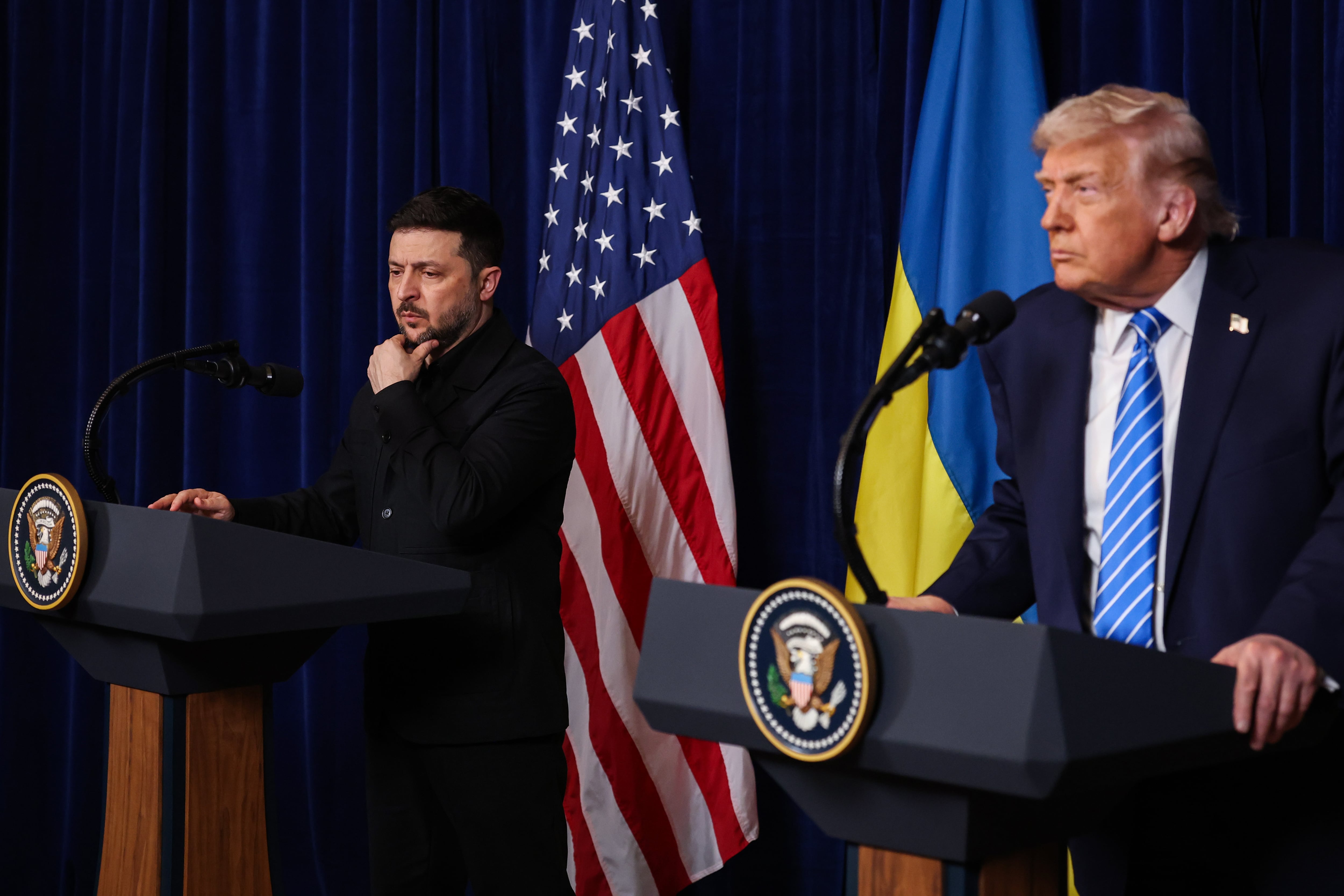
The security architecture remains in flux, too. U.S. President Donald Trump offered Ukraine a 15-year security guarantee as part of a revised plan earlier the same day — a commitment Zelenskyy quickly called “strong” but pushed to extend to 30 or 50 years, citing the war’s near-15-year span since Russia’s 2014 annexation of Crimea.
But the offer requires U.S. congressional ratification and European parliamentary approval, according to NPR — a procedural hurdle that could still leave the guarantees undefined in practice.
The military Russia failed to break
The army Moscow expected to collapse in 72 hours is now one of the most combat-tested forces in the world.
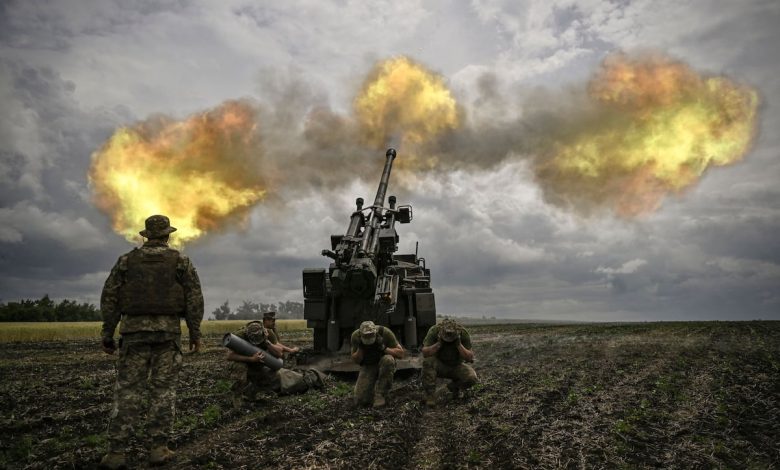
Nearly one million Ukrainians are currently under arms, trained on NATO weapons systems, integrated into Western intelligence-sharing networks and hardened by almost four years of high-intensity conventional warfare.
They’ve absorbed more battlefield lessons in drone tactics, electronic countermeasures and decentralized command than any NATO military has learned in decades — and they’ve done it under fire. This is the force the 20-point framework would cap at 20% smaller than its current size.
Hodges, who spent years planning for a potential Russian conflict from his headquarters in Wiesbaden, Germany, sees the limit as an operational straitjacket.
“What Ukraine is being asked to do is politically and morally unacceptable,” he told Military Times.
The force limits aren’t just about headcount, he explained. They constrain rotation cycles, training throughput and the mobilization surge capacity Ukraine would need if the ceasefire breaks.
An army locked at 800,000 can’t regenerate the way a wartime force needs to — not while holding a 600-mile front and defending cities from nightly drone barrages while Russia builds toward a 2026 recruitment target of 409,000 soldiers, military intelligence chief Kyrylo Budanov said in a year-end interview with Suspilne.
RELATED
Ukraine’s booming drone industry is part of the equation, already outpacing the alliance it’s defending. Kyiv now claims a production capacity of four million first-person-view drones annually — more than all NATO countries combined, according to Bloomberg — with 96% built domestically, according to Defense Minister Rustem Umerov.
The asymmetry was on display in September, when at least 19 Russian drones crossed into NATO airspace over Poland. Dutch F‑35s and Polish F‑16s were scrambled — backed by an Italian airborne early‑warning aircraft, a Belgian tanker and German Patriot batteries — to successfully shoot down just four of the 19, per Air & Space Forces Magazine.
Ian Kelly, a former U.S. ambassador to Georgia and the Organization for Security and Cooperation in Europe, sees the pattern clearly.
“You can’t accidentally send 20 missiles into Poland,” he told Military Times. “And that was not the first time.”
The incident prompted Polish Prime Minister Donald Tusk to declare that Europe is already enmeshed in “a new type of war,” according to The Guardian.
While the revised 20-point version raised the troop cap, it didn’t change the architecture. The army that has more experience fighting modern-day Russia than any military in NATO would still be locked into a force structure designed by Moscow — while the North Atlantic alliance watches its most capable forward buffer get gutted by the enemy it was built to stop.
A pause that favors Moscow
A DMZ without enforcement looks just like a new front, according to Hodges. And the security guarantees now being floated don’t explain who fires back when Russia tests it — which is why many Ukrainian and NATO planners like him see current proposals as a freeze, not an end.
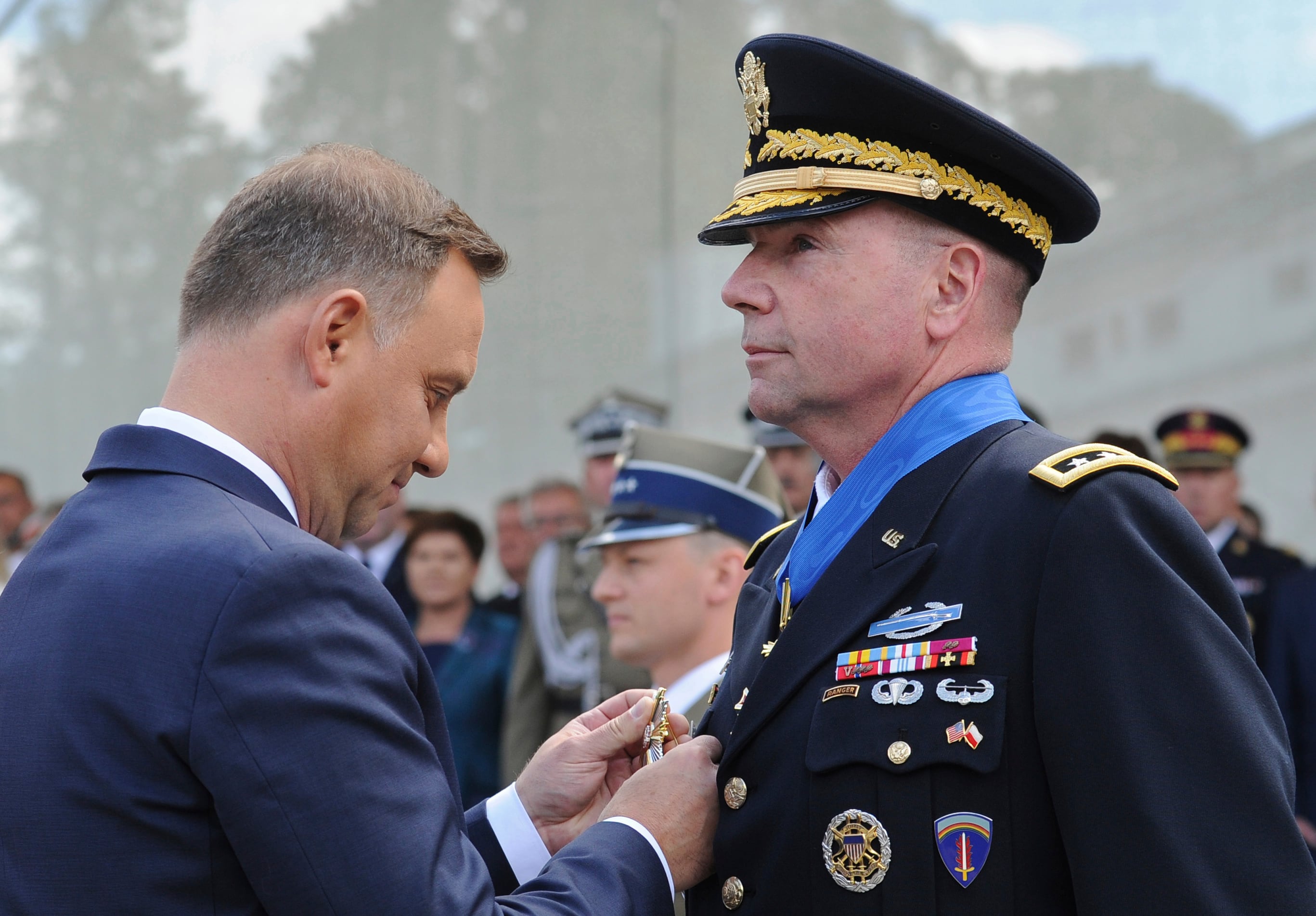
The retired lieutenant general pointed to Dayton. That deal froze the lines in Bosnia, with American and NATO troops on the ground authorized to enforce the peace with lethal action. Twenty-five years later, that framework still holds.
But the current proposals for peace in Ukraine offer no equivalent.
“We had Minsk-1 and Minsk-2,” Hodges said. “You had ceasefires, you had observers and the Russians just blew past all that. Never lived up to it.
“If there’s going to be any sort of demilitarized area or a zone of separation like we had after the Dayton Peace Accords, there will have to be Europeans and Canadians in there with real capability — that have the authority to shoot back immediately when Russia violates it.”
Who, Hodges posed, will then fly reconnaissance over the buffer zone? Who responds when Russia probes the line — under what authority and on what timeline? And with the contact line shifting daily even now, which day’s positions get frozen?
“Unless you have somebody there that’s a credible deterrent, the Russians are not going to respect that,” he added. “And I don’t think any serious people believe they will.”
Even if the skies go quiet, the mission doesn’t — temporarily stopping the war doesn’t mean Ukraine can stand down. The front still has to be manned; air defense still has to cover cities and forward positions; ammunition has to keep flowing; medevac chains kept operational; rotation cycles maintained.
One senior European diplomat, granted anonymity by Military Times to discuss the sensitive negotiations, said even with a ceasefire and DMZ, the security needs of Ukraine and Europe wouldn’t let up. Russia will keep probing.
“The only reason this is still called hybrid war is because we have decided to call it hybrid,” he said.
The pattern is already clear: Drones have already breached NATO airspace. Sabotage plots and cyberattacks have been uncovered across the continent and the U.S. Russian probes stop just short of triggering Article 5.
“When does it cross the line?” he added. “When do we have a Sarajevo moment?”
The security guarantees are supposed to close these resource and security gaps while preventing a return to war — but they don’t, the diplomat said. And everyone at the negotiating table knows it.
“Does anybody seriously believe that this administration would respond to a Russian drone attack on Ukraine as if it was a Russian drone attack on New York or Washington?” Hodges asked, referring to the “platinum” guarantees U.S. officials floated earlier this month.
“Of course not.”
Who pays to hold the line
Even if the guarantees hold, the math doesn’t add up: Russia can afford to drag out its invasion — Ukraine can’t.
World Bank figures put Russia’s 2024 GDP at $2.17 trillion; Ukraine’s at $190.7 billion — an 11-to-1 ratio.
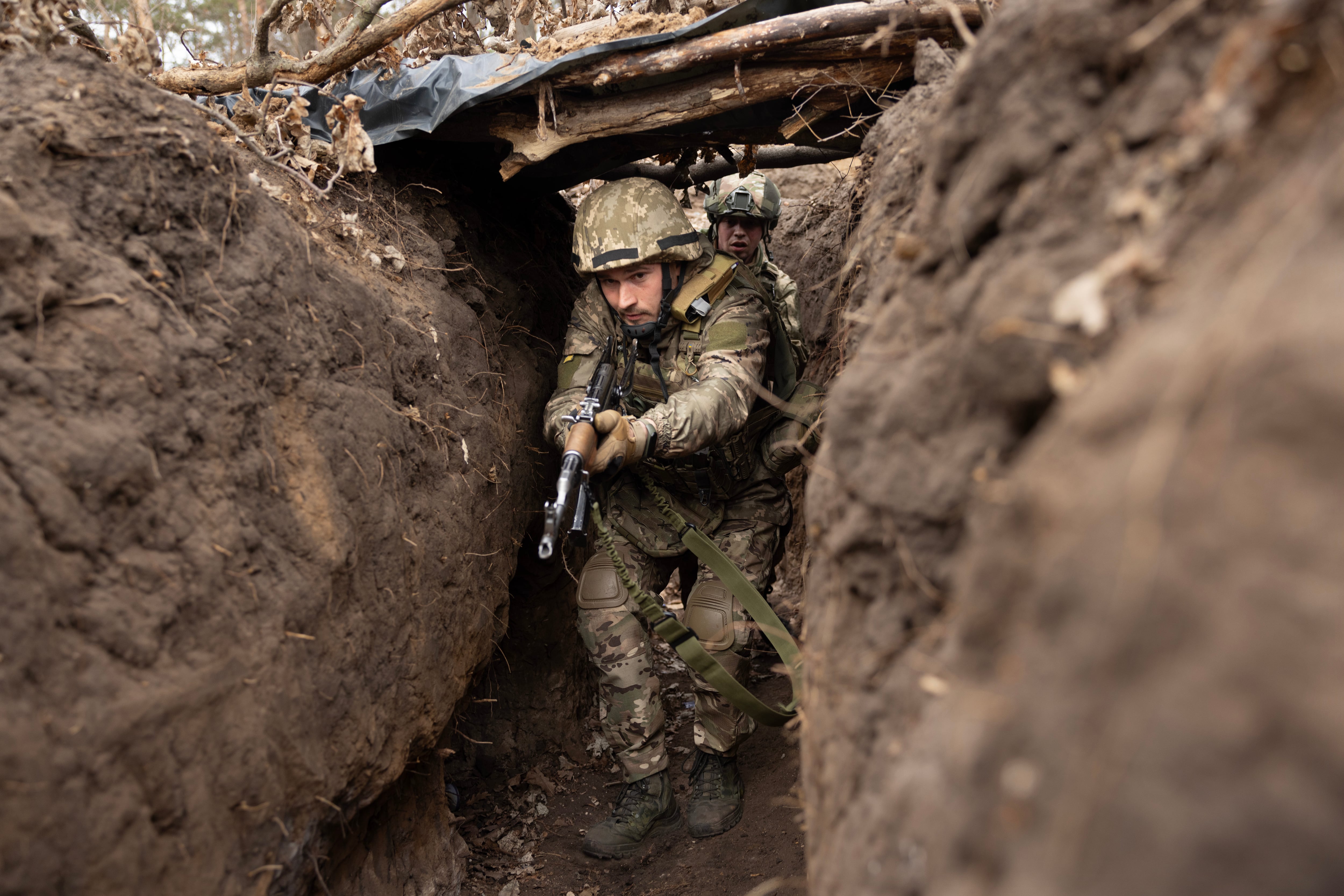
Ukraine carries the highest military burden in the world, over a third of its GDP annually, according to a SIPRI analysis. But Russia can budget to keep its war machine running long-term: Moscow used about 7.2% of its GDP on defense spending in 2025 — or 15.5 trillion rubles, roughly Ukraine’s entire annual economic output.
That imbalance shapes everything that follows, including how long Russia can sustain the war, and how much outside money Ukraine needs just to stay in the fight.
If sanctions ease under any deal, Russia’s defense industrial base recovers on a timeline Ukraine can’t match. The money is already a fight — the EU has spent months trying to unlock frozen Russian assets, with Belgium demanding extra safeguards that have stalled the process, complicating EU efforts to turn frozen wealth into Ukraine support at scale, according to Politico.
The only thing that changes Putin’s math is making the war too expensive to continue.
“That’s how this war ends, when Russia cannot pay for what they’re doing,” Hodges said. “And we won’t get there by killing another half a million Russians. Putin doesn’t care about that.”
In his view, that means doing what European leaders have spent three years postponing: unfreezing the money in Belgium and getting it to Kyiv, putting real sanctions on Lukoil and Rosneft, going after the secondary buyers — Turkey, India and China — who keep Russia’s oil revenue flowing.
Kelly explained that the only “consistent message” from Washington has been “that there is no more ‘free lunch,’ no more big multi-billion dollar packages.”
That leaves European allies holding both the deterrence mission and the sustainment bill without the experienced partner they built their latest defense posture around.
If the U.S. slows its funding of Ukraine or European defense spending enough, or continues to shirk the sanctions campaign against Russia, the burden falls on Europe — on allies who then have to sustain Ukraine and deter Russia at the same time, with a weaker forward buffer than they had before any deal was signed.
“The Europeans have failed,” Hodges said, “which is why Putin refers to the European leaders as ‘piglets’ — because he is pretty sure that Europeans are not going to do what’s necessary.”
If the West wants a peace plan that holds, he added, it has to do what the current frameworks don’t: enforce violations in real time, keep Ukraine armed and funded and make the war financially unbearable for Moscow.
“What we’ve done so far hasn’t delivered,” the diplomat admitted. “So, how do we step up our support in a way that might impact the calculus in Moscow?”
No one has answered that question yet. What they have is a framework that caps Ukraine’s army, leaves enforcement undefined and asks allies to carry a burden it hasn’t built the capacity to hold. It’s less a peace plan than a stress test, officials say, and from where Europe sits, it’s failing.
“We all see where this is heading,” the diplomat said. “And it scares the bejesus out of us.”