WARSAW, Poland — As the Polish government is advancing efforts to absorb loans from the European Union to finance purchases of new weapons made in Europe, opposition politicians are concerned that reliance on funds from Brussels could draw the country away from defense companies based in the United States.
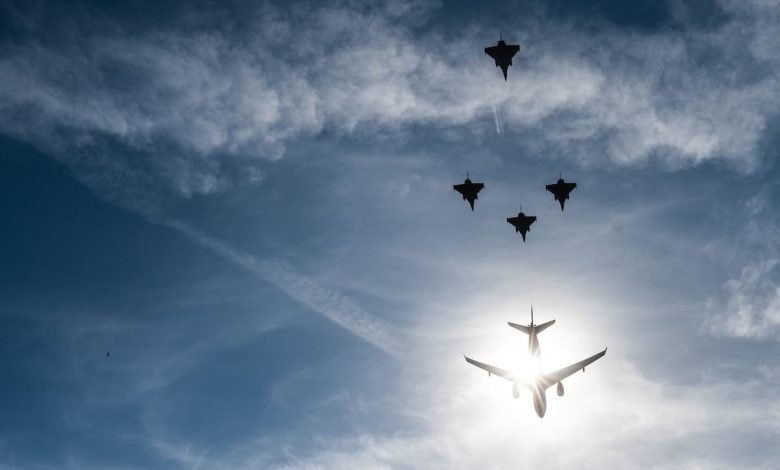
The development comes as Warsaw considers using a loan to select the Airbus A330 MRTT aircraft over Boeing’s KC-46 for the Polish Air Force.
Under the EU’s Security Action For Europe (SAFE) scheme, the Polish defense budget is to absorb additional funds of around €43.7 billion ($50.7 billion) in low-cost loans. The program is to enable member states to bolster their defense capabilities amid Russia’s ongoing invasion of Ukraine, and Poland is set to receive the largest share of the funds.
On Feb. 27, the Polish parliament approved the draft legislation to implement SAFE loans, and President Karol Nawrocki will need to decide this month whether he wants to sign the bill, veto it, or refer it to the country’s Constitutional Tribunal.
Prime Minister Donald Tusk, whose centrist government regularly clashes with right-wing Nawrocki who backs the opposition, is a major proponent of the loan program.
Tusk has claimed the majority of the funds will be injected into the Polish defense sector, with a focus on procurements of innovative gear for the country’s military.
“Significantly more than 80 percent, and these are the opinions of experts, generals and state institutions, will serve Poland and our companies,” Tusk said at a Feb. 27 press briefing. “It will be one of the breakthrough impulses for the development of the Polish economy. The development of the most modern technologies, so satellites, space, cyber, drones and anti-drone systems, will capture 36 percent” of the loans’ value, he said.
Tusk also stated that Poland will continue to purchase weapons from U.S. companies.
“We will be an even better ally thanks to the SAFE program. And those more than 100 billion [dollars] that we intended to spend on equipment and technological capabilities that come from the United States, they will be spent anyway,” the prime minister said.
This year, the Polish government has earmarked around PLN 200.1 billion ($54.2 billion) for defense, up from PLN 186.6 billion budgeted in 2025. This means the nation’s military expenditure could exceed 4.8% of its gross domestic product (GDP) in 2026.
Poland’s expanding defense budget has driven a shopping spree for new gear, including procurements of tanks, fighter jets, helicopters, missiles and rocket launchers bought from the United States.
While Nawrocki, who was elected president in May 2025 with the opposition Law and Justice (PiS) party’s backing, is mulling whether to sign the SAFE bill, the government and the opposition are at odds over the program’s utility for Polish military modernization efforts.
Mariusz Błaszczak, Poland’s former Minister of National Defence who is a PiS lawmaker, told Defense News that, in its current form, SAFE poses risks to Warsaw’s decision-making sovereignty in the field of defense and to the stability of the state’s finances.
“Firstly, we are talking about a loan mechanism, meaning an increase in state debt in a formula that may be subject to additional political and procedural conditions imposed by EU institutions,” Błaszczak said.
“Law and Justice has always held the view that Poland’s security should be built on a strong nation-state, real military capabilities, and a strategic alliance with the United States within NATO, rather than through mechanisms that could restrict our freedom of acquisitions and equipment preferences,” he added.
In the politician’s view, there is also a risk that SAFE loans “will de facto reward specific manufacturers at the expense of the best available technologies. For Poland, the key criteria should be quality and interoperability with NATO, not political correctness in procurement.”
While the Ministry of National Defence has not released a full list of acquisitions that are to be bankrolled by SAFE loans, senior military officials have named the potential purchase of tanker aircraft as one of the key projects.
Maj. Gen. Ireneusz Nowak, the deputy general commander of the Polish Armed Forces, told local news site Defence24.pl at least two Airbus A330 MRTTs are to be purchased with the use of an EU loan. The aircraft is a direct competitor to Boeing’s KC-46 that the U.S. company has pitched to Poland’s Air Force.
Błaszczak said he believes the availability of SAFE loans should not tilt the ministry’s preference towards gear made in Europe if alternative U.S. products offer better capabilities and compatibility.
“We are talking about a choice between the European Airbus A330 MRTT and the American Boeing KC-46 Pegasus. In my opinion, three issues are key to such decisions: interoperability with NATO forces, industrial conditions, and a long-term alliance strategy,” said the opposition lawmaker.
“The Polish military today relies heavily on American equipment: from Patriot systems, through HIMARS, to the F-35. Therefore, the natural direction is maximum compatibility and logistical cohesion,” he added.
Jaroslaw Adamowski is the Poland correspondent for Defense News.