PARIS — MBDA, Europe’s biggest missile maker, plans to double production of its top-of-the-range Aster air-defense missile in 2026, an “absolutely massive” jump in response to surging demand, Chief Executive Officer Éric Béranger said.
The company will lift its overall missile output by 40% this year, a “very significant” increase, Béranger said at a press conference here on Thursday to present MBDA’s annual results. The firm will double the size of its five-year investment plan to help ramp up production.
The destruction wrought by missiles and drones in wars in Ukraine and the Middle East has created a sense of urgency in Europe to build up air defenses, after decades of lackluster investment that saw countries such as Denmark and Belgium abandon the capability altogether. MBDA’s missiles have seen use in both the Ukrainian conflict and in the Middle East.
“We see a very high demand for our products,” Béranger said. “MBDA products are delivering on their mission, they are doing what they are expected to do, they are reliable. And because of this, we are each day receiving a lot of demands.”
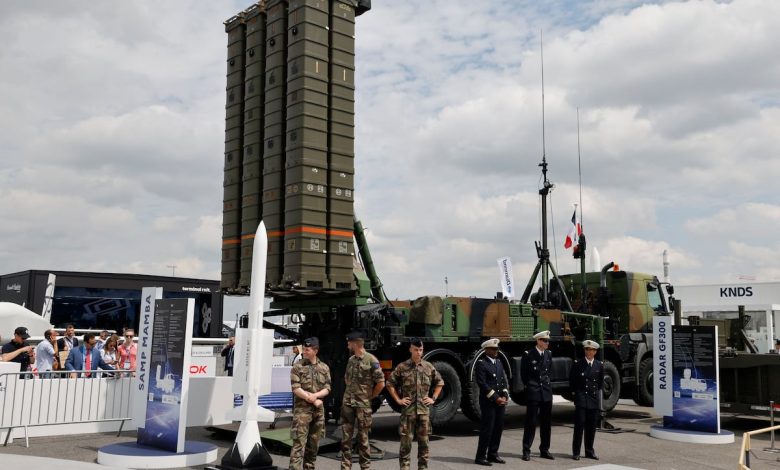
MBDA’s Aster family of missiles is used in the SAMP/T air-defense system, the only European alternative to the American Patriot system, as well as for high-end air defense by the French, Italian and British navies. The missile maker had already targeted an Aster production increase of 50% between 2022 and the end of 2025.
RELATED
Order intake for MBDA stood at €13.2 billion ($15.2 billion) in 2025, compared with €13.8 billion a year earlier. The order backlog at the end of December climbed to a record €44.4 billion euros, from €37 billion a year earlier. Sales jumped to €5.8 billion from €4.9 billion.
Europe accounted for 70% of MBDA’s order intake in 2025, a “very clear indicator” of the ramp up of demand in the region, according to the CEO. With Europe “massively rearming,” MBDA is expanding its European presence and creating new sites, he said.
MBDA produces a broad range of air-defense and strike missiles, including Mistral ground-based air-defense interceptors, the Meteor air-to-air missile, the SCALP-EG/Storm Shadow cruise missile and Exocet anti-ship weapon. The company says it already doubled missile production between 2023 and the end of 2025.
RELATED
The CEO said MBDA’s integrated European model, with businesses in France, the United Kingdom, Italy and Germany, allows the company to play a major role in both national defense programs as well as European cooperative initiatives. MBDA is owned by Airbus and the U.K.’s BAE Systems with a 37.5% stake each, with Italy’s Leonardo owning the remaining 25%.
To finance the growth, MBDA increased its investment plan for 2026-2030 to €5 billion from a planned €2.5 billion for the 2025-2029 period, according to Béranger. The company also plans to hire 2,800 additional workers in 2026.
“We are focusing very much on increasing our production, on increasing our capabilities, which means that we are investing a lot,” Béranger said. “For us the key question as an industrialist is where to size the production tool. Historically, MBDA has not been structured to produce in mass.”
The company’s MICA ground-to-air and air-to-air missile has been in high demand, and it’s one of the products where MBDA invested last year to increase production, though demand “has suddenly surged much beyond what we had anticipated.”
The French Air Force has been using MICA missiles to shoot down dozens of Shahed drones in defense of the United Arab Emirates, raising concerns about depleting stockpiles for the munition, Le Figaro reported earlier this month.
Meanwhile on Aster, MBDA has dedicated some specialized machinery to the model to boost output, whereas low production rates of the past meant those machines would be used to make several missile models.
“With the current surge in demand, we are specializing machines on the products which are in very high demand,” Béranger said. “We have done it with Aster. It’s almost totally done. We still have some machines that we have ordered which are not with us yet, but will come very soon.”
The company is also expanding capacity in its supply chain as well as in-house, and creation of a second Aster assembly line in Italy is in progress, according to Béranger. MBDA currently assembles the air-defense missile on a production line in France.
Béranger declined to say whether increased production will mean lower per-unit prices, saying that’s being discussed with customers, and that MBDA’s investments in production capacity will need to be reimbursed.
The company is seeing interest from Gulf countries for the SAMP/T system made by Eurosam, a consortium between MBDA and Thales, according to Béranger. He declined to identify the countries, saying there are direct contacts with MBDA as well as between governments.
The MBDA-led, French-British development of a stealthy cruise missile and a high-supersonic strike missile within the Stratus program has completed the assessment phase, with the next step being development. Italy has joined as a partner for the Stratus LO, the stealthy missile, Béranger said.
Within the Hydis2 consortium project led by MBDA to develop a hypersonic interceptor, the 19 partners have selected two potential concepts, which will be narrowed to one concept by the end of the year, according to Béranger.
MBDA is working with Airbus and Spain’s Sener on remote drone carriers as part of the troubled French-German-Spanish Future Combat Air System, which is at risk of breakdown due to infighting between Airbus and Dassault Aviation over the next-generation fighter at the heart of the project.
Béranger said the remote-carrier partners are working together “very well,” with a lot of progress on development, and he expressed hope the cooperation continues no matter what happens to FCAS.
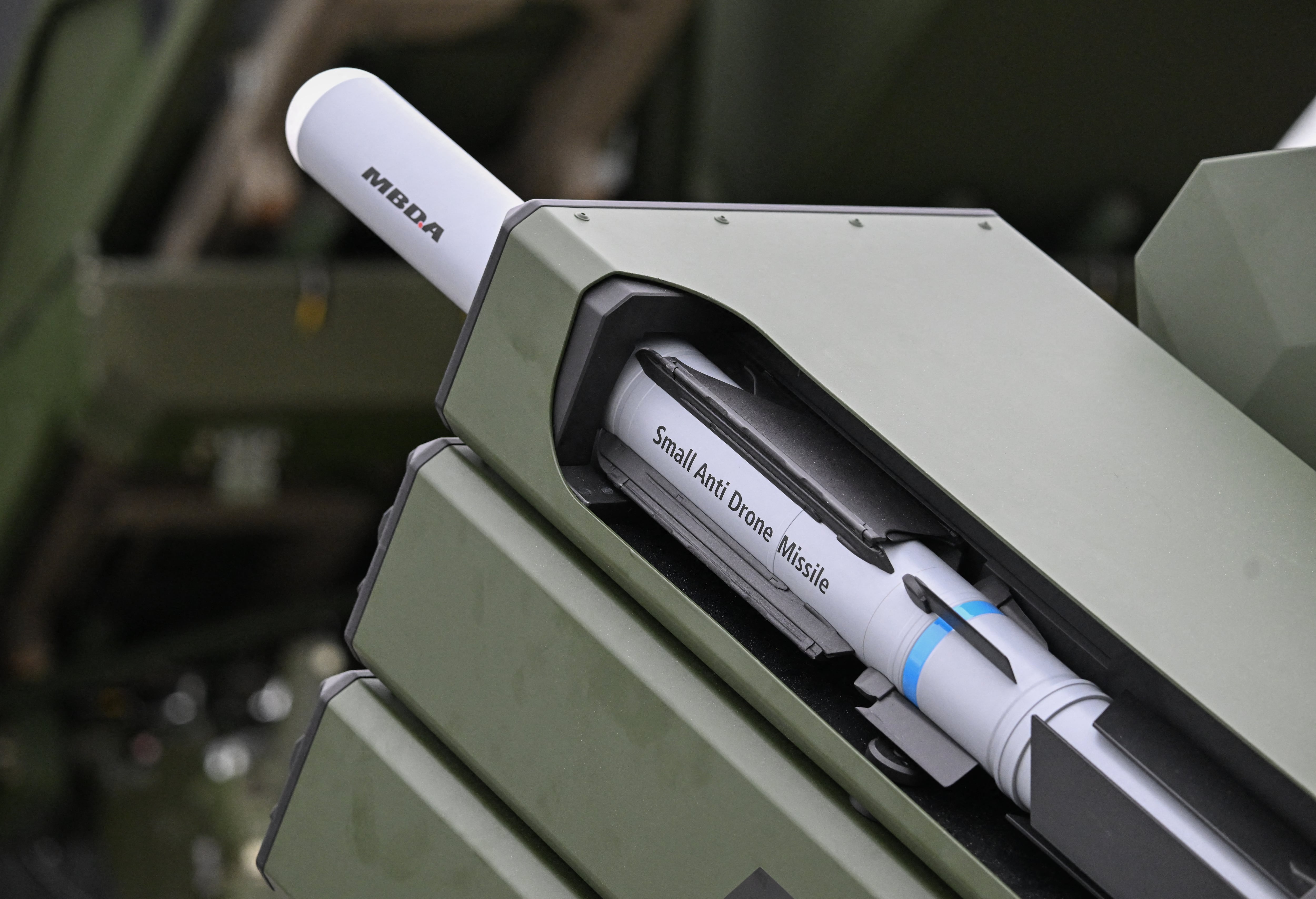
The company is talking with potential partners in Europe “beyond the usual countries of MBDA” about mass producing some of its designs, according to Béranger. MBDA has been expanding into massed weapons with the development of a relatively low-cost, one-way effector, similar to the Shahed drones used by Russia and Iran.
Rudy Ruitenberg is a Europe correspondent for Defense News. He started his career at Bloomberg News and has experience reporting on technology, commodity markets and politics.