PARIS — Spain’s Indra teamed up with South Korea’s Hanwha Aerospace to fill a Spanish order for tracked self-propelled artillery with a budget of €4.55 billion (U.S. $5.3 billion).
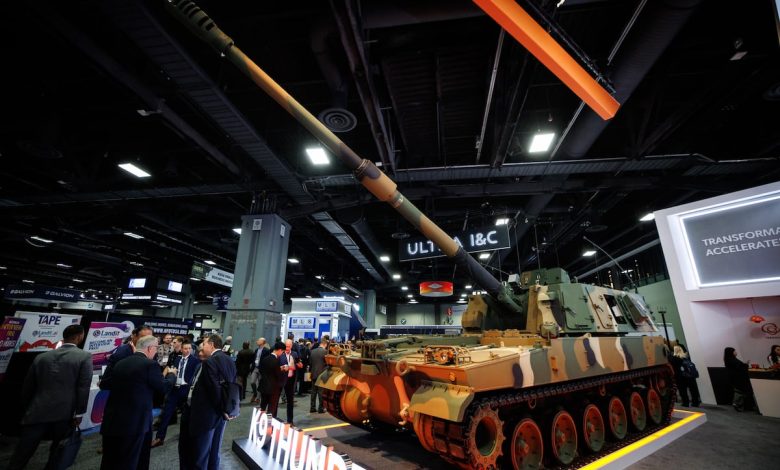
Indra signed a binding agreement with Hanwha to produce 280 tracked vehicles for the Spanish Armed Forces based on the Korean company’s K9 155mm self-propelled howitzer, the Spanish company said Tuesday. The program will include 128 tracked artillery vehicles and 120 ammunition resupply vehicles, as well recovery vehicles and command-and-control units.
Hanwha’s K9 self-propelled artillery gun has been a major export success in Europe, helping South Korea become the second-biggest arms supplier to European NATO members, behind the United States. European K9 customers in recent years included Norway, Romania and Poland, with Hanwha typically willing to cooperate with local defense industries to win deals.
“The alliance between two major global defense leaders, Indra and Hanwha, enables us to offer the Spanish Armed Forces real sovereignty and autonomy throughout the life cycle of a new family of land platforms that did not exist until now,” Indra Chairman Ángel Escribano said in a statement.
Indra said the deal is of “enormous strategic relevance” for Spain due to the high level of associated technology transfer, putting the country among those in Europe with their own capacity to design and manufacture tracked land platforms.
The project will require an investment of €130 million to equip Indra’s plant in Gijón, Spain, with new industrial capabilities and advanced machinery, as well as set up an additional integration plant in the city, according to Indra.
Based on the K9 family of vehicles, Indra will design and manufacture the hulls for the vehicles in Spain, and provide the mission system, battlefield management system and communications. The Spanish firm said it will have design authority over the hull.
Artillery has been a priority area of investment for Europe, as Russia’s 2022 invasion of Ukraine and the ensuing war prompted a reassessment of the need for mass and firepower on the battlefield. Ukraine has also become a test bed for integration of artillery with drones for targeting, even as unmanned aerial vehicles have emerged as one of the main threats to howitzers and their crews.
European countries spent more than $15 billion on rocket and tube artillery between May 2022 and July 2024, led by Poland, according to the latest Military Balance report from the International Institute for Strategic Studies.
In addition to the tracked howitzer purchase, Spain has also budgeted €2.9 billion for wheeled self-propelled artillery, as part of its defense modernization and capacity plan.
Rudy Ruitenberg is a Europe correspondent for Defense News. He started his career at Bloomberg News and has experience reporting on technology, commodity markets and politics.