BERLIN — Germany will move to a voluntary conscription model and begin mandatory physical checks for all male citizens coming of age. The country’s parliament approved a draft law to that effect on Friday.
The measure, which is expected to face no serious challenge in the parliament’s Senate-like upper house, is expected to come into force on Jan. 1, 2026.
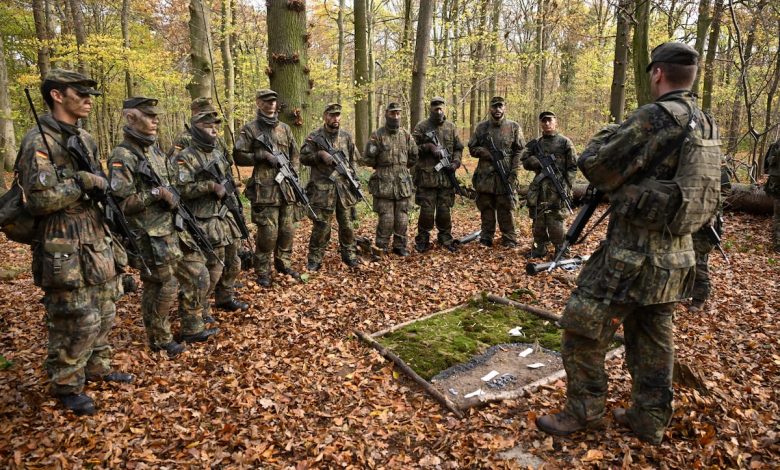
Under the new legislation, the Bundeswehr − the country’s armed forces − will be legally bound to its goal of stocking up the number of both active personnel and reservists to a total of up to 470,000 soldiers, of which 270,000 would be active-duty soldiers, by 2035.
On Friday, the Bundeswehr said it had around 184,330 active personnel, up 1.5% or 2,750 soldiers from a year ago.
German men born in 2008 or thereafter will be required to fill out an online questionnaire once they come of age and subsequently visit one of 24 physical inspection centers that will be set up for medical examinations. The system is meant to be fully operational by mid-2027. Women can opt into the process, but will not be obligated to take part. The military service itself will, for now, remain voluntary and will stand alongside the existing optional civil service model.
After completing their time, those trained by the Bundeswehr will become reservists.
Recruits who choose to join the military for six to eleven months will receive a monthly pay of €2,600 ($3,030) before tax, with additional money promised if they decide to stay longer.
There are no plans for mandatory conscription “currently,” the German Bundeswehr said in a statement after the draft law passed.
At the same time, if the voluntary model proves insufficient to recruit the required number of people, the law leaves the door open for mandatory measures.
“If that is not enough, we will have no choice but to introduce partial conscription,” said German defense minister Boris Pistorius on the sidelines of the vote in the parliament.
A provision for a compulsory military service on a needs basis is included in the law passed today, but would require an additional vote by parliament to activate.
While lawmakers were voting, protests against the new measure took place in several German cities, including Berlin. At the same time, a partial student strike in opposition to the conscription was ongoing.
Growing the Bundeswehr has become a necessity as a consequence of “the threat situation and NATO plans,” the military said.
“In the event of a defense situation, which we want to prevent at all costs, the state must know who is ready for action,” said Pistorius. “This country, this democracy, deserves it.”
Linus Höller is Defense News’ Europe correspondent and OSINT investigator. He reports on the arms deals, sanctions, and geopolitics shaping Europe and the world. He holds a master’s degrees in WMD nonproliferation, terrorism studies, and international relations, and works in four languages: English, German, Russian, and Spanish.